The social sector is no stranger to turbulence. Funding streams can dry up without notice, policy landscapes shift seismically, and key partners may withdraw their support abruptly. In the face of such relentless change, the immediate and often understandable instinct is to shield direct service operations, the very heart of an organization’s mission. However, this protective measure, while seemingly prudent, can inadvertently undermine the long-term capacity of social sector organizations to achieve their critical objectives.
These organizations are perpetually navigating a dual challenge: the deliberate change they aim to create in the world – fostering better outcomes, building stronger communities, and dismantling systemic inequities – and the constant, often unpredictable operational changes that buffet them from the outside. Funding instability, evolving policy priorities, and shifting philanthropic landscapes are not anomalies; for many, they represent the very fabric of their operating environment.
When external pressures mount, the organizational focus naturally constricts, concentrating resources and attention on the immediate delivery of services. The mission is urgent, resources are finite, and pausing investments in areas deemed less critical, such as internal capacity building, can feel like the most responsible course of action while awaiting a return to stability. Yet, this reactive approach can create a vicious cycle. Without investing in the very mechanisms that foster resilience and adaptability, organizations become increasingly vulnerable to the next wave of disruption.
The crux of the matter lies in the understanding that long-term mission impact is not solely dependent on the dedication of frontline staff. It is equally, if not more so, reliant on individuals who possess the acumen to lead through ambiguity, build consensus internally, and galvanize support externally. This is where leadership development emerges not as a discretionary luxury, but as a foundational imperative. The evidence is unequivocal: strengthening leadership capacity directly enhances an organization’s ability to deliver on its mission, not just today, but well into the future.
The Transformative Power of Investing in Nonprofit Leadership
Capacity-building for nonprofits encompasses a broad spectrum of organizational strengthening, aiming to enhance an organization’s ability to fulfill its mission sustainably. This includes cultivating robust leadership capabilities, refining organizational systems, fostering strategic partnerships, and, crucially, building the inherent resilience required to adapt and thrive amidst evolving circumstances.
Social sector leaders are typically endowed with deep subject matter expertise, invaluable clinical experience, nuanced policy understanding, and profound community credibility. These are the bedrock of their roles. However, navigating complex stakeholder landscapes, fostering collaboration across diverse boundaries, and sustaining progress over extended periods demand a distinct set of capabilities that technical expertise alone cannot guarantee. The deliberate cultivation of these leadership competencies is a critical component of effective nonprofit capacity-building.
As one seasoned nonprofit stakeholder articulated, "When you invest in the leadership skills… you increase the odds and the pace and the sustainability of impact. Can they get there without it? Sure, some will. But you will get higher numbers, you will get longer-term vision and outcomes. You will have even bigger thinking when you invest in this kind of space." This sentiment underscores a fundamental truth: investing in leaders is an investment in amplified and accelerated impact.
Extensive research corroborates this assertion. A multi-study examination of capacity-building initiatives for nonprofits, drawing on qualitative interviews and survey data from nearly 300 social sector leaders who participated in specialized programs, has revealed a direct correlation between leadership investment and tangible, positive outcomes. These include measurable advancements such as expanded healthcare access, significant reductions in maternal mortality rates, and the successful implementation of civic initiatives designed to address deep-seated systemic inequities.
The impact of leadership development extends beyond the mere acquisition of new skills. It fundamentally alters how leaders perceive their own capabilities and what they believe is achievable. This recalibration of standards and the evolution of leadership identity are often the catalysts for larger-scale change. It influences how leaders present themselves in collaborative settings, the ambitious goals they pursue, and, critically, their capacity to respond effectively and resiliently when confronted with adversity.
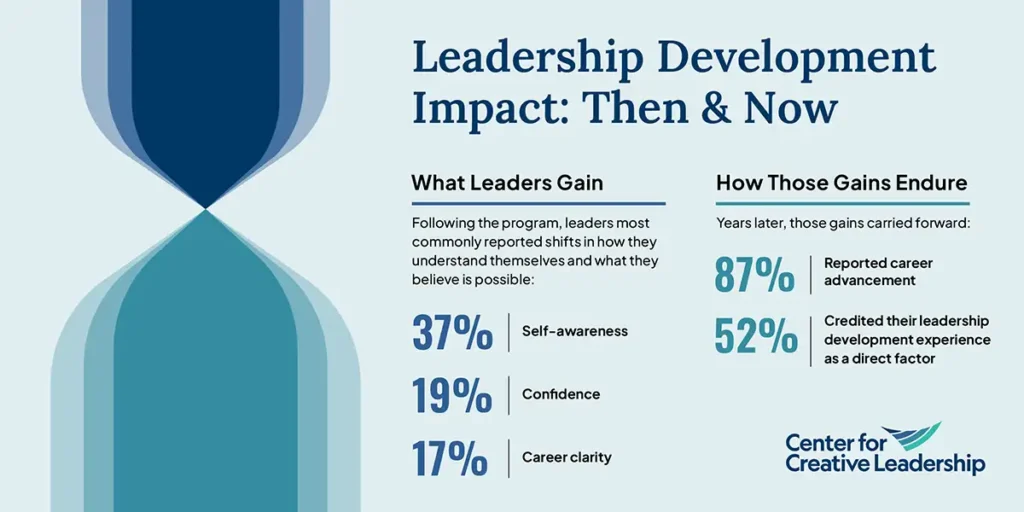
Within a study involving 261 nonprofit leaders, the most frequently reported benefits of leadership development programs were enhanced self-awareness (37%), increased confidence (19%), and greater career clarity (17%). One participant, who had struggled with recognizing her own achievements, shared how the program empowered her to acknowledge her successes without succumbing to feelings of inadequacy. Another leader, initially burdened by what she described as "massive imposter syndrome," emerged with a clarified vision and a more robust understanding of how to effectively drive impact.

These profound internal shifts invariably translate into observable behavioral changes within organizations. A leader who previously hesitated to voice their opinions might begin to actively contribute in high-stakes meetings. A program director, emboldened by an expanded sense of possibility, may pursue larger grant opportunities or initiate new, ambitious partnerships. These individual transformations ripple outwards, influencing decision-making processes and shaping how organizations collectively respond to pressure and uncertainty.
Three Pillars of Effective Nonprofit Capacity-Building
The enduring impact of leadership development is not merely anecdotal; it is demonstrably durable over time. In a subsequent survey conducted several years after nonprofit leaders had completed their development programs, an impressive 87% reported career advancement, with more than half explicitly attributing their professional growth to their leadership development experiences.
This sustained success, our research indicates, is rooted in three consistent contributors to lasting impact:
- Integrated Learning Experiences: Effective capacity-building goes beyond isolated workshops. It involves structured programs that integrate theoretical knowledge with practical application, allowing leaders to immediately test and refine new skills in their real-world roles. This experiential learning fosters deeper understanding and accelerates skill adoption.
- Ongoing Support and Coaching: The journey of leadership development is not a one-time event. Sustained impact is fostered through continuous support mechanisms, such as peer learning circles, mentorship, and one-on-one coaching. These elements provide a crucial safety net for navigating challenges, reinforcing learning, and fostering accountability.
- Organizational Alignment and Buy-In: For leadership development to translate into organizational-level change, it must be supported by a receptive organizational culture. This requires buy-in from all levels, from board members to frontline staff, ensuring that the principles and practices learned are integrated into the organizational fabric and are not perceived as solely an individual endeavor.
When all three of these pillars are firmly in place, the positive effects of leadership development spread throughout the organization, amplifying impact. Conversely, when these elements are absent, progress often remains confined to the individual leader, failing to translate into broader organizational or community-level gains.
The Imperative of Investing in Capacity-Building Amidst Volatility
The current climate, characterized by economic uncertainties and shifting philanthropic priorities, might seem like an inopportune moment to consider investments in capacity-building for nonprofits and social sector organizations. However, precisely because of these challenges, the argument for such investment becomes even more compelling.
In times of heightened uncertainty, organizations become even more reliant on the strength and adaptability of their people. The capacity to lead effectively does not spontaneously emerge, nor can it be sustained without dedicated nurturing and reinforcement. Leadership development programs are designed to deliberately cultivate this capacity. Decades of experience and extensive research within the social sector consistently demonstrate that the return on this investment is tangible, enduring, and far-reaching.
Social sector organizations that prioritize investing in their people during periods of change are not doing so because they possess an abundance of discretionary funds. They invest because they possess a profound understanding that their long-term mission impact is intrinsically linked to the capability and resilience of their leaders, who must be equipped and supported to navigate an ever-shifting landscape. This strategic foresight is what distinguishes organizations that merely survive from those that truly thrive and achieve lasting positive change.
A Call to Action for Sustained Impact
The challenges facing the social sector are multifaceted and persistent. Funding fluctuations, evolving policy directives, and unexpected partner withdrawals are not temporary disruptions but rather the defining characteristics of the environment in which these vital organizations operate. In this context, the instinct to protect direct service is understandable, but it must be balanced with a strategic commitment to building the internal capacity that ensures long-term effectiveness.
Investing in leadership development is not a tangential concern; it is a core strategy for mission success. By strengthening the skills, confidence, and vision of leaders, organizations empower themselves to not only weather storms but to emerge from them more resilient, innovative, and impactful. The evidence is clear: organizations that prioritize the growth and support of their leaders are better positioned to achieve their ambitious goals, drive meaningful change, and ultimately, fulfill their critical missions for years to come.
For foundations, policymakers, and the leaders of social sector organizations themselves, recognizing the indispensable role of leadership development is paramount. It is an investment in the human capital that underpins all social progress. As the landscape continues to evolve, the capacity of our social sector to adapt, innovate, and deliver will depend, in large part, on the strength and foresight of its leadership.
We have dedicated decades to partnering with nonprofits, foundations, and social sector organizations to cultivate enduring leadership. Explore our comprehensive capacity-building solutions designed specifically for nonprofits and social sector organizations, and discover how a strategic partnership can translate into tangible, long-lasting impact.