Stuart Udell, CEO of Prometric, recently shared his leadership philosophy on the Corporate Competitor Podcast, drawing parallels between childhood lessons in baseball and the critical importance of avoiding self-inflicted wounds in the business world. Udell articulated a clear stance against internal politics and communication breakdowns, labeling them as the corporate equivalent of a "dropped ball" – preventable errors that undermine an organization’s progress. His insights, rooted in a foundational understanding of what truly constitutes a "mental error" versus a physical one, offer a compelling framework for leaders seeking to optimize performance and foster a more effective and resilient corporate culture.
The Infielder’s Lesson: Differentiating Errors
The conversation on the Corporate Competitor Podcast began with a vivid anecdote from Udell’s youth. As a young infielder in little league, he experienced the sting of dropping a well-fielded ball, allowing a runner to reach base safely. This physical error, a common occurrence in sports, was met with understanding from his father, who also served as his coach. However, Udell recalled a crucial distinction his father emphasized: while physical errors were forgivable, "mental errors" were a far graver concern. This early lesson underscored the idea that some mistakes are a consequence of external forces or inherent challenges, while others stem from internal lapses in judgment, focus, or execution.
Decades later, this fundamental principle continues to inform Udell’s leadership approach as the chief executive of Prometric, a global leader in assessment and credentialing. He identified two primary areas within an organization that he tolerates the least: internal politics and communication problems. "Both are self-imposed errors, right?" Udell stated during the podcast. "Business is hard enough without you creating your own problems." This sentiment highlights a core belief that while external market pressures, competitive landscapes, and unforeseen global events are inherent to the business environment, the internal friction generated by politics and poor communication is entirely within an organization’s control to mitigate.
The Cost of Internal Politics and Poor Communication
Internal politics, characterized by maneuvering for personal gain, power struggles, and the formation of factions, can create a toxic work environment. This often leads to a dilution of focus on strategic objectives, wasted resources on unproductive conflicts, and a decline in employee morale. When individuals prioritize navigating internal hierarchies or engaging in strategic alliances over collaborative problem-solving and the achievement of common goals, the entire organization suffers.
Similarly, communication breakdowns can manifest in numerous ways, from a lack of clarity in directives and feedback to the withholding of vital information. This can result in misunderstandings, duplicated efforts, missed deadlines, and a pervasive sense of uncertainty among employees. In an era where agility and rapid adaptation are paramount, an organization hampered by poor communication is inherently less capable of responding effectively to change.
Data from various business studies consistently underscore the detrimental impact of these issues. For instance, a 2023 report by Gartner found that poor communication was a significant factor in employee disengagement, contributing to a 15% decrease in productivity. Furthermore, research by the Harvard Business Review has indicated that companies with strong internal communication are 4.5 times more likely to retain top talent. The financial implications are also substantial, with studies suggesting that the average large corporation can lose $62.4 million per year due to inadequate communication to and between employees. These figures paint a stark picture of the tangible costs associated with what Udell terms "self-imposed errors."
Fostering a Culture of Transparency and Directness
Udell’s solution to these internal pitfalls lies in cultivating a culture of transparency and directness. He advocates for leaders to be forthright with their employees, even when delivering difficult news. This approach is predicated on a belief in treating team members as capable adults, fostering trust and mutual respect. "I’ve found that it’s always best to be forthright and direct," Udell explained. "Treat your team members like adults because that’s how I would want to be treated."
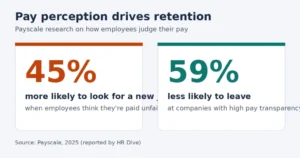
This philosophy aligns with established principles of effective leadership. Transparency builds credibility, allowing employees to understand the rationale behind decisions and feel more invested in the company’s trajectory. When employees are kept in the dark or subjected to ambiguous messaging, it breeds suspicion and disengagement. Direct communication, even when challenging, provides clarity and allows for constructive dialogue and problem-solving. It empowers employees by giving them the information they need to perform their roles effectively and contribute meaningfully to the organization’s success.
The implications of such a transparent culture extend beyond mere operational efficiency. It can foster a sense of psychological safety, where employees feel comfortable voicing concerns, offering innovative ideas, and admitting mistakes without fear of reprisal. This, in turn, can accelerate problem-solving and drive innovation. By treating employees as partners in the business, leaders can unlock a greater degree of commitment and discretionary effort.
Beyond Talent: The Pillars of a Championship Team
Udell’s discussion also delved into other critical aspects of building a successful organization, moving beyond a simplistic focus on individual talent. He posited that while talent is a factor, it is not the sole determinant of success. The true differentiator lies in how that talent is harnessed and aligned towards a singular, collective goal.
Talent as a Component, Not the Entire Equation
"There’s a difference between a collection of talent and a championship team," Udell emphasized. This distinction highlights the crucial role of team cohesion, shared vision, and effective collaboration. A group of highly skilled individuals, if not working in concert, can resemble a collection of stars rather than a unified force. The success of a championship team is not merely the sum of its individual parts but the emergent property of their synergy, shared purpose, and mutual support.
This perspective is supported by extensive research in organizational behavior. Studies on team dynamics consistently show that factors like clear roles, effective communication channels, mutual trust, and a shared understanding of objectives are more predictive of team success than the raw talent of individual members. For instance, Google’s Project Aristotle, a multi-year study on team effectiveness, identified psychological safety as the most critical factor, followed by dependability, structure and clarity, meaning, and impact. These factors are all cultivated through intentional leadership and a focus on team dynamics rather than solely individual prowess.
The Choice of Positivity in a Complex World
In an era marked by rapid technological disruption, geopolitical uncertainties, and constant change, Udell stressed the importance of choosing a positive mindset. He described this not as naive optimism but as a deliberate leadership choice. "There’s glass half-full, there’s glass half-empty, and then there’s you—your glass overflowing," he remarked, illustrating the spectrum of perspectives leaders can adopt.
The challenges of the modern business landscape are undeniable. Artificial intelligence is transforming industries, global supply chains are subject to volatility, and economic fluctuations are a constant concern. In such an environment, a leader’s mindset can significantly influence their team’s resilience and their ability to navigate adversity. A positive and proactive outlook can foster creativity, encourage problem-solving, and motivate teams to overcome obstacles. Conversely, a negative or defeatist attitude can become a self-fulfilling prophecy, draining morale and hindering progress.
The impact of leadership mindset on organizational culture is well-documented. Research in positive psychology suggests that leaders who exhibit optimism and resilience are more likely to foster similar traits in their employees, leading to higher levels of engagement and performance. This is not about ignoring challenges but about framing them as opportunities for growth and learning.
The Enduring Power of Hard Work and Culture
Finally, Udell underscored the fundamental truth that an organization’s success is inextricably linked to hard work. He dispelled any notion of a "magic trick" or a singular slogan that could guarantee victory. Instead, he defined culture as "actually the work that happens along the way." This practical definition emphasizes that a strong organizational culture is not an abstract concept but the tangible outcome of consistent effort, ethical behavior, and a commitment to excellence from all members.
The development of a robust company culture is a long-term endeavor that requires sustained attention and reinforcement. It is built through the daily actions of leaders and employees, the integrity of processes, and the consistent application of values. When hard work is valued, recognized, and rewarded, it becomes embedded in the organizational DNA. This creates a virtuous cycle where dedication leads to results, which in turn reinforces the commitment to continued effort.
Implications for Business Leaders
Stuart Udell’s insights offer a valuable roadmap for business leaders seeking to build high-performing organizations. The core message—that internal politics and communication failures are self-imposed errors—serves as a critical reminder that while external challenges are unavoidable, internal weaknesses can and must be addressed.
By prioritizing transparency, fostering direct communication, and cultivating a culture where talent is aligned towards a common purpose, leaders can significantly reduce the likelihood of "dropping the ball." Furthermore, by consciously choosing a positive and proactive mindset, and by recognizing that sustainable success is built on the foundation of consistent hard work and a well-defined culture, organizations can navigate the complexities of the modern business environment with greater resilience and effectiveness. The lessons learned on a childhood baseball field, when applied with strategic intent in the corporate arena, can indeed lead to fewer self-inflicted wounds and a more assured path to sustained achievement.