
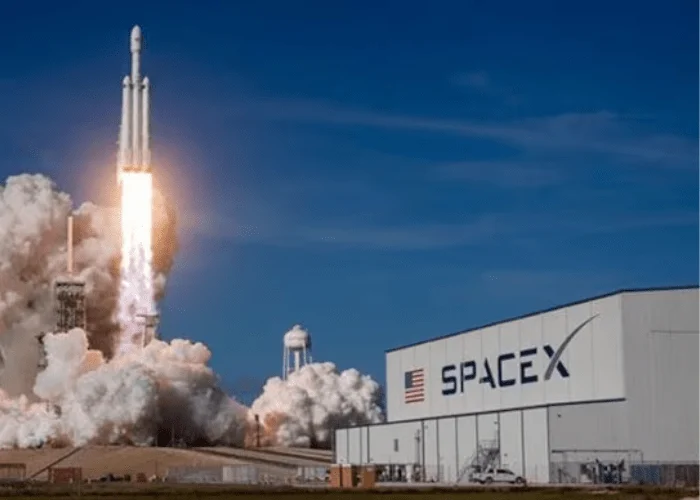
SpaceX, the ambitious aerospace manufacturer and space transportation services company founded by Elon Musk, has reportedly brought forward a critical stock-vesting timeline for its employees. This strategic adjustment is widely interpreted as a strong indicator of the company’s accelerating momentum toward a highly-anticipated public listing. Employees have been informed that the vesting of their shares, originally slated for May, will now occur in April, with some reports suggesting it could take place as early as the upcoming week. This move is not merely an administrative shift; it directly addresses employee liquidity concerns by allowing them to access and sell a larger portion of their stock options sooner, a pivotal factor as the company draws closer to what could be one of the largest initial public offerings (IPOs) in history. The timing of stock vesting, which dictates when granted shares become eligible for sale, is a critical component of employee compensation and a significant milestone in any company’s journey toward public ownership.
The Vesting Acceleration: A Strategic Pre-IPO Maneuver
The decision to advance the vesting schedule from May to April represents a deliberate and strategic action by SpaceX management. For employees, particularly those who have been with the company for several years, their vested stock options represent a substantial portion of their net worth. Prior to an IPO, these options are largely illiquid, meaning they cannot be easily converted into cash. By accelerating the vesting, SpaceX provides its workforce with an earlier opportunity to gain liquidity, potentially alleviating financial pressures and rewarding long-term commitment ahead of the anticipated public debut. This proactive measure also serves as a potent retention tool, signaling confidence in the company’s future and offering tangible benefits to its talent base at a crucial juncture.
Market analysts and industry observers view this acceleration as a clear signal that SpaceX is rapidly advancing its IPO preparations. While the precise date for a public filing remains fluid, expectations point towards a filing in May, with pricing potentially occurring in mid-June. Such timelines, though subject to change based on market conditions and regulatory processes, underscore the urgency reflected in the expedited vesting schedule. This internal corporate action provides a rare glimpse into the operational mechanics preceding a major public offering, often characterized by a flurry of financial, legal, and administrative adjustments designed to optimize conditions for a successful market entry.
SpaceX’s Ambitious Trajectory: Valuation and Fundraising Goals
The impending public offering is expected to be monumental in scale, with SpaceX reportedly targeting an astonishing valuation exceeding $2 trillion. Should this valuation be achieved, it would place SpaceX among the world’s most valuable companies, alongside technology giants like Apple, Microsoft, and Nvidia, and energy behemoths such as Saudi Aramco. Furthermore, the company aims to raise an unprecedented sum of up to $75 billion through the IPO. If successful, this would eclipse all previous records for an initial public offering, far surpassing the $25 billion raised by Alibaba in 2014 or the nearly $30 billion secured by Saudi Aramco in 2019. This audacious target reflects not only the immense potential investors see in SpaceX’s diverse ventures but also the strategic imperative to secure significant capital for its capital-intensive projects.
The justification for such a colossal valuation rests on a "sum-of-the-parts" analysis, considering SpaceX’s multiple, high-growth business units:
- Launch Services (Falcon 9, Falcon Heavy): SpaceX has revolutionized the aerospace industry with its reusable rocket technology, drastically reducing launch costs and increasing launch frequency. It holds significant contracts with NASA, the U.S. Space Force, and numerous commercial satellite operators. Its market dominance in this sector provides a strong, consistent revenue stream.
- Starlink: This burgeoning satellite internet constellation aims to provide global broadband access, particularly to underserved rural and remote areas. With millions of subscribers already, Starlink represents a rapidly expanding recurring revenue business with massive global reach potential. Its strategic importance extends beyond commercial users to include critical governmental and military applications.
- Starship: The development of Starship, SpaceX’s fully reusable super heavy-lift launch system, is arguably its most ambitious undertaking. Designed for interplanetary travel, lunar landings, and deploying next-generation satellite mega-constellations, Starship promises to fundamentally alter space exploration and logistics. While still in development, its long-term potential for cargo and human transport to the Moon and Mars underpins a significant portion of the company’s speculative future valuation.
- xAI: Recently integrated into SpaceX, xAI aims to develop artificial intelligence to understand the true nature of the universe. Its applications within SpaceX could range from optimizing rocket launches and Starlink network management to advanced robotics for space exploration and intelligent manufacturing processes. This unit adds a cutting-edge AI dimension to the company’s intrinsic value.
Each of these segments operates within burgeoning markets, contributing to a narrative of unparalleled growth and disruptive innovation that fuels investor interest and supports the ambitious valuation targets.
Background and Chronology of a Space Pioneer
SpaceX was founded by Elon Musk in 2002 with the audacious goal of reducing space transportation costs and enabling the colonization of Mars. Its journey has been marked by a series of groundbreaking achievements and persistent innovation:
- 2006-2008: Early failures of the Falcon 1 rocket, followed by its first successful orbital launch in September 2008, a critical turning point that secured a NASA Commercial Resupply Services contract.
- 2010: First flight of the Falcon 9 rocket and the Dragon spacecraft, initiating a new era of commercial spaceflight.
- 2012: Dragon becomes the first commercial spacecraft to dock with the International Space Station (ISS).
- 2015: Achieves the world’s first successful vertical landing of an orbital rocket first stage (Falcon 9), ushering in the era of reusable rockets.
- 2018: First launch of the Falcon Heavy, the world’s most powerful operational rocket.
- 2019: Begins deploying the Starlink constellation, launching thousands of satellites to build a global broadband internet service. Also, first untethered hop test of the Starship prototype (Starhopper).
- 2020: Launches NASA astronauts to the ISS on the Crew Dragon spacecraft, marking the return of human spaceflight capabilities to American soil.
- 2021: Conducts the Inspiration4 mission, the first all-civilian orbital spaceflight.
- 2022-Present: Continued rapid expansion of Starlink, extensive testing of Starship, and consistent record-breaking launch cadence for Falcon 9.
- Late 2023: Elon Musk announces the formation of xAI, which is later reported to be integrating closely with SpaceX and Tesla.
- Early 2024: Reports emerge of accelerated IPO preparations, including the recent stock vesting adjustment, alongside internal restructuring of the xAI team.
Throughout this timeline, SpaceX has conducted numerous private funding rounds, attracting investments from major players like Alphabet Inc. (Google), Fidelity, and various sovereign wealth funds and venture capital firms. These rounds progressively escalated the company’s private valuation, providing a robust foundation for its eventual public market debut. Early investors have consistently seen substantial gains, underscoring the company’s impressive growth trajectory.
Internal Dynamics: Reshaping xAI and Talent Management
The announcement of accelerated IPO preparations coincides with reports of internal changes within SpaceX, particularly concerning its artificial intelligence arm, xAI. Elon Musk is reportedly actively reshaping the team following its integration into the broader SpaceX ecosystem. This restructuring involves both the aggressive hiring of new talent and the management of recent exits within the AI division. Such internal shifts are not uncommon in rapidly evolving technology companies, especially when a new venture like xAI is brought under the umbrella of an existing enterprise.
The strategic rationale behind integrating xAI into SpaceX is profound. SpaceX generates an enormous volume of data from its launch operations, satellite network, and Starship development. Advanced AI capabilities are crucial for optimizing rocket performance, managing the complex Starlink constellation, automating aspects of Starship operations, and processing vast amounts of telemetry. Musk’s direct involvement in shaping xAI underscores its critical importance to the future operational efficiency and innovation across all of SpaceX’s ventures. The recruitment drive suggests an intent to rapidly scale xAI’s capabilities, while managing exits is often a part of optimizing team composition for specific strategic objectives.
Anticipated Investor Interest and Market Impact
Strong investor interest in SpaceX’s IPO is virtually guaranteed, driven by several compelling factors:
- Disruptive Technology: SpaceX is a recognized leader in reusable rocket technology, satellite internet, and advanced space transportation, fundamentally disrupting established industries.
- Market Dominance: Its command of the launch services market and rapid expansion of Starlink position it as a dominant player in key sectors of the burgeoning space economy.
- Elon Musk’s Track Record: Musk’s history of founding and leading highly successful, transformative companies like Tesla has cultivated a dedicated investor base eager to back his next big venture.
- Diversified Business Model: Unlike many pure-play aerospace or telecom companies, SpaceX offers a unique blend of launch services, global internet connectivity, and aspirational interplanetary transport, providing diversification within a single investment.
- Government Contracts: Significant contracts with NASA and the U.S. Space Force provide stable, long-term revenue streams and underscore the company’s strategic national importance.
A successful debut would not only be a landmark event for the financial markets but would also likely see SpaceX quickly qualify for major stock market indices such as the Nasdaq-100 and potentially the S&P 500. Inclusion in these indices is highly significant, as it would trigger mandatory purchases by passive index funds and exchange-traded funds (ETFs) that track these benchmarks. This influx of institutional capital would create sustained demand for SpaceX stock, potentially driving further price appreciation and providing a strong floor for its market capitalization.
Broader Implications for the Space Economy and Early Backers
The public listing of SpaceX carries profound implications extending far beyond the company itself:
- For the Space Industry: A successful, high-valuation IPO could inject unprecedented levels of capital and public interest into the broader space economy. It might encourage more private space companies to pursue public listings, foster greater innovation, and attract more talent and investment into the sector. Competitors such as Blue Origin, United Launch Alliance (ULA), and Rocket Lab would face an even more formidable, publicly-traded rival with immense access to capital.
- For Early Investors: Entities like Alphabet Inc., which backed SpaceX in its earlier, more speculative stages, stand to realize colossal returns. Alphabet, through its Google division, invested in SpaceX in 2015 at a valuation significantly lower than current projections. Their impending gains highlight the immense value creation tied to the company’s market debut and the foresight of early backers who recognized SpaceX’s long-term potential. Other venture capital firms and private equity groups that participated in earlier funding rounds would also see their stakes mature into extraordinary profits.
- For Employees: Beyond immediate liquidity, an IPO would transform the financial prospects of thousands of SpaceX employees. Their vested and future stock options would become publicly tradable assets, contributing to significant wealth creation and potentially fostering a new generation of millionaires within the company ranks. This also strengthens the company’s ability to attract and retain top talent in a highly competitive market.
- For Public Market Investors: Investing in SpaceX would offer public investors a direct stake in the future of space exploration, global connectivity, and cutting-edge AI. While offering immense growth potential, it also comes with the inherent risks associated with highly ambitious, capital-intensive technology ventures.
In conclusion, the acceleration of employee stock vesting at SpaceX is more than a mere administrative change; it is a powerful signal of a company rapidly preparing for a historic public offering. With audacious valuation targets, a diversified portfolio of disruptive technologies, and the unwavering vision of Elon Musk, SpaceX stands on the precipice of a market debut that promises to redefine the landscape of both the aerospace industry and global financial markets. The coming months will undoubtedly witness intense scrutiny as the company navigates the final stages of its journey to becoming a publicly traded entity, an event eagerly anticipated by employees, early investors, and the global investment community alike.








