
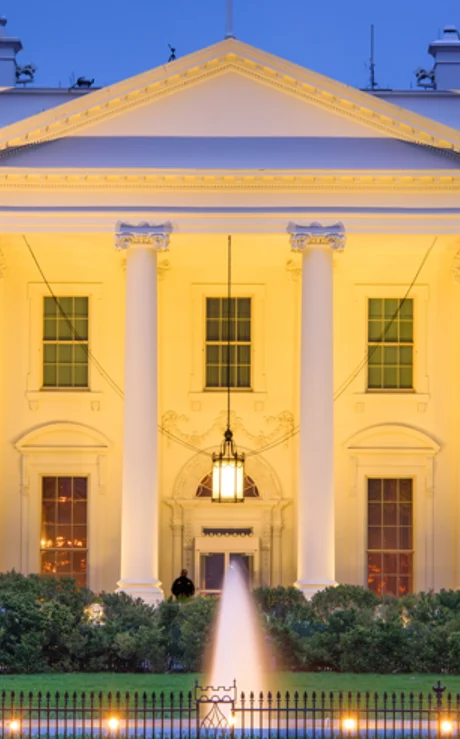
On April 23, 2025, the White House issued a transformative Executive Order entitled Restoring Equality of Opportunity and Meritocracy, signaling a fundamental shift in the federal government’s approach to civil rights enforcement. The Order establishes a sweeping new federal policy mandate: the elimination of disparate-impact liability across all federal contexts to the maximum extent permitted by law. By directing federal agencies, including the Equal Employment Opportunity Commission (EEOC) and the Department of Justice (DOJ), to deprioritize enforcement and litigation rooted in this legal theory, the administration seeks to realign the American workforce and educational systems around a strict interpretation of merit-based selection.
The Executive Order characterizes the theory of disparate impact—which holds that neutral practices can be discriminatory if they disproportionately affect protected groups—as being at odds with constitutional principles of equal treatment. According to an accompanying White House fact sheet, the administration views the theory as a mechanism that mandates race-oriented outcomes rather than proscribing actual discriminatory intent. This move has immediate and profound implications for employers, federal contractors, and developers of artificial intelligence (AI) tools, creating a complex new legal landscape where federal priorities may diverge sharply from state laws and private litigation trends.
A Historical Perspective on Disparate Impact Theory
To understand the magnitude of the April 23 Order, it is necessary to examine the half-century of legal precedent it seeks to roll back. The concept of disparate impact was first articulated by the U.S. Supreme Court in the landmark 1971 case Griggs v. Duke Power Co. In that case, the Court ruled that Title VII of the Civil Rights Act of 1964 proscribes not only overt discrimination but also practices that are fair in form but discriminatory in operation. The Court famously noted that "the touchstone is business necessity," meaning that if an employment practice (such as a high school diploma requirement or a standardized test) excludes a protected group at a higher rate, the employer must prove the practice is significantly related to job performance.
Following Griggs, the theory was applied to various sectors, including housing under the Fair Housing Act and credit under the Equal Credit Opportunity Act. However, the theory faced challenges in the late 1980s, most notably in Wards Cove Packing Co. v. Atonio (1989), where the Supreme Court made it more difficult for plaintiffs to succeed in such claims. In response, Congress passed the Civil Rights Act of 1991, which specifically codified disparate-impact liability into Section 703(k) of Title VII. This statutory inclusion has long provided the legal basis for the EEOC and private plaintiffs to challenge hiring and promotion practices that result in statistical imbalances, even in the absence of evidence of discriminatory intent.
The 2025 Executive Order represents a direct challenge to this long-standing consensus. By asserting that the theory "imperils the effectiveness of civil rights laws," the administration is attempting to return to a standard of "disparate treatment," which requires proof of intentional bias or animus to establish a violation of the law.
Chronology of Federal Civil Rights Policy Shifts
The path to the April 23 Executive Order has been marked by a series of administrative and judicial developments over the last several years:
- May 2023: The EEOC issues technical assistance guidance on the use of AI in employment, warning that algorithmic tools could lead to disparate impact and that employers would be held liable for such outcomes.
- Late 2023 – 2024: Various conservative legal foundations and advocacy groups file a series of lawsuits challenging diversity, equity, and inclusion (DEI) programs in the private sector, often citing the Supreme Court’s decision in SFFA v. Harvard, which struck down affirmative action in college admissions.
- January – March 2025: Following the inauguration, the new administration begins a systematic review of all "equity-focused" federal regulations.
- April 23, 2025: President Trump signs the Executive Order "Restoring Equality of Opportunity and Meritocracy," effectively halting federal support for the disparate impact theory.
- May 2025 (Projected): Federal agencies are required to submit detailed plans for the repeal or amendment of existing regulations and the modification of current consent decrees within 30 days of the Order’s issuance.
Key Provisions and Agency Mandates
The Executive Order is structured to ensure rapid implementation across the federal bureaucracy. Its primary sections outline a strategy of administrative withdrawal from disparate impact enforcement:
Section 2: The Policy Mandate. This section defines the "Policy of the United States" as the elimination of disparate-impact liability in all contexts to the maximum degree possible. This serves as the guiding principle for all subsequent agency actions.
Section 4: Enforcement Deprioritization. The Order directs the heads of all executive departments and agencies to "deprioritize enforcement of all statutes and regulations to the extent they include disparate-impact liability." This includes a specific focus on Title VII employment provisions and Title VI regulations regarding federal financial assistance.
Section 6: Assessment of Ongoing Litigation. This is perhaps the most immediate "teeth" of the Order. It requires the Attorney General and the EEOC Chair to assess all pending investigations, civil suits, and positions taken in ongoing matters that rely on a theory of disparate impact. Agencies are directed to take "appropriate action," which legal analysts suggest could include the dismissal of active lawsuits, the withdrawal of amicus briefs in private litigation, and the termination of pending investigations into employer hiring practices.
Section 7: Preemption and Merit-Based Guidance. The Order instructs the Attorney General to evaluate whether federal authorities can preempt state laws that continue to impose disparate-impact liability. Furthermore, it mandates the creation of new guidance for employers on how to promote "equal access to opportunity" without relying on educational credentials or race-conscious metrics.
The Future of AI and Algorithmic Selection Procedures
One of the most significant sectors impacted by this Order is the rapidly growing field of HR technology and Artificial Intelligence. In recent years, the EEOC had made "systemic discrimination" caused by AI a top priority. Many employers have adopted algorithmic tools to screen resumes, conduct video interviews, and assess candidate personality traits. Under previous guidance, these tools were subject to rigorous statistical "four-fifths rule" testing to ensure they did not disproportionately screen out members of protected classes.
The new Order signals that the federal government will no longer allocate resources to investigate or litigate claims that AI tools have resulted in statistical disparities. For AI developers, this may reduce the immediate pressure of federal audits. However, the Order does not eliminate the underlying technology’s tendency to mirror historical biases found in training data. While federal enforcement may wane, the risk of "black box" algorithms producing skewed results remains a technical and ethical challenge for the industry.
Conflicts with Statutory Law and Private Litigation
Despite the sweeping nature of the Executive Order, legal experts point out a significant hurdle: the Executive Branch cannot unilaterally repeal an Act of Congress. Because disparate impact was codified in the Civil Rights Act of 1991, the theory remains part of the statutory law of the land.
This creates a "split" in the legal environment. While the EEOC and DOJ may stop bringing disparate impact cases, the "private right of action" remains intact. Individual employees and class-action attorneys can still file lawsuits in federal court alleging disparate impact under Section 703(k). The absence of the EEOC in these matters may make such cases more expensive and difficult for private plaintiffs to prosecute—given that the EEOC often provided the heavy lifting in data collection and expert analysis—but the legal pathway remains open until or unless Congress acts to amend the statute.
State and Local Resistance vs. Federal Preemption
As the federal government retreats from disparate impact enforcement, several states and municipalities appear poised to fill the void. States like California, Illinois, Colorado, and New York have robust fair employment and housing laws that independently recognize disparate impact. For example:
- New York City: Local Law 144 already requires "bias audits" for automated employment decision tools.
- Colorado: The recently enacted AI Act (SB24-205) imposes requirements on developers and deployers of high-risk AI systems to mitigate algorithmic discrimination.
- New Jersey: The Division on Human Rights has proposed rules specifically addressing disparate impact in housing and employment.
The Executive Order’s instruction to the Attorney General to explore "preemption" suggests a looming constitutional battle. The administration may argue that these state laws interfere with a unified federal policy on meritocracy or that they violate the Equal Protection Clause by forcing employers to engage in race-conscious decision-making to avoid statistical imbalances.
Implications for Corporate Compliance and Strategy
For employers, the April 23 Order provides a reprieve from federal "systemic" investigations but introduces new layers of uncertainty. Businesses operating across multiple states must navigate a patchwork of regulations where a hiring practice might be perfectly legal in the eyes of the federal government but subject to a class-action lawsuit in a state court.
The administration’s focus on "merit" and the removal of degree requirements (often referred to as "skills-based hiring") provides a roadmap for employers looking to align with the new federal policy. However, the withdrawal of federal guidance on AI and testing leaves a vacuum in best practices. Legal advisors suggest that while federal enforcement risk has decreased, the risk of private litigation and state-level enforcement remains a primary concern.
In conclusion, the Executive Order "Restoring Equality of Opportunity and Meritocracy" marks a definitive end to an era of civil rights enforcement defined by statistical outcomes. By pivoting to a merit-only framework and sidelining the disparate impact theory, the administration is betting that a focus on individual intent rather than group results will foster a more competitive and fair economy. Whether this shift can survive the inevitable challenges in the courts and the resistance of state legislatures remains the defining legal question of the year.








