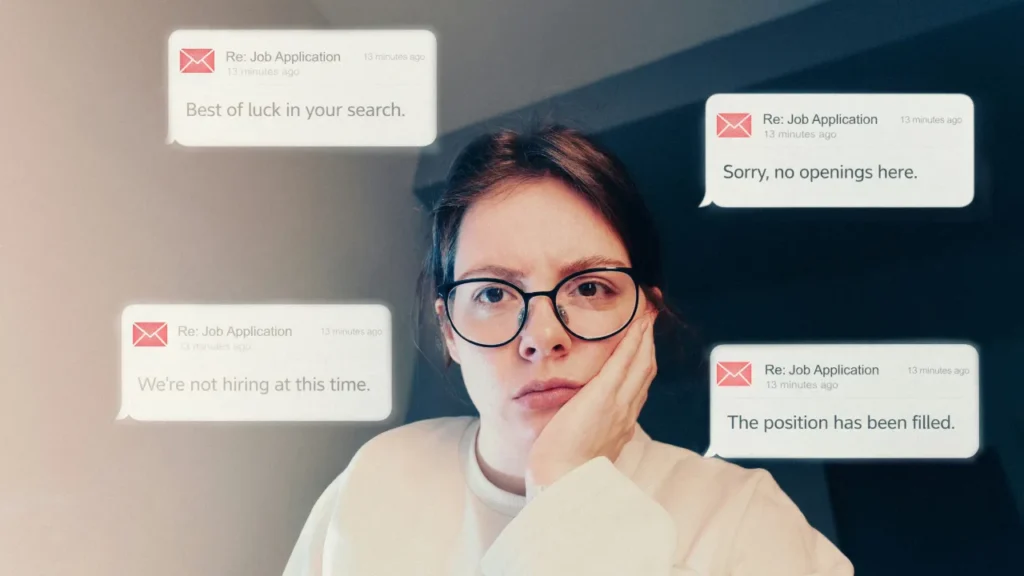
The current labor market presents a stark paradox: companies are shedding jobs, often citing the integration of artificial intelligence, while simultaneously struggling to fill critical positions due to a shortage of experienced professionals. This apparent contradiction signals a fundamental rewiring of the global workforce, driven by converging demographic shifts and the accelerating capabilities of AI. The implications extend far beyond individual career paths, impacting entire industries and necessitating a re-evaluation of how work is structured and valued.
On the surface, headlines proclaiming AI-driven layoffs might suggest a future where machines render human workers obsolete. Many professionals, particularly those in sectors experiencing technological disruption, report prolonged periods of unemployment, finding their applications lost in a digital void and struggling to secure roles that align with their established skill sets. This sentiment is amplified by the recent wave of high-profile workforce reductions across technology and other sectors, fueled by economic recalibrations and a push for greater efficiency. For instance, in late 2023 and early 2024, major tech companies like Google, Microsoft, and Amazon announced significant layoffs, often attributing them to restructuring and the optimization of operations, which frequently involves AI integration.
However, this narrative of widespread human displacement is countered by a growing crisis in other vital sectors. In healthcare, education, and the skilled trades, employers are voicing increasing difficulty in finding qualified candidates to fill essential roles. This is not merely a cyclical mismatch but a structural shift, indicating a deeper transformation in labor supply and demand. This phenomenon is particularly acute in developed economies where aging populations and declining birth rates are creating a demographic squeeze.
Demographic Headwinds: A Looming Labor Shortage
The demographic underpinnings of this labor shortage are significant and well-documented. Developed nations are experiencing a sustained decline in birth rates, leading to a shrinking pool of younger workers entering the job market. Simultaneously, a large cohort of experienced workers, largely from the post-World War II baby boom generation, is reaching retirement age. This dual demographic pressure means that experience is leaving the workforce at a pace that outstrips the rate at which new, experienced talent is being cultivated.
Lightcast’s "Fault Lines" analysis, a comprehensive study of labor market trends, projects that the United States, for example, is on a trajectory toward a substantial labor shortage by the early 2030s. This forecast is driven by accelerating retirements and a comparatively smaller wave of younger individuals entering the workforce to fill those vacated positions. This trend is not unique to the U.S.; many European nations and Japan are facing even more pronounced demographic challenges, with some forecasting critical labor shortages in the coming decade. For instance, Germany’s Federal Employment Agency has repeatedly highlighted the growing deficit of skilled workers across various sectors, projecting millions of unfilled positions in the coming years due to demographic factors.
The Legacy of Abundant Labor: Inefficiencies Exposed
For decades, the global economy largely operated under the assumption of readily available labor. Businesses were structured and workflows designed with the implicit understanding that gaps could always be filled by a steady supply of workers. This era of labor abundance often masked underlying inefficiencies within organizations. When labor was plentiful and relatively inexpensive, companies could afford to carry administrative overhead, redundant processes, and less optimized human capital management.
As workforce growth stagnates and retirements accelerate, the cost of maintaining these inefficiencies becomes increasingly burdensome. This puts additional pressure on the existing supply of experienced employees, who are often expected to shoulder greater responsibilities and manage more complex tasks without adequate support. The traditional operational models, built for an era of surplus, are proving ill-equipped for a future characterized by scarcity.

AI’s Dual Role: Displacement and Augmentation
Artificial intelligence is playing a complex, dual role in this evolving labor landscape. On one hand, AI is demonstrably automating tasks previously performed by humans, particularly those that are routine, data-intensive, or require basic cognitive processing. This is leading to job displacement in certain sectors, often impacting entry-level positions. These roles historically served as crucial training grounds for developing the experience and judgment needed for more senior positions.
Emerging economic research, such as a study from Anglia Ruskin University, suggests that AI’s increasing capability in generating and coordinating knowledge will push the demand for scarce human talent upward. The focus will shift towards uniquely human capabilities that AI cannot easily replicate, including critical judgment, contextual understanding, complex problem-solving, and nuanced interpersonal skills. AI is effectively lowering the cost of knowledge work that is easily codifiable, thereby increasing the relative value of human expertise that is difficult to automate.
This confluence of demographic strain and expanding AI capability signals a critical inflection point. The next phase of the future of work will likely reward organizations and systems that are built for human leverage, rather than simply human labor. This means optimizing how human talent is deployed, focusing on roles where human judgment and creativity are paramount.
Healthcare: Augmenting Expertise, Not Replacing It
The healthcare sector offers a compelling case study of how AI can augment, rather than replace, human workers. A typical doctor’s visit involves a significant amount of time spent on administrative tasks: patient intake, documentation, coordination of follow-up care, and data entry. These are labor-intensive activities that often detract from the core clinical encounter.

Technology, particularly AI, is poised to alleviate much of this administrative burden. Ambient AI systems can automatically draft clinical notes from patient conversations, freeing up clinicians to focus on the patient. Remote monitoring technologies can flag potential health risks earlier, allowing for proactive intervention. Intelligent routing systems can direct patients to the most appropriate level of care, optimizing resource allocation. Predictive analytics can identify individuals at risk of exacerbating health conditions before symptoms become severe, while post-visit tools can support patient recovery and adherence to treatment plans without consuming additional clinician time.
The ultimate goal is not to automate the practice of medicine itself, which relies heavily on human empathy, intuition, and complex decision-making. Instead, the objective is to ensure that scarce clinical expertise is applied precisely where it is most needed – in moments requiring interpretation, trust-building, and intricate problem-solving. Healthcare systems that proactively redesign their care delivery models to maximize the time clinicians spend on these high-value human interactions will be better positioned to navigate the workforce challenges ahead. The demand for compassionate care providers, skilled diagnosticians, and empathetic caregivers will only grow, even as AI handles more of the peripheral tasks.
Education: Redefining the Educator’s Role
Education faces a parallel inflection point, with AI and demographic shifts reshaping the landscape. Teaching and human development, whether in K-12 schools, universities, or professional training environments, remain inherently interpersonal endeavors. However, many current educational delivery models reflect outdated needs and constraints.
Personalized learning platforms and AI-powered tutoring systems are increasingly capable of managing aspects of education that once consumed significant teacher time, such as content delivery, basic skill practice, and formative feedback. This automation raises questions about the traditional value proposition of higher education, especially given its rising costs, when comparable or even superior learning experiences can be accessed through more accessible and personalized channels.

As knowledge transmission becomes more automated, the core function of educators must evolve. Instead of being primary conduits for standardized content delivery, teachers should be empowered to focus on skills and experiences that AI cannot replicate. This includes fostering critical thinking, nurturing creativity, facilitating collaborative learning, and providing mentorship and emotional support. Educational institutions that redesign their human roles around these uniquely human contributions will be better equipped to meet the needs of future learners and address the diminishing supply of qualified educators. The emphasis will shift from information dissemination to holistic development and the cultivation of higher-order thinking.
Skilled Trades: AI as an Augmentation Tool
Perhaps one of the most underestimated transitions is occurring within the skilled trades workforce. Many organizations are currently experiencing significant challenges in finding highly skilled technicians. These roles are often perceived as automation-resistant due to their reliance on physical labor in unpredictable environments. However, technology is poised to redefine these roles as well.
Imagine a scenario where a technician repairing a complex appliance uses generative AI to diagnose the problem and receive step-by-step guidance through the repair process. As more equipment is equipped with embedded diagnostics, augmented reality will become an indispensable tool, guiding technicians through intricate repairs. Furthermore, advancements in physical AI and smarter products will enable more first-level maintenance and troubleshooting to be handled closer to the point of need, potentially even by less experienced individuals or consumers themselves. This could reduce the demand for routine service calls, freeing up highly skilled technicians for more complex and diagnostic challenges.
Over time, this technological integration will alter how the expertise of skilled tradespeople is applied. The primary constraint will shift from the sheer number of available hands to the depth of expertise required to oversee, interpret, and intervene when increasingly sophisticated automated systems encounter their limits. This necessitates a new generation of trades professionals who are adept at working alongside advanced technology, capable of higher-level problem-solving and system management. The future of skilled trades will involve a symbiotic relationship between human expertise and intelligent automation.

The Imperative for Redesign: Human Roles in a Technology-Rich Future
The forces of demographic change and AI advancement are converging to create an unprecedented challenge and opportunity for the global workforce. Demographics are constricting the supply of available workers, while AI is transforming the demand for specific tasks and skills. Together, these factors are compelling a long-overdue re-evaluation of how work itself is structured and organized.
In the coming years, the competitive advantage for organizations will increasingly stem from their ability to identify where unique human judgment and creativity generate disproportionate value. This will involve strategically stripping away the surrounding tasks that dilute this core value and building new pathways to cultivate human depth and expertise within technology-rich environments. The focus must shift from managing labor to cultivating human capital.
Organizations that embrace this paradigm shift will not only be better equipped to weather the impending talent squeeze but will also play a pivotal role in defining the future of work. This requires a proactive approach to workforce planning, a commitment to continuous learning and upskilling, and a willingness to reimagine traditional operational models. The future belongs to those who can effectively integrate human ingenuity with technological innovation, creating a more resilient, productive, and ultimately, more human-centric economy.