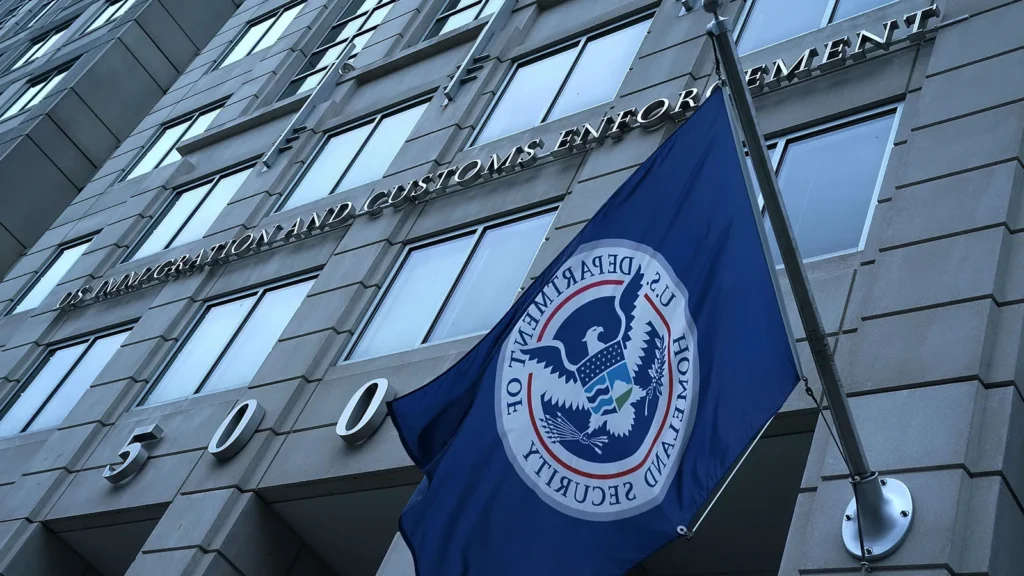
A federal court has permitted a significant portion of a race discrimination lawsuit filed by a White employee of U.S. Immigration and Customs Enforcement (ICE) to move forward, highlighting judicial scrutiny over an agency director’s decision-making in filling two key leadership roles. The plaintiff alleges she was unfairly bypassed for promotion in favor of an African American candidate, with the court’s analysis focusing on what it deemed unusual alterations to the hiring process and an alleged remark from the director that implied a racial bias. This development, published on April 20, 2026, underscores a growing trend of "reverse discrimination" claims, a legal area that has seen increased attention and reduced barriers for plaintiffs in recent years, influenced by a landmark 2025 U.S. Supreme Court decision.
Allegations of a Flawed Hiring Process at ICE
The lawsuit centers on two distinct but related positions: an acting unit chief role and a permanent unit chief position within ICE. According to court documents, the plaintiff, a seasoned employee, claims that the agency director’s actions systematically disadvantaged her and ultimately led to her being denied these promotions. The court’s initial review meticulously detailed the plaintiff’s assertions, painting a picture of a hiring process that deviated from established agency norms, raising questions about fairness and transparency.
For the acting unit chief position, the court noted that the role was reportedly filled without any prior public announcement of its availability. This lack of transparency, the plaintiff argued, effectively prevented her from even expressing interest or competing for the position, a stark departure from typical agency practices for such temporary leadership assignments. This omission, the court suggested, could be interpreted as a deliberate circumvention of standard procedures designed to ensure equitable opportunity.
The process for the permanent unit chief position drew even greater scrutiny. The plaintiff applied for this role, but she alleged that the director significantly altered the hiring methodology after the process had already commenced. One critical change involved the introduction of a second round of interviews, a move described by the court as "unusual" and a deviation from historical ICE hiring practices. This procedural shift reportedly caused confusion and uncertainty among members of the interview panel themselves, signaling an irregularity that potentially served a specific, undisclosed agenda.
During the initial round of interviews for the unit chief position, the plaintiff reportedly performed well, placing ahead of the co-worker who was eventually selected. However, despite her strong performance, the director subsequently excluded the plaintiff from participating in the second round of interviews. The stated reason for this exclusion was that the plaintiff "lacked important qualifications for the position." This justification, however, was challenged by the plaintiff, who pointed out that the selected co-worker similarly lacked experience in some of the duties explicitly listed in the vacancy announcement. This apparent inconsistency in applying qualification standards further fueled the plaintiff’s allegations of discriminatory intent.
Adding to the plaintiff’s case was an alleged remark made by the director. According to the lawsuit, an unnamed colleague informed the plaintiff that the director had expressed an intent to fill the role in a manner reminiscent of "White male managers at ICE" who "put their guys in whatever positions they want." While the context and exact phrasing of this remark would be subject to further legal scrutiny, the court considered it highly significant. Taken in conjunction with the alleged manipulation of the selection process, the court found that this remark "supports a reasonable and plausible inference that [the plaintiff] was denied the Unit Chief position because of her race." This inference allowed the case to proceed, signaling that the plaintiff had presented sufficient evidence to warrant a full examination of her claims.
The Evolving Landscape of "Reverse Discrimination" Lawsuits
The ICE case emerges amidst a noticeable increase in "reverse discrimination" lawsuits, where plaintiffs belonging to majority groups allege discrimination based on their race, gender, or other protected characteristics. This legal trend has garnered heightened public and judicial attention, particularly following a pivotal 2025 U.S. Supreme Court decision that significantly eased the evidentiary burdens previously faced by plaintiffs in such cases. Prior to this ruling, some federal courts had imposed higher standards for majority-group plaintiffs to prove discrimination, often requiring them to demonstrate "background circumstances" suggesting the defendant was an unusual employer who discriminated against the majority. The Supreme Court’s decision effectively leveled the playing field, allowing these claims to be evaluated under the same legal framework as traditional discrimination claims.
This shift has profound implications for employers across all sectors, including federal agencies. Title VII of the Civil Rights Act of 1964 prohibits discrimination based on race, color, religion, sex, and national origin, applying equally to all individuals regardless of their demographic background. The recent legal developments reinforce that anti-discrimination protections are universal.
Federal regulators, including the U.S. Equal Employment Opportunity Commission (EEOC), have also become more active in pursuing reverse discrimination cases. The EEOC, tasked with enforcing federal laws prohibiting employment discrimination, has indicated a focus on ensuring that corporate diversity, equity, and inclusion (DEI) programs do not inadvertently lead to discriminatory outcomes against non-minority groups. This focus reflects a broader societal debate about how to achieve diversity without resorting to quotas or preferential treatment that could be seen as discriminatory.

A Broader Context: Scrutiny of DEI Initiatives
The increased scrutiny of hiring practices and the rise of reverse discrimination claims are inextricably linked to the ongoing national conversation surrounding Diversity, Equity, and Inclusion (DEI) initiatives. While DEI programs are designed to foster inclusive workplaces and address historical disparities, their implementation has increasingly faced legal challenges. Critics argue that some DEI efforts, particularly those with explicit numerical goals or targets, can lead to reverse discrimination by prioritizing demographic characteristics over merit.
According to various legal analyses, the number of workplace discrimination complaints, including those alleging reverse discrimination, has remained consistently high. While specific, granular data on reverse discrimination cases is often subsumed under broader race or gender discrimination categories, legal experts note a palpable increase in such filings, particularly in the wake of the 2025 Supreme Court ruling. This judicial landscape necessitates that organizations meticulously review their hiring, promotion, and DEI strategies to ensure compliance with anti-discrimination laws.
The legal environment has created a complex challenge for organizations striving to build diverse workforces while adhering strictly to merit-based principles. Companies and government agencies must navigate the fine line between proactive efforts to promote diversity and practices that could be construed as discriminatory against any group. This often involves ensuring that all hiring and promotion decisions are well-documented, objectively justified, and consistently applied to all candidates, irrespective of their protected characteristics.
The Accenture Precedent: A Case of Gender Parity Goals
The ICE lawsuit is not an isolated incident. Another high-profile example cited in legal circles involved a male plaintiff who sued Accenture in 2025, alleging he was unlawfully passed over for a promotion in favor of a less experienced female subordinate. The plaintiff claimed this decision was a direct consequence of Accenture’s explicit goal to achieve gender parity within its workforce. This case highlighted how well-intentioned DEI objectives, when translated into specific hiring or promotion decisions, could potentially expose companies to legal challenges if not carefully implemented. While the parties in the Accenture suit ultimately agreed to a joint dismissal in October of the same year, according to court documents, the case served as a cautionary tale for corporations setting ambitious demographic targets. The dismissal could indicate a settlement or an agreement between the parties, but it does not negate the initial legal premise or the implications it raised for corporate DEI strategies.

Implications for Federal Agencies and Corporate HR
The court’s decision to allow the ICE employee’s lawsuit to proceed carries significant implications, particularly for federal agencies and Human Resources departments across the country.
- Heightened Scrutiny of Hiring Practices: The case sends a clear message that courts will rigorously examine the procedural integrity of hiring and promotion processes. Deviations from standard practices, lack of transparency, or inconsistent application of qualification criteria will be viewed with suspicion, especially when coupled with allegations of discriminatory intent.
- Documentation and Justification: Employers must ensure that all hiring decisions are thoroughly documented and objectively justified. Any changes to a hiring process must have clear, non-discriminatory rationales. This includes maintaining detailed records of candidate qualifications, interview evaluations, and the reasons for selection or non-selection.
- Training for Managers: Agency directors and hiring managers require comprehensive training on anti-discrimination laws and best practices for equitable hiring. This training should emphasize the importance of consistent application of policies and the avoidance of any remarks that could be construed as discriminatory.
- Review of DEI Initiatives: Organizations, both public and private, will likely undertake a renewed review of their DEI programs to ensure they are legally compliant and do not inadvertently create risks of reverse discrimination. This may involve shifting focus from numerical targets to broader systemic changes that foster diversity without engaging in preferential treatment.
- Legal Costs and Reputation: Lawsuits, regardless of their ultimate outcome, are costly in terms of legal fees, time, and potential damage to an organization’s reputation. Federal agencies, like private corporations, are motivated to avoid such protracted legal battles.
- Employee Morale and Trust: Allegations of unfairness and discrimination can significantly impact employee morale and trust within an organization. A transparent and equitable hiring process is crucial for maintaining a healthy workplace culture.
Chronology of Key Events (Inferred and Specified):
- Prior to 2025: Alleged events pertaining to the ICE director’s hiring decisions for the acting unit chief and unit chief positions take place. The plaintiff is bypassed for promotion in favor of an African American candidate.
- 2025: U.S. Supreme Court issues a decision removing court-imposed barriers for plaintiffs in "reverse discrimination" claims, effectively lowering the evidentiary standard.
- 2025: A male plaintiff files a "reverse discrimination" lawsuit against Accenture, alleging he was unlawfully passed over for promotion in favor of a less experienced female subordinate due to gender parity goals.
- October 2025: Parties in the Accenture lawsuit agree to a joint dismissal of the case.
- Late 2025/Early 2026 (Inferred): The White ICE employee files her discrimination lawsuit against the agency.
- April 20, 2026: A federal court allows a significant portion of the White ICE employee’s discrimination lawsuit to proceed, citing the unusual hiring practices and the alleged racially charged remark by the agency director.
- 2026: Federal regulators at the U.S. Equal Employment Opportunity Commission (EEOC) continue to pursue reverse discrimination cases, often in the context of cracking down on corporate diversity, equity, and inclusion programs.
The federal court’s decision in the ICE case serves as a powerful reminder of the complexities inherent in employment law and the constant need for vigilance in upholding principles of fairness and non-discrimination. As the legal landscape continues to evolve, employers must adapt their practices to ensure that their pursuit of organizational goals, including diversity, aligns fully with the letter and spirit of anti-discrimination statutes. The spotlight on "reverse discrimination" claims signals a new era of scrutiny, where all individuals, regardless of their background, are afforded equal protection under the law in the workplace.