
A well-designed performance management framework is the cornerstone of any thriving organization, serving as the engine that drives not only individual growth but also collective success. Far beyond a mere annual evaluation of past endeavors, a robust performance management system is a strategic blueprint for cultivating future achievement, fostering deep employee engagement, and solidifying long-term organizational prosperity. When this system is meticulously aligned with an organization’s overarching goals and unique culture, it possesses the transformative power to convert disparate efforts into a unified strategy that propels both individual and corporate achievements to new heights. This comprehensive guide aims to equip organizations, whether they are refining existing processes or building a new framework from the ground up, with the insights needed to cultivate a performance management approach that champions continuous improvement and delivers tangible, meaningful results.
Understanding the Essence of Performance Management Frameworks
At its core, a strong performance management framework functions as an organizational compass. It guides a company from a state of fragmented and often chaotic performance-related activities toward a cohesive, interconnected system designed to foster the success of every employee, team, and ultimately, the entire business. This strategic architecture serves to align individual efforts, connect them to the larger organizational mission, and motivate each member to contribute their utmost. Performance management frameworks are instrumental in ensuring that every individual understands their specific role and how their contributions directly impact the broader organizational objectives. Essentially, a well-defined performance management model lays the groundwork for how an organization will strategically:
- Set clear and measurable performance expectations.
- Provide ongoing feedback and coaching to support employee development.
- Recognize and reward achievements to foster motivation and retention.
- Identify areas for growth and implement targeted development plans.
- Align individual performance with strategic business goals.
The Crucial Purpose and Undeniable Importance of a Solid Framework
In recent years, numerous organizations have undertaken significant shifts in their performance management approaches. However, research from Quantum Workplace suggests that many of these efforts are falling short of their intended impact. Data indicates that while a substantial 75% of employees report their organization has made changes to its performance management processes within the last year, fewer than half of these individuals perceive these revised processes as effective, efficient, or genuinely motivating.
In today’s demanding business environment, both managers and employees are operating under increasing time pressures. They simply do not have the bandwidth for cumbersome tools or excessive paperwork. Consequently, an effective performance management program must prioritize simplification and standardization, streamlining each step of the process to ensure maximum ease of use.
Furthermore, a well-structured performance management framework guarantees that all components of the system work in concert to create a transparent, two-way dialogue. This fosters an environment where employees feel genuinely valued and their voices are actively heard. Crucially, such a program should be intentionally designed to enhance employee engagement, as engaged employees are demonstrably more productive and committed. Ultimately, a robust framework empowers employees to take ownership of their performance, leading to heightened engagement, increased motivation, and greater job satisfaction. The positive ripple effect of this includes enhanced productivity, reduced employee turnover, and the cultivation of a stronger, more resilient workplace culture.
Core Components of an Effective Framework
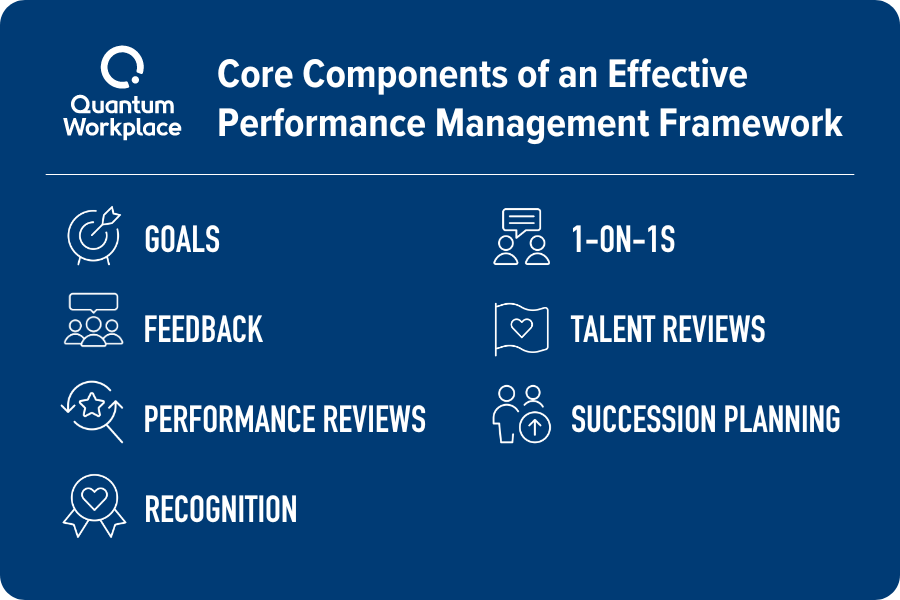
An effective performance management framework is built upon several critical components that interlock and function seamlessly throughout the performance management cycle. These essential elements ensure a holistic and integrated approach to managing and developing employee performance:

- Clear Goal Setting: Establishing specific, measurable, achievable, relevant, and time-bound (SMART) goals that are directly aligned with organizational objectives.
- Continuous Feedback and Coaching: Implementing regular, informal check-ins and constructive feedback sessions between managers and employees, moving beyond the traditional annual review.
- Performance Development: Identifying skill gaps and creating personalized development plans to foster employee growth and career advancement.
- Recognition and Rewards: Acknowledging and celebrating employee achievements, both big and small, to reinforce desired behaviors and boost morale.
- Performance Reviews: Conducting formal evaluations that synthesize ongoing feedback, goal achievement, and developmental progress, providing a comprehensive assessment.
- Talent Management Integration: Connecting performance data with broader talent management strategies, such as succession planning and career pathing.
Designing Your Performance Management Framework: A Tailored Approach
When it comes to performance management, a one-size-fits-all approach is rarely effective. The unique DNA of each organization—its culture, values, and operational nuances—demands a bespoke framework. If you’ve ever experienced the frustration of an HR technology vendor attempting to shoehorn your organization into a generic performance management model, you understand the critical need for a solution that is intrinsically tailored to your specific environment.
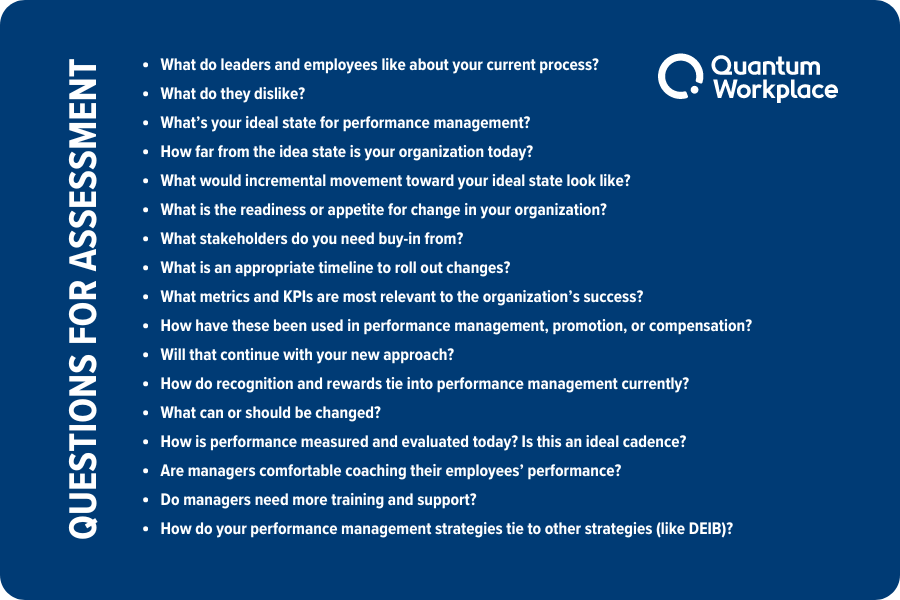
The creation of a high-impact performance management framework necessitates meticulous planning. It requires a deep understanding of what your organization truly needs and aspires to achieve. The process should commence with a thorough assessment of your current performance management practices. Identify any existing gaps, inefficiencies, or areas ripe for improvement.
Crucially, this design phase must be a collaborative endeavor. Engage directly with the individuals who are most impacted by the system: your employees and your managers. Solicit their feedback, understand their expectations, and ensure that the new framework resonates with their day-to-day realities. This inclusive approach fosters a sense of ownership and buy-in, paving the way for a smoother and more successful implementation.
Key Questions for Assessing Your Current System
To gain a clear understanding of how well your current performance management system is functioning and to identify opportunities for evolution, posing a series of targeted questions is essential. Honest introspection regarding these inquiries will illuminate the path forward:
- Alignment: To what extent are individual and team goals clearly linked to the organization’s strategic objectives?
- Clarity: Are performance expectations communicated effectively and understood by all employees?
- Feedback Frequency: How often do employees receive constructive feedback from their managers and peers? Is this feedback timely and actionable?
- Development Focus: Does the system actively support employee growth and skill development? Are there clear pathways for career progression?
- Recognition Effectiveness: Are employees recognized and rewarded for their contributions in a meaningful and motivating way?
- Managerial Effectiveness: Are managers equipped with the necessary skills and tools to effectively manage performance and coach their teams?
- Employee Engagement: Does the performance management process contribute to higher levels of employee engagement and job satisfaction?
- Fairness and Equity: Is the performance evaluation process perceived as fair, objective, and equitable by all employees?
- Technology Utilization: Are the current performance management tools user-friendly, efficient, and supportive of the desired processes?
- Cultural Fit: Does the performance management framework authentically reflect and reinforce the organization’s core values and culture?
Connecting Performance Management to Your Unique Culture
For any performance management framework to truly resonate and drive results, it must be deeply interwoven with the fabric of your company’s culture. It should serve as a living embodiment of your organization’s values, beliefs, and operational ethos. For instance, if your organizational culture places a high premium on teamwork and collaboration, your performance framework should actively incorporate mechanisms for peer feedback and emphasize collective goal achievement. Conversely, if your culture champions innovation and individual initiative, the system should be designed to encourage creativity, support calculated risk-taking, and provide avenues for recognizing pioneering efforts.
When you artfully blend the performance management framework with your organization’s distinct cultural identity, you create a powerful synergy that elevates employee performance. This integrated approach fosters a profound sense of belonging and inclusion among team members, cultivating a more cohesive and robust work environment.
Quantum Workplace’s Performance Pathways: A Flexible Approach
Quantum Workplace recognizes a fundamental truth: a monolithic approach to performance management rarely yields optimal results across diverse organizations. Each company possesses a unique tapestry of culture, values, and operational methodologies, underscoring the imperative for a customized strategy.
It is precisely this understanding that led to the development of Performance Pathways. These distinct, yet interconnected, performance management frameworks are meticulously designed to empower organizations to craft and implement their ideal performance management systems. Performance Pathways offer a modular and adaptable solution, catering to a spectrum of organizational needs and maturity levels. Here’s how they provide a strategic advantage:
Pathway #1: Performance Evaluation
This pathway is designed to standardize an organization’s approach to performance appraisal by focusing on structured performance reviews. It involves formal review cycles initiated by HR to ensure that employee performance is consistently aligned with overarching organizational goals.
Best suited for Organizations That:
- Require a formalized, systematic approach to performance assessment.
- Need to ensure consistent evaluation criteria across departments.
- Are focused on compliance and accountability through documented reviews.
- Prefer a clear, hierarchical structure for performance management.
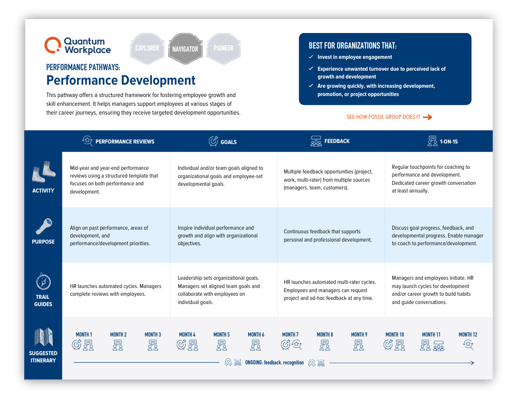
Pathway #2: Performance Development
This pathway offers a structured framework specifically aimed at fostering employee growth and enhancing skill sets. It assists managers in effectively supporting employees at various stages of their career journeys, ensuring they receive targeted development opportunities that are harmoniously aligned with thoughtful career pathing initiatives.
Best suited for Organizations That:
- Prioritize employee growth and long-term career development.
- Seek to proactively address skill gaps within their workforce.
- Are committed to building internal talent pipelines.
- Want to enhance employee retention through clear development opportunities.
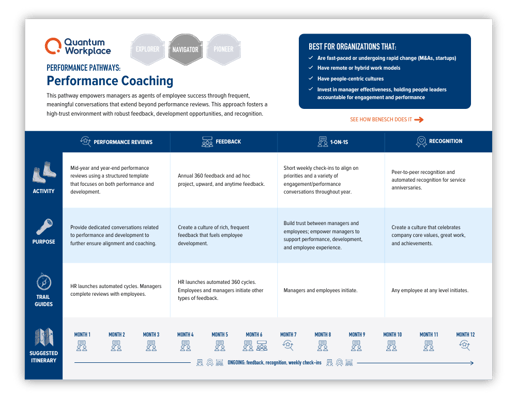
Pathway #3: Performance Coaching
This pathway empowers managers to act as pivotal agents in driving employee success. It emphasizes frequent, meaningful conversations that extend well beyond the confines of traditional performance reviews. This approach cultivates a high-trust environment characterized by robust, ongoing feedback, ample development opportunities, and consistent recognition.
Best suited for Organizations That:
- Value strong manager-employee relationships and open communication.
- Aim to foster a culture of continuous learning and improvement.
- Believe in proactive performance guidance rather than solely retrospective evaluation.
- Seek to enhance employee motivation and engagement through consistent support.
Pathway #4: Collaborative Performance Coaching
This pathway leverages a systematic methodology for employee feedback, closely linking performance management directly to tangible business outcomes and individual career progression. This model is particularly advantageous for data-driven organizations, those operating within matrixed environments, and companies with well-defined hierarchical structures, ensuring a seamless alignment between employee contributions and strategic objectives.
Best suited for Organizations That:
- Require rigorous data analysis to inform performance decisions.
- Operate in complex, multi-faceted organizational structures.
- Need to ensure tight alignment between individual performance and strategic goals.
- Value a holistic approach that integrates feedback, development, and business impact.
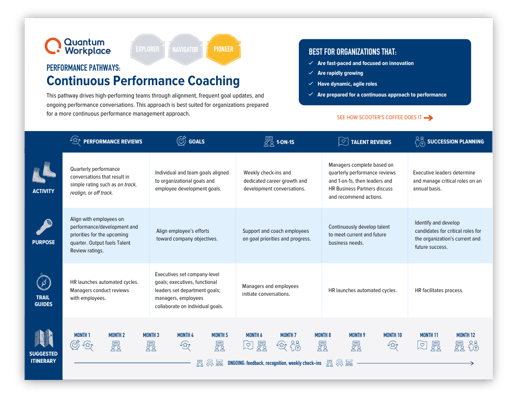
Pathway #5: Continuous Performance Coaching
This pathway is engineered to cultivate high-performing teams through meticulous alignment, frequent goal updates, and ongoing performance dialogues. This approach is ideally suited for organizations that are fully prepared to embrace a more dynamic and continuous performance management methodology, moving away from periodic, isolated events.
Best suited for Organizations That:
- Are agile and adaptable, embracing frequent feedback and adjustments.
- Operate in fast-paced industries where rapid response is critical.
- Value real-time performance insights and proactive management.
- Are committed to fostering a culture of ongoing accountability and achievement.
Best Practices for Implementing Your Performance Management Framework
Embarking on the implementation of a new performance management system can initially feel like an overwhelming undertaking. However, the key to success lies not in attempting a radical overhaul overnight, but in embracing a strategy of gradual progress and mindful change management.
Prioritize Your Needs
Begin by meticulously identifying your organization’s most pressing performance management needs. Prioritize these needs and focus your initial efforts on addressing the most critical one. Clearly define the desired behaviors you aim to cultivate, establish precise goals, and leverage the capabilities of your chosen platform to lay a robust foundation.
Scale Your Efforts
As you achieve your initial objectives, gradually expand your efforts to incorporate more sophisticated capabilities. Actively solicit feedback from your users—both managers and employees—to continuously refine and optimize your strategies. The overarching aim is to solidify and embed the desired behaviors you set out to establish.
Drive Progress Through Iteration
Do not halt your progress once your initial priorities are met. Identify the next critical item on your agenda and repeat the iterative process. As you integrate new features and capabilities, thoughtfully consider how to harness the wealth of data generated by your system for insightful analysis and strategic decision-making.
Communicate with Transparent Change Management
- Define Your "Why": Ensure absolute clarity and alignment across the organization regarding the fundamental purpose behind the changes. Clearly articulate the reasons for implementing the new performance management system and the anticipated benefits for individuals and the organization as a whole.
- Engage Stakeholders: Maintain consistent and open lines of communication with all relevant stakeholders before, during, and after the launch. Keep them informed of progress, solicit their input, and involve them actively in the process.
- Offer Training and Support: Partner closely with your chosen technology provider to deliver comprehensive training and ongoing support for all users. A supportive partner can significantly smooth the transition and enhance user adoption.
- Align with Mission, Values, and Culture: Continuously connect the performance management changes back to your organization’s core mission, deeply held values, unique culture, and overarching strategic priorities. Reinforce how these adjustments contribute to the broader organizational goals.
- Encourage Flexibility: Emphasize the importance of adaptability and flexibility throughout the implementation and ongoing use of the system. Acknowledge that challenges may arise, but the ability to pivot and adjust is paramount to sustained success.
- Collect Feedback: Establish clear and accessible mechanisms for gathering feedback from users. Utilize this valuable input to fine-tune your approach, address any emerging issues promptly, and continuously improve the system’s effectiveness.
- Adapt and Evolve: Be prepared to adapt and evolve your strategy as needed. The journey towards establishing a truly successful performance management system is an ongoing one, and continuous adjustments will invariably be necessary to maintain relevance and efficacy.
Evaluating and Enhancing Your Performance Management Model
Regularly assessing the effectiveness of your performance management framework is not merely advisable; it is essential for its sustained utility and impact. This evaluation should extend beyond mere metrics of system usage to encompass its tangible influence on the organization’s overall performance.
Collecting data on key performance indicators (KPIs) is crucial. This includes metrics such as employee engagement scores, the rate of goal achievement, and outcomes from employee development initiatives. Analyzing this data will reveal critical trends, highlight organizational strengths, and pinpoint areas that require focused improvement. Furthermore, leveraging employee feedback through surveys and focus groups provides invaluable qualitative insights into their experiences with the framework.
Consistent review of these metrics is vital for identifying patterns. Are employee engagement scores trending upward since the implementation of the framework? Are employees consistently meeting their objectives with greater frequency? The answers to these questions will directly inform the enhancement of your framework’s effectiveness.
Continuous performance management is best understood as an ongoing journey rather than a static destination. It necessitates regular evaluation of your framework, active solicitation of feedback from all stakeholders, and a commitment to identifying and implementing areas for improvement.
Consider the provision of ongoing training and support for both managers and employees. Offer refresher courses on the art of giving and receiving feedback, mastering performance conversations, and creating impactful development plans. By cultivating a culture that embraces continuous learning and growth, you ensure your performance management framework remains dynamic, relevant, and perfectly attuned to the evolving needs of your organization and its people.
Integrating Performance Management Software
The selection of the right performance management tool, one that authentically aligns with your workplace culture, is a critical determinant of your strategy’s success. When seeking the ideal technology solution, prioritize a provider that not only consolidates the essential elements of an effective system but actively propels organizational growth. Look beyond providers offering isolated, standalone systems or tools. Instead, seek a comprehensive solution that supports and amplifies your organization’s journey toward peak performance.

Move Your Teams Forward with Clear and Aligned Goals
Establishing clear and aligned goals is fundamental to the success of high-performing teams. Quantum Workplace empowers your teams to set, monitor, and ultimately accomplish critical objectives.
- Quantum Workplace Goals: Learn more about how our robust goal management software can drive clarity and accountability.
Boost Trust and Employee Performance with Employee Feedback
The cultivation of trust and the enhancement of employee performance are inextricably linked to the effectiveness of your feedback mechanisms.
Keep Managers and Employees on the Same Page with Performance Reviews
Performance reviews remain a cornerstone of most performance management programs. However, to truly drive improvement, these reviews must become more effective, efficient, and engaging. Streamline performance conversations to make them impactful and productive.
- Quantum Workplace Performance Reviews: Discover how our intuitive software simplifies and enhances the performance review process.
Celebrate Success and Help Team Members Feel Valued with Real-Time Recognition
Recognizing and celebrating achievements in real-time is a powerful motivator, fostering a sense of value and boosting overall team morale.
Increase Clarity and Connection with Performance Reviews and 1-on-1 Meetings
The synergy between structured performance reviews and regular one-on-one meetings creates unparalleled clarity and connection, ensuring everyone is aligned and informed.
Identify and Develop Top Talent with Talent Reviews
Talent reviews are essential for identifying high-potential individuals and developing the next generation of leaders within your organization.
Sustain High Performance with Succession Planning
Robust succession planning ensures organizational continuity and resilience by preparing future leaders to step into critical roles.
Conclusion
In conclusion, the deliberate creation and meticulous implementation of a high-caliber performance management system are paramount to achieving sustained organizational success. By thoroughly understanding the purpose, core components, and best practices associated with performance management, organizations can significantly elevate employee engagement and drive meaningful improvements in overall performance. Embarking on this critical journey toward enhanced performance management begins now. Explore Quantum Workplace’s comprehensive Performance Pathways to find the framework that best suits your organization’s unique needs.
Are you ready to construct your ideal performance management program using flexible, intuitive, and engaging tools you can trust? Request a personalized demo of Quantum Workplace’s advanced performance management software today.
What is a Performance Management Framework?
A performance management framework is a structured, systematic approach that organizations employ to plan, measure, and continuously improve employee performance over a defined period. It serves to articulate clear goals, facilitate consistent feedback, and provide crucial growth opportunities, all while ensuring that individual contributions are intrinsically aligned with the broader strategic objectives of the business. For example, a company might leverage a performance management framework to ensure that departmental goals are directly synchronized with overarching strategic priorities, thereby enabling every employee to clearly understand how their daily tasks contribute to the organization’s ultimate success.
What are the Key Components of a Performance Management Framework?
An effective performance management framework is characterized by both strategic and behavioral components that forge a vital link between people strategy and tangible performance outcomes. Key components typically encompass:
- Goal Setting: The establishment of clear, measurable, and actionable objectives.
- Ongoing Feedback: Regular and constructive communication regarding performance.
- Performance Development: Initiatives focused on skill enhancement and career growth.
- Recognition: Acknowledgment and reward for achievements and contributions.
- Performance Reviews: Formal assessments that synthesize performance data.
- Talent Management Integration: Connection to broader HR strategies like succession planning.
How Do You Create a Performance Management Framework?
Building a performance management framework is an iterative process that involves defining its purpose, establishing its structure, and refining its operational processes. Rather than a rigid checklist, it functions as an integrated system that evolves alongside the organization it serves. Core components to include are:
- Strategic Alignment: Ensuring all performance activities directly support organizational goals.
- Clear Expectations: Defining what success looks like for each role.
- Continuous Feedback Loop: Facilitating ongoing dialogue and support.
- Development Focus: Prioritizing employee growth and skill enhancement.
- Recognition and Reward Systems: Motivating employees through acknowledgment.
When these components work in concert, the system fosters continuous improvement rather than relying solely on episodic evaluations.
What is the Common Framework?
The most prevalent performance management framework adheres to a continuous improvement loop, often conceptualized as the "Plan – Act – Review – Improve" model. This cyclical process ensures that employees are consistently working towards evolving objectives while maintaining transparency regarding their progress. Many modern organizations adapt this fundamental model by integrating elements such as SMART goals, Objectives and Key Results (OKRs), or Continuous Performance Management systems. These adaptations introduce flexibility and real-time adaptability, effectively aligning people strategy with overall business agility.
What are the Steps of the Performance Management Framework?
The performance management framework typically follows five foundational steps that align people performance with impactful business outcomes:
- Planning: Setting clear goals and performance expectations.
- Monitoring: Tracking progress and providing ongoing feedback.
- Developing: Supporting employee growth and skill acquisition.
- Rating: Evaluating performance based on established criteria.
- Rewarding: Recognizing and reinforcing high performance.
This comprehensive process creates a consistent cycle of accountability, enabling both employees and managers to adjust strategies in real time to achieve sustained success.