
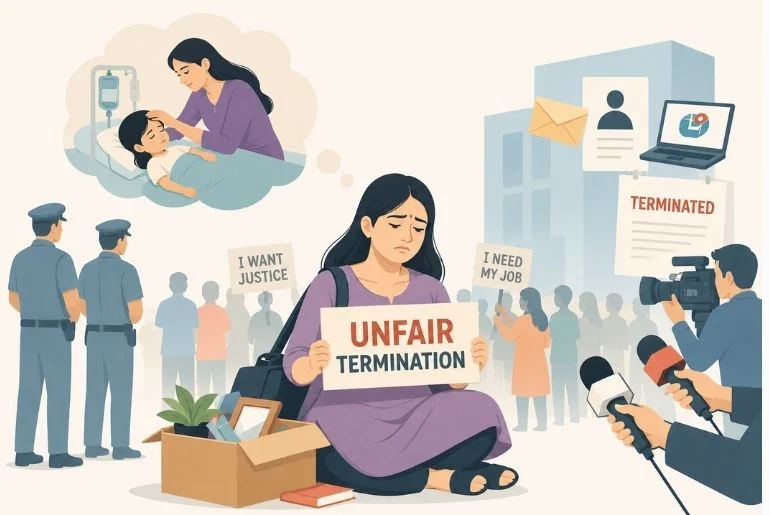
A recent incident at Tech Mahindra’s Dundigal campus has thrust the global IT services giant into the spotlight, following a protest staged by an employee, Bhavana, who alleges unfair termination. Bhavana, a software professional who had joined the company approximately four months prior to the incident, claims her dismissal was a direct consequence of her taking leave to care for her unwell 11-year-old daughter. The allegations, which include concerns about stringent workplace policies and a lack of empathy from management, have led to a preliminary police investigation and prompted Tech Mahindra to initiate an urgent review of the matter. This case not only highlights the individual plight of an employee grappling with personal emergencies but also opens a broader discourse on corporate responsibility, employee rights, and prevailing workplace cultures within India’s burgeoning technology sector.
The incident underscores the delicate balance companies must strike between operational demands and employee well-being, particularly in an industry known for its demanding schedules and competitive environment. As the details of Bhavana’s experience unfold, they bring to the fore critical questions about the implementation of leave policies, the adequacy of employee support systems, and the overall ethos governing employer-employee relationships in contemporary corporate India.
Detailed Chronology of Events Leading to the Protest
Bhavana’s tenure at Tech Mahindra, though brief, was reportedly marked by several health and personal challenges that she claims were met with insufficient understanding from the company. Her account details a series of events that culminated in her termination and subsequent protest:
Early Tenure and Personal Health Issues: Bhavana joined Tech Mahindra roughly four months before the late July incident. During her initial training period, she reportedly experienced a significant health setback, falling ill and fainting at work, which necessitated hospitalization. This early episode set a precedent for her subsequent interactions regarding health-related absences.
June Medical Leave and Warning: In June, Bhavana took 13 days of medical leave, a period she claims was crucial for her recovery. Despite informing management about her condition and her husband also communicating her health issues to the company, she received a warning letter. This response, she alleges, indicated an unsympathetic stance from the management, suggesting a rigid adherence to policy over individual circumstances. The issuance of a warning letter so early in her employment, particularly after a hospitalization incident, raised her concerns about the company’s approach to employee welfare.
Logistical Challenges and Missed Work: Bhavana also recounted an occasion where she was prevented from reaching work due to the company’s alleged failure to schedule her office cab. Such logistical lapses, if accurate, can significantly impact an employee’s ability to fulfill their duties and reflect potential systemic issues in support services. This incident further contributed to her perception of a challenging work environment.
Daughter’s Illness and Critical Leave Request: The precipitating event for her termination occurred when her 11-year-old daughter fell seriously ill. Bhavana informed her supervisors about the urgent need for leave to care for her child. She claims she was instructed to log in remotely and await approval for her leave request. However, faced with repeated and urgent calls from her unwell daughter, Bhavana made the difficult decision to prioritize her child’s immediate needs, leaving her workstation after assuring the company she would compensate for the missed work. This moment highlights the intense pressure many working parents face when juggling professional responsibilities with family emergencies.
Post-Leave Communication and Termination: Following this critical absence, Bhavana received emails from the company directing her to report back to work by July 21. Subsequently, without, she claims, being given an opportunity to explain her situation or the extenuating circumstances surrounding her daughter’s illness, she received a notice of termination. This alleged lack of due process in her dismissal became a central point of her grievance.
Public Protest and Police Intervention: Feeling aggrieved and unheard, Bhavana staged a protest outside Tech Mahindra’s Dundigal campus, publicly detailing her ordeal. This act of protest quickly drew attention, leading her to file a formal complaint with the Dundigal police. The police have since initiated a preliminary investigation into the matter and have requested a detailed report from Tech Mahindra, signaling the formalization of the dispute beyond an internal HR issue.
Broader Context: Workplace Culture, Labor Laws, and Industry Practices
Bhavana’s case is not an isolated incident but rather symptomatic of broader challenges and debates within the Indian IT sector regarding employee rights, workplace flexibility, and corporate accountability.
The Indian IT Sector Landscape: India’s IT sector is a cornerstone of its economy, employing millions. While offering significant opportunities, it is also characterized by intense competition, high-pressure environments, and demanding performance metrics. Companies often implement strict attendance and leave policies to maintain productivity and meet client deadlines. However, the rapidly evolving nature of work, especially post-pandemic, has led to increased calls for more flexible and empathetic workplace policies. Many employees in the sector grapple with long working hours, continuous skill upgrades, and the pressure to maintain a high output, often at the expense of personal well-being.
Employee Welfare and Leave Policies in India: Indian labor laws, such as the Factories Act and the Shops and Establishments Acts, provide frameworks for various types of leave, including casual leave, sick leave, and earned leave. While there isn’t a specific national mandate for "caregiver leave" for an unwell child outside of specific scenarios like maternity leave, progressive companies often integrate provisions for family emergencies within their broader leave policies. The onus is typically on the employee to follow company protocol for leave requests, but the spirit of such policies often includes a degree of flexibility for genuine emergencies. Bhavana’s situation raises questions about whether Tech Mahindra’s policies, or their implementation, adequately accommodate unforeseen family exigencies. The distinction between ‘sick leave’ for oneself and ’emergency leave’ for a dependent is often a grey area in many corporate policies, leading to potential disputes.
Workplace Culture Concerns: Bhavana’s additional allegation that employees were required to report every time they left their desks, even for washroom breaks, points to a potentially hyper-vigilant and micro-managed workplace culture. Such practices, if true, can erode employee trust, stifle autonomy, and contribute to a stressful work environment. Modern management philosophies increasingly advocate for trust-based leadership and results-oriented assessments rather than constant surveillance of physical presence. Such stringent controls can negatively impact employee morale, mental health, and overall productivity, fostering an environment of fear rather than collaboration. This type of oversight can also be seen as an indicator of an organizational culture that prioritizes control over employee well-being and autonomy.
Impact of COVID-19 and Remote Work: The COVID-19 pandemic significantly altered workplace dynamics, pushing many IT companies towards remote and hybrid work models. This shift brought greater flexibility, but as companies increasingly mandate a return to office, the debate around work-life balance and the accommodation of personal emergencies has resurfaced. The expectation for Bhavana to ‘log in and wait for approval’ while her child was unwell could be a remnant of hybrid work policies, where physical presence is not the only metric, but approvals are still centrally controlled, potentially without immediate human discretion for emergencies. This highlights the ongoing tension between organizational control and individual employee flexibility, a tension exacerbated by the return-to-office mandates across the IT sector.
Official Responses and Investigative Pathways
The unfolding situation has elicited responses from both the company and law enforcement, indicating a formal process of investigation and resolution:
Tech Mahindra’s Official Stance: Following the protest and media attention, Tech Mahindra released a statement acknowledging the matter and confirming that it is "reviewing the matter urgently." This typical corporate response indicates that the company is likely initiating an internal inquiry, involving its Human Resources and legal departments. Such a review would typically involve examining Bhavana’s employment records, her leave applications, the communication trail between her and her supervisors, and the company’s specific policies regarding leave, attendance, and termination. The urgency of the review suggests an awareness of the potential reputational and legal risks associated with the allegations. While the company has not yet released further details, its actions will be closely watched for transparency and fairness.
Police Investigation: The Dundigal police have commenced a preliminary investigation based on Bhavana’s complaint. Their role at this stage is primarily to ascertain the facts, collect evidence, and mediate if possible. They have formally sought a report from Tech Mahindra, which will likely include the company’s version of events, relevant documentation, and internal investigation findings. While the police typically handle criminal matters, they often become involved in civil disputes that escalate to public protests or involve allegations of harassment or unfair practices, often referring such cases to appropriate labor authorities if criminal intent is not established. The police investigation adds a layer of external scrutiny to the company’s internal review.
Potential Role of Labor Authorities: Should the police investigation not resolve the matter to Bhavana’s satisfaction, or if it finds evidence of labor law violations, the case could be escalated to the Department of Labour and Employment or industrial tribunals. These bodies are specifically tasked with adjudicating disputes between employers and employees, ensuring compliance with labor laws, and facilitating fair resolutions. An aggrieved employee can file a complaint alleging wrongful termination, unfair labor practices, or violation of employment terms. The involvement of these bodies could lead to a more formal legal battle, potentially resulting in orders for reinstatement, compensation, or penalties against the company if found liable.
Expert Commentary (Inferred): Labor law experts and HR consultants, when commenting on such cases, often emphasize the importance of due process in termination. Even during a probationary period, employers are generally expected to provide clear communication, warnings, and opportunities for explanation before termination, especially when the reasons are performance or attendance-related. The lack of an alleged "chance to explain" is a critical point that legal experts would scrutinize. Furthermore, they would highlight the ethical dimension of balancing business needs with employee welfare, particularly in emergency situations. The increasing awareness of employee mental health and work-life balance issues also puts pressure on companies to adopt more flexible and empathetic policies.
Implications and Broader Impact
The Tech Mahindra incident carries significant implications for various stakeholders, extending beyond the immediate parties involved:
For Tech Mahindra:
- Reputational Risk: Allegations of unfair termination and an unsympathetic workplace culture can severely damage a company’s reputation. In an era where corporate image is closely tied to talent acquisition and retention, negative publicity can deter potential employees and impact brand loyalty among existing staff and clients.
- Legal Scrutiny: The ongoing police investigation and the potential for a formal labor dispute expose Tech Mahindra to legal challenges, which could result in financial penalties, compensation orders, or even mandatory policy changes.
- Internal Policy Review: The incident may compel Tech Mahindra to undertake a comprehensive review of its HR policies, particularly those pertaining to leave, attendance, employee support for family emergencies, and termination protocols. This could lead to the implementation of more flexible or clearly defined policies to prevent similar incidents in the future.
- Employee Morale: Existing employees may view this case as a litmus test of the company’s commitment to employee welfare. A perceived unfair resolution could negatively impact morale, trust, and productivity across the organization.
For Employees in the IT Sector:
- Awareness of Rights: The case serves as a stark reminder for employees to be fully aware of their employment contracts, company policies, and legal rights concerning leave, termination, and grievance redressal.
- Precedent Setting: The outcome of Bhavana’s case could set a precedent for how similar situations are handled within the IT industry. A favorable outcome for the employee might encourage others to challenge perceived injustices, while an unfavorable one might reinforce existing power dynamics.
- Work-Life Balance Advocacy: The incident contributes to the ongoing conversation about the necessity of robust work-life balance initiatives and greater flexibility for employees, particularly those with caregiving responsibilities.
For Workplace Culture in India:
- The Productivity vs. Welfare Debate: This case reignites the debate on where companies draw the line between maintaining high productivity standards and ensuring employee welfare, especially in high-pressure sectors like IT.
- Micro-management vs. Trust: The allegation regarding reporting washroom breaks fuels discussions about appropriate levels of managerial oversight versus fostering a culture of trust and autonomy among employees.
- Role of HR: The incident highlights the critical role of Human Resources departments in mediating disputes, ensuring fair treatment, and upholding ethical workplace practices, rather than merely enforcing corporate policies.
The Role of Social Media and Public Scrutiny: In today’s hyper-connected world, incidents like Bhavana’s can quickly gain traction on social media platforms, amplifying the employee’s voice and placing immense public pressure on corporations. This external scrutiny often forces companies to respond more swiftly and transparently than they might otherwise.
Conclusion
The allegations made by Bhavana against Tech Mahindra, leading to her public protest and a police investigation, represent a significant moment for the company and the broader IT industry in India. As Tech Mahindra conducts its urgent review and the Dundigal police proceed with their preliminary investigation, the focus remains on ensuring a fair and just resolution for all parties involved. Beyond the immediate outcome, this incident raises profound questions about the nature of contemporary workplace culture, the adequacy of employee support systems, and the imperative for corporations to balance their operational demands with a genuine commitment to employee well-being and equitable treatment. The resolution of this case will undoubtedly be watched closely, potentially influencing future employment practices and reinforcing the critical importance of empathetic leadership and transparent, fair policies in the evolving landscape of global employment.








