The landscape of employee compensation and recognition is undergoing a significant transformation, driven by shifting workforce expectations and a growing understanding of the impact of employee well-being on business performance. While often conflated, employee benefits and rewards serve distinct yet complementary roles in fostering a positive and productive work environment. Benefits form the foundational elements that employees expect as part of their employment, ensuring stability, security, and well-being. Rewards, on the other hand, are the strategic tools used to acknowledge effort, celebrate achievements, and reinforce behaviours that propel a business forward. Understanding and intentionally implementing separate, robust programs for each is becoming increasingly crucial for organisations across the UK.
The Evolving Nature of Employee Expectations in the UK
Recent years have witnessed a marked evolution in what UK employees seek from their professional lives. Beyond traditional remuneration, there is a heightened emphasis on comprehensive well-being support, genuine work-life balance, and benefits that resonate on a personal level, rather than appearing merely performative. The cost of neglecting these evolving needs is substantial. Research from the Institute for Public Policy Research (IPPR) has highlighted a significant increase in costs to UK workplaces, estimated at £30 billion since 2018. This surge is largely attributed to issues linked to employee health, burnout, and time taken away from work due to these factors.
Conversely, the financial benefits of investing in employee well-being are becoming increasingly evident. A study by Deloitte revealed a compelling return on investment, with employers seeing an average of £4.70 in productivity gains for every £1 invested in mental health and well-being initiatives. This data underscores that a one-size-fits-all approach to employee support is no longer effective. A holistic rewards program, which acknowledges and addresses the diverse values of today’s workforce, is essential. When support feels relevant and recognition is timely and meaningful, employees are more likely to feel genuinely valued, leading to increased engagement, motivation, and long-term loyalty.
Understanding Rewards vs. Benefits: The Key Differences
At their core, benefits provide the essential scaffolding of employment. They are designed to offer stability, support employee well-being, and ensure financial security, thereby establishing clear expectations between employers and employees. Benefits often encompass legally mandated provisions and standard offerings designed to meet fundamental employee needs.
Rewards, however, operate on a different plane. They are designed to acknowledge and appreciate individual and team efforts, highlight progress, and recognize contributions in real-time. While benefits foster consistency and a baseline of security, rewards are instrumental in making employees feel noticed and appreciated for their specific contributions. They send clear signals about what behaviours and achievements are valued by the organisation and articulate why an employee’s work is significant to the broader business objectives.
What are Rewards?
Rewards are essentially expressions of praise and appreciation, strategically deployed to motivate employees through positive reinforcement. The nature of these rewards can vary significantly, influenced by company culture, industry norms, and individual employee preferences. Effective rewards can encompass a broad spectrum of initiatives, including formal recognition programs, targeted employee wellness initiatives, performance-based incentives, and lifestyle perks. The most impactful rewards are those that are personal, intentionally designed, and directly aligned with the values and priorities of the employees they aim to acknowledge.
Examples of rewards can include:
- Recognition Programs: Peer-to-peer recognition platforms, public acknowledgments of achievement, or awards for outstanding performance.
- Incentives: Bonuses tied to specific project milestones, sales targets, or team achievements.
- Wellness Initiatives: Subsidised gym memberships, access to mental health support services, mindfulness workshops, or contributions towards personal well-being activities.
- Development Opportunities: Funding for professional development courses, attendance at industry conferences, or mentorship programs.
- Experiential Rewards: Team-building events, special experiences, or additional paid time off.
What are Benefits?
Benefits represent the fundamental entitlements and provisions that employees receive as part of their employment contract. These typically include statutory entitlements, retirement provisions, and other foundational support systems. While some benefits are legally mandated, others are offered at the employer’s discretion as part of their overall compensation package.
Common examples of benefits include:
- Statutory Leave: Paid annual leave, sick pay, and parental leave, in line with UK employment law.
- Workplace Pensions: Contributions made by the employer to an employee’s pension fund, in compliance with auto-enrolment regulations.
- National Insurance Contributions: Employer contributions to the National Insurance system.
- Health Insurance: Private medical insurance or dental plans, often offered as a supplementary benefit.
- Life Insurance: Death-in-service benefits providing financial support to beneficiaries.
- Other Statutory Entitlements: Maternity, paternity, and adoption leave.
The Risks of Merging Rewards with Traditional Benefits
While both benefits and rewards aim to demonstrate employee value, conflating them can dilute the impact and effectiveness of each. Benefits are the bedrock of employment security, providing a consistent and expected level of support. They are the non-negotiables that contribute to an employee’s overall sense of stability and financial well-being. Rewards, conversely, are designed to be dynamic and aspirational. They are the mechanisms for inspiring discretionary effort, celebrating specific accomplishments, and fostering a culture of achievement.
When rewards are subsumed within broader benefits packages, it can become challenging for employees to discern between what is an expected entitlement and what is a specific recognition of their individual efforts or contributions. This ambiguity can lead to a diminished appreciation for both. Benefits may be taken for granted as simply part of the job, while targeted rewards may lose their potency if they are not clearly communicated as distinct acknowledgments of exceptional performance or behaviour. The result is often a missed opportunity to truly motivate and engage the workforce. In the UK, many existing platforms used for employee recognition often fall short, offering a transactional experience that lacks genuine impact, thus failing to foster a stronger culture or retain top talent.
Why Rewards Should Be a Standalone Program

The distinct purposes of rewards and benefits necessitate their separation into dedicated programs. Benefits address the foundational needs of employees, ensuring security and well-being. Rewards, however, are designed to actively drive engagement, motivate performance, and acknowledge progress. When these functions are blended, the clarity of purpose is lost. Employees may struggle to differentiate between standard provisions and specific acknowledgments of their efforts.
High-quality rewards platforms are engineered for flexibility, personalization, and responsiveness. They can be tailored to the specific context of recognition, considering who is being recognised, the reason for the recognition, and the broader organizational goals. This contrasts sharply with a generic, one-size-fits-all approach. A dedicated rewards program can offer a dynamic and adaptable framework that allows for:
- Personalised Recognition: Tailoring rewards to individual preferences and achievements.
- Timely Acknowledgement: Providing recognition in close proximity to the behaviour or achievement.
- Diverse Reward Options: Offering a range of incentives, from tangible gifts to experiential opportunities.
- Performance Alignment: Directly linking rewards to desired business outcomes and behaviours.
By maintaining rewards as a distinct initiative, organisations can deploy sharper, more effective tools for driving engagement. This approach signals a genuine investment in employee success, moving beyond mere box-ticking to cultivate a culture where individuals feel truly seen and valued for their contributions.
Key Components of an Effective Rewards Program
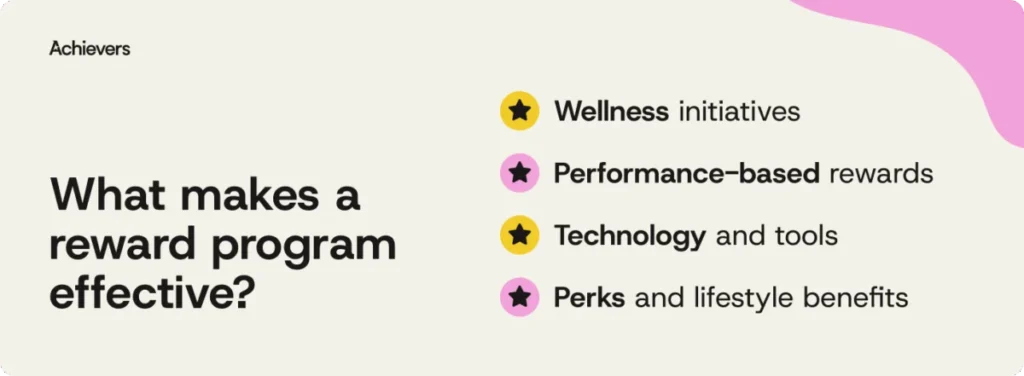
A truly impactful rewards program moves beyond generic gestures and embraces a well-rounded, user-friendly, and adaptable approach. Employees, particularly those who consistently go above and beyond, are unlikely to be motivated by repetitive, cookie-cutter rewards. To create a memorable and effective program, organisations must consider several key components:
Wellness Initiatives:
The global impact of mental health challenges on the workforce is substantial, with an estimated 12 billion working days lost annually due to depression and anxiety. Investing in employee wellness is not merely a benevolent act; it is a sound business strategy. A rewards program that incorporates wellness support demonstrates a commitment to employees’ holistic health, extending beyond their direct output. This can include:
- Mental Health Support: Access to counselling services, mindfulness apps, or stress management workshops.
- Physical Well-being: Subsidised gym memberships, fitness challenges, or contributions towards sports equipment.
- Work-Life Balance Support: Flexible working options, additional paid time off for personal rejuvenation, or resources for managing family responsibilities.
Perks and Lifestyle Offerings:
In the era of hybrid and flexible working, perks that facilitate a healthier work-life integration are highly valued. These offerings acknowledge the need for employees to manage personal responsibilities alongside their professional commitments. Practical and popular options include:
- Flexible Spending Accounts: Allowing employees to allocate funds towards personal expenses like childcare, commuting, or professional development.
- Home Office Support: Stipends for setting up ergonomic workspaces or contributing to utility bills for remote workers.
- Subscription Services: Offering discounts or contributions towards streaming services, meal kits, or hobby-related subscriptions.
- Travel and Leisure Benefits: Discounts on flights, hotels, or recreational activities.
Performance-Based Rewards:
Clear acknowledgement of hard work and dedication is a powerful motivator. Performance-based rewards translate this recognition into tangible outcomes, reinforcing the message that an employee’s efforts are noticed and appreciated. Effective approaches include:
- Individual Performance Bonuses: Monetary rewards tied to achieving specific, measurable goals.
- Team Achievement Awards: Recognizing collective success and fostering a collaborative spirit.
- Spot Bonuses: Spontaneous recognition for exceptional effort or problem-solving.
- Milestone Rewards: Acknowledging significant career anniversaries or project completion.
Technology and Tools:
Even the most thoughtfully designed rewards program can falter without the right technological infrastructure. Modern platforms are crucial for ensuring smooth, scalable, and engaging implementation without overburdening administrative teams. Key features to look for include:
- User-Friendly Interface: An intuitive platform that is easy for both administrators and employees to navigate.
- Customisation Options: The ability to tailor the program to specific organisational needs and culture.
- Integration Capabilities: Seamless integration with existing HR and payroll systems.
- Analytics and Reporting: Tools to track program effectiveness, identify trends, and measure ROI.
- Mobile Accessibility: Ensuring employees can access and participate in the program from any device.
Integrating Rewards with Employee Experience
A well-executed rewards program is more than just a collection of perks; it is an integral component of the overall employee experience. It fosters motivation, enhances performance, and shapes a positive workplace culture. By articulating how individual contributions align with broader organisational goals, rewards programs can imbue employees with a greater sense of purpose. This, in turn, leads to higher engagement, reduced turnover, and a culture where individuals feel genuinely valued and appreciated for their unique contributions.
Simple yet effective ways to embed rewards into the employee experience include:
- Making Recognition Public and Visible: Celebrating achievements openly to reinforce desired behaviours and inspire others.
- Encouraging Peer-to-Peer Recognition: Empowering employees to acknowledge and appreciate their colleagues, fostering a collaborative environment.
- Aligning Rewards with Company Values: Ensuring that recognised behaviours and achievements directly reflect the core values of the organisation.
- Regularly Communicating Program Successes: Sharing stories of recognition and the positive impact it has on individuals and teams.
Challenges in Implementing Separate Rewards Programs
While the benefits of a dedicated rewards program are substantial, the implementation process can present certain challenges. Organisations must be prepared to navigate these hurdles to ensure successful adoption and long-term effectiveness.
Potential Roadblocks:
- Resistance to Change: Employees and managers may be accustomed to existing systems and hesitant to embrace new approaches.
- Budgetary Concerns: Securing adequate funding for a comprehensive rewards program can be a significant obstacle.
- Lack of Understanding: Misconceptions about the distinction between rewards and benefits can lead to confusion or a lack of buy-in.
- Administrative Burden: The perceived complexity of managing a new program can deter stakeholders.
- Measuring ROI: Demonstrating the tangible return on investment for a rewards program can be challenging.
Solutions:
- Clear Communication and Education: Thoroughly explaining the rationale and benefits of a standalone rewards program to all stakeholders.
- Phased Implementation: Rolling out the program in stages to allow for adaptation and feedback.
- Pilot Programs: Testing the program with a smaller group to identify and address any issues before a full-scale launch.
- Manager Training: Equipping managers with the knowledge and tools to effectively implement and champion the rewards program.
- Leveraging Technology: Utilising robust reward platforms to automate processes and reduce administrative load.
- Data-Driven Approach: Continuously tracking program metrics and gathering feedback to measure impact and make necessary adjustments.
The Strategic Value of a Separate Rewards Program
Establishing a standalone rewards program is a strategic imperative for forward-thinking organisations. While traditional benefits provide essential stability, a dedicated rewards program elevates the employee experience and delivers significant, lasting value to the business. Tailored rewards programs can significantly boost engagement, helping UK employers differentiate themselves in a highly competitive talent market. Rewards are not merely about acknowledging past actions; they are proactive tools for attracting top talent, cultivating a positive workplace culture, and driving overall employee satisfaction. By working in tandem with existing benefits, a well-designed rewards program can create a truly compelling and motivating employee experience, fostering loyalty and driving sustained business success.