April 15, 2026
By Neil Franklin
Recent events hosted by HubStar in London and Amsterdam signal a significant evolution in how organizations approach workplace strategy, with a pronounced pivot towards three foundational priorities: justifying the commute, leveraging data for spatial understanding, and embracing agile planning and design. These regular quarterly gatherings, designed to foster dialogue among senior leaders from corporate real estate, facilities management, HR, IT, and workplace experience sectors, have become a barometer for emerging trends and persistent challenges in the post-hybrid work landscape. The discussions at these two sessions underscored a collective focus on re-evaluating the purpose and design of the office in response to shifting employee expectations and the pervasive reality of hybrid work models.
The overarching sentiment from these gatherings is a discernible departure from prescriptive mandates for office attendance. Instead, organizations are increasingly investing in creating environments that actively entice employees to return, recognizing that the physical office must now contend with the convenience and flexibility of remote work. This competitive dynamic is driving a heightened emphasis on the overall employee experience, with a keen focus on how spaces can effectively cater to a diverse range of work activities and individual needs. Insights shared by attendees highlighted notable variations in office utilization patterns across different career stages. Notably, mid-career professionals were identified as being less inclined to commute to the office, sparking considerable interest in developing more nuanced, persona-based design strategies that acknowledge and address these differing preferences. This suggests a future where office design is less about a one-size-fits-all approach and more about creating tailored environments that resonate with specific employee demographics and their work habits.
The Commute as Part of the Experience
A consistent theme emerging from the HubStar forums was the growing recognition that the workplace experience is not confined solely within the building’s walls. The journey to work, or the commute, is now being considered an integral component of the broader employee experience. This broader perspective is influencing how organizations assess and strategize around office location, accessibility, and the overall journey employees undertake to reach their workplaces. The implications of this are far-reaching, potentially impacting decisions related to public transport links, proximity to employee residential areas, and even the provision of amenities that make the commute more palatable, such as subsidized transport or dedicated cycling facilities. The aim is to transform the commute from a potential deterrent into a seamless and even positive part of the workday.
Data-Driven Insights for Smarter Spaces
The role of artificial intelligence (AI) in shaping future workplaces was another significant area of discussion. While AI has historically been viewed through an operational lens, participants indicated a clear shift towards exploring its more strategic applications. There is a palpable expectation that AI will profoundly influence future workplace requirements, though a degree of uncertainty persists regarding the precise translation of these AI-driven insights into concrete space planning decisions. This suggests that while the potential of AI is acknowledged, the practical implementation strategies are still in their nascent stages of development.
Concurrently, the importance of data in informing workplace design continues to grow. However, attendees pointed towards an evolving emphasis, moving beyond mere data collection to a more sophisticated focus on data interpretation. The true value of workplace data is now being realized in the actionable insights it can generate, underscoring the continued indispensable role of human judgment in comprehending and effectively applying these insights. This signifies a maturation of data utilization, where raw numbers are transformed into strategic intelligence that drives tangible improvements in the workplace environment. For instance, data on space utilization patterns can inform decisions about the optimal mix of collaborative versus focused work zones, or the ideal size and configuration of meeting rooms.
Embracing Flexibility and Adaptability
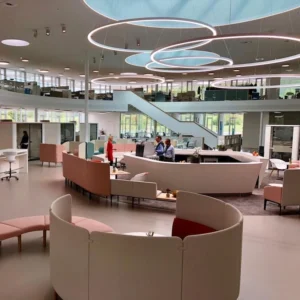
Flexibility in the physical environment is emerging as a critical design imperative. Organizations are increasingly prioritizing modular and reconfigurable spaces, recognizing the need for environments that can readily adapt to evolving uses and changing organizational needs. This reflects a fundamental shift in viewing the workplace not as a static entity, but as a dynamic ecosystem that must evolve in tandem with the business and its workforce. This approach allows for greater agility in responding to unpredictable shifts in work patterns, team structures, or project requirements, ensuring the office remains a relevant and functional asset. The ability to quickly reconfigure layouts, for example, to accommodate a new project team or to create additional quiet zones during peak periods, is becoming a significant advantage.

Furthermore, concerns surrounding the intricate relationship between the work environment, employee attention, and overall output are actively shaping design decisions. This has led some organizations to explore how physical space can be optimized to foster both deep concentration and effective collaboration. The challenge lies in creating environments that can cater to these often-competing demands, requiring a nuanced understanding of how different spatial configurations influence cognitive states and interpersonal interactions. This might involve the creation of distinct zones for focused work, free from distractions, alongside vibrant, collaborative hubs designed to spark creativity and teamwork.
Redefining Productivity in the Hybrid Era
The persistent challenge of defining and measuring productivity in hybrid work settings remains a central concern for many organizations. Participants described a tangible shift away from traditional, output-centric metrics towards broader indicators. These now often include employee sentiment, engagement levels, and well-being, as organizations seek more practical and holistic ways to understand and assess performance in this new paradigm. This evolution in measurement reflects a growing understanding that productivity is not solely about tangible outputs but also about the overall health and satisfaction of the workforce.
Context of the HubStar Events
HubStar, a leading provider of workplace experience and analytics solutions, has been instrumental in facilitating these crucial industry conversations. Their biannual events, strategically held in key European business hubs like London and Amsterdam, bring together a curated group of senior executives and decision-makers. These forums provide a unique platform for candid exchange, allowing participants to share best practices, discuss emerging challenges, and collectively shape the future of workplace strategy. The longevity and regularity of these gatherings, now a consistent feature in the industry calendar, attest to their value in addressing the dynamic and rapidly changing landscape of the modern workplace. The engagement from a diverse range of functional areas – from real estate and facilities to HR and IT – highlights the cross-functional nature of effective workplace strategy.
Supporting Data and Industry Trends
The insights gleaned from these HubStar events align with broader industry trends. A recent report by Global Workplace Analytics indicated that by 2025, an estimated 32.6 million Americans will be working from home, representing 22% of the workforce. This sustained level of remote and hybrid work necessitates a re-evaluation of the office’s purpose. Furthermore, a study by Leesman, a global workplace intelligence firm, found that while employees desire flexibility, they also report a need for dedicated spaces for focused work and opportunities for informal social interaction, underscoring the need for a balanced and thoughtfully designed office environment. The data suggests that companies are increasingly investing in technology that supports hybrid work, with spending on collaboration tools and workplace management software expected to rise by 15% annually over the next five years, according to market research firm Gartner.
Broader Impact and Future Implications
The strategic shift towards justifying the commute, leveraging data for spatial understanding, and embracing flexible design has profound implications for the future of commercial real estate and corporate strategy. Organizations that successfully adapt their workplaces to meet these evolving expectations are likely to see enhanced employee engagement, improved retention rates, and ultimately, greater productivity and innovation. The office is transforming from a mere place of work into a strategic tool for talent attraction, collaboration, and cultural reinforcement.
The emphasis on data interpretation suggests a future where workplace decisions are more informed and evidence-based, moving away from assumptions and towards empirically validated strategies. This could lead to more efficient use of real estate, reduced operational costs, and a more personalized and effective employee experience. The embrace of modular and reconfigurable spaces signals a move towards a more agile and responsive built environment, capable of adapting to the unpredictable nature of future business needs.
Conversely, organizations that fail to adapt risk losing their competitive edge in the war for talent and may struggle to foster a cohesive and engaged workforce. The insights from the HubStar events serve as a clear call to action for businesses to proactively re-examine their workplace strategies and invest in creating environments that are not only functional but also inspiring, supportive, and aligned with the evolving needs of their employees in the hybrid era. The ongoing dialogue facilitated by organizations like HubStar will be critical in navigating these complexities and ensuring that workplaces of the future are designed for sustained success.