
Hiring top talent remains a critical, yet persistently challenging, endeavor for large organizations globally in 2026. Despite advancements in technology and strategic planning, the landscape of talent acquisition is marked by significant hurdles, necessitating urgent reform and innovative approaches. With a projected shortfall of highly skilled workers across major economies, and a staggering 75% of organizations reporting difficulties in securing full-time positions, the urgency to refine recruitment strategies has never been greater. This article delves into five effective, future-proof strategies designed to empower large-scale recruitment drives, ensuring businesses onboard the best talent in an increasingly competitive environment.
The Global Talent Shortage: A Persistent Challenge
The year 2026 continues to highlight a severe global talent deficit, a trend exacerbated by demographic shifts, rapid technological advancements, and evolving skill requirements. While the original data pointed to a 2.5 million highly skilled worker shortfall within a specific country (implying the UK context), this phenomenon is mirrored across industrialized nations, impacting sectors from technology and healthcare to manufacturing and finance. Digital transformation has accelerated the demand for specialized skills in areas like artificial intelligence, cybersecurity, data analytics, and green technologies, creating a significant mismatch between available talent and industry needs. This scarcity is further complicated by a competitive global market, where remote work options allow top professionals to choose employers from anywhere, intensifying the battle for skilled labor. The prevailing sentiment among HR leaders is that traditional reactive hiring models are no longer sufficient; a paradigm shift towards proactive, technology-driven, and candidate-centric strategies is imperative.
AI at the Forefront: Reshaping Sourcing and Screening
Artificial intelligence has transitioned from a novel concept to an indispensable tool in the recruitment process, with over half of all large organizations already integrating AI into their hiring workflows by 2026. This adoption rate is projected to climb higher as companies recognize AI’s transformative potential. AI’s capabilities span the entire recruitment lifecycle, from generating nuanced job descriptions and automating candidate searches to screening résumés and predicting candidate success.
AI-driven hiring tools significantly expand an organization’s sourcing reach. Unlike human recruiters limited by time and bandwidth, AI-powered algorithms can efficiently scan vast talent pools across various platforms—including professional social networks, specialized job boards, academic databases, and even internal talent directories. These systems identify potential candidates whose profiles align with specific skill sets, experience levels, and cultural markers defined by the hiring organization. This broad net-casting ensures that hidden gems and diverse candidates, who might otherwise be overlooked, are brought to the forefront.
Once candidates are sourced, AI tools excel at screening with remarkable accuracy and consistency. AI-powered recruitment platforms leverage natural language processing (NLP) and machine learning to analyze CVs, résumés, and portfolios. They can identify specific keywords, quantify relevant experience, and even assess soft skills based on textual analysis, all against predefined job role criteria. This implicit accuracy dramatically reduces the manual effort required from human recruiters, allowing them to focus on more strategic engagement. Industry reports indicate that approximately 70% of enterprise-size businesses now utilize AI-powered Applicant Tracking System (ATS) software for initial CV screening, highlighting its widespread acceptance and utility.
Investing in a modern ATS, fortified with advanced AI capabilities, is no longer an option but a strategic necessity for streamlining the hiring pipeline. Beyond automated CV screening, these systems offer algorithm-informed candidate ranking, smart interview scheduling, and even preliminary assessment tools. By automating repetitive and time-consuming administrative tasks, AI-powered ATS technology simplifies the candidate selection process, significantly speeding up hiring decisions. This speed is crucial in a market where top talent is often "snapped up" quickly. A recent Google Case Study on large-scale talent acquisition reported that ATS optimization, particularly with AI integration, could lead to a 70-80% reduction in manual screening time and enable organizations to hire workers twice as fast. This efficiency gain translates directly into a competitive advantage in securing highly sought-after professionals.
Crafting the Perfect Pitch: The Art of Job Description Optimization
Often overlooked, the effectiveness of job descriptions (JDs) can profoundly impact the success of a recruitment drive. Poorly optimized JDs not only limit the visibility of job postings but can also deter high-quality applicants and, more critically, inadvertently introduce bias into the recruitment process. For large organizations aiming to attract diverse, top-tier talent, relying on unoptimized or generic job descriptions is a significant detriment.
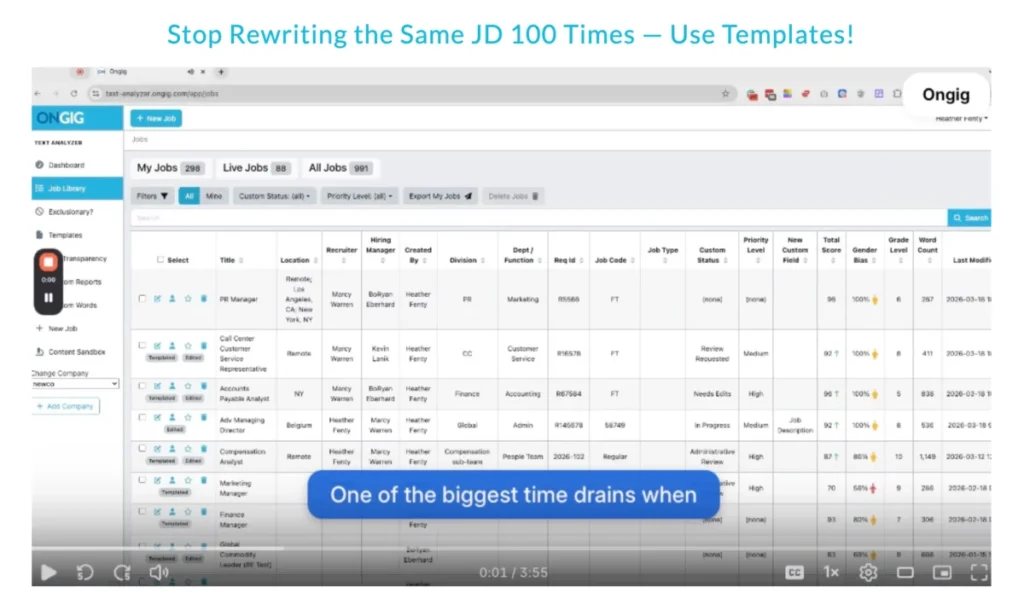
This is where specialized platforms for JD optimization, such as Ongig, offer invaluable support. These tools utilize data-driven insights to analyze the structure, language, and inclusivity of job advertisements. They help HR teams identify and eliminate biased language (e.g., gender-coded words, ageist terms, or ableist phrasing) that might inadvertently discourage certain demographics from applying. By ensuring language is neutral, inclusive, and appealing to a broader audience, organizations can significantly expand and diversify their applicant pool.
Furthermore, these platforms enhance readability and SEO performance. A well-optimized JD uses clear, concise language, avoids jargon, and incorporates relevant keywords that improve its ranking on job boards and search engines. For large-scale HR teams managing hundreds or thousands of postings, the ability to quickly optimize JDs for better visibility and appeal is a game-changer. Tools often provide quick demo videos and resources that illustrate how to remove biased language, improve readability scores, and boost SEO, making it simple for recruiters to implement best practices. The result is a higher volume of better-fit candidates, a critical outcome in a highly competitive hiring market. Analysts suggest that optimized job descriptions can increase qualified applications by up to 20% and improve candidate diversity by 15-25%.
Beyond Reactive Hiring: Embracing Proactive Talent Acquisition
In an environment where top talent is scarce, waiting for applications to roll in is an increasingly insufficient strategy. If an organization consistently faces an unsatisfactory talent pool, it is a clear indicator that a shift towards proactive candidate sourcing is necessary. This approach moves away from reactive post-and-pray methods, focusing instead on building a robust pipeline of pre-qualified, ready-to-hire candidates long before a specific vacancy arises.
Proactive sourcing begins with strategic talent pipelining and relationship building. Recruiters actively engage with potential hires, often individuals who are not actively looking for a new job but possess highly desirable skills and experience. This involves creating and nurturing talent community databases using platforms like LinkedIn Talent Hub, conducting targeted direct outreach on professional and social platforms, and fostering continuous engagement through thought leadership and employer branding initiatives. The goal is to establish rapport and build interest in the organization as a potential future employer, allowing recruiters to quickly connect with top talent within their respective industries when opportunities emerge.
Employee referral programs have also proven exceptionally effective in proactive sourcing. Organizations like Spotify have successfully capitalized on their existing team’s networks, transforming employees into brand ambassadors and talent scouts. Spotify’s robust referral program enabled the online music platform to fill approximately 70% of its roles internally or through referrals, drastically cutting down the hiring pipeline and reducing recruitment costs. This strategy not only brings in high-quality candidates who are often a strong cultural fit but also leverages the trust and credibility of current employees, making new hires more likely to succeed and stay. Industry data suggests that referred employees often have higher retention rates and perform better than those hired through traditional channels.
Streamlining Operations: The Power of Centralized Recruitment Data
A fragmented hiring process is a common culprit behind pipeline delays and missed opportunities. Many large organizations still grapple with disparate HR systems, multiple recruitment tools, and a reliance on manual data entry, creating inefficiencies that cost time and talent. In a fast-paced market where top candidates are quickly snapped up, such operational bottlenecks are untenable.
The solution lies in centralizing recruitment data and processes within a unified system. Integrated platforms, such as Access PeopleXD Evo, are designed to manage the entire talent acquisition lifecycle from a single source. This means all candidate data—from initial application and CV details to interview notes, assessment results, and communication history—is stored in one secure, accessible location. This eliminates data silos, reduces duplication of effort, and ensures consistency across the recruitment team.
Centralization also facilitates the automation of routine recruitment tasks. Automated CV screening and sorting, intelligent interview scheduling, compliance checks, and personalized communication templates can all be managed from a single system. By freeing HR teams from the burden of manual administration, these professionals can reallocate their time and expertise towards more strategic engagement activities, such as building candidate relationships, refining employer branding, and conducting deeper talent analytics. The ability to access real-time data and comprehensive insights from a centralized system allows for more informed decision-making, accelerating the hiring pipeline and ensuring that top talent is secured before competitors can intervene. Organizations that have successfully centralized their recruitment data report a significant reduction in administrative overhead and an improvement in overall hiring efficiency, sometimes by as much as 30-40%.
Cultivating Connection: Prioritizing the Candidate Experience
In 2026, the candidate experience is a critical determinant of recruitment success and an organization’s employer brand. A single poor experience can damage a company’s reputation, deter future applicants, and even impact consumer perception. Regardless of business size, every candidate deserves a high standard of communication, transparency, and efficiency throughout the hiring journey. This is particularly challenging for large organizations handling thousands of applicants simultaneously.
Automation plays a pivotal role in maintaining consistent, high-quality candidate communication at scale. Implementing automated status updates, for example, ensures potential hires are kept informed at every stage of the pipeline—from application confirmation to interview invitations, feedback, and final decisions. This transparency keeps top talent engaged and prevents them from feeling "forgotten" within a large applicant pool. Personalized communication, even if automated, fosters a sense of respect and value, which is crucial for building a positive perception of the employer.
The consequences of a suboptimal candidate experience are significant. According to experts at OpenArc, "62% of candidates lose interest if they don’t hear back within a few weeks, and 48% have declined jobs due to long processes." This underscores the necessity for prompt follow-up emails, timely feedback, and streamlined processes. Organizations that prioritize quick, clear communication and efficient workflows gain a distinct advantage. Beyond communication, the entire interview process, from initial screening to final decision, must be respectful of the candidate’s time and provide clear expectations. Even a positive rejection experience can leave a lasting positive impression, potentially turning a candidate into a future applicant or brand advocate. Proactive onboarding communications, even before an offer is accepted, can also significantly enhance the candidate experience and reduce pre-boarding anxiety.
Implications for the Future of Work
The hiring landscape in 2026 is undergoing a rapid and fundamental transformation. The integration of AI, workflow automation, and real-time analytics represents not just an incremental improvement but a foundational shift in the HR sector. To optimize talent acquisition pipelines, large organizations must fully harness the potential of technology while simultaneously adopting proactive, strategic approaches to talent sourcing.
The era of merely posting a job and passively awaiting applications is definitively over. Organizations that succeed in 2026 are those that proactively identify, engage with, and nurture relationships with top talent, often before a specific job application even goes live. This strategic foresight, combined with a commitment to efficiency and a superior candidate experience, will differentiate market leaders. The evolving role of HR professionals increasingly demands strategic thinking, technological fluency, and a deep understanding of human psychology, moving them from administrative roles to pivotal architects of organizational success.
April 13, 2026 by Rebecca Barnatt-Smith in HR Content






