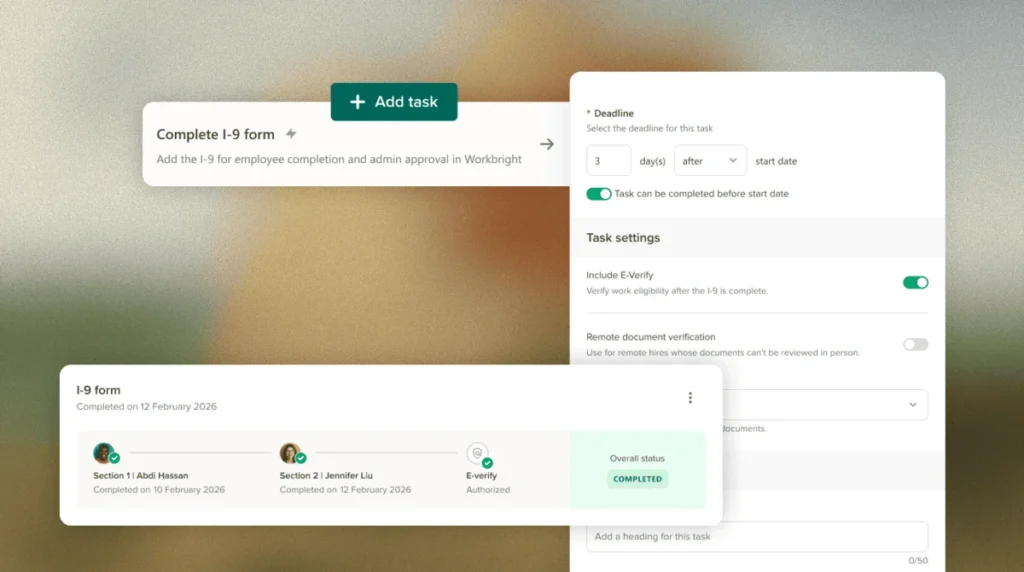
Workable, a leading global hiring platform, has officially announced the release of an integrated I-9 and E-Verify workflow designed to simplify and automate a critical aspect of U.S. employment compliance for its customers. This new offering aims to eliminate the traditional burdens associated with verifying employee work eligibility, moving away from manual processes like downloading PDFs, duplicate data entry, and navigating multiple disparate tools. The innovative solution allows employees to complete Section 1 of the I-9 form digitally, while HR teams can seamlessly review necessary documents and complete Section 2 directly within the Workable platform. For organizations leveraging E-Verify, the system is engineered to automatically submit verification requests during the onboarding process, ensuring federal requirements are met with enhanced ease and accuracy.
Understanding Form I-9 and E-Verify: A Foundation of U.S. Employment Law
To fully appreciate the significance of Workable’s new integrated workflow, it is crucial to understand the foundational elements of U.S. employment verification. Form I-9, officially titled "Employment Eligibility Verification," is a U.S. Citizenship and Immigration Services (USCIS) form that employers must complete for each new hire to verify their identity and confirm they are authorized to work in the United States. This requirement stems from the Immigration Reform and Control Act (IRCA) of 1986, a landmark piece of legislation that made it illegal for employers to knowingly hire or continue to employ unauthorized immigrants. The law places a significant responsibility on employers to ensure their workforce is legally authorized, with substantial penalties for non-compliance, including fines ranging from hundreds to thousands of dollars per violation, and even potential criminal charges in cases of pattern or practice violations.
The process typically involves two main sections: Section 1, completed by the employee upon hire, where they attest to their employment authorization and provide identifying information; and Section 2, completed by the employer, where they physically examine the employee’s original identity and employment authorization documents (e.g., U.S. passport, driver’s license, Social Security card, Permanent Resident Card) and record the document information. Historically, this has been a paper-intensive process, fraught with opportunities for human error, misplaced documents, and compliance oversights.
E-Verify, on the other hand, is an internet-based system operated by USCIS in partnership with the Social Security Administration (SSA). It allows employers to electronically confirm the employment eligibility of their newly hired employees by comparing information from the employee’s Form I-9 to data from U.S. Department of Homeland Security (DHS) and SSA records. While E-Verify is voluntary for most employers, it is mandatory for federal contractors and subcontractors, as well as employers in certain states with specific legislative mandates. The system aims to provide a more definitive and immediate verification of employment authorization, reducing the likelihood of hiring unauthorized workers. However, integrating E-Verify into existing HR workflows has often presented its own set of challenges, requiring separate logins, manual data re-entry, and careful management of tentative non-confirmation (TNC) cases.
The Evolution of Employment Verification: From Paper to Digital
The journey of employment verification has been a gradual transition from entirely manual, paper-based systems to increasingly digitized solutions. For decades following IRCA’s passage in 1986, employers primarily relied on paper I-9 forms, often stored in physical binders or filing cabinets. This approach presented numerous logistical hurdles, especially for organizations with distributed workforces or high turnover rates. The administrative burden on HR departments was considerable, involving not only the initial completion and review but also ongoing maintenance, re-verification for certain visa holders, and diligent record-keeping for the statutory three-year or one-year-after-termination period.
The advent of the internet and digital record-keeping began to pave the way for electronic I-9s. In 2006, DHS published a final rule authorizing employers to complete, sign, and store Forms I-9 electronically, provided certain security and integrity standards were met. This was a pivotal moment, offering the potential for significant efficiency gains and reduced physical storage requirements. However, many employers struggled to implement compliant electronic systems, often relying on third-party vendors or internal custom solutions that could be complex and costly.
E-Verify, initially launched as a pilot program in 1996, gradually gained traction and became more robust. By 2007-2008, its use expanded significantly, particularly with the introduction of federal acquisition regulations mandating its use for most federal contracts. Despite its benefits, the standalone nature of E-Verify meant that employers often had to duplicate data from the I-9 into the E-Verify system, adding another layer of manual effort and potential for error.
The COVID-19 pandemic further accelerated the need for digital solutions. With the sudden shift to remote work, the traditional requirement for physical inspection of I-9 documents became impractical. In response, DHS issued temporary flexibilities allowing for remote inspection of documents, a measure that was extended multiple times. This period highlighted the inherent inflexibility of the old system and underscored the urgent need for a permanent, digital-first approach to I-9 compliance. In July 2023, DHS announced a new optional alternative procedure for employers enrolled in E-Verify to remotely examine documents for Form I-9, signaling a significant move towards embracing digital solutions as a standard practice. This regulatory shift provides a crucial backdrop for Workable’s timely new offering.
Workable’s New Integrated Workflow: A Leap Forward in Compliance Technology
Workable’s new I-9 and E-Verify workflow directly addresses the longstanding challenges and the recent regulatory shifts by embedding compliance directly into the hiring platform’s existing onboarding setup. This integration means U.S. teams using Workable no longer need to rely on manual workarounds, external systems, or fragmented processes to ensure compliance.
The core innovation lies in creating a seamless, structured experience that eliminates common pain points:
- No More Downloading PDFs: The entire process is digital, removing the need for physical forms.
- No Duplicate Data Entry: Information is captured once and flows through the system.
- No Jumping Between Multiple Tools: All steps are consolidated within Workable.
This release represents a significant step for Workable customers in the U.S., offering a streamlined pathway to meet federal requirements with greater confidence and efficiency.
Key Features and Streamlined Processes
The design of Workable’s I-9 + E-Verify experience is centered on user-friendliness and compliance integrity, offering a clear, step-by-step process for both employees and HR teams.
For Employees (Section 1 Completion):
When a new hire is onboarded through Workable, they are prompted to complete Section 1 of Form I-9 digitally. This typically occurs as part of their initial onboarding paperwork, often alongside other essential documents. The digital interface guides them through entering personal information, attesting to their employment authorization, and electronically signing the form. This self-service approach empowers employees to complete their part accurately and efficiently, reducing delays and errors that often arise from paper forms.
For HR Teams (Section 2 Completion and Document Review):
Once the employee completes Section 1, the HR team is notified. From within Workable, HR professionals can:
- Review Documents: The platform facilitates the secure upload and review of identity and employment authorization documents provided by the employee. In light of the July 2023 DHS alternative procedure, for E-Verify employers, this review can now be conducted remotely, provided the employer follows the specified guidelines (e.g., conducting a live video interaction with the employee to ensure the documents relate to the employee). For non-E-Verify employers or those opting out of the alternative procedure, physical inspection remains the standard.
- Complete Section 2 Digitally: After reviewing the documents, HR can complete Section 2 of the I-9 form directly within Workable, entering the document details and electronically signing the employer attestation. This ensures all information is captured accurately and stored securely.
- Automated E-Verify Submission: Crucially, if the organization has opted to use E-Verify, the system automatically submits the necessary information to the E-Verify system upon completion of Section 2. This eliminates the need for HR to manually log into a separate E-Verify portal, re-enter data, and then track the case separately. The status of the E-Verify case (e.g., Employment Authorized, Tentative Non-Confirmation) is then reflected within Workable, allowing for consolidated management of the entire verification process.
This integrated approach not only speeds up the process but also significantly reduces the potential for manual data entry errors, which are a common cause of I-9 violations.
Addressing the Pain Points of U.S. Organizations
The implications of Workable’s new workflow for U.S. organizations are substantial, directly addressing long-standing pain points in employment compliance:
- Risk Mitigation: The complexity of I-9 regulations means that even well-intentioned employers can fall prey to technical errors or substantive violations. According to a 2022 survey by the National I-9 Center, nearly 75% of employers admitted to having I-9 errors, with fines for violations often exceeding tens of thousands of dollars for larger organizations. Automation and digital guidance significantly reduce the likelihood of errors, thereby mitigating financial penalties and reputational damage.
- Enhanced Efficiency: HR teams spend countless hours on administrative tasks related to I-9 and E-Verify. By automating data capture, document management, and E-Verify submissions, Workable frees up valuable HR time, allowing professionals to focus on strategic initiatives rather than repetitive paperwork. This efficiency gain is particularly impactful for organizations with high hiring volumes.
- Improved Candidate Experience: The onboarding process is a critical touchpoint for new employees. A clunky, paper-intensive I-9 process can create a negative first impression. A streamlined, digital workflow contributes to a more modern, professional, and positive onboarding experience, enhancing employer brand and new hire engagement.
- Centralized Record Keeping: Digital storage within Workable ensures that all I-9 and E-Verify records are centrally located, easily accessible, and securely maintained. This is invaluable during audits by agencies like Immigration and Customs Enforcement (ICE), where quick and accurate retrieval of records is paramount.
- Adaptation to Remote Work: The permanent optionality for remote I-9 document inspection for E-Verify employers makes a digital solution like Workable’s indispensable. It allows companies to hire and onboard talent remotely without compromising compliance, a critical capability in today’s distributed work environment.
The Broader Landscape of Digital HR and Compliance
Workable’s integrated I-9 and E-Verify workflow is not an isolated development but rather a significant contribution to the broader trend of digital transformation within Human Resources. The HR technology market has seen continuous innovation, with a strong focus on automating routine tasks, improving data accuracy, and enhancing the employee experience. Solutions that consolidate multiple HR functions into a single, cohesive platform are increasingly valued by organizations seeking operational efficiency and strategic advantage.
This release positions Workable more firmly as a comprehensive solution provider, moving beyond just applicant tracking to encompass a crucial aspect of post-hire compliance. This holistic approach helps organizations maintain a single source of truth for employee data, from initial application through onboarding and beyond.
Expert Perspectives and Industry Reception
While specific external reactions are yet to be widely published, the general sentiment within the HR and compliance community towards such integrations is overwhelmingly positive. "The administrative burden of I-9 compliance has been a perennial challenge for U.S. employers, often cited as one of the most complex and error-prone HR tasks," states Sarah Jenkins, a seasoned HR compliance consultant. "Solutions that genuinely integrate I-9 and E-Verify into existing HR systems, rather than offering them as separate add-ons, are precisely what the market needs. This not only reduces the workload but also significantly lowers the risk profile for businesses."
From Workable’s perspective, this launch underscores their commitment to addressing core customer needs. "We understand the immense pressure U.S. organizations face to remain compliant with federal employment laws, especially with the complexities of I-9 and E-Verify," a Workable spokesperson might comment. "Our goal with this integrated workflow is to remove that burden, providing a seamless, secure, and compliant experience directly within the Workable platform. It’s about empowering HR teams to focus on people, not paperwork, while ensuring peace of mind regarding regulatory adherence." This product enhancement aligns with the company’s vision to streamline the entire hiring journey, making it more efficient and compliant from start to finish.
Implications for Employers and the Future of Onboarding
The release of Workable’s integrated I-9 and E-Verify workflow carries significant implications for U.S. employers across various sectors. For small to medium-sized businesses (SMBs), which often lack dedicated compliance officers, this automation can be a game-changer, providing an accessible and affordable way to meet complex legal requirements. For larger enterprises, it offers a standardized, scalable solution that can be deployed across multiple locations, ensuring consistent compliance practices.
Beyond immediate efficiency gains and risk reduction, this type of integration points towards a future where onboarding is almost entirely digital, personalized, and highly efficient. The traditional "first day" paperwork can largely be completed before an employee even steps foot in the office (or logs into their virtual workstation), allowing them to focus on training, team introductions, and productivity from day one. This enhanced employee experience is crucial for talent retention in a competitive labor market.
Compliance Imperatives and Regulatory Context
It is imperative for employers to remember that while technological solutions like Workable’s greatly assist with compliance, the ultimate responsibility for adhering to federal regulations remains with the employer. The I-9 process is subject to audits by federal agencies, and any discrepancies or failures to follow proper procedures can lead to significant penalties. Employers must stay informed about evolving regulations, such as the July 2023 DHS remote inspection alternative, and ensure their internal processes and chosen technologies align with the latest guidelines. Workable’s solution is designed to facilitate this alignment, but continuous vigilance from employers is key.
Looking Ahead: The Continued Digitization of HR
The introduction of Workable’s new I-9 and E-Verify workflow marks another milestone in the ongoing digitization of HR functions. As businesses continue to navigate dynamic regulatory environments, remote work trends, and the demand for superior employee experiences, the need for robust, integrated HR technology will only grow. Solutions that can seamlessly blend recruitment, onboarding, compliance, and other HR processes into a unified platform will be critical for organizational success in the years to come. Workable’s latest offering positions it as a strong contender in this evolving landscape, providing a much-needed tool for U.S. employers striving for both efficiency and unwavering compliance.