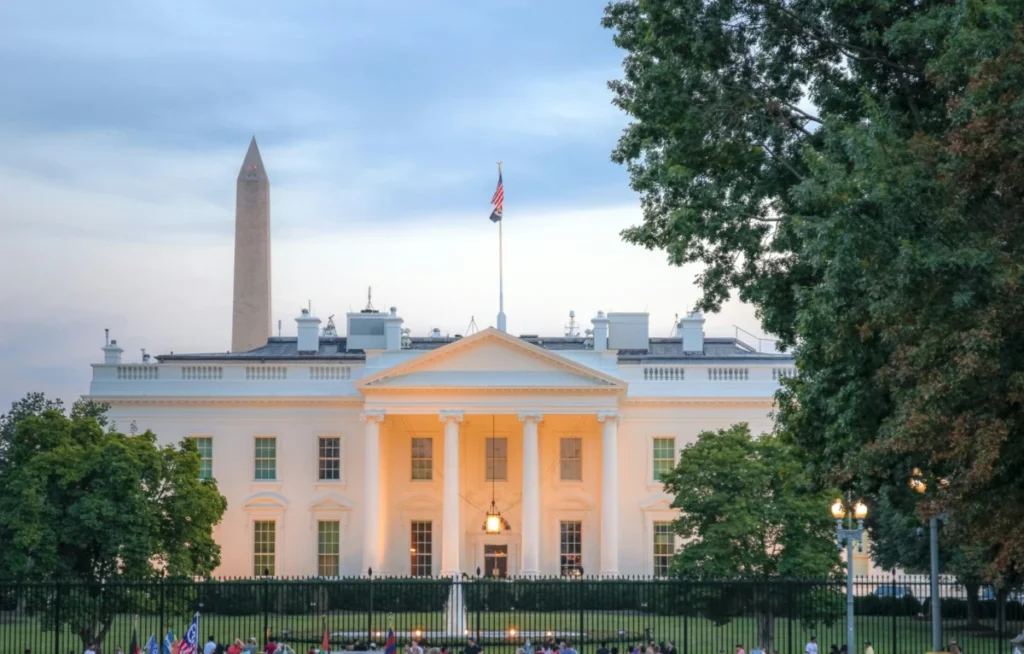
The landscape of American federal labor law and civil rights enforcement underwent a seismic shift on Tuesday, January 28, 2025, as President Donald Trump moved to dismiss two Democratic commissioners of the Equal Employment Opportunity Commission (EEOC). The removal of Commissioner Charlotte Burrows and Commissioner Jocelyn Samuels, both of whom were serving fixed terms, marks an unprecedented challenge to the traditional independence of the agency tasked with enforcing federal laws against workplace discrimination. These dismissals were accompanied by the firing of the EEOC’s General Counsel, Karla Gilbride, mirroring a broader executive strategy that has simultaneously targeted leadership at the National Labor Relations Board (NLRB) and the Private Civil Liberties Oversight Board (PCLOB).
The move has immediately plunged the EEOC into a state of procedural uncertainty. By removing Burrows and Samuels, the Trump administration has effectively stripped the five-member Commission of its quorum. Under Title VII of the Civil Rights Act of 1964, the EEOC requires at least three members to conduct official business, such as authorizing major litigation or implementing new regulations. Currently, the agency is left with only two members: Acting Chair Andrea Lucas, a Republican, and Commissioner Kalpana Kotagal, a Democrat. This structural paralysis is expected to trigger a wave of litigation centered on the President’s authority to override congressionally mandated term limits for independent agency officials.
A Chronology of Coordinated Executive Action
The dismissals at the EEOC were not isolated incidents but rather the culmination of a 48-hour campaign to assert "unitary executive" control over independent federal bodies. The timeline of these events illustrates a rapid and coordinated effort by the White House:
- Monday, January 27, 2025: The administration began its sweep by firing NLRB General Counsel Jennifer Abruzzo. Simultaneously, at the EEOC, Andrea Lucas was designated as Acting Chair. Under her immediate authority, the agency began removing specific "technical assistance" documents from its public website, particularly those related to gender identity and artificial intelligence.
- Tuesday Morning, January 28, 2025: Media reports confirmed that the President had fired NLRB Member Gwynne Wilcox, a Democratic appointee. This followed the dismissal of the NLRB General Counsel, effectively stalling the board’s ability to issue new complaints in major labor disputes.
- Tuesday Afternoon, January 28, 2025: Confirmation emerged that all three Democratic members of the Privacy and Civil Liberties Oversight Board (PCLOB) had been terminated. Shortly thereafter, Commissioners Burrows and Samuels received notice of their dismissals from the EEOC.
- Tuesday Evening, January 28, 2025: Commissioner Samuels confirmed her dismissal via social media, labeling the move "unlawful" and a "fundamental misunderstanding" of the agency’s independent nature. Commissioner Burrows released a statement through her legal counsel indicating she would explore all available legal remedies to challenge the termination.
The Statutory Conflict: Title VII vs. Executive Will
The central legal tension arises from the language of Title VII of the Civil Rights Act of 1964. Unlike many executive branch positions where officials serve "at the pleasure of the President," EEOC Commissioners are appointed to fixed, staggered five-year terms. The statute was designed to ensure the agency remains bipartisan and insulated from sudden political shifts, theoretically preventing any single administration from unilaterally clearing the Commission to install a partisan majority mid-term.
Significantly, Title VII does not contain an explicit "for cause" removal provision, which in some other statutes limits a President’s power to fire officials only for "neglect of duty or malfeasance." The Trump administration appears to be interpreting this silence as a lack of restriction on presidential authority. This stands in contrast to the National Labor Relations Act (NLRA), which does include "for cause" language, yet the administration has moved against NLRB members with the same vigor, asserting that such statutory restrictions are unconstitutional infringements on executive power.
Immediate Operational Impacts on EEOC Litigation
The loss of a quorum does not mean the EEOC will cease to function, but it severely curtails the agency’s "high-impact" activities. The day-to-day operations of the EEOC are managed by thousands of career civil servants who continue to investigate the approximately 70,000 to 80,000 charges of discrimination filed by workers annually. However, the absence of a quorum creates a bottleneck at the highest levels of enforcement.
According to a formal delegation of authority modified in early 2021, the EEOC General Counsel (now led by an Acting General Counsel from the career ranks following Gilbride’s firing) can initiate routine litigation. However, the Commission must vote to approve several critical categories of legal action, including:
- Systemic Litigation: Cases alleging a "pattern or practice" of discrimination affecting large groups of employees.
- Amicus Briefs: Instances where the EEOC seeks to weigh in on significant legal questions in private lawsuits.
- Novel Legal Theories: Cases that take positions contrary to existing Circuit Court precedent or present unsettled legal issues.
- Major Resource Allocations: Lawsuits requiring significant agency expenditures.
Without a quorum, the EEOC cannot authorize these types of cases. For employers, this means that while routine individual discrimination lawsuits will continue, the threat of massive, agency-backed class actions or systemic "pattern or practice" suits is effectively paused until a quorum is restored through Senate confirmations or a court ruling reinstating the fired commissioners.
Policy Reversal via Technical Assistance
While the Commission is hamstrung regarding formal rulemaking, the Acting Chair retains significant unilateral power over "technical assistance" (TA) documents. Unlike formal "Enforcement Guidance," which requires a majority vote of the Commission, TA documents are considered administrative interpretations that fall under the Chair’s purview.
Acting Chair Andrea Lucas has already utilized this authority to signal a dramatic shift in agency priorities. Within hours of her appointment, the EEOC website saw the removal of several key documents:
- Interpretations of the Bostock v. Clayton County Supreme Court decision as it applies to LGBTQ+ bathroom access and pronoun usage.
- Guidance on the use of Artificial Intelligence in hiring and its potential for disparate impact.
- Reports on discrimination within the technology sector.
In a press release titled "Removing Gender Ideology and Restoring the EEOC’s Role of Protecting Women in the Workplace," Lucas confirmed that her priorities include "rooting out unlawful DEI-motivated race and sex discrimination" and "defending the biological and binary reality of sex." This indicates that while the Commission cannot yet revoke formal enforcement guidance on harassment—which was approved by a 3-2 vote in 2024—the agency’s public-facing advice to employers will now reflect a significantly different ideological framework.
The Constitutional Stakes: Testing the Unitary Executive Theory
The firing of the EEOC commissioners is widely viewed by legal scholars as a deliberate attempt to force a Supreme Court showdown over the "Unitary Executive Theory." This theory posits that the President possesses the absolute power to direct and remove all officials within the executive branch, and that Congress cannot create "independent" agencies that are shielded from presidential control.
The Supreme Court has moved closer to this view in recent years. In Seila Law v. CFPB (2020), the Court ruled that the Consumer Financial Protection Bureau’s structure—a single director protected by "for cause" removal—was unconstitutional. However, the Court has historically distinguished between single-headed agencies and multi-member boards like the EEOC or the Federal Trade Commission (FTC).
The landmark 1935 case Humphrey’s Executor v. United States has long protected multi-member, bipartisan boards from at-will removal by the President. Proponents of the Trump administration’s actions argue that Humphrey’s Executor is an outdated relic that conflicts with the plain text of Article II of the Constitution. Within the current Supreme Court, Justices Clarence Thomas and Neil Gorsuch have already signaled their willingness to overturn the 1935 precedent, arguing that the distinction between "quasi-legislative" and "executive" functions is a legal fiction.
Broader Implications for the Federal Workforce and Employers
For the American business community, the immediate future is characterized by a "frozen" regulatory environment. Formal EEOC guidance, such as the 2024 Enforcement Guidance on Harassment, remains technically in effect because it cannot be revoked without a quorum. However, employers can expect that the agency will not spend its resources enforcing the specific provisions of that guidance that conflict with the new administration’s stated priorities.
The coordinated firings across the EEOC, NLRB, and PCLOB also suggest a broader strategy to diminish the "administrative state." By leaving these agencies without quorums, the administration effectively deregulates by attrition—preventing the agencies from issuing new rules, updating data collection requirements (such as the EEO-1 reports), or pursuing aggressive systemic litigation.
Legal experts anticipate that Burrows and Samuels will file suit in the U.S. District Court for the District of Columbia seeking preliminary injunctions to be reinstated to their posts. If a court stays their removals, the EEOC could return to a Democratic-majority quorum, creating a situation of "dueling leadership" between the Acting Chair and the reinstated commissioners. If the courts uphold the removals, it will signal a permanent change in the nature of independent agencies, effectively turning every federal board into an extension of the sitting President’s office.
As the legal battles begin, the EEOC remains in a state of suspended animation. While career investigators continue to process charges, the strategic direction of the nation’s civil rights watchdog is now a matter for the federal courts to decide, with the very definition of "independent agency" hanging in the balance.