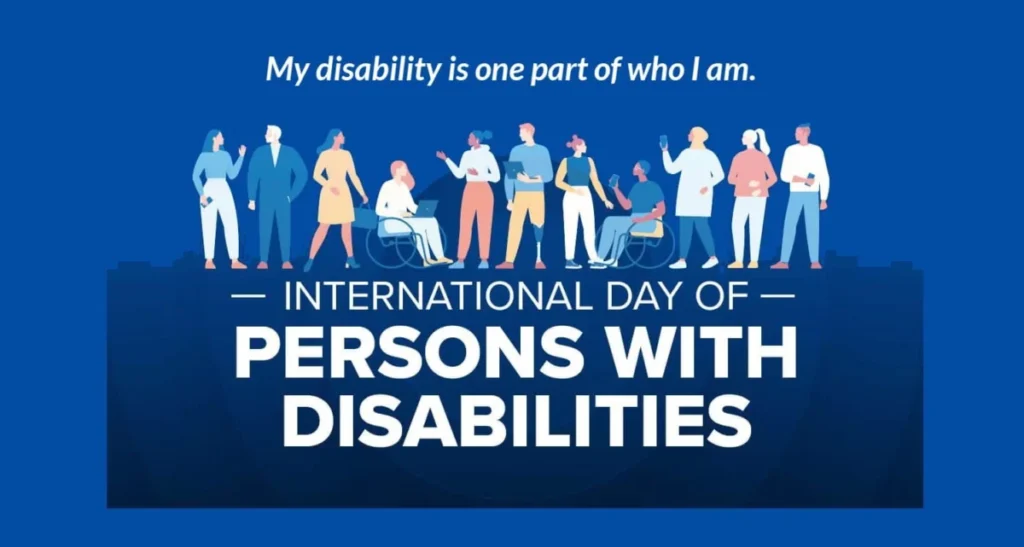
The International Day of Persons with Disabilities, observed annually on December 3rd, serves as a crucial global platform to advocate for the rights and well-being of persons with disabilities. This observance, established by the United Nations General Assembly in 1992, aims to promote full and equal participation of persons with disabilities in social life and to ensure accessibility and equal opportunities for them. As individuals approach later stages of life, the likelihood of experiencing some form of disability increases, underscoring the universal relevance of understanding the diverse spectrum of disabilities and fostering inclusive environments. This article delves into the multifaceted challenges faced by persons with disabilities, particularly in the realm of employment and economic participation, highlighting the significant disparities and the vast untapped potential that remains.
The Stark Employment Gap and Economic Disparity
A significant disparity exists between the prevalence of disabilities within the working-age population and their actual participation in the workforce. Data from the U.S. Department of Labor and Census suggests that between 11% and 13% of the working-age population lives with some form of disability. However, the proportion of individuals with disabilities employed is considerably lower, hovering around 5% to 6%. This discrepancy indicates that individuals with disabilities are approximately one-third as likely to be employed compared to their non-disabled peers, representing a substantial loss of economic potential for both individuals and society.
This employment gap is exacerbated by a persistent wage disparity. Research conducted by the International Labour Organization (ILO) and the World Health Organization (WHO) reveals that workers with disabilities experience, on average, a 15% lower wage. This figure is broken down further, showing a 12% lower wage in developed countries and a more significant 26% reduction in less developed countries, even when adjusted for work output and productivity. These organizations attribute this wage gap to a combination of factors, including overt discrimination and the limited availability of suitable employment opportunities tailored to the needs of persons with disabilities.
Understanding the Diverse Landscape of Disabilities
The term "disability" encompasses a vast array of conditions, both visible and invisible, impacting individuals in diverse ways. The International Day of Persons with Disabilities emphasizes the need to recognize and accommodate this diversity. For instance, cognitive disabilities, affecting an estimated 5.3% of the working-age population in the U.S. (approximately 10.7 million individuals), highlight the critical role of neuro-inclusive design and assistive technologies. Companies like Microsoft and SAP are pioneering programs focused on neurodiversity hiring, recognizing the unique strengths individuals with conditions such as autism, ADHD, and dyslexia bring to the workplace. These initiatives often involve adapting screening tools and interview processes to accommodate different communication styles and cognitive processing.
Ambulatory disabilities, impacting 4.3% of the working-age population (around 8.6 million individuals), underscore the paramount importance of physical accessibility. This includes the provision of accessible workspaces, adaptive equipment, and robust remote work options. While publications like Newsweek and SHRM recognize and rate companies based on their accessibility standards, challenges related to commuting and navigating physical environments persist for many.
Disabilities related to independent living, affecting 3.9% of the working-age population (approximately 7.9 million individuals), necessitate flexible scheduling and comprehensive support services. This can range from modified work hours to on-site assistance, enabling individuals to manage their daily needs while maintaining consistent employment.
Furthermore, sensory disabilities, including hearing impairments (affecting 2.0% of the working-age population, or 4.1 million individuals) and vision impairments (affecting 2.1% of the working-age population, or 4.3 million individuals), require specific accommodations. For individuals with hearing loss, this translates to a need for digital accessibility features such as closed captioning and visual safety protocols. Those with vision impairments rely heavily on assistive technologies like screen readers and adherence to web accessibility standards such as WCAG 2.2.
Crucially, many disabilities are not immediately apparent. Mental health conditions and neurological differences, including anxiety, OCD, dyslexia, autism, and ADHD, often present invisible challenges. Individuals with these conditions may struggle with open-plan offices, sensory overload from noise, and navigating unwritten social codes. These environmental and social barriers can contribute to significantly higher unemployment rates, estimated to be 30-40% higher for individuals with non-visible disabilities.
The Double-Edged Sword of Artificial Intelligence
The rapid advancement of Artificial Intelligence (AI) presents both opportunities and challenges for persons with disabilities in the workplace. On one hand, AI-powered tools used in resume screening, assessments, and candidate selection processes must be meticulously adjusted to avoid inadvertently discriminating against individuals with disabilities. Biases embedded within algorithms can perpetuate existing inequalities, further marginalizing this population.
Conversely, AI also offers revolutionary assistive technologies. Tools like Microsoft Copilot can significantly enhance productivity by providing real-time transcription, note-taking, and automated audio recording. These innovations can level the playing field, enabling individuals with various disabilities to participate more fully and effectively in work-related tasks. HR professionals, in particular, must be acutely aware that a substantial portion of their candidate pool and existing workforce, potentially upwards of 10%, may benefit from or require these technological aids.
Even seemingly straightforward workplace initiatives, such as "Return to Office" mandates or broad "productivity programs," may require careful reconsideration and adaptation. While most HR teams are cognizant of these needs, ongoing dialogue and proactive adjustments are essential to ensure these programs are inclusive and do not create unintended barriers for employees with disabilities.
Shifting the Paradigm: From Accommodation to Inclusion
While legislative frameworks often drive companies to consider disabilities through the lens of "accommodation," a more progressive and effective approach is to embrace the concept of "inclusion." This fundamental shift in perspective recognizes that all individuals contribute value in unique ways. By assuming this inherent value, organizations can move beyond simply meeting minimum requirements and instead foster environments where specific disabilities are not seen as impediments but as part of a diverse human tapestry. Treating individuals as peers and partners, rather than recipients of special provisions, cultivates a more equitable and dynamic workplace.
The Economic Imperative of Disability Inclusion
Beyond the ethical and social imperatives, prioritizing disability inclusion presents a compelling financial case for businesses. Companies that take this issue seriously unlock significant economic benefits. This extends to the consumer market, where a substantial segment of the population faces challenges with product accessibility. For instance, a recent report highlighted that over 10% of food packaging is unusable or difficult to open for consumers with disabilities, representing a lost market opportunity.
Furthermore, the economic cost of excluding persons with disabilities from the workforce is immense. The underemployment and unemployment of this demographic translate to billions of dollars in lost workforce productivity annually. Addressing this gap is not merely a matter of social responsibility but a strategic economic imperative.
A Personal Reflection and a Universal Reality
As individuals navigate their careers and approach later stages of life, the prospect of personal disability becomes increasingly relevant. While many may not actively consider disability issues unless directly impacted by it through a relative or friend, the reality is that aging often brings about physical or cognitive changes that can lead to acquired disabilities. This personal experience can foster a profound sense of empathy and a deeper understanding of the challenges faced by the 12% or more of the population who navigate these hurdles daily.
The International Day of Persons with Disabilities offers a vital opportunity for reflection and action in the workplace. By fostering a culture of understanding and proactively implementing inclusive practices, organizations can tap into a rich reservoir of talent and ensure that all individuals have the opportunity to contribute their unique skills and perspectives.
Further Research and Engagement
To deepen understanding and promote actionable strategies, extensive research is being conducted to contextualize disability within economic and business frameworks. Utilizing advanced analytical tools, such as Google Gemini, researchers are developing comprehensive reports to illuminate the economic implications of disability inclusion. These reports aim to provide data-driven insights that can inform policy decisions and corporate strategies worldwide.
Organizations and individuals are encouraged to share their programs, innovative ideas, and personal stories related to disability inclusion. This collective sharing is crucial for ensuring that research and advisory support effectively address the diverse needs and challenges faced by persons with disabilities globally.
Broader Global Context and Resources
The United Nations actively champions the rights of persons with disabilities. Their observance of the International Day of Persons with Disabilities serves as a global call to action, reinforcing the importance of creating a world that is accessible, equitable, and inclusive for all. Resources such as the UN’s dedicated page on the International Day of Persons with Disabilities offer comprehensive information on the history, objectives, and ongoing efforts to advance disability rights. Social media platforms, like Instagram, also showcase a vibrant montage of activities and personal stories shared on this day, illustrating the global reach and impact of the observance.
In conclusion, the International Day of Persons with Disabilities is more than a symbolic observance; it is a critical reminder of the vast, often overlooked, population of individuals with disabilities and the imperative to foster environments where they can thrive. By embracing inclusion, leveraging assistive technologies, and dismantling systemic barriers, we can unlock untapped potential, promote economic prosperity, and build a more just and equitable society for everyone.