A thoughtfully designed employee rewards and recognition program extends far beyond boosting morale; it offers organizations a potent and practical mechanism to cultivate engagement, elevate performance, and enhance retention, particularly amidst increasing operational demands and evolving workforce complexities. While the intent behind such programs is often positive, not all initiatives yield the desired results. The critical differentiator between a well-intentioned program and a truly impactful one lies in the frequency and manner of recognition delivery.
Research from the State of Recognition Report consistently highlights a strong correlation between recognition frequency and employee performance. Notably, employees who receive recognition weekly are 2.6 times more likely to be performing at their peak. This data underscores a fundamental principle: recognition is most effective when it is frequent, genuinely meaningful, and clearly tied to the specific behaviors and achievements an organization aims to foster. This guide delves into the core components of effective recognition, explores successful reward strategies, and offers actionable insights for embedding a culture of appreciation into the daily fabric of the workplace.
At its essence, an employee rewards and recognition program serves as a structured framework for acknowledging and reinforcing outstanding work. It encompasses the recognition of employee contributions—from significant achievements to consistent, everyday efforts—and couples this acknowledgment with relevant and valued rewards. Modern programs are increasingly delivered through scalable, integrated systems, ensuring consistency in recognizing excellence while supporting organizational growth and adaptability. This approach fosters visible recognition across teams, reinforcing shared values, while often employing points-based reward systems that offer employees flexibility while providing HR leaders with budgetary control and operational simplicity. This model is adaptable for organizations of all sizes, from mid-market companies to global enterprises.
The overarching objective is straightforward yet strategic: to elevate employee morale, stimulate high performance, and improve overall retention rates. When executed effectively, employee recognition transcends mere feel-good gestures, demonstrably influencing engagement levels, productivity, and the propensity of employees to remain with the organization. Crucially, the development of a successful recognition program does not necessitate exorbitant resources; rather, it hinges on strategic structuring, clearly defined objectives, and an unwavering commitment to consistent recognition as the organization expands.
Real-World Recognition: Tangible Ways to Show Employees They Matter
Effective employee recognition need not be overly elaborate; its authenticity and timeliness are paramount. The most impactful forms of recognition are those that are perceived as genuine, delivered promptly, and directly linked to an employee’s specific contributions. Organizations can implement a variety of practical and proven methods to recognize and reward their workforce:
Work Anniversaries with Intentionality, Not Automation
While a perfunctory "Congratulations on five years!" is a starting point, truly impactful recognition involves personalized messages, public acknowledgment, or thoughtful rewards that underscore the significance of an employee’s tenure and dedication. Celebrating service milestones, from the first year to the tenth and beyond, reinforces loyalty and reassures employees of their enduring value to the organization.
Employee Appreciation Events That Transcend the Ordinary
Organizing team lunches, virtual celebrations, or company-wide appreciation events provides dedicated spaces to acknowledge employees without the constraints of a packed meeting agenda. These occasions allow organizations to pause, express gratitude, and foster stronger connections. The inclusion of celebratory elements, such as shared meals or treats, often enhances the positive impact.
Achievement Recognition That Reinforces Desired Behaviors
Highlighting accomplishments—such as the successful completion of a major project, the attainment of a key performance goal, or the adept navigation of a demanding deadline—effectively reinforces the behaviors that drive organizational success. Recognition disseminated during team meetings, through formal awards programs, or via internal communication platforms makes achievements visible and encourages their replication.

Employee Spotlights for Consistent Recognition
Implementing weekly or monthly employee spotlights offers a simple yet effective method for consistent individual recognition, moving beyond major milestones. A brief feature in a company newsletter or a prominent shout-out on collaborative platforms like Slack ensures employees feel acknowledged and provides visible examples of exemplary work for others to emulate.
Recognition Versus Rewards: Understanding the Distinction
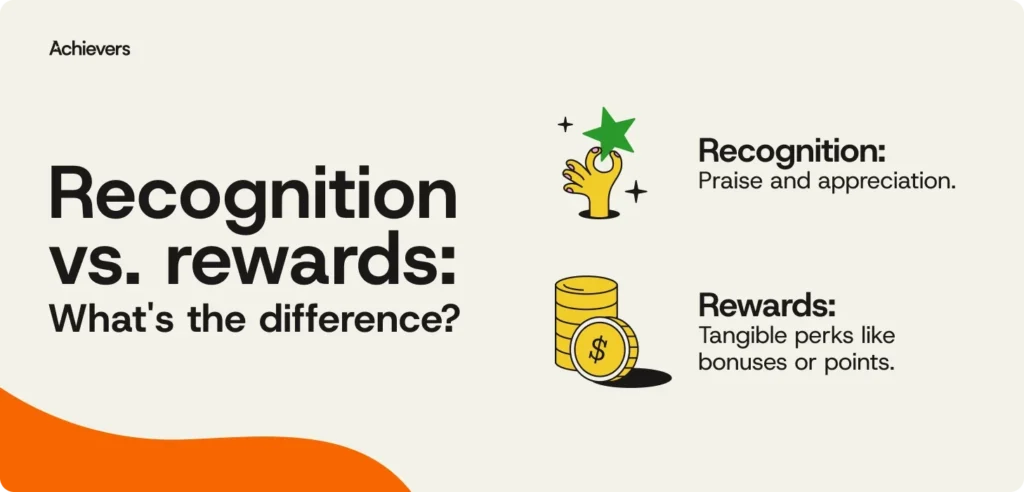
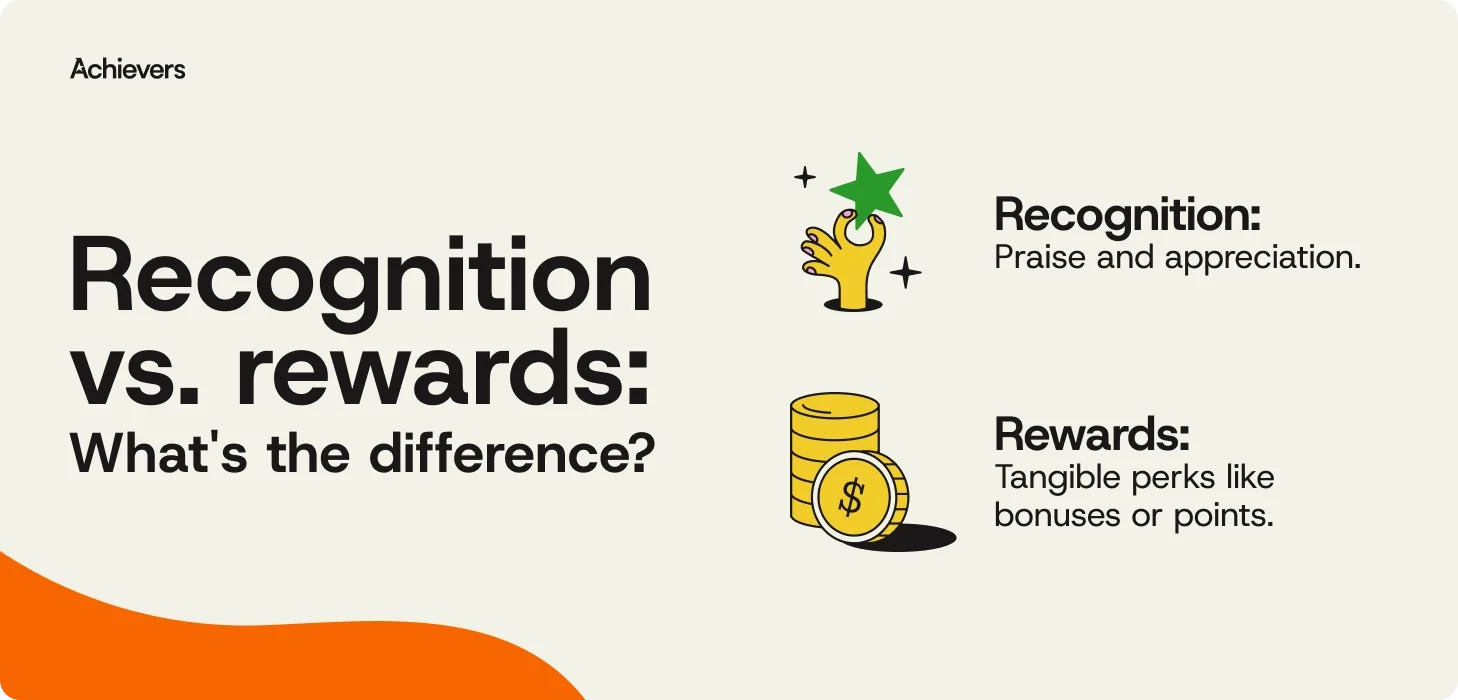
While closely intertwined, employee recognition and employee rewards are distinct concepts. Acknowledging this difference is crucial, as the most robust programs strategically integrate both. For growing organizations, recognition often serves as the foundational element, establishing habits, visibility, and consistency. Rewards then provide structure and reinforcement as teams expand and operational expectations evolve. The most successful initiatives leverage both in tandem.
Recognition is the act of acknowledging an employee’s effort, behavior, or results. This can range from a sincere thank-you message to a public commendation or a note detailing the impact of an individual’s work. Recognition is frequently social and visible, reinforcing organizational values and making positive contributions more apparent and replicable.
Rewards, conversely, are tangible. They typically encompass bonuses, gift cards, points, or unique experiences that employees can redeem. Rewards enhance the impact of recognition by assigning material value to acknowledged contributions. However, their effectiveness is amplified when paired with clear and meaningful recognition.
In essence:
- Recognition communicates, "I see what you did, and it mattered."
- Rewards signify, "And we value it."
The most effective employee rewards and recognition programs do not treat these as mutually exclusive. They strategically combine timely recognition with thoughtful rewards to reinforce the behaviors that drive engagement, performance, and retention, all without introducing undue complexity.
The Business Case for Investing in Employee Rewards and Recognition
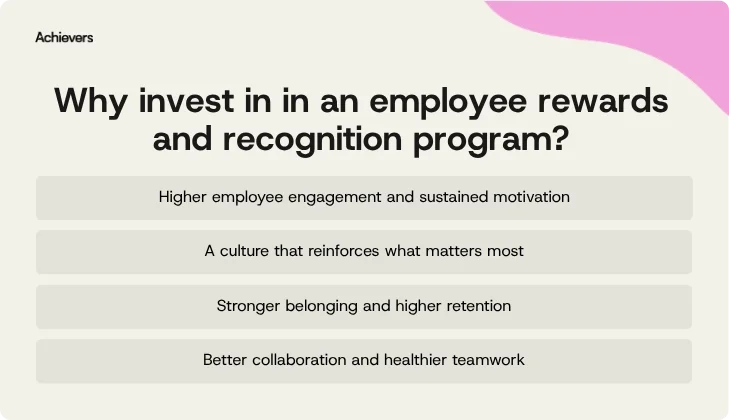
Beyond fostering a sense of appreciation, robust rewards and recognition programs are instrumental in cultivating a workforce that is more engaged, better connected, and more inclined to remain with the organization. An environment where employees feel valued contributes to a workforce that approaches their responsibilities with greater enthusiasm and commitment.
Effective rewards and recognition programs facilitate several critical business outcomes:
Enhanced Employee Engagement and Sustained Motivation
When employees feel acknowledged and appreciated, they invest more energy and commitment into their work. Regular recognition, particularly through structured programs like points-based systems, ensures a continuous flow of appreciation, moving beyond the limitations of annual reviews that may occur long after a significant contribution.
A Culture That Reinforces Core Values
Recognition stands as one of the most powerful tools for reinforcing company values and strategic priorities. By consistently highlighting behaviors that align with the organizational mission, recognition helps to embed these values throughout the workforce, transforming abstract principles into tangible, repeatable actions.
Stronger Sense of Belonging and Improved Retention
Feeling valued is a fundamental driver of connection. When employees understand that their work is meaningful, they experience a greater sense of inclusion, increased motivation, and a clearer vision for their future within the organization. Recognition shifts the perception of employment from "just a job" to "I belong here."
Improved Collaboration and Healthier Team Dynamics
When recognition is integrated into daily work practices—rather than being solely a managerial function or confined to private exchanges—interpersonal relationships within teams tend to improve. Public acknowledgment, peer-to-peer recognition, and shared celebratory moments foster a supportive environment where team members uplift one another.
Recognition by the Numbers: The Quantifiable Impact of Gratitude
While the intrinsic value of recognition is widely understood, data consistently demonstrates its tangible business impact when implemented with consistency and intentionality. Insights from Achievers Workforce Institute’s State of Recognition Report reveal that well-designed recognition programs yield measurable results.
- Increased Engagement: Employees recognized at least once a month are 45% more engaged. This regular acknowledgment signals to employees that their contributions are noticed in real-time, fostering sustained motivation.
- Reduced Turnover: Consistent manager recognition can reduce turnover risk by 35%. This stems from the direct link between managerial acknowledgment, clear expectations, and employee trust, all critical factors in retention.
- Positive Business Outcomes: Organizations with peer-to-peer recognition programs are 37% more likely to achieve positive business outcomes. This highlights the power of distributed recognition in reinforcing culture and capturing contributions that might otherwise go unnoticed by leadership.
- Program Success Rates: Recognition programs emphasizing frequent, low-cost recognition moments are 26% more likely to succeed. This underscores the sustainability and effectiveness of consistent, smaller gestures over infrequent, high-cost rewards.
- Impact of Social Recognition: Social, non-monetary recognition can account for 60-70% of total recognition and still drive significant results. Public praise and visible appreciation fulfill a fundamental human need to be seen and valued, building connection and culture at scale.
- Alignment with Values: A striking 96% of high-performing recognition programs align recognition with company values. This strategic alignment ensures that recognition reinforces organizational priorities and guides employee behavior effectively.
- Milestone Awards: Milestone awards that reflect meaningful contributions drive 50% higher retention than generic tenure-based awards. Personalized and relevant recognition resonates more deeply, fostering longer employee tenure.
The overarching takeaway is that a substantial budget is not a prerequisite for an effective recognition program; rather, intentionality and consistent follow-through are key.
Understanding the Business Value of Recognition and Rewards
Most organizations possess existing frameworks for recognition and rewards, whether through platforms, processes, or allocated budgets, all intended to drive performance, strengthen connections, and cultivate a culture that supports business objectives. However, translating these intentions into measurable impact can be challenging. The gap often arises not from a lack of effort, but from a failure to fully understand what truly drives results.
Emma Harvie, Global Head of Recognition and Rewards Insights at Achievers, notes in "From platform to performance: Unlocking the business value of recognition and rewards" that many recognition strategies fall short of their potential ROI. A common pitfall is treating recognition as a static presence rather than an active, ongoing practice. Without consistent reinforcement, recognition fails to become an integrated aspect of daily work, making it difficult to link these efforts to desired business outcomes.
Data from the Achievers Workforce Institute (AWI) supports this observation: while 69% of organizations report having a formal recognition platform, only 24% of employees feel meaningfully recognized. This disparity highlights a critical need to shift from simply having a platform to actively fostering a culture of consistent, impactful recognition.
The distinction between platform activity and genuine behavior change is significant. While metrics like platform logins and recognitions shared can indicate activity, they do not necessarily reveal whether recognition is influencing how employees work. The frequency of meaningful recognition experiences is paramount. Weekly recognition, for instance, has been linked to a four-fold increase in productivity, a threefold increase in engagement, and a fivefold increase in the likelihood of employees envisioning a long-term career with their organization. This represents a crucial shift in perspective—moving beyond activity metrics to understanding tangible organizational transformation.
Unlocking Scale and Impact with Rewards Marketplaces
While rewards can, in isolation, feel transactional, their integration with meaningful recognition amplifies their impact. Recognition establishes the "what" and "why," while rewards provide tangible reinforcement. When disconnected, rewards risk losing their association with the behaviors they are intended to encourage. However, when consistently paired, their combined impact is undeniable. Achieving this requires not just intent but also the right structural framework to deliver rewards consistently, equitably, and visibly across the organization.
Building a Rewards and Recognition Program That Scales with Your Organization
Developing a program that consistently delivers results need not be overly complex. By establishing a clear structure, maintaining a focused approach, and demonstrating a genuine commitment to appreciation, organizations can create a recognition experience that employees value and actively participate in.
Key elements for success include:
Early, Frequent, and Frictionless Recognition
The frequency of recognition is critical. When appreciation is woven into the daily workflow—rather than being reserved for infrequent events like birthdays or annual reviews—employees feel consistently seen and supported. Effective programs minimize barriers to recognition by utilizing simple, intuitive platforms that facilitate participation across all levels of the organization.
Specific and Meaningful Recognition
Generic praise often lacks lasting impact. Recognition becomes most effective when it clearly articulates what an employee did and why it mattered. Instead of a vague "great job," specific examples—such as helping a team meet a deadline, providing exceptional customer service, or fostering cross-functional collaboration—reinforce desired behaviors and make them repeatable.
Feedback Integration and Action
The most successful recognition programs are dynamic and evolve based on employee input. Regular feedback, gathered through satisfaction surveys, pulse checks, or informal conversations, provides invaluable insights into what is resonating and what can be improved. Equally important is demonstrating that employee feedback leads to tangible changes, thereby building trust, credibility, and sustained engagement.
Partnering for Success: Building a Robust Rewards and Recognition Program
The efficacy of a recognition program is intrinsically linked to the platform that supports it. A well-chosen third-party solution not only simplifies the recognition process but also helps to embed appreciation as a consistent, measurable habit throughout the organization. When evaluating recognition platforms, several essential criteria should be considered:
- Ease of Use: The platform should be intuitive and accessible for all employees, regardless of their technical proficiency.
- Scalability: The solution must be capable of growing with the organization, accommodating increasing employee numbers and evolving recognition needs.
- Integration Capabilities: Seamless integration with existing HR systems can streamline processes and enhance data accuracy.
- Customization Options: The ability to tailor the program to align with specific company values, goals, and culture is crucial.
- Reporting and Analytics: Robust reporting features are essential for measuring program effectiveness, tracking engagement, and demonstrating ROI.
- Reward Flexibility: Offering a diverse range of desirable rewards caters to individual preferences and increases motivation.
Supercharging Your Employee Rewards and Recognition Program
When implemented thoughtfully, a well-structured employee rewards and recognition program makes employees feel genuinely valued, cultivating a culture of appreciation that directly contributes to business success. Frequent, meaningful recognition, aligned with company values, encourages positive behaviors that lead to improved team dynamics and enhanced organizational outcomes.
Whether formalizing recognition for the first time or scaling an existing program, adopting a modern, mobile-friendly platform can streamline the process. Solutions like Achievers facilitate peer-to-peer recognition, manager-driven appreciation, and points-based rewards, creating a comprehensive recognition experience that keeps employees motivated and committed. By offering a wide array of desirable rewards, organizations can foster a culture of continuous appreciation, driving both employee satisfaction and business performance.