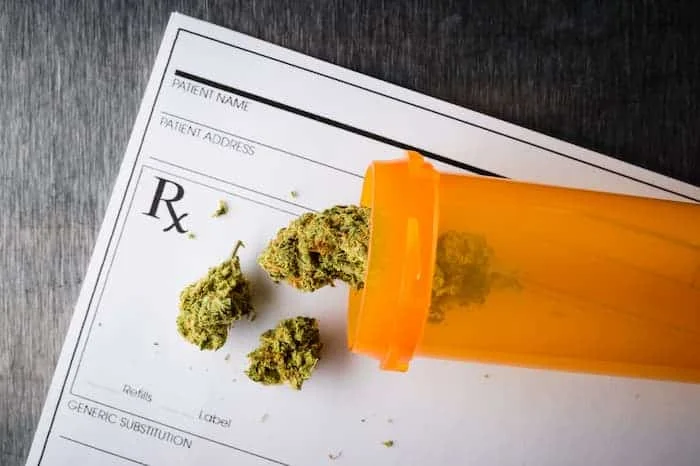
In a landmark policy reversal last month, the Trump administration enacted a significant reclassification of certain forms of marijuana, designating them as less dangerous substances under federal law. This move, while not outright legalization, fundamentally eases federal restrictions on state-licensed medical marijuana and FDA-approved cannabis products, immediately triggering a cascade of complex questions for employers navigating compliance, while simultaneously heralding substantial economic and scientific opportunities for the nascent cannabis industry. The April order, issued under the directive of Acting Attorney General Todd Blanche, marks a pivotal moment in the nation’s evolving stance on cannabis, shifting these specific marijuana forms from Schedule I to Schedule III of the Controlled Substances Act (CSA). Schedule I is the most restrictive category, reserved for substances deemed to have no accepted medical use and a high potential for abuse, such as heroin and LSD. The new Schedule III classification places these cannabis products alongside drugs like Tylenol with codeine, ketamine, and anabolic steroids, recognizing their accepted medical uses and lower potential for abuse relative to Schedule I substances.
Crucially, the order does not federally legalize recreational marijuana use, nor does it expand medical marijuana access to states where it is not already legal. However, experts across legal and economic sectors unanimously agree that the reclassification will yield significant tax benefits for legitimate cannabis manufacturers operating in state-legal markets. Furthermore, it is widely anticipated to accelerate scientific and medical research into the drug’s therapeutic potential, a development that could, in turn, motivate more states to consider or expand medical marijuana legalization. Despite the far-reaching implications, the order conspicuously omits specific guidance regarding potential impacts on the workplace, a critical void that has left employers grappling with immediate uncertainty. Littler attorneys Nancy North Delogu and Jen Chierek Znosko, in their analysis of the development, highlighted this oversight, noting, “As a practical matter, however, impacts may be substantial, at least in states with medical marijuana programs with broad application.”
A Historic Shift: Background to the Reclassification
The journey of cannabis through the federal regulatory labyrinth has been long and contentious, marked by a profound disconnect between federal prohibition and a rapidly expanding landscape of state-level legalization. Historically, the Controlled Substances Act of 1970, which established the five-schedule system for classifying drugs, placed cannabis squarely in Schedule I. This classification was based on the premise that marijuana had no accepted medical use, a high potential for abuse, and a lack of accepted safety for use under medical supervision. For decades, this federal stance created an intractable conflict with states that began legalizing medical marijuana in the 1990s, starting with California in 1996, and later recreational cannabis in the 2010s.
The push for reclassification gained significant momentum in recent years, fueled by a growing body of scientific evidence supporting cannabis’s medical applications, shifting public opinion, and the economic realities of state-legal cannabis markets. In October 2022, President Biden initiated a formal review of cannabis scheduling, directing the Secretary of Health and Human Services (HHS) and the Attorney General to assess how marijuana is scheduled under federal law. This directive marked a pivotal turning point, signaling a willingness at the highest levels of government to reconsider decades-old policy. Following an exhaustive scientific and medical evaluation, HHS formally recommended to the Drug Enforcement Administration (DEA) in August 2023 that cannabis be moved to Schedule III. The DEA, the federal agency primarily responsible for enforcing the CSA and determining drug schedules, then began its review process, which culminated in the Acting Attorney General’s April order. This order effectively mandates the DEA to initiate the formal rescheduling process, which includes a public comment period before a final rule can be issued.
Understanding Schedule III: A New Regulatory Framework
The move from Schedule I to Schedule III carries significant practical implications for the cannabis industry, researchers, and ultimately, patients. Schedule III drugs are defined as substances with a moderate to low potential for physical and psychological dependence, an accepted medical use, and a lower abuse potential than Schedule I or II drugs.
For the cannabis industry, particularly businesses operating legally at the state level, the most immediate and profound impact will be financial. Under Schedule I, cannabis businesses were subject to Section 280E of the IRS tax code, which prohibits businesses trafficking in Schedule I or II controlled substances from deducting ordinary business expenses from their gross income. This punitive tax burden has crippled many state-legal cannabis enterprises, forcing them to pay exorbitant effective tax rates, often exceeding 70% or even higher. Reclassification to Schedule III will lift this severe restriction, allowing these businesses to claim standard deductions, significantly improving their profitability and financial stability. Industry analysts project that this change could inject billions of dollars annually back into legal cannabis businesses, fostering greater investment, innovation, and job creation.
From a scientific perspective, the reclassification is a monumental step forward. The Schedule I status severely hampered research into cannabis, imposing onerous regulatory hurdles that made it incredibly difficult for scientists to obtain research-grade cannabis, secure funding, and conduct studies. Moving to Schedule III will significantly streamline these processes, opening doors for expanded, rigorous scientific inquiry into cannabis’s therapeutic potential for a wide array of conditions, including chronic pain, epilepsy, multiple sclerosis, PTSD, and various neurological disorders. This could accelerate the development of new FDA-approved cannabis-derived medicines, providing more evidence-based treatment options for patients.
While the reclassification doesn’t directly address banking restrictions, the federal government’s acknowledgement of cannabis’s medical utility under Schedule III could indirectly ease some of the apprehension among financial institutions. Currently, many banks are hesitant to work with cannabis businesses due to federal illegality, leading to a largely cash-based industry fraught with security risks. A clearer federal stance, even if not full descheduling, may encourage more traditional banking services to enter the sector.
Chronology of a Policy Transformation
The reclassification of cannabis has been a process spanning several years, culminating in the recent directive:
- October 2022: President Joe Biden announces a pardoning of federal offenses for simple marijuana possession and initiates a review of cannabis’s Schedule I status, directing HHS and the Attorney General to assess the drug’s classification.
- August 2023: Following a comprehensive scientific and medical review, the Department of Health and Human Services (HHS) formally recommends to the Drug Enforcement Administration (DEA) that cannabis be reclassified from Schedule I to Schedule III of the Controlled Substances Act. This recommendation is based on findings of an accepted medical use for cannabis and a lower potential for abuse compared to Schedule I substances.
- April [Current Year]: Acting Attorney General Todd Blanche, acting on behalf of the Trump administration, issues an order directing the DEA to proceed with the rescheduling of certain forms of marijuana to Schedule III. This order specifically applies to state-licensed medical marijuana and FDA-approved products containing marijuana.
- Following the Order: The DEA is now mandated to initiate the formal rulemaking process for reclassification. This process typically involves:
- Publication of a Notice of Proposed Rulemaking (NPRM): The DEA will publish its proposal in the Federal Register.
- Public Comment Period: A mandatory 60-day period during which the public, stakeholders, and interested parties can submit comments on the proposed rule. This period is critical for gathering diverse perspectives and potential legal challenges.
- Review of Comments: The DEA will review and consider all submitted comments.
- Publication of Final Rule: After review, the DEA will publish a final rule, which will officially enact the reclassification.
Diverse Reactions and Broader Implications
The announcement has elicited a wide range of reactions from various stakeholders, reflecting the complex and multifaceted nature of cannabis policy.
The cannabis industry has largely welcomed the news with enthusiasm, particularly regarding the anticipated tax relief. Industry groups like the National Cannabis Industry Association (NCIA) have lauded the move as a long-overdue step towards normalizing the industry and fostering economic growth. They project that the elimination of Section 280E could save cannabis businesses billions, allowing for reinvestment, expansion, and increased competitiveness.
Medical researchers and the scientific community have expressed optimism about the prospect of significantly eased research restrictions. Dr. Nora Volkow, Director of the National Institute on Drug Abuse (NIDA), has previously highlighted the challenges posed by Schedule I status for research. The reclassification is expected to accelerate studies into cannabis’s efficacy, safety, and potential therapeutic applications, potentially leading to more FDA-approved medications derived from cannabis.
However, the reclassification has introduced a labyrinth of workplace compliance challenges for employers, particularly those in states with medical marijuana programs. Littler attorneys Delogu and Znosko, along with experts from Ogletree Deakins, emphasize that the order creates "more questions than answers" in the immediate term.
- Americans with Disabilities Act (ADA) Claims: A primary concern is the anticipated surge in claims under the ADA. Historically, courts have often sided with employers in cases involving medical marijuana use, citing its Schedule I status as a basis for denying accommodations or justifying adverse employment actions. With medical marijuana now federally recognized as a Schedule III substance with accepted medical use, this "illegality" defense is significantly weakened. Employers can expect more workers to allege discrimination based on their medical marijuana use or to request reasonable accommodations for their condition, which may include off-duty cannabis use. This necessitates a fundamental re-evaluation of current disability accommodation policies and practices.
- Drug Testing Policies: The reclassification puts existing zero-tolerance drug testing policies under increased scrutiny. While employers retain the right to prohibit impairment at work, distinguishing between impairment and the mere presence of cannabis metabolites (which can linger in the body for weeks) becomes more complex when the substance has federal medical recognition. Employers will need to carefully consider policies regarding off-duty medical marijuana use that does not result in impairment during work hours or affect job performance. This is particularly relevant in states that already offer some level of workplace protection for medical marijuana users.
- Safety-Sensitive Positions: The order explicitly does not alter federal regulations governing employees in safety-sensitive positions, such as those regulated by the U.S. Department of Transportation (DOT). DOT regulations continue to prohibit all marijuana use, irrespective of state law or the new federal classification, based on its previous Schedule I status. This creates a dual standard that employers must meticulously navigate, maintaining strict prohibitions for federally regulated roles while potentially adapting policies for other employee groups.
- Employer Best Practices: Legal experts are advising employers to proactively review and update their drug testing policies, accommodation procedures, and employee handbooks. This includes training HR personnel and managers on the implications of Schedule III status, engaging in the interactive process for accommodation requests, and consulting legal counsel to ensure compliance with both federal and relevant state laws.
Social and Legal Trajectories
Beyond the immediate economic and workplace impacts, the reclassification signals a broader societal shift in attitudes towards cannabis. It reflects growing public acceptance of marijuana’s medical utility and represents a significant step away from the decades-long federal prohibitionist stance. This policy change could further catalyze legislative efforts for broader federal cannabis reform, potentially paving the way for full descheduling or even federal legalization in the future. It lends greater legitimacy to state-level cannabis programs and may encourage other states to consider medical or recreational legalization, observing the federal government’s softening stance.
However, the reclassification does not equate to decriminalization or legalization for recreational use at the federal level, and individuals caught with marijuana for non-medical purposes in federal jurisdictions could still face penalties. It primarily impacts the regulatory framework for medical and research purposes and the financial operations of state-legal cannabis businesses.
A Future Unfolding: Uncertainty and Opportunity
The reclassification of certain marijuana forms to Schedule III marks a historic inflection point in U.S. drug policy. It promises to unlock significant economic benefits for the burgeoning cannabis industry and to accelerate vital scientific research into the plant’s therapeutic potential. Yet, it simultaneously ushers in an era of complex legal and operational challenges, particularly for employers grappling with evolving workplace compliance demands. As Littler attorneys Delogu and Znosko aptly summarized, "This rule change may create more questions than it answers, at least for now." The coming months, with the public comment period and the DEA’s final rulemaking process, will be critical in shaping the precise contours of this new federal landscape. Stakeholders across all sectors will be closely watching as the implications of this monumental shift continue to unfold, navigating a future where cannabis, in certain forms, is no longer considered a drug with no accepted medical use.