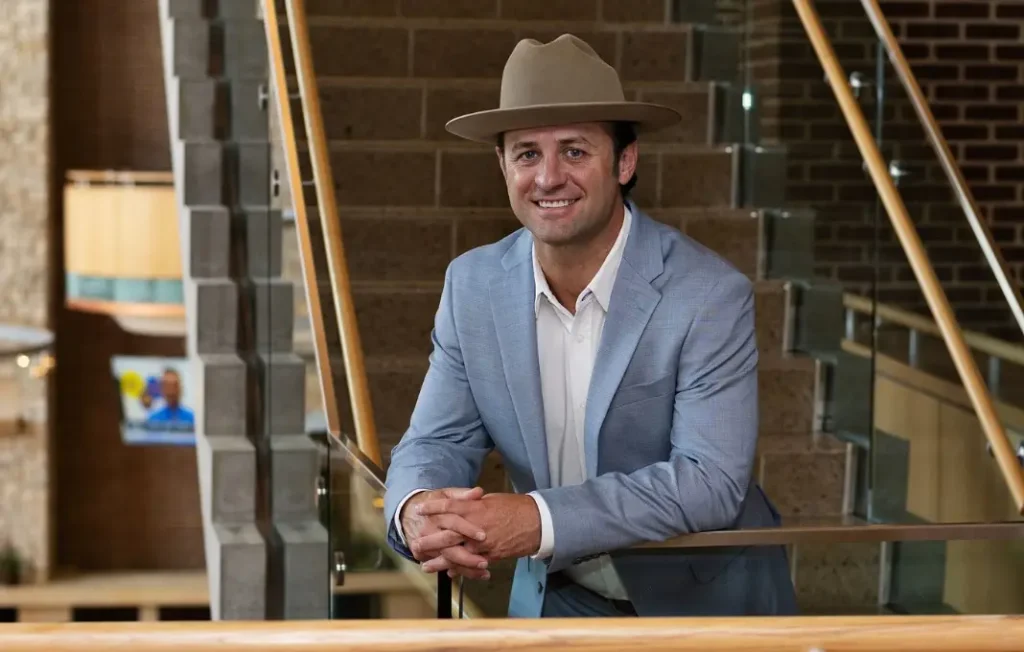
All Metals Fabricating, a stalwart of American manufacturing for seven decades, is undergoing a profound transformation under the leadership of third-generation CEO Lance Thrailkill. Moving decisively beyond its roots as a traditional sheet metal shop, the Texas-based company is aggressively investing in Industry 4.0 technologies, vertical integration, and critical infrastructure to redefine its operational capabilities. This strategic pivot aims to enhance speed, precision, and long-term growth, positioning the family business to capitalize on emerging market demands driven by artificial intelligence, electrification, and the burgeoning need for robust data infrastructure.
The company’s journey began in 1953 as a modest sheet metal operation, built on a foundation of skilled craftsmanship and unwavering reliability. A significant inflection point arrived in 1978 when Lance Thrailkill’s grandfather, Bill Thrailkill, acquired the business. His tenure marked a period of substantial growth and operational discipline. By instilling a culture of accountability and a relentless focus on customer value, he quadrupled sales within his first year. This ethos of excellence was meticulously carried forward by Lance’s father, William "Billy" Thrailkill Jr., who further expanded the company’s service offerings, guiding its evolution into a comprehensive contract manufacturing partner. Today, All Metals Fabricating (AMF) stands as a testament to this enduring legacy, serving a diverse clientele across the aerospace, telecommunications, defense, medical, energy, transportation, and industrial sectors.
What has remained constant across its more than 70-year history is AMF’s commitment to its word, its long-term perspective, and its proactive approach to investment. What has dramatically evolved, however, is the scale, complexity, and technical sophistication of its operations.
Embracing the Digital Frontier: Industry 4.0 as Operational Standard
Lance Thrailkill’s vision for the future of manufacturing is unequivocally digital, automated, and data-driven. This foresight led AMF to make a strategic decision early on: to integrate Industry 4.0 principles not as a theoretical concept, but as the fundamental operational framework.
"Manufacturing excellence in the future would be digital, automated, and data-driven, or it wouldn’t be sustainable," Thrailkill stated in a recent interview. "At All Metals, Industry 4.0 isn’t a concept – it’s how we operate."
This commitment is evidenced by significant investments in advanced manufacturing technologies and integrated systems. AMF has implemented enterprise resource planning (ERP) software, specifically JobBOSS, designed for manufacturers, which provides a centralized platform for managing operations. This is complemented by machine connectivity, enabling real-time data collection from production floor equipment. This data fuels analytics that inform decision-making, moving the company away from assumptions and towards fact-based strategies. Automation and robotics have been strategically deployed across facilities, enhancing efficiency and precision in processes such as welding and bending.
The result is a significant improvement in operational visibility and predictability. Teams, from machine operators to senior management, now have real-time access to key performance indicators, production flow, and capacity utilization. This transparency empowers employees and fosters a more engaged and productive workforce. The company has invested heavily in advanced robotic welding systems, automated bending machinery, high-speed laser and punch systems, and comprehensive machine monitoring solutions. Furthermore, an automated, digitally-driven quoting software has streamlined the sales process, reducing lead times and improving customer responsiveness.
Crucially, Thrailkill emphasizes that this technological advancement is not about replacing human capital. Instead, it’s about augmenting the capabilities of skilled professionals. "Technology at AMF is not about replacing people," he explained. "It’s about equipping skilled professionals with better tools and better information so they can perform at their best." This approach has garnered recognition from industry bodies like ECI and IndustryWeek, but more importantly, it translates into tangible benefits experienced by AMF’s clientele.
Charting the Course for Accelerated Growth
Looking ahead, All Metals Fabricating is not content to rest on its laurels. The company is embarking on a deliberate strategy of accelerated growth, driven by continued substantial investments in automation and digitally connected manufacturing. The focus is on enhancing speed, precision, and scalability, moving beyond mere automation towards smarter, more autonomous workflows. This evolution means leveraging data to anticipate and resolve potential issues before they impact production.
A key strategic pillar for AMF is its increasing role in manufacturing critical infrastructure. This is particularly true for sectors such as data centers and power generation, where the demands for reliability, speed, and precision are paramount. As the global demand for artificial intelligence, cloud computing, and electrification continues to surge, the underlying infrastructure must scale at an equivalent pace. AMF is positioning itself to be a primary supplier for these burgeoning needs.
In parallel, the company is significantly expanding its machine shop capabilities, making it a core pillar of its integrated offering. Investments in multi-axis machining, further automation, and "lights-out" manufacturing capabilities are enabling AMF to achieve greater vertical integration. This allows for the production of more complex, higher-value assemblies entirely in-house, thereby shortening lead times and improving overall project efficiency.
The internal operations of the business are also undergoing a digital transformation. AMF is investing in advanced software and AI solutions to refine its quoting processes, optimize scheduling, and enhance strategic decision-making. The objective is not to introduce complexity, but to eliminate friction points and streamline operations. This commitment to intelligent scaling and responsible growth aims to create a superior experience for both customers and employees.
Thrailkill articulated this forward-looking vision with clarity: "At the end of the day, our focus is straightforward: build critical infrastructure better, faster, and more intelligently, while setting a higher standard for modern American manufacturing."
Expanding Horizons: PRINT3D Technologies and the Future of Construction
Lance Thrailkill’s entrepreneurial spirit extends beyond metal fabrication. He is also a co-founder of PRINT3D Technologies, a venture born out of a recognition of stagnation within the construction industry. The sector, despite rising costs, labor shortages, and increasing housing demand, has seen minimal technological advancement in decades. PRINT3D aims to address this by focusing on practical innovation.
"The construction industry hasn’t meaningfully changed in decades, even as costs, labor shortages, and housing demand continue to rise," Thrailkill observed. "Our focus is practical innovation. We’re not trying to reinvent architecture; we’re focused on reinventing how homes are built so builders can construct faster, more consistently, and more affordably without sacrificing quality or design."
The core philosophy of PRINT3D revolves around accessibility and seamless integration into the existing building ecosystem. The goal is to develop reliable, repeatable systems that are compatible with current builder practices. This approach aims to democratize advanced construction automation, making it readily available to builders who are actively constructing homes daily.
The future trajectory for PRINT3D involves making 3D-printed homes both scalable and architecturally conventional. A significant development effort is underway to create a rotary printhead capable of producing a square bead, thereby mimicking the appearance of traditional brickwork. This innovation is seen as crucial for widespread adoption, as homes that appear familiar are more likely to be embraced by the market. The objective is to enable builders to 3D print homes that retain a traditional aesthetic while reaping the benefits of speed, efficiency, and consistency offered by automation.
Beyond conceptual development, PRINT3D is transitioning to real-world implementation. This year, the company commenced construction on the first-ever 3D-printed wilderness and wellness Airbnb retreat in Mingus, Texas. This project serves as a tangible demonstration of the technology’s potential in a practical setting, showcasing how advanced construction technology can be integrated with thoughtful design to create livable spaces.
Furthermore, PRINT3D is engaged in developing a rural Opportunity Zone housing project. This initiative offers investors a mechanism to defer capital gains taxes while generating solid returns, and more importantly, it contributes to the provision of much-needed affordable housing in underserved areas. For Thrailkill and his team, innovation is only truly meaningful when it addresses real-world problems and generates lasting value for communities.
"PRINT3D complements everything we do in manufacturing," Thrailkill concluded. "Whether it’s metal fabrication or construction technology, the principle is the same: use automation, data, and disciplined execution to solve problems at scale – without losing sight of people. That’s where real impact happens."
The synergistic relationship between All Metals Fabricating and PRINT3D Technologies underscores a broader vision: leveraging technological advancements and disciplined execution to drive progress across diverse industrial landscapes. By focusing on intelligent automation, data-driven decision-making, and a commitment to solving real-world challenges, Lance Thrailkill is steering both ventures towards a future defined by innovation, efficiency, and sustainable growth, setting a new benchmark for modern American manufacturing and construction.