The increasing integration of artificial intelligence into daily operations is creating unprecedented challenges for employers, particularly as it intersects with employees’ sincerely held religious beliefs. This emerging conflict echoes a 2012 incident in West Virginia, where a coal miner’s religious objection to a biometric hand scanner led to his termination and, ultimately, a landmark legal victory awarding him over half a million dollars in damages. Legal experts now caution that a similar wave of litigation may soon confront unsuspecting organizations that have deployed AI tools, highlighting a critical new frontier in workplace accommodation law.
A Surge in Religious Discrimination Claims Sets the Stage
The landscape of religious discrimination claims has undergone a dramatic transformation in recent years. James Paul, a seasoned shareholder at Ogletree Deakins specializing in employment law, notes a stark increase in such inquiries. For nearly two decades, Paul rarely encountered client questions regarding religious objections. This changed profoundly with the onset of the COVID-19 pandemic. The widespread implementation of policies concerning vaccination, masking, and testing ignited a "rapidly increasing trend" of employees challenging employer directives on religious grounds. Paul recounts receiving perhaps one objection or inquiry per month in earlier times, a frequency that has escalated to two or three daily. This surge has undeniably heightened employer awareness and sensitivity to religious accommodation requests, establishing a precedent for the current AI dilemma.
Parallel to this rise in religious claims, artificial intelligence has rapidly become a dominant force reshaping the modern workplace. By 2026, AI’s disruptive potential is consuming the attention of HR leaders across industries. A March poll conducted by the CHRO Association and the University of South Carolina’s Darla Moore School of Business revealed that a staggering 91% of Chief Human Resources Officers (CHROs) identified AI as their most immediate area of concern. This confluence of accelerating religious accommodation requests and pervasive AI adoption is now creating novel legal and operational quandaries for organizations, with little existing case law to provide clear guidance. As Evan Peña, a partner at Quarles & Brady, succinctly puts it, "If you’re encountering this, there’s a good chance you might be the test case. No employer wants to be in that position."
The Complexities of Religious Objections to AI
Resistance to AI in the workplace is not exclusively tied to religious or spiritual convictions. Many employees harbor reservations or outright hostility towards adopting new technologies, often citing concerns about job security, privacy, or the perceived dehumanization of work. However, when an objection stems from religious belief, it introduces a distinct legal framework governed by federal anti-discrimination laws.
According to James Paul, religious objections to AI typically fall into one of two broad categories: concerns about AI’s environmental impact and the extensive energy infrastructure required to power it, or anxieties regarding the potential loss of human autonomy in decision-making, particularly with the rise of "agentic" AI systems that operate with a degree of independence. Both types of concerns can deeply conflict with an employee’s personal convictions, viewing them as an affront to their stewardship of creation or their God-given free will.
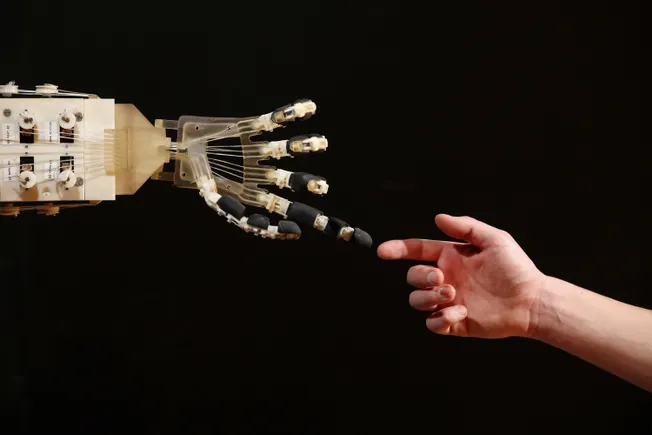
Nancy Delogu, a shareholder at Littler Mendelson, highlights additional ethical dimensions. Some employees may object to AI on the grounds that its deployment can displace human workers, leading to economic hardship and social inequity, which they might see as morally reprehensible. Others might be concerned by AI’s potential, and in some documented instances, actual use in illegal activities, particularly in the context of AI warfare, which raises profound ethical and moral questions about complicity.
It is crucial to note that sources consulted by HR Dive could not identify any mainstream religious texts or major religious organizations that explicitly prohibit the use of AI altogether. While some large religious groups have issued ethical guidelines regarding AI, these documents generally focus on promoting responsible and ethical AI use rather than advocating for its complete avoidance by adherents. However, this absence of explicit doctrinal prohibition does not diminish the validity of an individual’s religious objection.
Paul emphasizes that an employee’s sincerely held religious belief or practice does not require endorsement, direction, or communication from an organized religion. Even where a religious organization has articulated a moral stance on a particular issue, its statement may leave ample room for individual adherents to form their own deeply personal convictions. The seminal case of EEOC v. Consol Energy, Inc. perfectly illustrates this principle. The plaintiff, a West Virginia coal miner, genuinely feared eternal damnation as a consequence of using a biometric hand scanner, a technology he believed would be utilized by the Christian Antichrist to identify followers bearing the "mark of the beast." This unique and idiosyncratic belief, despite lacking direct support from organized religious doctrine, was successfully argued in court because the individual convinced the jury of its sincerity.
Federal courts have consistently demonstrated a reluctance to scrutinize the sincerity of professed religious beliefs. Evan Peña points to the U.S. Supreme Court’s 2022 decision in Kennedy v. Bremerton School District, which concerned a high school football coach’s prayer at midfield. In that ruling, the Court deliberately sidestepped a detailed discussion about the sincerity of the coach’s belief, underscoring the judiciary’s general deference to individual declarations of faith. Such judicial restraint implies that employers face a significant uphill battle in challenging the sincerity of an employee’s belief, even if the belief or practice appears unusual or deviates from mainstream interpretation.
Regulatory bodies, including the U.S. Equal Employment Opportunity Commission (EEOC), share this reluctance to question sincerely held beliefs. Their guidance explicitly advises caution, stating that an employer should generally assume that an employee’s request for religious accommodation is based on a sincerely held religious belief. For this reason, Nathaniel Glasser, a member of the firm at Epstein Becker Green, advises employers to be "very cautious" before attempting to challenge an employee’s religious belief itself. While an employer might pursue such a challenge if they possess "objective information" that an employee lacks sincerity or that the belief is not genuinely religious, Glasser warns that this is "a potentially risky endeavor." The focus, therefore, must shift from questioning the belief to exploring viable accommodations.
Prioritizing Necessity: The First Step in Accommodation
Employers cannot reasonably grant every accommodation request, and with AI, distinguishing between a genuine religious objection and mere technological discomfort can be challenging. However, federal laws are unequivocal: if an employer receives a religious accommodation request, the analytical framework remains consistent with any other such request. Delogu stresses that "The employer has to take a look and try to understand what the objection is and whether that can be accommodated."
Delogu shared a recent client example involving an employee whose work entailed creating digital films and videos. This employee claimed that using AI-generated imagery in projects violated his religious beliefs. The client initiated an interactive process to gather more information, highlighting the multifaceted questions that arise. For instance, the employer needed to clarify the scope of the objection: did "AI" encompass standard digital tools that automatically enhance images, and had the employee previously used such tools? Furthermore, they had to ascertain if the objection extended merely to uploading his work to an AI platform or if the employer could even feasibly prevent such an upload in their existing workflow. "That’s as close as I’ve seen to the technology itself being an issue," Delogu remarked, underscoring the novelty of these scenarios.
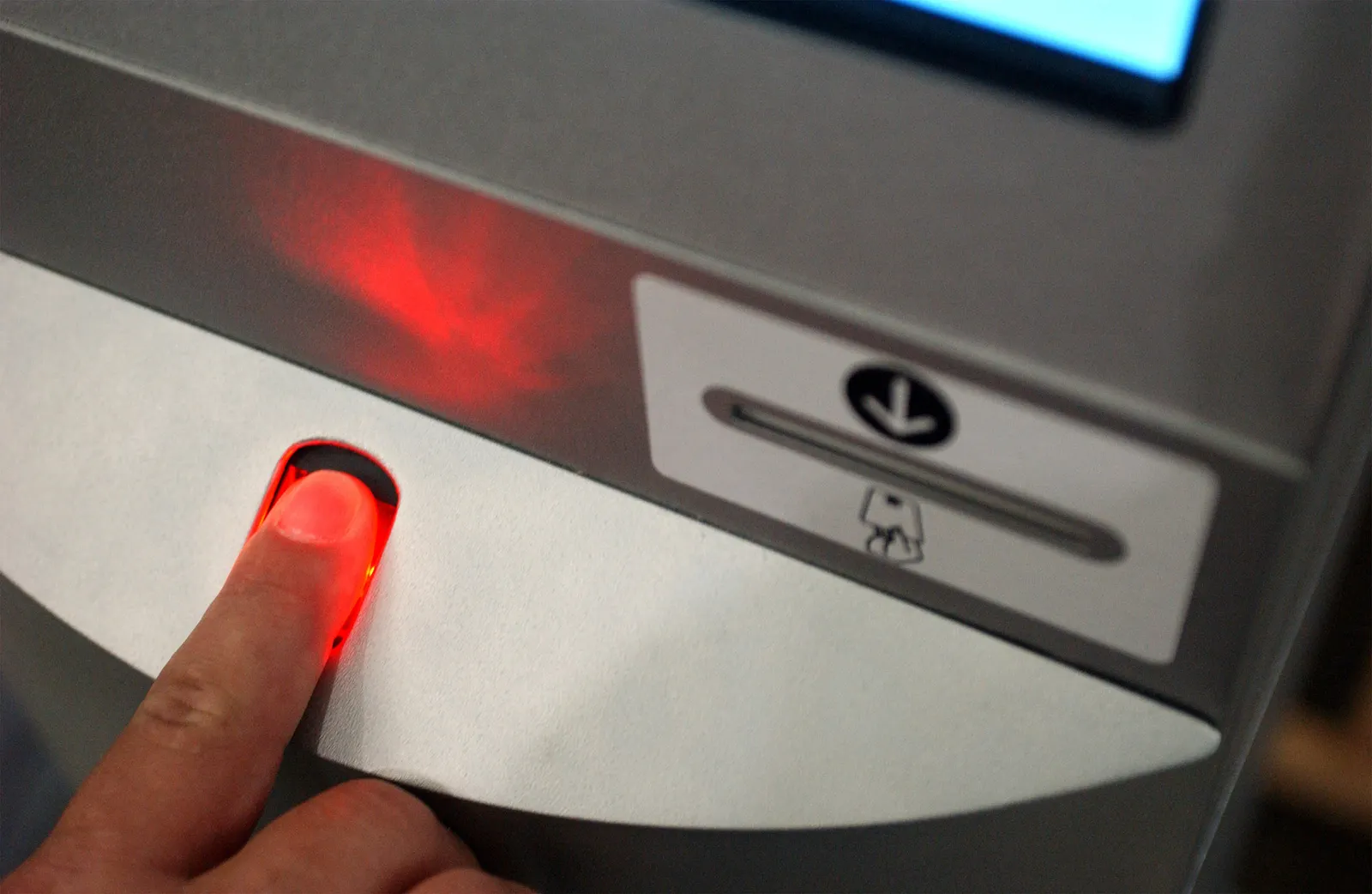
A fundamental initial consideration for employers is to assess whether an employee with a religious objection truly requires AI technology to perform their essential job functions. If the AI tool is not integral to the core duties of the role, a straightforward accommodation might involve exempting the employee from AI use requirements. In the Consol Energy case, the miner could have been accommodated by an alternative method for clocking in or recording work hours, such as a manual timecard or a supervisor’s log. Applying this logic to AI, if an employee objects to using an AI-powered search engine, an employer might permit the use of traditional non-AI search tools, or even physical reference books, if practical and efficient.
HR teams should also review past decisions regarding employees who have refused to use AI for non-religious reasons. If those employees successfully perform their duties without AI, it could significantly weaken an employer’s argument against accommodating a religious objection. While employers are not strictly bound by past precedents, Peña notes that "it is relevant, and a jury’s going to look at that." Consistency in application, even if not legally binding, provides a stronger defense against claims of discriminatory treatment.
The "Undue Hardship" Conundrum Post-Groff v. DeJoy
A significant shift in the legal landscape occurred with the Supreme Court’s 2023 Groff v. DeJoy decision, which heightened the standard for employers to demonstrate that a proposed religious accommodation imposes an "undue hardship" under Title VII of the 1964 Civil Rights Act. The Court ruled that the burden posed by an accommodation must be "substantial in the overall context of the employer’s business."
This elevated bar makes it considerably more difficult for employers, particularly larger organizations, to claim undue hardship. Peña explains that accommodation decisions are now more intrinsically tied to the specific job functions and the employer’s capacity to provide an effective alternative without fundamentally altering the business’s operations.
The inherent efficiency of AI introduces a compelling "wrinkle" into this analysis. As AI tools become increasingly sophisticated, they could enable employees to perform tasks with unprecedented speed and accuracy, potentially leading to a substantial performance gap between AI users and non-users. Peña offers a compelling hypothetical: imagine two customer service representatives, one utilizing AI to handle 40 customer tickets daily, while the other, due to a religious exemption, manages only three. This drastic disparity could raise legitimate questions about whether the employee with significantly lower productivity is genuinely fulfilling the essential functions of their role.
The EEOC’s post-Groff guidance clarifies that employers may consider factors such as increased operating costs, infringement on the rights of other employees, and decreased efficiency when evaluating potential undue hardship. However, this analysis remains a "fact-based, individualized determination," as Glasser emphasizes. The more objective factors an employer can quantify and present – such as demonstrable financial impact or a clear reduction in essential output – the stronger their case for undue hardship. Glasser advises, "Employers should be thinking now about the types of AI tools being offered to their employees and what those tools are intended to do with respect to each individual that’s going to be using them."
Another critical consideration is the ubiquity of AI within a particular work process or job. If AI is deeply embedded throughout an operation, opting out may become practically unfeasible. Glasser illustrates this with a hypothetical manufacturing assembly line where AI is integrated at various stages, meaning even manual workers interact with goods whose production is partly AI-assisted. If a manual worker on this line requests a religious accommodation to avoid contact with AI-produced items, such a request could present an enormous challenge for the employer. Evaluating such a request would necessitate a deep dive into the specific job’s relationship to AI, parsing the degree of interaction and the feasibility of creating a completely AI-free workflow. "Employers will likely have to be prepared to engage in those discussions and get a better understanding of the underlying [religious] belief and what the employee believes they can and cannot do vis a vis AI," Glasser concludes.

Emphasizing Process and Proactive Strategies
Regardless of the ultimate determination regarding an accommodation request, employers must ensure consistent and fair treatment of all religious accommodation requests. Tracey Diamond, a partner at Troutman Pepper Locke, advocates for designating an internal point-of-contact specifically responsible for receiving, considering, and consistently processing such requests. This centralized approach helps maintain uniformity and reduces the risk of arbitrary decisions.
While AI presents novel challenges, the fundamental principles for evaluating accommodation requests remain largely unchanged, according to Paul. This includes meticulous documentation of every aspect of the evaluation process: the precise details of the request, any anticipated operational burdens, projected costs, practical impediments, and other issues that could substantiate a claim of undue hardship.
A common pitfall, Paul observes, is that many employers lack the robust, well-defined processes for handling religious accommodation requests that they typically have in place for disability-related accommodations. He strongly advises HR teams to conduct a comprehensive audit of their existing policies and procedures, including the forms used to process requests, to ensure they possess an effective and legally compliant framework.
Crucially, employers must avoid starting the accommodation process on the wrong foot, particularly by prematurely doubting the sincerity of a religious belief. Delogu stresses that HR professionals cannot simply reject requests that appear difficult to accommodate. Instead, those evaluating requests must invest time to genuinely understand the employee’s specific concerns and engage in an interactive dialogue about potential alternatives. "It bears repeating that there may be some requests from people who share those beliefs out of left field, and we’ve got to treat those seriously," Delogu reiterates, underscoring the imperative for empathy, diligence, and legal adherence in this rapidly evolving landscape.
The intersection of rapidly advancing AI and deeply held religious beliefs represents a complex and largely uncharted legal and ethical territory for employers. As AI continues its pervasive march into the workplace, organizations that proactively develop comprehensive policies, foster open dialogue, and commit to a consistent, well-documented accommodation process will be best positioned to navigate these novel challenges and uphold both innovation and religious freedom.