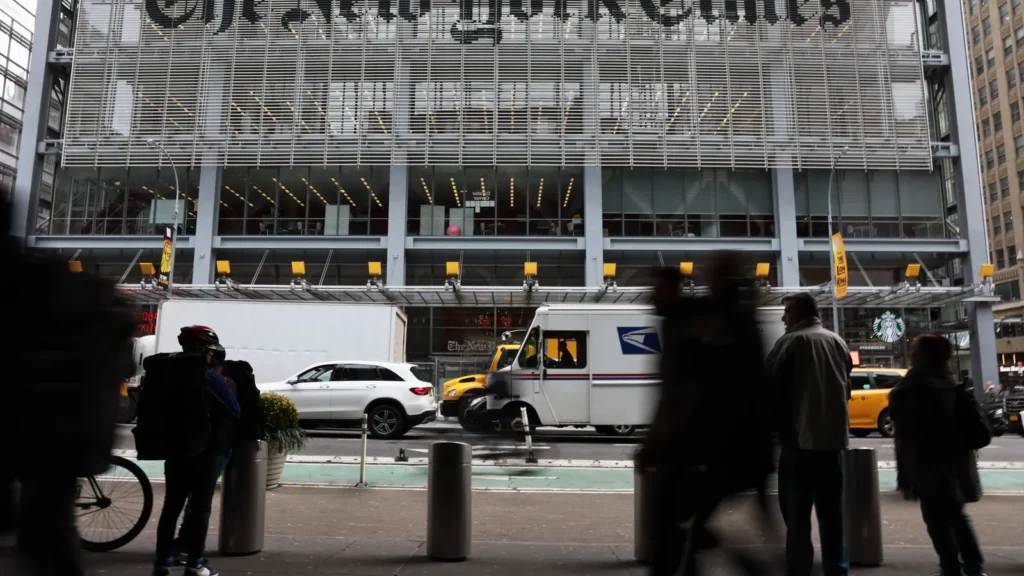
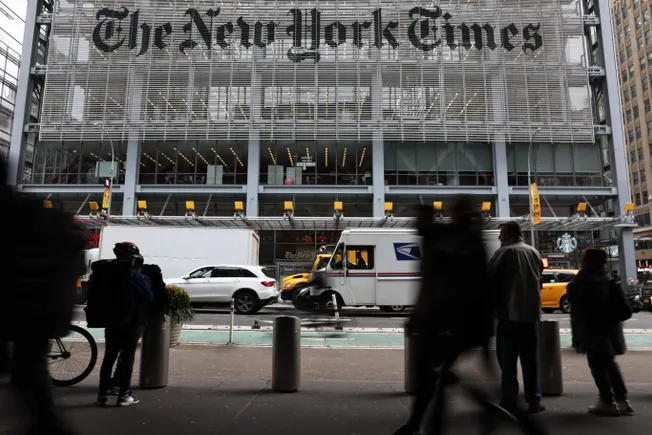
The Equal Employment Opportunity Commission (EEOC) has filed a lawsuit against The New York Times, accusing the venerable news organization of engaging in race and sex discrimination through its diversity, equity, and inclusion (DEI) policies. The federal agency’s action, announced on May 6, 2026, alleges that the newspaper’s employment practices, particularly a specific personnel decision for a deputy newsroom position, prioritize race and gender over merit, prompting a swift and strong denial from the NYT and a rare public dissent from the EEOC’s sole Democratic commissioner, Kalpana Kotagal. Kotagal critically characterized the litigation as politically motivated, suggesting it aligns with the Trump administration’s broader agenda to dismantle civil rights protections and undermine employer efforts to advance equal employment opportunity.
The Heart of the Dispute: Allegations and Denials
The lawsuit stems from what the EEOC describes as the NYT’s "well-documented commitment to enacting race and sex conscious decision making in the workforce through its diversity, equity, and inclusion (DEI) policies." Specifically, the agency cited the company’s 2021 "Call to Action" and other internal publications, which outline explicit plans to increase non-White and female representation, particularly within leadership roles. The EEOC contends that these stated goals translated into discriminatory practices, culminating in a hiring decision that allegedly favored specific demographic groups over the most qualified candidate, thereby violating federal anti-discrimination laws. The agency’s demands include a permanent injunction to prevent future discrimination, back pay for the aggrieved party, and the placement of the charging party into a deputy editor position, among other remedies.
In a robust rebuttal, Danielle Rhoades Ha, senior vice president of communications for The New York Times, categorically rejected the allegations, labeling them "politically motivated." In a public statement, Rhoades Ha asserted, "Our employment practices are merit-based and focused on recruiting and promoting the best talent in the world. We will defend ourselves vigorously." She further criticized the EEOC’s conduct throughout the process, noting that the agency "deviated from standard practices in highly unusual ways." The NYT maintains that the lawsuit focuses on a single personnel decision out of more than 100 deputy positions within the newsroom, arguing that "EEOC’s filing makes sweeping claims that ignore the facts to fit a predetermined narrative." The company firmly states that it hired the most qualified candidate for the role in question and did not factor race or gender into the hiring decision.
A Dissenting Voice: Commissioner Kotagal’s Concerns
The internal dynamics of the EEOC itself have been brought into sharp focus by this lawsuit. Kalpana Kotagal, the only Democratic commissioner on the five-member panel, publicly expressed her strong opposition to authorizing litigation against The New York Times. In a detailed post on LinkedIn, Kotagal stated that she voted against the action not only because she disagreed with the substance of the case but also because she did not "believe it’s a good use of scarce agency resources." Her critique went further, directly implicating the political climate surrounding the agency.
"Regrettably, I fear this litigation is driven not by the merits, but by a desire to advance the administration’s political agenda, which weakens civil rights protections for workers and undermines employer efforts to advance equal employment opportunity," Kotagal wrote. This statement carries significant weight, as it comes from within the agency tasked with enforcing civil rights laws. She also drew a direct link to recent reporting by The New York Times itself in April 2026, which investigated the alleged "weaponization of the agency" and the diversion of its limited resources toward cases that align with the administration’s priorities. This internal criticism from a high-ranking official suggests a deep ideological rift within the EEOC regarding its mission and enforcement strategy, particularly concerning DEI initiatives.
The Broader Political Context: DEI Under Scrutiny
This lawsuit does not occur in a vacuum but rather within a highly charged political environment where diversity, equity, and inclusion programs have become a significant point of contention. The second Trump administration has consistently targeted DEI initiatives since its inception, viewing them as inherently discriminatory or as promoting "reverse discrimination." President Trump himself has frequently used strong rhetoric against DEI, even claiming in a recent State of the Union address that his administration had "ended DEI."
This stance is part of a broader conservative movement that argues certain DEI practices, particularly those involving quotas or specific demographic targets, can lead to preferential treatment based on race or sex, thereby violating the Civil Rights Act of 1964. Critics of DEI often point to the Supreme Court’s 2023 ruling in Students for Fair Admissions v. Harvard/UNC, which effectively ended affirmative action in college admissions, as a signal that similar principles should apply to corporate employment practices. While that ruling specifically addressed higher education, its legal reasoning has been interpreted by some as a blueprint for challenging race-conscious policies in other sectors. The EEOC’s lawsuit against the NYT, therefore, is widely seen as an extension of this larger political and legal campaign against corporate DEI efforts, potentially emboldening other challenges nationwide.
The EEOC’s Mandate and Enforcement Process
The Equal Employment Opportunity Commission is a federal agency established to interpret and enforce federal laws prohibiting discrimination based on race, color, religion, sex (including pregnancy, gender identity, and sexual orientation), national origin, age (40 or older), disability, or genetic information. Its mission is to prevent and remedy unlawful employment discrimination and to advance equal opportunity for all in the workplace. The agency typically initiates an investigation based on a charge filed by an individual employee or applicant, or by a commissioner.
The process usually involves:
- Charge Filing: An individual files a complaint alleging discrimination.
- Investigation: The EEOC investigates the allegations, gathering evidence from both the charging party and the employer.
- Finding: The agency determines if there is "reasonable cause" to believe discrimination occurred.
- Conciliation: If reasonable cause is found, the EEOC attempts to reach a pre-litigation settlement through an administrative conciliation process, encouraging the parties to resolve the dispute voluntarily.
- Litigation: If conciliation fails, the EEOC may decide to file a lawsuit in federal court.
In this case, the EEOC stated that it brought the lawsuit only after first attempting to reach a pre-litigation settlement through conciliation, implying that these efforts were unsuccessful. The NYT’s accusation that the EEOC "deviated from standard practices in highly unusual ways" during this process suggests a procedural dispute in addition to the substantive disagreement over the discrimination claim. This could imply issues with how the investigation was conducted, the transparency of the conciliation efforts, or the final decision to litigate.
A History of Contentious Relations

The lawsuit against The New York Times is not an isolated incident in the fraught relationship between the Trump administration and the prominent media organization. President Donald Trump and his administration have a documented history of legal and rhetorical confrontations with the NYT. Politico reported on multiple lawsuits filed by President Trump and his administration against the newspaper. This pattern of litigation suggests a broader strategy of pressuring or challenging media outlets perceived as critical of the administration.
For instance, The New York Times company itself sued the Defense Department in December 2025 over press restrictions. The newspaper was awarded a significant victory in that press freedom case in March 2026, underscoring its willingness to litigate against federal entities to protect its interests and journalistic principles. This backdrop of ongoing legal battles against federal agencies, coupled with the NYT’s own reporting on the "weaponization" of the EEOC, fuels the narrative that the current discrimination lawsuit is less about employment practices and more about political retribution or a broader ideological agenda.
The Evolving Landscape of Corporate Diversity
The concept of Diversity, Equity, and Inclusion has gained significant traction in corporate America over the past two decades, accelerating notably after major social justice movements in recent years. Companies, including The New York Times, have adopted DEI initiatives with the stated goals of fostering more representative workforces, enhancing innovation, and improving business outcomes by reflecting the diverse populations they serve. These initiatives often involve setting aspirational goals for increasing representation of underrepresented groups, implementing bias training, and reviewing hiring and promotion processes.
The NYT’s 2021 "Call to Action" is emblematic of many corporate DEI strategies that aim to rectify historical underrepresentation. Such initiatives typically involve active recruitment from diverse talent pools, mentorship programs, and sometimes, setting internal targets or benchmarks for demographic representation in leadership. While advocates argue these efforts are crucial for creating equitable workplaces and addressing systemic biases, critics contend that if not carefully implemented, they can inadvertently lead to "reverse discrimination," where qualified individuals from majority groups are overlooked in favor of minority candidates to meet diversity quotas. The legal challenge against the NYT highlights this ongoing tension and the fine line companies must navigate between promoting diversity and adhering strictly to non-discrimination laws. The outcome of this case could significantly influence how corporations design and implement their DEI programs moving forward, pushing them towards more "race-neutral" or "gender-neutral" approaches to achieve diversity goals without explicit consideration of protected characteristics in individual hiring decisions.
Potential Ramifications: Legal and Corporate Implications
The EEOC’s lawsuit against The New York Times carries substantial potential ramifications, both legally and for the broader corporate landscape.
From a legal perspective, if the EEOC prevails, it could set a significant precedent regarding the permissible scope of DEI initiatives. It might force companies to reconsider any programs that involve explicit demographic targets or race/sex-conscious decision-making, potentially shifting towards more process-oriented or outcome-focused DEI strategies that do not directly consider protected characteristics in individual hiring or promotion. The case could clarify the legal boundaries of "affirmative action" in the private sector, particularly in light of recent Supreme Court rulings impacting higher education. The burden of proof in such cases is often complex, requiring the EEOC to demonstrate not just the existence of DEI policies but a direct causal link between those policies and discriminatory employment decisions. Conversely, if the NYT successfully defends itself, it could reinforce the legality of robust DEI programs that are carefully structured to avoid explicit discrimination.

For corporations nationwide, this lawsuit could have a chilling effect on DEI efforts. Many companies, wary of legal challenges, may scale back or re-evaluate their diversity programs, opting for more cautious approaches. This could lead to a re-emphasis on "equal opportunity" in a strictly race-neutral and gender-neutral sense, potentially slowing down progress in diversifying leadership and workforces. HR professionals and legal departments will likely scrutinize their DEI policies more rigorously, ensuring they are defensible against claims of reverse discrimination. The case also underscores the political risks associated with DEI, particularly in a polarized environment where federal agencies may be perceived as weaponized for political ends.
Furthermore, the public dissent from Commissioner Kotagal raises serious questions about the integrity and political independence of the EEOC. If a federal agency charged with upholding civil rights is widely perceived as being driven by political agendas rather than merits, it could erode public trust in its impartiality and effectiveness. This perception could make it more difficult for the EEOC to fulfill its mandate, as both employers and employees might view its actions through a political lens, regardless of the merits of individual cases.
Looking Ahead: The Path of the Litigation
The lawsuit has just begun, and the legal process will likely be protracted. The EEOC has formally requested the court to grant a permanent injunction against The New York Times to prevent future discrimination, order the company to provide back pay to the charging party, and place the charging party in a deputy editor position. These are standard remedies sought in employment discrimination cases. The New York Times has unequivocally stated its intention to "defend ourselves vigorously," indicating a lengthy and potentially high-profile legal battle.
The litigation will likely involve extensive discovery, with both sides presenting evidence related to the specific hiring decision, the NYT’s broader DEI policies, and internal communications. Expert testimony on human resources practices, statistical analysis of workforce demographics, and legal interpretations of anti-discrimination statutes will play crucial roles. The outcome will depend on how the court weighs the evidence, particularly concerning whether the NYT’s DEI initiatives led to actual discriminatory practices in individual employment decisions, or if the company indeed hired the most qualified candidate irrespective of race or gender, as it claims. Given the high stakes and the political context, this case is poised to become a landmark event in the ongoing national debate over diversity, equity, and inclusion in the American workplace.