A recent study commissioned by the organizers of the ORGATEC office design trade fair has underscored the enduring social significance of the physical workplace, revealing that a substantial proportion of employees in Germany have found romantic connections, friendships, and informal social bonds within their professional environments. The research, conducted by YouGov and encompassing a representative sample of over 2,000 individuals, indicates that despite the pervasive trend towards hybrid and remote working models, offices remain fertile ground for building meaningful relationships. This finding holds particular relevance as ORGATEC prepares to host its 2026 event, which will pivot on the theme "From rooms to relationships: designing spaces in an ever-changing world," aiming to explore how workplace design can foster both productivity and human connection.
Key Findings: Romance and Camaraderie in the Cubicle
The YouGov study paints a compelling picture of the workplace as a hub for social interaction, extending beyond purely professional engagement. A striking statistic revealed that approximately one in three employees in Germany has dated a colleague. This figure suggests a significant overlap between professional life and personal relationships, challenging the notion that the workplace is solely a domain for task completion.
Further elaborating on this social dynamic, the survey found that over 40 percent of respondents admitted to having engaged in flirting with colleagues at work. A gender breakdown of this statistic reveals a notable difference, with men (47.33 percent) being more likely to report workplace flirting than women (34.75 percent). This disparity could be attributed to a variety of societal factors and workplace dynamics, warranting further investigation into the nuances of inter-gender communication and perception within professional settings.
The research also delved into the formation of romantic relationships stemming from workplace encounters. Nearly 29 percent of currently employed individuals stated they had entered into a romantic relationship with a colleague at some point in their career. Moreover, almost 16 percent of respondents indicated that they had met their current or former partner through their professional lives. These figures highlight the profound impact the workplace can have on individuals’ personal lives, shaping not just their careers but also their most intimate connections.
The Architecture of Connection: Spaces That Foster Interaction
Beyond romantic entanglements, the study also shed light on the physical environments within offices that are most conducive to informal interaction and relationship building. Company events and after-work social gatherings emerged as the leading catalysts, with 40.24 percent of respondents identifying them as the settings most associated with flirting and personal connections. These organized social occasions provide a relaxed atmosphere, distinct from the daily pressures of work, allowing colleagues to interact on a more personal level.
Break rooms were also identified as significant social spaces, cited by 27.67 percent of respondents. These informal gathering spots offer opportunities for spontaneous conversations and brief moments of respite, fostering a sense of camaraderie. Standard workstations and general office areas, while primarily functional, were recognized by 24.61 percent of respondents as spaces where informal interactions can occur. This suggests that even in designated work zones, opportunities for connection can arise organically.
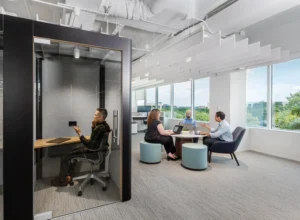
The survey further emphasized the importance of deliberately designed informal workplace settings in encouraging conversation and strengthening interpersonal bonds. Lounge-style seating areas and corner sofas were deemed particularly effective for social interaction by approximately 35 percent of respondents. This points to a growing recognition of the value of comfortable, non-traditional workspaces that promote a more relaxed and approachable atmosphere. Outdoor workspaces and terraces also ranked highly, suggesting that access to fresh air and a change of scenery can enhance social engagement. Shared desks and communal tables, often found in co-working environments or flexible office layouts, were identified by around a quarter of respondents as facilitators of interaction.
The overarching sentiment from the study indicates a strong correlation between informal meeting spaces and a positive workplace culture. More than 65 percent of participants reported that lounges, coffee points, and communal areas had a strong or very strong influence on team cohesion and interpersonal relationships. This data provides a clear mandate for organizations to invest in and prioritize the design of such spaces to cultivate a more connected and collaborative workforce.

ORGATEC 2026: Designing for Human Connection
The comprehensive findings of this study are set to directly influence the thematic direction of ORGATEC 2026, a premier international trade fair for modern working environments. Scheduled to take place in Cologne, Germany, from October 27th to 30th, the event will dedicate its focus to exploring the critical role of workspace design in facilitating communication, collaboration, and social interaction.
Under the overarching theme, "From rooms to relationships: designing spaces in an ever-changing world," ORGATEC 2026 aims to be a crucible for innovation and discussion. The trade fair will bring together a diverse spectrum of stakeholders, including leading companies, innovative designers, strategic planners, and seasoned workplace specialists. Together, they will showcase cutting-edge concepts and practical solutions for creating flexible, adaptive, and human-centric work environments. The event will serve as a vital platform for understanding how to balance the demands of organizational performance with the fundamental human need for connection.
The organizers of ORGATEC are keenly aware of the evolving nature of work, particularly in the wake of the global pandemic which accelerated the adoption of remote and hybrid models. However, this study suggests that the desire for in-person interaction and the formation of relationships remains a powerful driver for employees. The event will therefore explore how physical spaces can be reimagined to not only support individual productivity but also to nurture the social fabric of organizations. This includes strategies for designing spaces that encourage serendipitous encounters, facilitate team building, and ultimately contribute to a more engaged and fulfilling work experience for all.
Broader Implications: The Evolving Role of the Office
The implications of this study extend far beyond the immediate context of ORGATEC. In an era where the definition of "work" is continuously being reshaped by technological advancements and shifting employee expectations, the findings serve as a crucial reminder of the enduring value of physical proximity and shared experiences. While remote work offers undeniable benefits in terms of flexibility and autonomy, it can also lead to feelings of isolation and a potential erosion of organizational culture.
This research suggests that the office of the future is not merely a place to execute tasks, but a dynamic ecosystem designed to foster human connection. Companies that prioritize the creation of inviting and functional social spaces are likely to benefit from increased employee engagement, improved team dynamics, and a stronger sense of belonging. This, in turn, can translate into higher productivity, greater innovation, and enhanced employee retention.
The study’s emphasis on informal settings like lounges and break rooms highlights a paradigm shift in workplace design. It moves away from the purely utilitarian cubicle farms of the past towards environments that acknowledge and actively support the social and emotional needs of employees. This approach recognizes that human beings are inherently social creatures, and that opportunities for informal interaction can be just as vital to a thriving workplace as dedicated meeting rooms or individual workstations.
Furthermore, the data on workplace dating and flirting, while perhaps surprising to some, underscores the complex and multifaceted nature of human relationships that develop within professional settings. It points to the need for organizations to foster an environment of respect and professionalism while also acknowledging that genuine human connections, including romantic ones, can and do emerge from shared work experiences. This requires a nuanced approach to policy and culture, ensuring that such relationships are managed ethically and without compromising the professional integrity of the workplace.
As businesses continue to navigate the post-pandemic landscape, understanding the social dimension of the workplace has become paramount. The insights gleaned from the ORGATEC-commissioned study provide a robust foundation for architects, designers, and organizational leaders to create work environments that are not only efficient and productive but also deeply human and conducive to building lasting relationships. The future of work, it seems, is not just about where we work, but how we connect within those spaces.