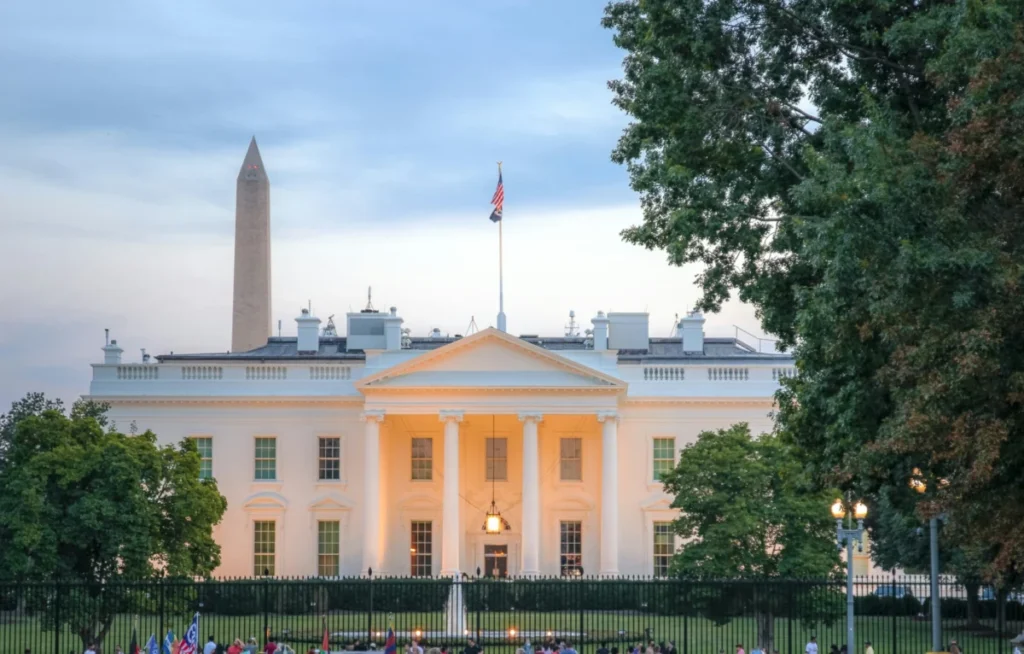
In a series of rapid-fire executive actions that have sent shockwaves through the federal workforce and the legal community, President Donald Trump has moved to terminate the leadership of several independent agencies, most notably the Equal Employment Opportunity Commission (EEOC). On the afternoon of Tuesday, January 28, 2025, the White House confirmed the dismissal of EEOC Commissioners Charlotte Burrows and Jocelyn Samuels, both Democratic appointees. The removal of these officials, who were serving fixed, five-year terms mandated by statute, represents a significant escalation in the administration’s efforts to assert "unitary executive" control over agencies that have historically operated with a degree of independence from the presidency.
The dismissals were not limited to the EEOC’s voting members. President Trump also terminated EEOC General Counsel Karla Gilbride, a move that parallels the dismissal of National Labor Relations Board (NLRB) General Counsel Jennifer Abruzzo earlier in the week. These actions follow a broader pattern of clearing out Democratic leadership in bipartisan boards, including the firing of NLRB Member Gwynne Wilcox and three members of the Privacy and Civil Liberties Oversight Board (PCLOB). As these agencies are left without quorums or with deadlocked partisan splits, the administration is effectively pausing the enforcement of various civil rights and labor protections while the legal validity of these terminations is debated in federal court.
The EEOC Quorum Crisis and Immediate Operational Impact
The EEOC is governed by Title VII of the Civil Rights Act of 1964, which establishes a five-member Commission. By law, the Commission requires a quorum of at least three members to exercise its primary statutory functions, such as approving systemic litigation, issuing new regulations, or modifying existing enforcement guidance. With the removal of Burrows and Samuels, the Commission is left with only two members: Acting Chair Andrea Lucas, a Republican, and Commissioner Kalpana Kotagal, a Democrat.
Without a third member, the EEOC is legally incapacitated regarding several high-level functions. The lack of a quorum does not mean the agency ceases to exist; rather, it enters a state of restricted operation. Career staff at the agency’s 53 field offices will continue to process the tens of thousands of discrimination charges filed by workers annually. However, the agency’s ability to "swing the big hammer"—initiating massive systemic lawsuits that challenge company-wide policies—is now largely frozen.
According to the Commission’s own internal delegation framework, last updated in January 2021, the General Counsel can continue to file routine, individual litigation. However, the General Counsel is prohibited from initiating cases involving pattern-or-practice discrimination, cases that require significant agency resources, or cases that take legal positions contrary to established Circuit Court precedent without a formal vote from a quorum of the Commission. Consequently, while day-to-day investigations into individual claims of harassment or wrongful termination will proceed, the era of aggressive, broad-scale EEOC enforcement actions is effectively on hiatus until new commissioners are confirmed by the Senate.
A Coordinated Sweep of Independent Agencies
The dismissals at the EEOC are part of a synchronized strategy to reshape the federal administrative state. The timeline of these events suggests a highly organized effort by the White House Counsel’s office:
- January 27, 2025: The administration fires NLRB General Counsel Jennifer Abruzzo. Simultaneously, the EEOC website begins purging technical assistance documents related to LGBTQ+ rights and artificial intelligence.
- January 28, 2025 (Morning): Reports emerge that the three Democratic members of the PCLOB have been terminated.
- January 28, 2025 (Afternoon): Media reports confirm the firing of EEOC Commissioners Burrows and Samuels. NLRB Member Gwynne Wilcox is also dismissed, leaving the NLRB without a quorum.
- January 28, 2025 (Evening): Acting EEOC Chair Andrea Lucas issues a press release titled "Removing Gender Ideology and Restoring the EEOC’s Role of Protecting Women in the Workplace," signaling a fundamental shift in agency priority.
This "clean sweep" approach targets agencies that share a similar bipartisan, multi-member structure. The National Labor Relations Act (NLRA) and Title VII were both designed to ensure that these agencies do not become mere extensions of the sitting president’s political agenda. By removing members before their terms expire, President Trump is challenging the very concept of the "independent agency," a cornerstone of American administrative law for nearly a century.
Constitutional Battleground: Humphrey’s Executor vs. The Unitary Executive
The legal justification for these firings rests on a burgeoning constitutional theory known as the "Unitary Executive." Proponents of this theory argue that Article II of the Constitution grants the President absolute authority to remove any executive branch official at will. This theory has gained significant traction in recent years, bolstered by Supreme Court decisions like Seila Law v. CFPB (2020) and Collins v. Yellen (2021), which struck down removal protections for leaders of single-director agencies.
However, multi-member boards like the EEOC have long been protected by the 1935 Supreme Court precedent Humphrey’s Executor v. United States. In that landmark case, the Court ruled that Congress could limit the President’s power to remove members of "quasi-legislative" or "quasi-judicial" bodies, such as the Federal Trade Commission, to cases of "inefficiency, neglect of duty, or malfeasance in office."
Crucially, Title VII—the law that created the EEOC—does not contain an explicit "for cause" removal provision for its commissioners, though it does establish fixed five-year terms. The Trump administration is betting that the current Supreme Court, which includes several justices who have expressed skepticism toward Humphrey’s Executor, will rule that fixed terms alone do not provide removal protection. In his Seila Law concurrence, Justice Clarence Thomas, joined by Justice Neil Gorsuch, argued that Humphrey’s Executor was wrongly decided and should be overruled entirely.
Reactions from the Dismissed Officials
The dismissed officials have indicated that they do not intend to leave quietly. Commissioner Jocelyn Samuels, a veteran civil rights attorney, posted on social media that her removal "violates the law and represents a fundamental misunderstanding of the nature of the EEOC as an independent agency." She confirmed that she is currently "considering legal options," suggesting a potential lawsuit to regain her seat.
Charlotte Burrows, who served as the EEOC Chair under the Biden administration, released a statement through her legal counsel stating she would "explore all legal options." If these officials sue, the resulting litigation could move rapidly through the court system, potentially reaching the Supreme Court within the next year. A ruling in their favor would represent a massive blow to the administration’s restructuring plans, while a ruling in favor of the President would effectively end the independence of the federal administrative state.
Shift in Enforcement Priorities: AI, DEI, and Gender Identity
While the legal battle looms, Acting Chair Andrea Lucas has wasted no time in redirecting the EEOC’s focus. On her first full day of authority, the agency removed several key technical assistance documents from its website. These included:
- Guidance on the use of Artificial Intelligence in hiring and its potential for algorithmic bias.
- Fact sheets regarding LGBTQ+ worker protections under the Bostock v. Clayton County decision.
- Guidance on transgender employees’ access to bathrooms and the use of preferred pronouns.
In her official statement, Lucas emphasized that her priorities would include "rooting out unlawful DEI-motivated race and sex discrimination" and "defending the biological and binary reality of sex." This indicates a 180-degree turn from the previous administration’s focus on systemic racism and gender equity. The EEOC is now expected to pivot toward investigating "reverse discrimination" claims and protecting workers who refuse to participate in diversity, equity, and inclusion programs on religious or ideological grounds.
Data and Historical Context
The EEOC typically handles between 65,000 and 80,000 charges of discrimination annually. In fiscal year 2023, the agency recovered over $665 million for victims of discrimination. Historically, the agency has maintained a bipartisan balance, even during periods of intense political polarization.
The current vacancy crisis at the EEOC is not entirely without precedent, but the method of its creation is. During the first Trump administration and the early Biden administration, the EEOC occasionally lacked a quorum due to the slow pace of Senate confirmations. However, those vacancies occurred due to the natural expiration of terms or voluntary resignations. The deliberate firing of sitting commissioners to create a vacancy is a first in the agency’s 60-year history.
Implications for the American Workplace
For employers and HR professionals, the immediate future is one of "frozen" regulations and shifting enforcement. While the EEOC’s 2024 Enforcement Guidance on Harassment remains technically in effect, Acting Chair Lucas has noted that the agency cannot unilaterally revoke it without a quorum. However, employers can expect that the agency will no longer prioritize cases based on that guidance if they conflict with the new administration’s "binary sex" priorities.
Furthermore, the dismissal of the General Counsel means that the pipeline of new federal lawsuits will likely slow to a trickle. Acting General Counsel, likely a career official appointed under the Federal Vacancies Reform Act, will have the authority to manage existing cases but will be cautious about initiating new high-profile litigation that might be disavowed by a future Republican-majority Commission.
As the legal challenges to these firings proceed, the very definition of "independent" within the U.S. government hangs in the balance. If the President’s actions are upheld, the EEOC, NLRB, and other commissions will effectively become cabinet-level departments, subject to the total policy control of whoever occupies the Oval Office. This would mark the end of a century-long experiment in bipartisan, expert-led governance of the American economy and workforce.