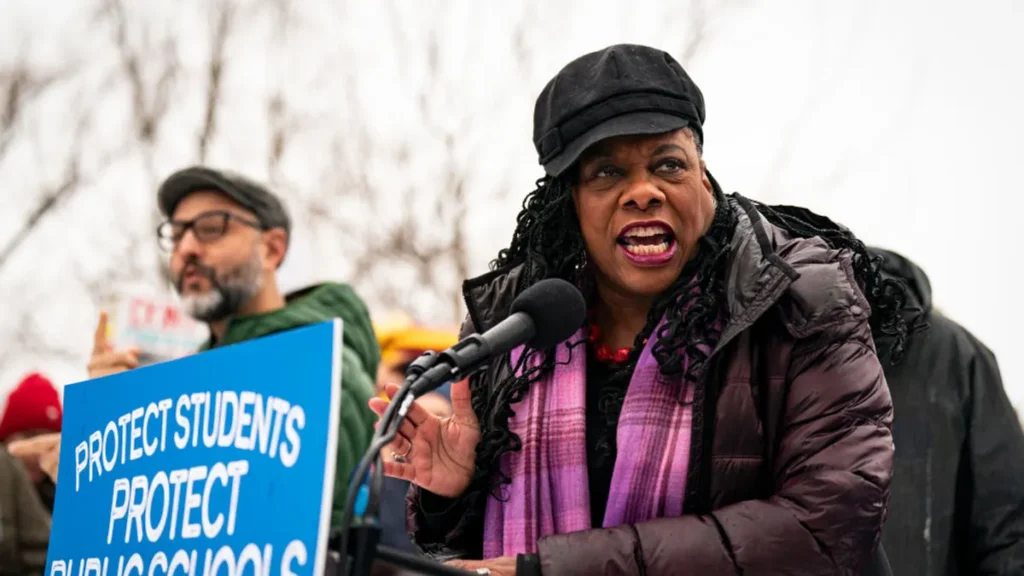
The National Education Association (NEA), the largest labor union in the United States, is facing a formal complaint filed with the Equal Employment Opportunity Commission (EEOC) by the Louis D. Brandeis Center for Human Rights Under Law (Brandeis Center). The complaint, filed on April 29, 2026, alleges that the NEA discriminated against its Jewish members by permitting and fostering pro-Palestinian activities that created a "hostile environment" during its 2025 Representative Assembly. This accusation has brought to the forefront deeply divisive issues surrounding political expression, religious discrimination, and the responsibilities of large membership organizations to protect all their constituents in an increasingly polarized climate.
Understanding the Parties and the Allegations
The National Education Association, founded in 1857, represents nearly 3 million educators, including public school teachers, faculty and staff in higher education, retired educators, and college students preparing to become teachers. As a powerful voice in American education policy and labor rights, the NEA’s internal dynamics and conduct significantly influence its vast membership and the broader educational landscape. Its annual Representative Assembly (RA) serves as its principal governing body, where delegates from across the nation convene to debate and vote on critical policy and governance initiatives.
The Louis D. Brandeis Center for Human Rights Under Law is a non-profit organization dedicated to advancing the civil and human rights of the Jewish people and promoting justice for all. It actively combats antisemitism through legal advocacy, education, and research, often intervening when it perceives Jewish individuals or groups are subjected to discrimination or harassment, particularly in educational or professional settings. By filing a complaint with the EEOC, the Brandeis Center aims to trigger a federal investigation into the NEA’s conduct, asserting that the union violated federal anti-discrimination laws.
The core of the complaint centers on the NEA’s alleged failure to protect its Jewish member-delegates from antisemitic harassment during the 2025 Representative Assembly, held in Portland, Oregon. According to the nearly 300-page document, Jewish members had expressed "a reasonable and objectively grounded concern for their physical safety" leading up to the conference, given the prevailing political climate. The complaint posits that while NEA leadership announced a zero-tolerance policy for "abusive behavior" during the RA, this prohibition was selectively unenforced when the conduct was directed at Jewish delegates.
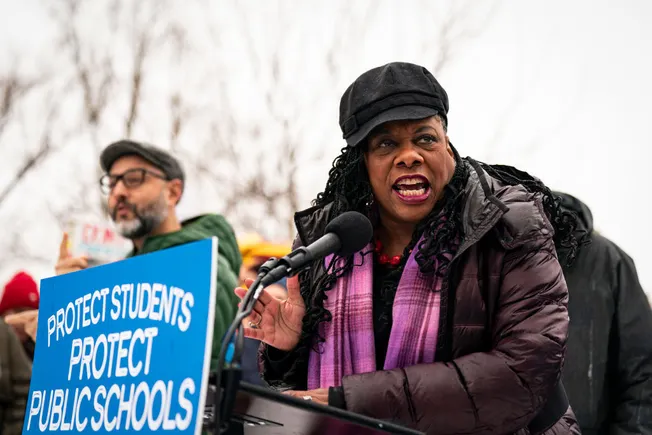
A Chronology of Allegations and Events
The period leading up to and following October 2023 saw a significant surge in tensions globally, particularly concerning the Israeli-Palestinian conflict. This geopolitical event profoundly impacted public discourse, manifesting as increased antisemitism and Islamophobia across various sectors, including educational institutions, workplaces, and professional organizations. This backdrop forms a crucial context for the Brandeis Center’s complaint against the NEA.
Pre-Conference Concerns (Early 2025): As plans for the 2025 Representative Assembly solidified, Jewish NEA members reportedly conveyed anxieties about potential hostility. The complaint suggests these concerns were "objectively grounded," indicating a pre-existing awareness of a fraught atmosphere within some segments of the union regarding the Israeli-Palestinian conflict. The delegates’ apprehension stemmed from a broader societal trend where discussions around the conflict often devolved into acrimony, sometimes bordering on discriminatory rhetoric, particularly against Jewish individuals.
The 2025 Representative Assembly (July 2025, Portland, Oregon): The Brandeis Center’s complaint specifically highlights incidents that occurred during this annual gathering. The Representative Assembly is a pivotal event for the NEA, where thousands of delegates discuss and vote on resolutions that guide the union’s advocacy and policy positions. It is meant to be a forum for democratic debate and decision-making.
One critical piece of evidence cited in the complaint is a July 12, 2025, email sent to NEA leadership by a Jewish NEA member, who is also a complainant in the EEOC charge. Titled "What I Witnessed at the NEA Representative Assembly Shook Me to My Core," the email vividly described a coordinated effort to marginalize and demonize Jewish delegates. The complainant wrote: "I watched as delegates lined up wearing keffiyehs, donned in Palestinian flags, and sporting shirts accusing Jews of genocide — ready, coordinated, and rehearsed to speak against anything remotely Jewish." The email further elaborated, "These were not spontaneous remarks. They were strategic efforts to erase and vilify. It was a preplanned coordinated attack to demonize, vilify and make Jews feel unsafe."
This account suggests that the alleged hostile environment was not merely a collection of isolated incidents but rather a deliberate, organized campaign to target Jewish members based on their identity and perceived association with Israel. Such actions, if substantiated, could constitute religious discrimination under federal law, creating an environment where Jewish members felt unwelcome, threatened, and unable to participate fully and safely in their union’s governance.

Filing the EEOC Complaint (April 29, 2026): After months of internal communication, or perhaps perceived inaction, the Brandeis Center officially filed the comprehensive, nearly 300-page complaint with the EEOC. This formal step signifies a serious legal challenge, moving the allegations from internal union discourse to federal regulatory scrutiny.
Legal Framework and Supporting Data
The complaint against the NEA falls under the purview of Title VII of the Civil Rights Act of 1964, which prohibits employment discrimination based on race, color, religion, sex, or national origin. While the NEA is a union and not an employer in the traditional sense for all its members, Title VII applies to labor organizations, prohibiting them from discriminating against their members. A "hostile work environment" claim under Title VII arises when unwelcome conduct based on a protected characteristic (like religion) becomes so severe or pervasive that it alters the conditions of the individual’s membership and creates an abusive professional or associational environment.
For a hostile environment claim to succeed, the conduct must be objectively offensive, meaning a reasonable person would find it hostile or abusive, and subjectively offensive, meaning the victim perceived it as such. The complaint specifically alleges that NEA leadership failed to intervene, effectively allowing the hostile environment to persist and, by extension, contributing to it through inaction.
The Brandeis Center’s actions align with a broader trend of increased legal challenges concerning antisemitism in various institutions following October 2023. Organizations like the Anti-Defamation League (ADL) have reported a dramatic rise in antisemitic incidents across the United States. For instance, the ADL’s annual audit for 2023 reported a record high in antisemitic incidents, including harassment, vandalism, and assault, with a significant spike occurring in the months following the Hamas attack on Israel. While specific data for NEA’s internal climate isn’t public, these national trends provide a critical backdrop, illustrating the pervasive nature of antisemitism that Jewish members would likely encounter and fear. The complaint underscores the difficulty for large organizations to navigate complex geopolitical issues without inadvertently (or allegedly, intentionally) allowing discrimination to flourish within their ranks.
Official Responses and the Path Forward

In response to the allegations, a NEA spokesperson issued a statement to K-12 Dive, asserting the organization’s firm stance against antisemitism. "NEA does not tolerate antisemitism in any form and remains committed to ensuring that all members and students, including Jewish members and students, can work and learn in a safe and welcoming environment," the spokesperson stated. The union also emphasized its commitment to inclusivity: "We always ensure our meeting rules and programs serve and support all members, regardless of race, religion, ethnicity, background, sexual orientation, or gender identity."
These statements reflect the NEA’s official policy of non-discrimination and its stated dedication to creating an inclusive environment. However, the Brandeis Center’s complaint suggests a significant disconnect between these stated policies and their alleged implementation on the ground, particularly concerning the protection of Jewish members during a politically charged event.
The EEOC’s process typically involves an investigation into the allegations. This can include interviewing witnesses, gathering documents, and potentially attempting to mediate a resolution between the parties. If the EEOC finds reasonable cause to believe discrimination occurred, it may pursue conciliation to achieve a voluntary settlement. If conciliation fails, the EEOC can file a lawsuit, or it can issue a "right-to-sue" letter, allowing the complainants to pursue their case in federal court. The length and outcome of such an investigation can vary significantly, often taking months or even years.
Broader Impact and Implications
This complaint against the NEA reflects a profound "fracture within the education community" that has become increasingly evident since the October 2023 Hamas attack on Israel. The conflict has not only sparked intense debate but has also exposed deep ideological rifts, particularly concerning issues of identity, human rights, and political solidarity. Similar concerns about hostile environments and discrimination have been raised by educators and students in various academic and professional settings across the country, highlighting a systemic challenge for institutions attempting to balance freedom of speech with the imperative to prevent discrimination and protect vulnerable groups.
Implications for Professional Organizations: The NEA case sets a precedent for how professional unions and associations are expected to manage political discourse within their ranks. It underscores the legal obligation to ensure that even during contentious debates, members’ protected characteristics, such as religion, are not used as a basis for harassment or the creation of a hostile environment. The outcome of the EEOC investigation could redefine the boundaries of acceptable political expression within professional bodies, emphasizing that freedom of speech does not extend to discriminatory conduct.
Impact on Membership and Reputation: For the NEA, this complaint poses a significant challenge to its reputation as a champion of inclusivity and workers’ rights. Allegations of religious discrimination can erode trust among its diverse membership, potentially leading to internal strife, decreased member engagement, or even calls for leadership changes. The union will likely face pressure to demonstrate concrete steps to address these concerns and reassure all its members of their safety and belonging.
Navigating Contentious Issues: The incident highlights the inherent difficulty for large, diverse organizations in navigating highly contentious international conflicts. The impulse to express solidarity with one side can, if not carefully managed, inadvertently lead to the marginalization or targeting of members associated with the other side, or with specific religious or ethnic groups. This case will likely prompt other unions and professional associations to review their internal policies and practices for managing political advocacy and ensuring compliance with anti-discrimination laws.
The Brandeis Center’s complaint against the National Education Association is more than just a legal dispute; it is a significant test of how one of the nation’s most influential professional organizations upholds its commitment to diversity, equity, and inclusion in an era of heightened political and social polarization. The resolution of this case will undoubtedly have lasting implications for the NEA, its members, and the broader landscape of civil rights in professional associations across the United States.