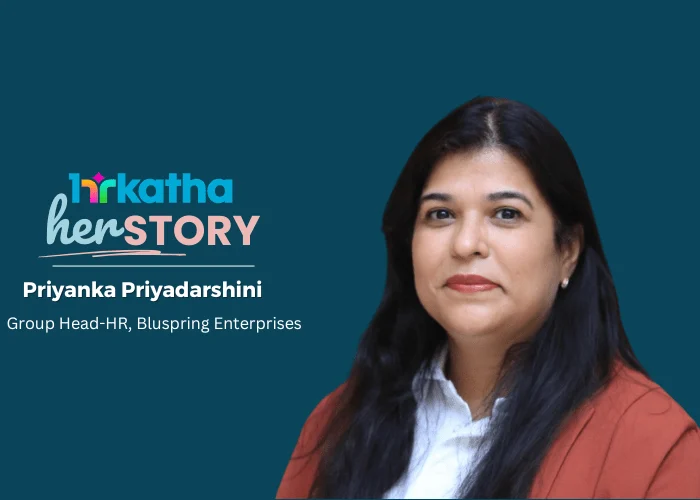
Priyanka Priyadarshini’s journey into the intricate world of Human Resources was not dictated by a rigid career plan but rather by an innate curiosity about human behaviour, the dynamics of team collaboration, and the underlying factors that enable certain organizational environments to flourish while others falter. This natural inclination, which sharpened into a clear professional calling over time, positioned her at the vital intersection of business strategy and human potential, offering a unique vantage point to perceive organizations not merely as corporate structures but as complex, living systems. Today, as the Group Head-HR at Bluspring Enterprises, Priyadarshini champions a philosophy that transcends traditional HR functions, viewing it as a pivotal force in shaping organizational culture and fostering environments where both individuals and the business can achieve symbiotic growth.
The Evolution of a Purpose-Driven HR Leader
Priyadarshini’s career trajectory reflects a broader paradigm shift within the Human Resources domain, moving from a predominantly administrative and support function to a strategic imperative. Her early career was marked by a deepening understanding of this evolution. As she navigated various roles and organizations, her initial curiosity blossomed into a profound sense of purpose – a commitment to harnessing human capital for sustainable business success. This evolution mirrors industry trends, where HR leaders are increasingly expected to be business strategists, talent architects, and culture champions, rather than just policy enforcers.
According to a recent report by Deloitte, 85% of HR leaders believe that the function needs to evolve rapidly to meet the demands of a changing workforce and business landscape. Priyadarshini embodies this progressive outlook, advocating for HR to be seen as a proactive driver of organizational success, rather than a reactive responder to operational needs. Her belief is that HR’s true value emerges when it actively shapes the organizational landscape through its people, a perspective that guides her leadership at Bluspring Enterprises. This involves moving beyond merely managing processes and policies to actively crafting environments that foster innovation, engagement, and productivity.
Navigating and Overcoming Unconscious Bias Through Performance
The path to leadership, particularly for women, is often paved with subtle challenges. Priyadarshini recounts instances early in her career where expectations, though not overtly discriminatory, subtly diverged, particularly concerning aspects like professional mobility, long-term commitment, or assumptions following marriage. These nuanced signals suggested that the bar for her might be set differently compared to her male counterparts. Such experiences are not isolated; a study by McKinsey & Company revealed that women, especially in early to mid-career stages, often face a "broken rung" phenomenon, struggling to advance to higher leadership positions due to systemic biases and lack of equitable opportunities.
Confronted with these latent biases, Priyadarshini made a conscious and strategic decision: to not engage defensively but to meticulously build credibility through unwavering consistency, a strong sense of ownership, and demonstrably superior outcomes. Her philosophy crystallized into the understanding that while unconscious bias might persist, its influence can be mitigated and perceptions gradually shifted through sustained, high-level performance coupled with quiet confidence. This approach allowed her to forge her own professional space, remaining grounded in her work and refusing to let external perceptions dictate her career trajectory. This strategy underscores a critical lesson for aspiring leaders: competence, delivered consistently, often speaks louder than words and can dismantle preconceived notions, creating pathways where none initially seem to exist. Her experience aligns with the broader push for meritocracy, where impact and capability, not gender, become the defining metrics of leadership.
Ethical Leadership: Navigating Critical Transitions with Integrity and Empathy
Some of the most demanding decisions in Priyadarshini’s career have emerged during periods of significant organizational transition, such as workforce restructuring, managing large-scale changes, or balancing critical business priorities with their inevitable human impact. These are inherently complex situations, she notes, acknowledging that behind every role is an individual, a family, and a unique life story. Her experience includes making difficult calls essential for business sustainability, even when aware of their direct human consequences.
In such moments of profound responsibility, Priyadarshini emphasizes that her decisions have always been guided by an unwavering commitment to clarity of intent, fairness, transparency, and integrity. Equally paramount is the manner in which these decisions are communicated – with genuine empathy, respect, and honesty. This delicate balance between robust business imperatives and deep human consideration is a hallmark of effective HR leadership. These critical junctures, she observes, are the ultimate tests of an HR leader’s judgment, values, and ethical framework. They require not only strategic acumen but also profound moral courage and compassion. The impact of empathetic communication during organizational change is well-documented; research by Gartner indicates that employees who feel supported and informed during times of change are significantly more engaged and productive, highlighting the long-term benefits of an integrity-driven approach.
Strategic HR: Shifting from Support to Influence
For Priyadarshini, the true essence of strategic HR begins with an intimate and granular understanding of the business itself – its core priorities, inherent challenges, and overarching strategic direction. This perspective transcends the traditional view of HR as a mere support function, repositioning it as an indispensable partner in value creation. Strategic HR, in her view, is not about crafting isolated policies but about meticulously designing people practices that directly enable and accelerate desired business outcomes. This can manifest in various critical areas, from driving enhanced productivity and cultivating robust leadership pipelines to significantly improving organizational capabilities and deliberately shaping a resilient, high-performance culture.
In practice, this strategic orientation translates into a relentless pursuit of the right questions: What are the business’s fundamental objectives? What specific talent profiles and leadership qualities are essential to achieve these objectives? Where do critical gaps in capability or capacity exist? The comprehensive answers to these pivotal questions then serve as the foundational blueprint for the HR interventions that follow, ensuring alignment and impact. Priyadarshini firmly believes that Human Resources truly ascends to a strategic level when it actively influences core business decisions, moving beyond a passive supportive role to an active, catalytic force in shaping the enterprise’s future. Her conviction aligns with contemporary HR thought leaders who advocate for HR professionals to become business interpreters, data scientists, and change agents, using insights to drive strategic talent decisions that directly impact the bottom line. The emphasis on outcomes over mere activity is central to this paradigm shift, where HR metrics are intrinsically linked to business performance indicators.
Sustaining the Leadership Pipeline: Bridging the Mid-Career Gap for Women
While significant progress has been made in recent years, marked by an increasing number of women in leadership roles, greater visibility, and a heightened organizational focus on diversity and inclusion (D&I), a persistent challenge remains: sustaining the leadership pipeline, particularly at the crucial mid-career stages. This is a phase where many talented women frequently step back or decelerate their career progression due to the confluence of competing professional and personal responsibilities, such as caregiving or family commitments. Statistics from the World Economic Forum highlight that while women enter the workforce at rates comparable to men, their representation significantly drops off at senior management and executive levels, creating a persistent gender gap.
To counteract this attrition, Priyadarshini stresses the imperative for organizations to proactively and consciously create equitable access to high-impact roles, ensure participation in critical decision-making forums, and assign business-critical projects to women. She makes a crucial distinction: while representation is steadily improving, true inclusion is ultimately measured by influence. It is in fostering genuine influence – empowering women not just to be present but to actively shape strategy and outcomes – that organizations still need to exert greater effort. This requires not merely a proliferation of D&I initiatives but a deep-seated organizational intent to embed inclusion into the very fabric of its culture and operational practices. This means addressing systemic barriers, providing mentorship and sponsorship, and implementing flexible work arrangements that support career longevity for women.
Mastering Change: From Resistance to Acceptance Through Trust
Priyadarshini has encountered numerous instances where proposed changes, particularly concerning performance frameworks or productivity expectations, were initially met with resistance or hesitation from employees. Through these experiences, she has gleaned a fundamental truth: simply pushing for change is insufficient; genuine understanding is paramount. The pivotal moment in converting skepticism to acceptance, she has learned, invariably lies in clearly articulating the "why." This involves transparently explaining the necessity of the change, the specific problem it aims to solve, and the long-term value it is poised to create for both individuals and the organization.
Her approach to change management is rooted in early stakeholder involvement, actively listening to concerns without dismissal, and maintaining absolute transparency in the implementation process. Over time, when employees observe consistency in the approach and perceive fairness in execution, initial resistance gradually transforms into acceptance. This transformation is fundamentally underpinned by trust, which Priyadarshini identifies as a critical ingredient for making any organizational change truly sustainable. This perspective aligns with leading change management models, which emphasize communication, participation, and psychological safety as key factors in successful transitions. The absence of trust, conversely, can lead to increased employee turnover, reduced productivity, and failed initiatives, underscoring the vital role of ethical and transparent leadership during periods of flux.
The Strategic Imperative: HR as a Business Partner
Priyadarshini advocates for the complete retirement of the outdated mindset that relegates HR to a mere support function. In the contemporary business landscape, HR plays an increasingly vital and far more significant role in directly shaping critical business outcomes through its strategic management of talent, leadership development, culture cultivation, and capability building. To treat HR as purely operational or administrative is to severely limit its profound impact and undervalue its potential contributions.
What truly warrants greater attention and investment, she argues, is the conceptualization and practice of HR as a deeply integrated strategic partner. This means an HR function that possesses an intimate understanding of the business’s realities, challenges, and aspirations, and actively contributes to its growth trajectory. This perspective resonates with global trends emphasizing HR’s role in driving competitive advantage. The rise of HR analytics, workforce planning, and employee experience design are all testament to this elevated status.
Priyadarshini’s leadership at Bluspring Enterprises, marked by its quiet consistency and an unwavering emphasis on tangible outcomes over fleeting perceptions, exemplifies this progressive belief. Her career advice – to "always keep investing in yourself, your learning, your perspective, and your growth" – underscores a commitment to continuous development that is essential for both individual leaders and the HR profession at large. Her conviction that "leadership is defined by capability and impact, not gender" serves as a powerful testament to her personal journey and her vision for an equitable and high-performing workplace. By starting her day with "clarity on priorities and what truly needs attention," she models the focused strategic thinking required in modern HR. If not HR, she envisions herself in "business strategy or people consulting," further highlighting her innate drive to influence organizational direction through understanding human dynamics. What energises her most about her work is "seeing people and organizations evolve and grow together," encapsulating her holistic vision for a symbiotic relationship between talent and enterprise.
Ultimately, Priyadarshini’s career and philosophy serve as a compelling blueprint for the future of Human Resources: a strategic, ethical, and people-centric function that is indispensable to navigating the complexities of the modern business world and fostering environments where both human potential and organizational objectives can thrive synergistically. Her unwavering commitment to integrity, performance, and strategic influence continues to redefine the boundaries of HR leadership, quiet, consistent, and profoundly impactful.