The landscape of global business is undergoing a profound transformation, driven by the rapid integration of Artificial Intelligence (AI). Following an extensive period of travel and engagement with hundreds of companies across Europe, Asia, and the Middle East, a clear consensus has emerged: AI is no longer a nascent concept but a tangible, indispensable business tool with an ever-expanding array of practical applications. This widespread adoption signifies a pivotal moment, often described as "crossing the Rubicon," where the integration of AI into core business operations is irreversible.
AI Adoption Reaches Critical Mass, Driving Significant ROI
Recent research underscores the accelerating pace of AI integration within the corporate world. A comprehensive survey conducted by Wharton reveals that a significant 46% of business leaders now utilize Generative AI (Gen AI) on a daily basis, with an overwhelming 80% incorporating it weekly. Crucially, these users are actively measuring the impact of AI, with 72% reporting that they track Return on Investment (ROI). The findings further indicate a strong positive financial outcome, as 74% of these users report a favorable return. Notably, the Human Resources (HR) department has emerged as a key beneficiary, ranking as the third-highest department for AI use cases, trailing only IT and Finance.
This surge in adoption is naturally accompanied by a commensurate increase in financial commitment. The Wharton survey indicates that 23% of large companies are allocating $20 million or more annually to AI initiatives, while an additional 43% are investing over $10 million per year. These substantial investments are yielding tangible benefits, primarily in the form of enhanced productivity.
The Dawn of Individual Productivity: AI as the New Digital Toolkit
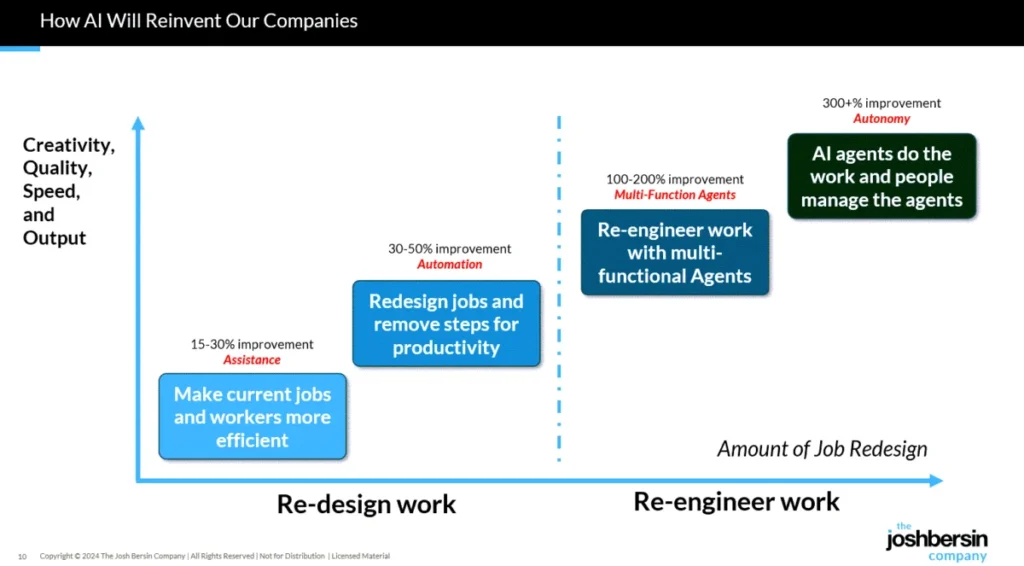
The primary driver of AI adoption, by a considerable margin, is what experts term "Stage 1" usage, focused on enhancing individual productivity. AI tools are empowering employees to streamline a multitude of tasks. These include the summarization of lengthy meetings, the rapid analysis of complex datasets, the efficient retrieval of critical information, and the augmentation of document authoring and review processes. While these personal productivity gains are immediate and substantial, they represent only the initial phase of AI’s potential impact.
This era of individual productivity gains draws parallels to the early days of transformative digital tools. Much like the advent of word processing, spreadsheets, and internet search revolutionized individual workflows, Gen AI is now fulfilling a similar role. Microsoft’s Copilot, for instance, is progressively solidifying its position as a foundational element of the modern digital workspace, akin to the ubiquitous nature of the Microsoft Office suite in previous decades. These tools are not merely augmenting existing tasks; they are fundamentally redefining how individuals approach their work, freeing up cognitive bandwidth for more strategic and creative endeavors.
Expanding Horizons: Corporate Agents and Knowledge Management
Beyond individual productivity, AI is rapidly evolving to address broader organizational needs. Approximately 12% of companies are now deploying corporate agents, such as IBM’s "Ask HR" system, which function as sophisticated knowledge and information management tools. These AI-powered chatbots are poised to become ubiquitous, capable of replacing cumbersome internal portals and SharePoint sites, and serving as powerful customer support interfaces. The expectation is that nearly every enterprise will eventually integrate such an agent into its operations.
A compelling case study from the healthcare sector illustrates this evolution. One large healthcare provider has successfully implemented an employee chatbot for the past four years. Its efficacy has been so profound that nearly all HR applications are now being integrated through this central AI interface. Employees can access information and support for a wide range of needs, including payroll, benefits, work schedules, and even professional development opportunities, all through a conversational AI.
The recruitment process is another area where AI is demonstrating significant value. Candidates can engage with AI agents for initial screening, undergo AI-driven assessments, and even participate in AI-avatar conducted interviews. This 24/7 accessibility eliminates the logistical constraints of scheduling human interactions, thereby accelerating the hiring cycle and improving candidate experience.
Towards Multi-Functional Agents: The Next Frontier of AI Deployment
While high-ROI, multi-functional agents are still in their developmental stages (referred to as Stage 3 in the AI adoption model), companies are actively deploying AI-powered coaching and learning tools. Many large organizations are now implementing AI-native learning systems, which have resulted in significant improvements in workforce enablement, including a reported 30-40% reduction in the need for supplementary staffing in certain areas.
The surge in demand for sophisticated HR and learning agents has led to a dramatic expansion in businesses like Galileo. This platform is now positioning itself as a digital HR business partner and a comprehensive "Supertutor," providing highly tailored AI solutions for staff and managers.
Crossing the Rubicon: A Point of No Return for AI Integration
The metaphor of "crossing the Rubicon" aptly describes the current state of AI adoption in business – a point beyond which there is no turning back. Despite persistent narratives surrounding AI’s potential to disrupt careers and lives, the reality on the ground is one of pragmatic utility. Generative AI, while not without its imperfections, is proving to be an accessible and understandable tool. Acknowledging the well-documented propensity for AI models, such as ChatGPT, to generate erroneous outputs, the critical development has been the growing human capacity to effectively utilize these tools and to train them with reliable data sets.
Two years ago, concerns about AI’s more speculative applications, like forming romantic relationships, dominated headlines. Today, significant capital investment, estimated in the trillions of dollars, has been poured into the underlying infrastructure, engineering, and power generation required for AI. This has contributed to a more stable and secure operational environment for AI technologies.
While the potential for AI to produce incorrect information, poorly formulated reports, or flawed findings remains, businesses are increasingly adept at "checking" AI outputs. This growing familiarity with the probabilistic nature of AI is fostering greater user confidence and trust.
However, new challenges are emerging. The substantial energy demands of AI infrastructure are leading to increased proximity to power plants and data centers, raising new political and environmental considerations. For instance, reports from the UAE suggest that each ChatGPT query consumes approximately four liters of water, highlighting a critical challenge for sustainable AI development.
The Road Ahead: From Single-User Tools to Integrated, Intelligent Agents
The trajectory of AI implementation suggests that the current stage of individual productivity tools is merely a prelude to more transformative applications. The true high-ROI potential lies in the development of "multi-functional agents" – AI systems capable of orchestrating complex, end-to-end business processes.
The analogy of power steering versus an autonomous vehicle effectively captures this evolution. Current AI productivity tools are akin to power steering, offering assistance with specific tasks. The ultimate goal, however, is to have AI "drive" the entire journey, managing processes from initiation to completion.

This shift is already evident in areas like recruitment and training, where agents are beginning to integrate functions such as writing job requisitions, engaging with candidates, scheduling interviews, and screening resumes. The logical progression is to connect these agents to broader HR functions like onboarding and performance reviews, creating a comprehensive "hiring and career" agent. The development of blueprints to facilitate the creation and integration of these multi-functional AI agents is becoming a priority for both vendors and buyers.
Organizations are moving away from fragmented AI solutions, where numerous individual agents operate in isolation, towards sophisticated systems that manage entire business workflows. Examples include agents that can manage the entire product lifecycle, from design and manufacturing to distribution and sales, or sales cycles that encompass lead generation, marketing, closing, and post-sale support. This integration promises to transform job roles, potentially rendering positions focused on repetitive, "steering wheel" tasks obsolete as AI handles these functions within a larger workflow.
Businesses like Galileo exemplify this evolution. What began as an HR "assistant" now possesses the capability to address queries, develop training modules, and provide solutions to complex compensation and benefits issues. These agents are transitioning from mere information providers to "solution builders," guiding users from problem identification to a validated resolution, much like a self-driving car navigates a journey.
The Rise of Agents with Memory and Personality
A second significant development on the horizon is the emergence of AI agents that possess "memory" and can adapt to individual users and business contexts. Systems like Galileo are already learning from past interactions, enabling them to provide more personalized and autonomous support.
Imagine a manager facing a staffing shortage. An AI agent could not only initiate the hiring process but also proactively engage the manager in a discussion about the role’s requirements, suggest internal candidates based on available skill sets, and even benchmark salary expectations. Months later, if the new hire’s onboarding was suboptimal, the agent could prompt the manager to consider further development plans for the team before adding new personnel. This evolving capacity for AI to understand context and learn from experience will dramatically increase its value. As these "steering wheel" agents become more sophisticated and interconnected, the entire operational landscape will be guided by AI, with significant advancements expected in the coming year.
Data Management: The Unsung Hero of AI Success
The companies that have achieved the most significant successes with AI consistently emphasize the critical importance of data management, data labeling, and data governance. This lesson has been hard-won, particularly for platforms like Galileo. The accuracy and effectiveness of AI are fundamentally dependent on the quality, currency, and proper labeling of the data it processes.
AI models do not inherently "understand" meaning; they operate on probabilities and complex mathematical calculations to generate outputs. Even minor inaccuracies in training data can lead to a substantial percentage of errors. Studies have indicated that a significant portion of AI-generated content, such as news queries, can be erroneous. Consequently, organizations like IBM, Walmart, and Bristol Myers Squibb have recognized data ownership and integrity as mission-critical functions. IBM, for example, has implemented a system where each of its over 6,000 HR policies has a designated owner responsible for its upkeep. Furthermore, IBM is developing AI agents to proactively monitor regulatory changes across numerous jurisdictions, identifying potential compliance issues.
Agent-to-Agent Communication: Building an Interconnected AI Ecosystem
The next frontier in AI development involves enabling agents to communicate with each other. While protocols for agent-to-agent (A2A) and multi-agent collaboration (MCP) are still maturing, significant progress is being made. Integrations are beginning to emerge, such as the connection between Galileo and SAP’s Joule, with more anticipated in the near future.
A word of caution for businesses: the allure of acquiring numerous specialized AI agents for various functions, particularly within HR, can be misleading. The true utility of these agents will be realized only when they can seamlessly collaborate. Companies are increasingly adopting short-term contracts to mitigate the risk of investing in technologies that may quickly become obsolete.
The development of an "Agentic AI Blueprint for HR" is underway, aiming to provide guidance on how these agents should connect and interact. Such blueprints are essential for preventing a fragmented landscape of competing AI vendors, ensuring that AI tools work in concert to drive organizational goals, much like a coordinated fleet of autonomous vehicles.
Navigating Vendor Risks and Market Consolidation
The AI market presents a dynamic and sometimes volatile landscape. The future trajectory of major AI providers like OpenAI remains uncertain, and established players like Microsoft Copilot are pursuing multifaceted strategies. Emerging competitors and established AI companies will need to contend with a rapidly evolving market. Market downturns could also lead to consolidation among AI companies.
However, certain vendors focusing on pragmatic, high-quality business applications, such as Galileo, Paradox, Eightfold, Sana, and Arist, appear well-positioned for sustained growth and potential acquisition targets. The Human Capital Management (HCM) sector, encompassing giants like SAP, Workday, ADP, HiBob, and ServiceNow, is actively integrating AI agents into their core payroll and workflow systems. These vendors aspire to become comprehensive, multi-functional AI solution providers, evidenced by acquisitions such as SAP’s of SmartRecruiters and Workday’s of HiredScore, Paradox, and Sana. Staying abreast of their evolving offerings is crucial for businesses.
Addressing Fears of Job Displacement and Worker Dumbing Down
Across various engagements, persistent concerns have surfaced regarding job security for HR professionals, the challenge of verifying candidate authenticity, and the potential for AI to diminish human cognitive abilities.
The overarching message in response to these anxieties is one of proactive engagement. Resisting this technological revolution is not a viable option; AI integration is inevitable. This period represents an unprecedented opportunity to re-engineer business processes and job functions. Embracing AI tools, whether independently or through platforms like Galileo, is essential for career development and for uncovering new avenues of professional growth.
The notion of AI entirely replacing human roles is largely unfounded. While technologies like autonomous vehicles may eventually become commonplace, the human experience of driving, with its associated skills and pleasures, will likely persist in other forms. The focus should shift towards leveraging AI to automate mundane tasks, thereby freeing individuals to pursue more value-adding, creative, and strategic endeavors.
The current immaturity and rapid evolution of AI create ongoing opportunities for individuals to act as "Superworkers," consultants, and innovators. Just as the advent of spreadsheets did not eliminate accountants but rather transformed their roles and increased their numbers, AI will similarly redefine professions. Designers, creators, authors, and analysts can view AI as a personal supercomputer, augmenting their capabilities to produce sophisticated and innovative work, much like skilled craftspeople utilize advanced tools.
The era of uncertainty is receding, and AI is firmly established as a permanent fixture in the business world. The path forward involves embracing the "Superworker" paradigm, actively learning, applying, and leveraging this transformative technology to drive organizational success. The responsibility now lies with individuals and organizations to navigate this new landscape and harness the full potential of AI.