The modern business-to-business (B2B) procurement landscape has undergone a fundamental shift, moving away from vendor-led claims toward a model built on verified outcomes and peer-validated trust. Industry data suggests that clients no longer finalize contracts simply because they appreciate a product’s features; rather, they commit to partnerships when they are convinced a vendor can reliably facilitate the achievement of specific organizational goals. In this climate, case studies have evolved from static marketing collateral into critical "revenue infrastructure" that serves to reduce perceived risk and accelerate the decision-making process across the entire sales funnel.
Research indicates that approximately 73% of B2B buyers cite case studies as a primary influence on their purchasing decisions, particularly during the final stages of vendor evaluation. This trend reflects a broader move toward evidence-based purchasing, where the "cost of inaction" and "proof of concept" are weighed more heavily than traditional brand messaging. Despite their importance, many organizations struggle to produce case studies that function as effective decision-making tools, often defaulting to chronological narratives that fail to address the specific pain points of prospective buyers.
The Shift from Messaging to Evidence-Based Validation
The decline of traditional advertising effectiveness in the enterprise sector has necessitated a more transparent approach to lead generation and sales enablement. Buyers are increasingly skeptical of high-level positioning and are instead seeking granular evidence that mirrors their own operational challenges. According to industry analysts, the average B2B buying group now consists of six to ten stakeholders, each requiring different forms of validation. Case studies serve as the "common language" that allows these diverse stakeholders—ranging from technical implementers to C-suite executives—to align on a vendor’s potential value.
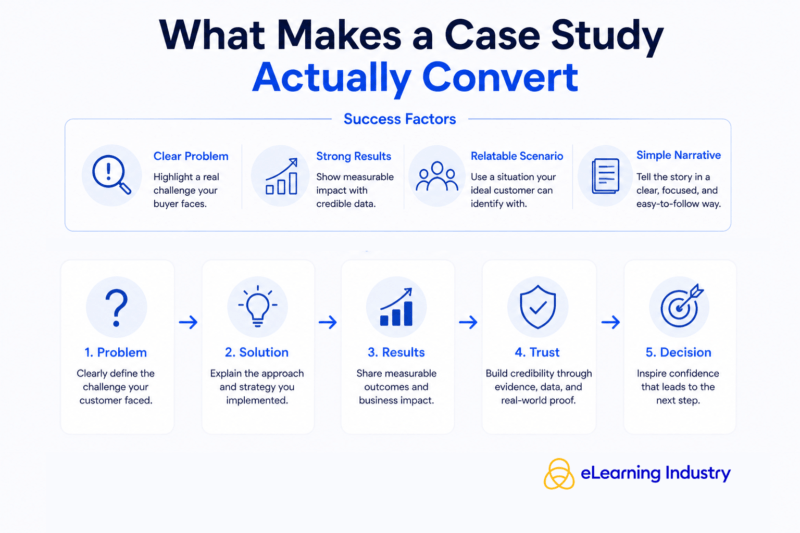
When structured correctly, a case study functions as a simulation of future success. It allows a prospect to project their organization into the narrative, effectively seeing a blueprint for their own transformation. This psychological shift from "observing a story" to "evaluating a solution" is what distinguishes high-performing content from generic corporate updates.

The PROOF Framework: A Technical Analysis of High-Converting Narratives
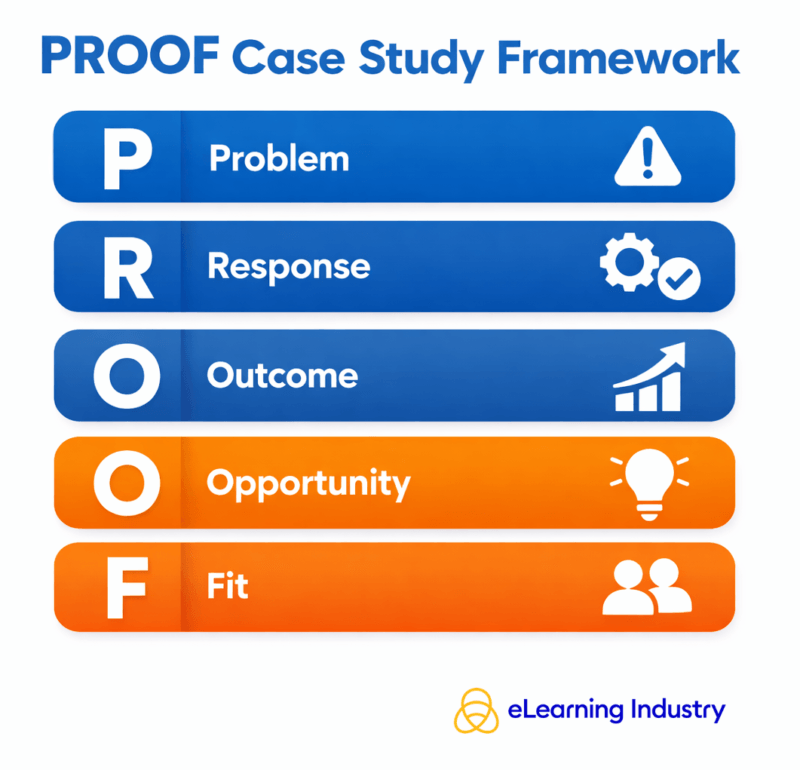
To maximize the impact of success stories, leading marketing strategists have adopted a structured methodology known as the PROOF framework. This system ensures that every piece of content addresses the critical technical and emotional triggers required to move a deal forward.
Problem: Defining the Catalyst for Change
The foundation of any persuasive case study is a sharp, specific definition of the initial challenge. Journalistic analysis suggests that the most effective stories do not just describe a problem but quantify the "cost of the status quo." This includes identifying the specific business pain, the operational bottlenecks, and the internal or external triggers that made the status quo untenable.
Response: The Logic of Implementation
This section moves beyond the "what" to explain the "how." It details the strategic actions taken and the logic behind the chosen solution. For enterprise buyers, this provides a window into the vendor’s methodology and operational competence, serving as a proxy for the quality of the future partnership.
Outcome: The Quantifiable Impact
The "Outcome" phase is the most critical for ROI-focused decision-makers. High-performing case studies emphasize measurable results—such as revenue growth, cost reduction, or time savings—backed by hard data. Without verifiable metrics, a success story remains anecdotal and loses its power to influence procurement departments.
Opportunity: Scalability and Future-Proofing
Forward-looking case studies extend the narrative to describe what becomes possible after the initial problem is solved. This demonstrates long-term strategic value and scalability, which is essential for securing multi-year contracts and enterprise-level buy-in.
Fit: Contextual Relevance
Finally, the "Fit" element clarifies the industry context, company size, and specific use cases. This helps prospects determine if the solution is purpose-built for their specific environment, reducing the friction associated with "generalist" software or services.
Chronology of Case Study Integration Across the Sales Funnel
The utility of a case study changes as a prospect moves through the buying journey. Organizations that fail to differentiate between "Marketing Case Studies" and "Sales Case Studies" often see a disconnect in their conversion rates.
- Top of Funnel (TOFU) – Establishing Credibility: At the awareness stage, case studies act as trust anchors. These are typically high-level, focusing on recognizable brand names and transformative headlines. The goal is to capture attention and establish immediate authority in a crowded market.
- Middle of Funnel (MOFU) – Facilitating Comparison: As buyers begin to shortlist vendors, case studies become comparative tools. At this stage, the content must dive deeper into implementation processes and specific hurdles. Buyers use these documents to validate internal shortlists and compare vendor methodologies side-by-side.
- Bottom of Funnel (BOFU) – Decision Support: In the final stages, case studies serve as risk-mitigation documents. They are often shared with procurement and finance teams to justify the investment. These versions are proof-heavy, featuring detailed ROI breakdowns, implementation timelines, and stakeholder testimonials.
Industry Benchmarks: Real-World Applications of Success Narratives
Several global leaders have set the standard for how success stories can be leveraged to dominate market share. Analyzing these examples provides a roadmap for smaller firms looking to scale their authority.
- HubSpot (Lead Generation): HubSpot utilizes a vast library of customer stories to demonstrate how their ecosystem supports various business sizes. By categorizing stories by industry and challenge, they ensure that every visitor finds a relatable success narrative, which has been a cornerstone of their inbound marketing dominance.
- Slack (Operational Efficiency): Slack’s case studies often focus on "human-centric automation." By highlighting how companies like Bolt use their platform to create more efficient workplaces, Slack moves the conversation from "chat software" to "organizational transformation tool."
- AWS (Technical Validation): Amazon Web Services (AWS) utilizes highly technical case studies to prove cloud optimization and cost reduction. Their partnership with Spotify, for instance, details complex data migrations, providing the technical "proof of life" required by enterprise CTOs.
- Shopify (Revenue Growth): Shopify focuses almost exclusively on merchant success and revenue outcomes. By showing the direct correlation between their platform and their clients’ bottom-line growth, they position themselves as a revenue partner rather than just a hosting provider.
Strategic Implications for the AI and HR Tech Sectors
The demand for high-quality case studies is particularly acute in emerging sectors like AI solution providers and HR tech vendors. In these markets, where technology often outpaces the buyer’s understanding, case studies serve as a bridge between complex technical capabilities and tangible business value.
For AI vendors, the challenge is often overcoming the "black box" perception. Case studies that detail the "Response" and "Outcome" phases help demystify the technology, showing how AI integrates with existing workflows to produce human-readable results. In the HR tech space, where stakeholder alignment is notoriously difficult, case studies provide the social proof necessary to satisfy HR directors, IT departments, and CFOs simultaneously.
Common Pitfalls and the "Content vs. Infrastructure" Mindset
The primary reason case studies fail is that they are treated as "isolated assets" rather than part of a broader "revenue infrastructure." Journalistic observation of B2B trends suggests several recurring mistakes:
- Surface-Level Descriptions: Failing to dive into the specifics of the transformation.
- Lack of Metrics: Presenting narratives without data-backed outcomes.
- Feature-Centricity: Focusing on what the product does rather than what the client achieved.
- Static Distribution: Leaving case studies to gather "digital dust" on a website instead of actively deploying them in sales decks, email sequences, and webinars.
The Future of the Case Study: Personalization and Multi-Channel Reach
As digital transformation continues to reshape the B2B sector, the format of the case study is also evolving. While written reports remain a staple, there is a growing trend toward "conversational authority assets." This includes sponsored podcasts, video testimonials, and interactive content experiences that allow prospects to engage with the data in real-time.
Furthermore, the integration of case studies into "full-funnel" marketing strategies is becoming a standard requirement for competitive positioning. A single success story is now frequently repurposed into a dozen different assets: a LinkedIn post for awareness, a detailed PDF for evaluation, a webinar for deep-dive learning, and a slide for the final sales pitch.
In conclusion, the transition from making claims to providing proof is not merely a marketing trend but a fundamental requirement for modern business growth. In an era of information transparency and stakeholder-heavy decision-making, the organizations that can most effectively document and distribute their customers’ success will be the ones that secure market leadership. Buyers do not trust what a company says about itself; they trust what the data says about that company’s impact on others. By treating case studies as essential revenue infrastructure, B2B firms can turn uncertainty into confidence and prospects into long-term partners.