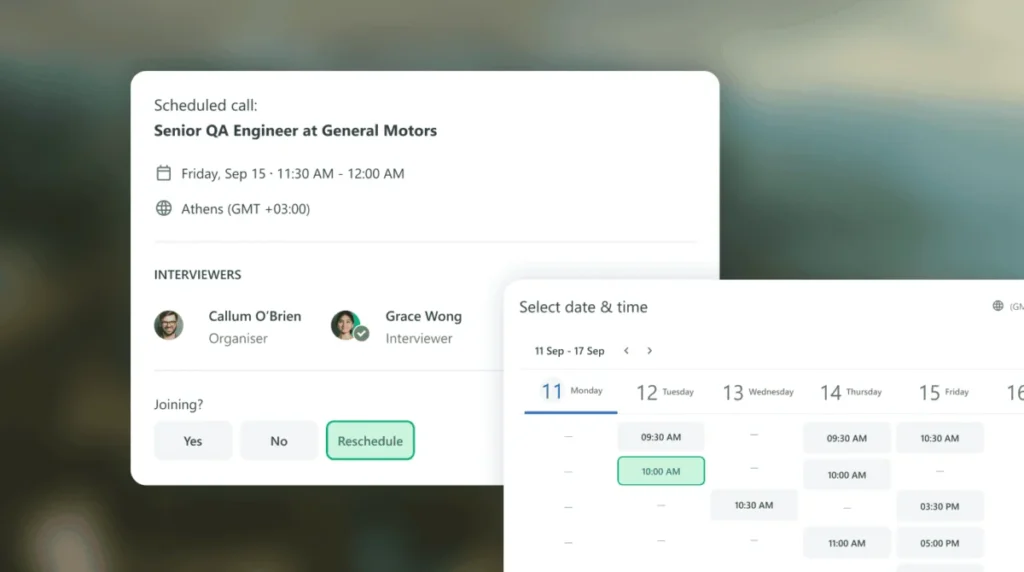
A significant enhancement to talent acquisition technology has been introduced, directly addressing a persistent pain point for both job seekers and hiring managers: the convoluted process of interview scheduling and rescheduling. The newly launched suite of improvements, spearheaded by a robust candidate self-rescheduling feature, aims to fundamentally reshape the interaction between prospective employees and companies, fostering a more respectful, autonomous, and efficient hiring journey from the outset. This development marks a pivotal moment in recruitment technology, moving beyond mere automation to embed genuine candidate-centricity into the core of the hiring workflow.
The Enduring Challenge of Interview Logistics
For hiring managers, the scenario is regrettably common: a meticulously planned interview invitation is extended to a promising candidate, carefully aligning with the availability of multiple team members. Yet, mere hours before the scheduled discussion, an email arrives, terse and apologetic: "I’m so sorry, but something has come up. Can we reschedule?" What often ensues is a protracted "calendar ping-pong" – a series of back-and-forth emails, intricate calendar cross-referencing, and tedious coordination among various interviewers. Days can pass before a new interview slot is secured, during which time the initial momentum wanes, and the strong candidate might begin to question the organization’s purported image as a modern, agile, and "people-first" employer.
This administrative friction is not merely an inconvenience; it represents a significant drain on resources and a tangible risk to talent acquisition pipelines. Industry data consistently highlights the inefficiencies inherent in traditional scheduling methods. A startling statistic reveals that, on average, only 50% of initial interview requests ultimately convert into booked meetings. This means that if a company extends interview invitations to 40 candidates from a pool of 200 applications, only approximately 20 of those interviews will actually materialise on the calendar. Half of these critical engagement opportunities are effectively lost before a single conversation can even begin, a substantial waste of effort and potential talent.
Underlying Causes of Scheduling Failure
Research delving into the dynamics of interview scheduling underscores that this high attrition rate is rarely attributable to recruiter oversight in isolation. Instead, it frequently stems from rigid, outdated scheduling workflows that offer limited flexibility. When a candidate needs to adjust their interview time, the prevailing solution has often been to invalidate the original invitation and generate an entirely new scheduling link, effectively forcing both parties to restart the coordination process from scratch. This cumbersome mechanism is exacerbated when candidates are simultaneously engaged in multiple hiring processes. Data collected from over 10,000 candidates revealed instances where individuals received multiple, redundant scheduling requests for the same stage of a hiring process, purely because the system couldn’t accommodate a simple reschedule without generating a fresh, disjointed interaction.
The cumulative impact of these rigidities is considerable: candidates experience palpable frustration at a crucial juncture in their job search, recruiters are burdened with excessive logistical coordination that detracts from strategic talent engagement, and, critically, a significant number of promising interviews never progress beyond the initial invitation stage. This systemic inefficiency translates into longer time-to-hire metrics, increased cost-per-hire, and a diminished candidate experience that can damage employer brand reputation in a highly competitive talent market.
The Evolving Landscape of Candidate Experience
The imperative for a superior candidate experience has never been more pronounced. In the wake of global shifts in work patterns and the intensified competition for skilled professionals, often dubbed the "Great Reshuffle" or "Great Reassessment," candidates possess unprecedented leverage. They are not merely seeking employment; they are evaluating potential employers based on every interaction, from initial application to offer acceptance. Research consistently demonstrates that the most positive candidate experiences are fundamentally built upon principles of respect, transparency, and autonomy.
When candidates are empowered to manage their own schedules, mirroring the autonomy they would expect for any other professional meeting, they feel inherently trusted and valued. Conversely, when they are subjected to inflexible, one-way communication channels, the experience can feel transactional and impersonal, as if they are merely being "processed" rather than being invited to partner with a prospective employer. This distinction is vital; a candidate’s initial interactions often serve as a microcosm of the company’s broader culture, influencing their perception of everything from work-life balance to internal collaboration. A negative or friction-filled scheduling experience can inadvertently signal a lack of respect for personal time or an overly bureaucratic environment, irrespective of the company’s actual values.
Introducing One-Click Candidate Self-Rescheduling
The core innovation driving this latest suite of improvements is the introduction of one-click candidate self-rescheduling. This feature fundamentally alters the rescheduling paradigm by eliminating the traditional email threads, the anxious waiting for responses, and the lingering concern of having inconvenienced hiring teams. Now, if a candidate’s schedule changes, they can simply access their original invitation and select a new time from the pre-approved available slots, instantly updating all relevant calendars and notifying necessary parties.
This elegant solution is not without intelligent design. It incorporates crucial "guardrails" engineered to protect both the integrity of the candidate experience and the operational efficiency of the hiring team. These guardrails typically include:
- Pre-defined Availability: Candidates can only select from interview slots that have already been designated as available by the hiring team and interviewers, preventing scheduling conflicts.
- Notification Protocols: Automated notifications are immediately dispatched to all involved interviewers and recruiters, ensuring everyone is kept abreast of the updated schedule without manual intervention.
- Reschedule Limits: Companies can configure limits on the number of times a candidate can self-reschedule, or impose deadlines (e.g., "no rescheduling within 24 hours of the interview") to prevent last-minute cancellations that disrupt interviewer schedules.
- Time Zone Intelligence: The system intelligently displays available times in the candidate’s local time zone, reducing confusion and errors.
- Integrity of Interview Structure: The new time slot adheres to the original interview’s duration and interviewer lineup, maintaining consistency in the evaluation process.
A Holistic Approach: Eight Additional Improvements
While candidate self-rescheduling is the headline feature, its launch is part of a broader, more comprehensive overhaul of the scheduling experience. Based on extensive feedback from diverse hiring teams, seven additional pain points have been addressed, signifying a commitment to a holistic, user-centric approach to recruitment technology. While specific details of all eight improvements were not provided in the initial announcement, typical enhancements in this area often include:
- Automated Reminders with Reschedule Options: Pre-interview reminders now include a direct link for rescheduling, proactively addressing potential conflicts.
- Enhanced Time Zone Management: More intuitive display and selection of time zones for global teams and candidates.
- Improved Interviewer Collaboration Tools: Easier for interviewers to mark their availability, block out times, and view each other’s schedules within the platform.
- Flexible Interview Block Configuration: Greater control for recruiters to define complex interview schedules (e.g., sequential interviews with different panels) with ease.
- Integration with Applicant Tracking Systems (ATS): Seamless data flow between scheduling and the core ATS, reducing manual data entry and potential errors.
- Optimized Calendar Sync: More robust and real-time synchronization with major calendar platforms (Google Calendar, Microsoft Outlook) to minimize discrepancies.
- Dynamic Scheduling Link Management: Intelligent links that remain active and update dynamically, rather than requiring new links for every change.
- Post-Interview Feedback Prompts: Automated nudges for interviewers to submit feedback promptly, accelerating the decision-making process.
These interconnected improvements collectively aim to create an ecosystem where scheduling is no longer a bottleneck but a seamless, almost invisible part of the recruitment process.
The Strategic Implications: Beyond Convenience
These improvements transcend mere convenience; they represent a fundamental paradigm shift in the power dynamics of recruitment.
For Candidates: The impact is profound. They are treated as the professionals they are, empowered to manage their schedules with the same respect and flexibility afforded to any other critical professional engagement. This autonomy fosters a sense of trust and value, communicating that the company is flexible, respectful of personal time, and invested in a positive relationship from day one. It removes a significant barrier to participation, especially for candidates with existing commitments or those juggling multiple interview processes.
For Hiring Teams: The administrative overhead is dramatically reduced. The ceaseless "email ping-pong" is eliminated, manual calendar updates become a relic of the past, and the frustrating chase to understand why a promising candidate might have "ghosted" an interview is minimized. Recruiters and hiring managers can reclaim valuable hours, shifting their focus from logistical coordination to more strategic, high-value activities such as candidate engagement, talent pipelining, and qualitative assessment. This frees up resources that can be reallocated to other critical talent acquisition initiatives.
For Hiring Metrics: The business impact is tangible and measurable. Expect to see faster time-to-fill rates as scheduling delays are drastically cut. Interview show rates are projected to increase significantly, reducing wasted interviewer time. Furthermore, candidate satisfaction scores are anticipated to climb, reinforcing a positive employer brand that attracts future talent. These are not just "nice-to-have" improvements; they are key performance indicators that directly impact an organization’s bottom line and competitive standing in the talent market.
The New Reality of Talent Acquisition
The traditional recruitment model, for decades, placed virtually all power on one side of the table. Companies dictated the "when" and "how" of interviews, and candidates were largely expected to bend their schedules to fit these rigid parameters. However, the modern talent market operates under entirely different rules. The best candidates, those with in-demand skills and experience, invariably have options. They are not simply applying for jobs; they are actively evaluating potential employers as critically as companies are evaluating them. Every single interaction, from the initial job description to the final offer, contributes to their holistic perception of a company’s culture, values, and operational efficiency.
When candidates are granted the autonomy to manage their interview schedules with ease and respect, it broadcasts a powerful and unambiguous message: their time is genuinely respected, their professionalism is trusted, and the organization is committed to treating people well from the very first interaction. This goes beyond mere transactional recruitment; it cultivates goodwill, builds early trust, and lays the foundation for a positive employee-employer relationship, even before an offer is extended. In an era where employer brand is paramount and talent scarcity is a constant challenge, this is not merely "good recruiting"; it is demonstrably "good business." Companies that embrace such candidate-centric approaches are better positioned to attract, engage, and ultimately secure the top talent necessary for sustained growth and innovation.
Implementation and Future Outlook
The self-rescheduling functionality is now readily available to all customers leveraging Google or Microsoft Calendar integrations, ensuring broad accessibility across prevalent enterprise environments. Crucially, the rollout has been designed to be non-disruptive to existing workflows. Current scheduling links remain active, providing teams with the flexibility to adopt the new functionality at their own pace, integrating it into their established processes without abrupt changes. This phased approach underscores the platform’s commitment to user experience, even for its enterprise clients.
These comprehensive updates are the direct result of continuous feedback loops with hiring teams, reflecting a genuine understanding of their daily challenges and aspirations. While significant strides have been made, the realm of scheduling remains an area ripe for further innovation, where even seemingly small changes can yield profound differences in efficiency and experience. Thoughtful hiring technology should fundamentally remove obstacles, rather than inadvertently creating them. By ensuring scheduling processes operate smoothly and efficiently, hiring teams are empowered to dedicate less energy to tedious coordination and more to the critical task of engaging in meaningful conversations with the right candidates, ultimately driving superior hiring outcomes.
Ready to provide candidates with unparalleled control over their interview experience and elevate your talent acquisition strategy? Explore the new suite of scheduling features or connect with our team to discover how these advancements can be seamlessly integrated into your existing hiring workflow, transforming friction into fluid, candidate-centric engagement.