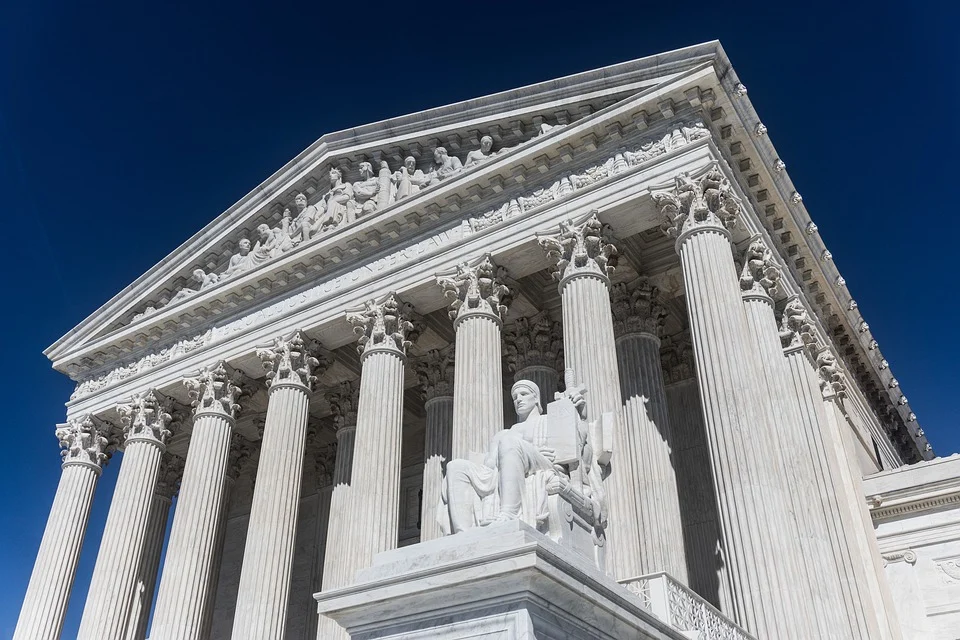
In a surprising procedural turn that has left the legal and business communities seeking clarity, the United States Supreme Court issued a one-sentence per curiam decision on June 5, 2025, dismissing the writ of certiorari in the case of Laboratory Corporation of America Holdings v. Davis. The dismissal, categorized as "improvidently granted," effectively cancels the Court’s previous commitment to resolve a long-standing circuit split regarding whether federal courts can certify class actions that include members who have suffered no actual injury. This development maintains the status quo in several jurisdictions, most notably the Ninth Circuit, where expansive class definitions remain a potent tool for plaintiffs’ attorneys, particularly in the realm of disability access and consumer rights.
The case, Laboratory Corporation of America Holdings v. Davis, No. 24-304, was positioned to be a landmark ruling on the interpretation of Federal Rule of Civil Procedure 23. By declining to rule on the merits, the Supreme Court has passed on a critical opportunity to define the boundaries of Article III standing within the context of massive damages classes. For employers and large-scale service providers, the decision—or lack thereof—means that the threat of "overinflated" class actions remains a significant litigation risk.
Background of the Dispute: Accessibility and Automated Kiosks
The litigation originated from a challenge to the modernizing infrastructure of healthcare service centers. Laboratory Corporation of America (Labcorp) implemented on-site, self-service touchscreen kiosks at its patient service centers to streamline the check-in process. While these kiosks were intended to improve efficiency, they were not equipped with screen-reading technology or tactile overlays, rendering them inaccessible to blind or visually impaired patients.
To mitigate this, Labcorp maintained a policy where staff members at the front desk would assist patients who could not use the kiosks. However, plaintiffs Luke Davis and Julian Vargas, both of whom are legally blind, filed a class action lawsuit alleging that the mere presence of inaccessible kiosks constituted a violation of Title III of the Americans with Disabilities Act (ADA) and California’s Unruh Civil Rights Act.
The Unruh Act is particularly significant in this context because it provides for statutory damages of at least $4,000 per violation. Because the ADA does not allow for individual monetary damages—only injunctive relief and attorney fees—plaintiffs in California frequently use ADA violations as a "predicate" to trigger the Unruh Act’s lucrative damages provisions. The central controversy arose when the district court certified a class of potentially more than 100,000 blind individuals. Labcorp argued that a vast majority of these individuals had never visited a service center, had not attempted to use a kiosk, or preferred checking in at the front desk regardless of the technology, meaning they suffered no concrete harm.
The Legal Conflict: Rule 23 vs. Article III Standing
The crux of the appeal to the Supreme Court centered on the intersection of Rule 23(b)(3), which requires that "questions of law or fact common to class members predominate over any questions affecting only individual members," and Article III of the U.S. Constitution, which limits federal court jurisdiction to actual "cases" or "controversies."
In the 2021 landmark case TransUnion LLC v. Ramirez, the Supreme Court held that "every class member must have Article III standing in order to recover individual damages." However, the TransUnion ruling left a procedural vacuum: does this requirement apply at the class certification stage, or only at the final judgment stage?
Labcorp’s petition argued that certifying a class that includes uninjured members violates the predominance requirement because the court would eventually have to conduct thousands of "mini-trials" to determine who was actually harmed and who was not. The Ninth Circuit Court of Appeals had previously affirmed the class certification, suggesting that the presence of uninjured members does not automatically defeat certification as long as the core legal questions are common to the group.
Chronology of the Case
The journey of Labcorp v. Davis through the federal judiciary highlights the procedural complexities that often define high-stakes class litigation:

- Initial Filing: Davis and Vargas filed their complaint in a California federal court, seeking to represent a nationwide class under the ADA and a California-specific class under the Unruh Act.
- District Court Certification: The district court certified the class, noting the commonality of the technology used across Labcorp locations.
- The $500 Million Clarification: The court later clarified the class definition to include all blind individuals who might have been deterred from using the kiosks, potentially exposing Labcorp to $500 million in statutory damages annually.
- Ninth Circuit Review: Labcorp sought an interlocutory appeal. The Ninth Circuit affirmed the certification, maintaining that the "injury" question could be handled later in the litigation.
- Supreme Court Intervention: In late 2024, the Supreme Court granted certiorari to address the "uninjured member" question.
- The June 5 Dismissal: After briefing and preparation for oral arguments, the Court abruptly dismissed the case as "improvidently granted" (DIG).
A "DIG" dismissal typically occurs when the justices realize, upon closer inspection of the record, that the case is a "bad vehicle" for the legal question presented—often due to a jurisdictional flaw or a change in the underlying facts that makes a broad ruling inappropriate.
The Lone Dissent: Justice Kavanaugh’s Economic Warning
Justice Brett Kavanaugh was the sole member of the Court to issue a written dissent against the dismissal. His opinion provided a glimpse into the internal debate and signaled a clear appetite among the conservative wing to eventually restrict no-injury classes.
Justice Kavanaugh dismissed the plaintiffs’ argument that the case was mooted by a subsequent clarifying order from the district court, calling the argument "insubstantial." He moved directly to the merits, stating that the case was "straightforward" under the Court’s existing precedents. According to Kavanaugh, if a class includes members who are not injured, they cannot share a "common" injury with the rest of the class, thereby failing the Rule 23 predominance test.
Kavanaugh’s dissent went beyond technical legalities, highlighting the "real-world consequences" of the Court’s inaction. He argued that classes "overinflated with uninjured members" create an environment of "massive liability" that essentially forces defendants into "blackmail settlements." He noted that these costs are rarely absorbed by the corporations themselves but are instead passed down to consumers through higher prices, to workers through lower wages, and to retirees through diminished investment returns in pension funds.
Supporting Data: The Rising Tide of ADA Litigation
The dismissal of the Labcorp appeal is particularly impactful given the statistical trends in federal litigation. According to data tracked by legal analysts and the ADA Title III blog, federal ADA Title III lawsuits have reached record highs in recent years.
- California Dominance: California remains the epicenter of this litigation. In 2023 and 2024, nearly 50% of all federal ADA Title III filings occurred in California, largely driven by the Unruh Act’s statutory damages.
- Settlement Pressures: Research from the U.S. Chamber of Commerce Institute for Legal Reform suggests that over 90% of certified class actions settle before trial, often because the "bet-the-company" nature of the potential damages makes a defense too risky.
- The "Deterrence" Theory: Plaintiffs often argue that the "uninjured" members are actually "deterred" members—people who didn’t visit a business because they knew it was inaccessible. The lack of a Supreme Court ruling means the definition of "deterrence" will continue to vary wildly between the Ninth Circuit and more conservative circuits like the Fifth or Eleventh.
Implications for Employers and Corporate Defendants
The Supreme Court’s decision to step back from the Labcorp case leaves a fragmented legal landscape. For employers, the immediate takeaway is that the "uninjured member" defense remains a primary battleground during the class certification phase.
Legal experts suggest that defendants should focus on developing a robust evidentiary record early in discovery to prove that "individualized inquiries" are necessary. If a defendant can show that determining whether a person was actually "deterred" or "injured" requires a case-by-case analysis of their intent, habits, and preferences, they may still be able to defeat class certification on predominance grounds, even without a definitive Supreme Court ruling.
Furthermore, the dismissal does not mean the issue is dead. With Justice Kavanaugh’s dissent providing a roadmap for future challenges, and with four other justices having previously signed onto the TransUnion decision, it is highly likely that a different "vehicle"—perhaps a case with a cleaner procedural record—will reach the high court within the next two terms.
Conclusion
The dismissal of Laboratory Corporation of America Holdings v. Davis is a temporary reprieve for the plaintiffs’ bar and a frustrating setback for corporate defendants seeking a uniform national standard. While the Supreme Court has opted not to close the door on classes containing uninjured members for now, the sharply worded dissent from Justice Kavanaugh suggests that the current composition of the Court remains skeptical of expansive class actions. Until the Court finds a suitable case to settle the circuit split, businesses operating in the Ninth Circuit must remain prepared for the continued threat of high-stakes litigation involving thousands of class members whose "injury" remains a matter of legal theory rather than physical or financial fact.