
The landscape of talent acquisition has undergone a profound transformation, moving beyond static job postings to dynamic, multi-faceted advertisements that serve as critical touchpoints in an organization’s employer branding strategy. Employers are increasingly recognizing that attracting top talent in a highly competitive global market requires more than merely listing requirements and qualifications; it demands creativity, transparency, and a strategic approach to showcasing company culture and values. This shift, prominent between 2018 and 2026, has seen job descriptions evolve into robust content platforms designed to engage, inform, and inspire potential candidates, setting new benchmarks for effective recruitment.
A Chronology of Transformation: From Listings to Living Documents
Historically, job advertisements were functional notices, often constrained by space and cost in print media. The advent of the internet in the late 20th and early 21st centuries brought about a transition to online job boards, offering greater reach and slightly more descriptive capacity. However, the period from 2018 to 2026 marks a significant acceleration in this evolution. Driven by evolving candidate expectations, the rise of social media, and increasing awareness of diversity and inclusion, job ads have become sophisticated marketing tools. This era has seen a departure from purely transactional job descriptions to more narrative-driven content that tells a company’s story, highlights its mission, and articulates the employee value proposition.
This transformation wasn’t sudden but a gradual accumulation of best practices. Early innovations included the incorporation of company videos and employee testimonials. By the mid-2020s, interactive elements, personalized content, and sophisticated analytics for tracking ad performance became standard. The emphasis shifted from simply filling a vacancy to creating an immersive candidate experience that begins the moment a potential applicant encounters a job advertisement.
The Essential Pillars of Modern Job Descriptions
To effectively compete for talent, companies have had to reconsider the fundamental components of their job descriptions (JDs). These are no longer just administrative documents but strategic assets, with several key features becoming vital for efficacy:
1. Crafting Compelling Content: Beyond Basic Information
The initial interaction with a job ad sets the tone for the entire recruitment process.
- Job Titles: While creative titles like "Chief Meme Officer" can grab attention, their primary function must remain clarity and accuracy. Industry data shows that overly ambiguous or trendy titles can deter serious applicants who rely on standard nomenclature for their job searches. A blend of creativity and keywords is optimal.
- Summaries: These serve as the "elevator pitch" for the role and the company. An engaging summary provides a snapshot of the position, the team, and the organizational culture, compelling candidates to delve deeper. Research by LinkedIn has consistently shown that job posts with strong, concise summaries receive higher engagement rates.
- Responsibilities: Clearly outlining day-to-day tasks and expectations is paramount. Rather than long paragraphs, bulleted lists with strong action verbs are recommended by talent acquisition experts like Morgan McKinley. This approach not only enhances readability but also conveys a sense of purpose and dynamism, allowing candidates to quickly visualize their potential contribution.
2. The Power of Transparency: Benefits and Company Culture
In an era where employees seek more than just a paycheck, transparency regarding benefits and company culture has become a non-negotiable.
- Benefits: Beyond competitive salaries, modern job ads explicitly highlight perks that cater to evolving workforce priorities. Projections for 2026 indicate a strong emphasis on parental benefits, comprehensive paid family leave, and enhanced insurance subsidies. Work-life balance initiatives, professional development opportunities, and wellness programs are also crucial differentiators. Companies that transparently list these offerings see higher application rates and attract candidates aligned with a holistic view of employment.
- Company Culture: Communicating an organization’s ethos is vital. This can be achieved through a brief description of values, mission statements, employee testimonials, or even short embedded videos showcasing the work environment. The goal is to give potential applicants an authentic sense of what it’s like to work there, fostering an initial connection and ensuring a "cultural add" rather than just a "cultural fit." A "first 90-day roadmap" presented visually within the job ad can serve as an innovative welcome guide, demystifying early experiences and reducing onboarding anxiety, especially for entry-level hires. This visual guide can outline company rituals, mentorship opportunities, and initial milestones, reflecting a supportive culture.
3. Ethical Employer Branding: Awards and Certifications
External validation significantly boosts employer credibility. The inclusion of prestigious awards and certifications in job ads has become a powerful recruitment tool. These include:
- "Glassdoor Employees’ Choice Award": Reflects genuine employee satisfaction and positive workplace experiences.
- "Built In Best Places to Work": Highlights companies recognized for their innovative cultures and employee-centric policies, particularly in tech.
- "Great Place To Work®" certifications: Signifies a high-trust, high-performance culture based on extensive employee surveys.
The growing focus on sustainability and organizational integrity has also led to increased interest in ethical awards like B Corp certifications. These certifications, which assess a company’s social and environmental performance, transparency, and accountability, resonate strongly with purpose-driven candidates, particularly among younger generations. Data suggests that companies with strong CSR credentials attract a larger pool of values-aligned applicants, often leading to higher retention rates.
Leveraging Technology for Reach and Inclusivity
Modern job advertising is inextricably linked to technological advancements, enhancing both discoverability and fairness.
1. SEO Optimization: Making Jobs Discoverable
In a digital-first world, a compelling job ad is ineffective if it cannot be found. Search Engine Optimization (SEO) for job postings has become a specialized field.
- Keyword Strategy: Identifying and incorporating relevant keywords that job seekers use (e.g., "software engineer remote," "marketing specialist NYC") is crucial for visibility on platforms like Google for Jobs, LinkedIn, and specialized job boards.
- Specificity and Description: Clear, precise language not only aids candidate understanding but also helps search engines accurately categorize and rank job ads.
- Location Information: For geographically specific roles, including the city, state, or region in the job title and description is vital. Recruitment management platforms like Workable allow for efficient filtering and management of jobs across multiple locations, streamlining the process for both recruiters and applicants.
- Structured Data: Implementing schema markup (structured data) in job postings helps search engines understand and display job listings more effectively, often resulting in richer search results snippets.
- Social Media Promotion: Sharing job ads across professional and social networks significantly increases their reach and can positively influence search engine rankings due to increased traffic and engagement. A workforce survey revealed that a striking 67% of candidates apply for jobs from their mobile devices, underscoring the critical need for mobile optimization in job ad design and distribution.
2. Fostering Diversity and Inclusion with AI
The commitment to diversity, equity, and inclusion (DEI) is a cornerstone of modern talent acquisition. Job ads play a critical role in attracting a diverse candidate pool.
- Welcoming Language: Using gender-neutral, unbiased language is fundamental. Research has shown that certain words and phrases can inadvertently deter applicants from underrepresented groups.
- AI-Powered Bias Detection: Tools leveraging AI algorithms can consistently identify and rectify biased language in job descriptions. These solutions help create impactful JDs at scale, mitigating the risk of unconsciously repelling top hires and ensuring compliance with anti-discrimination laws.
- Skills-First Approach: Shifting from degree-focused requirements to a skills-first approach is gaining traction. This involves assessing job scopes to determine genuine qualification necessities, recognizing that relevant certifications, competencies, and demonstrable skills can often outweigh traditional degree mandates, thereby broadening the talent pool and fostering greater equity. This approach has proven particularly effective in technical roles where practical experience is paramount.
- Cultural Add vs. Cultural Fit: Emphasizing the value of diverse perspectives and experiences, rather than seeking candidates who merely "fit in," encourages a richer, more innovative work environment.
Leading Examples of Modern Job Ads (2018-2026)
Companies that have successfully embraced these principles during this period include a diverse range of industries, showcasing how effective job advertising transcends sector boundaries. While specific visual elements cannot be described without the original images, the general characteristics of these leading examples can be inferred:
- McAfee: Likely emphasized its role in cybersecurity, attracting tech talent through clear career progression paths and innovation-focused culture.
- ADT: As a security company, its ads probably highlighted impact, community safety, and opportunities for service-oriented individuals, possibly featuring employee testimonials about meaningful work.
- Walmart: Given its scale, Walmart’s ads would have focused on career growth within a large organization, comprehensive benefits, and perhaps its initiatives in technology and sustainability to attract a broader range of talent.
- BMC: In enterprise software, BMC’s ads would likely appeal to tech professionals with details on cutting-edge projects, collaborative teams, and professional development.
- McGraw-Hill: As an education content provider, their ads would emphasize impact on learning, opportunities for innovation in digital education, and a culture of knowledge sharing.
- Disney: Known for its strong brand, Disney’s job ads would undoubtedly leverage its unique culture, creative environment, and opportunities to contribute to iconic experiences, often using evocative imagery and storytelling.
- Hulu: A streaming service, Hulu’s ads would target tech-savvy, media-passionate individuals, highlighting innovation, a dynamic work environment, and potentially unique perks related to entertainment.
- Unity Technologies: A leader in 3D development, Unity’s ads would speak directly to game developers and creative technologists, showcasing opportunities to work on groundbreaking projects and contribute to a vibrant developer community.
- Under Armour: As an athletic apparel company, their ads would likely inspire candidates passionate about sports and fitness, highlighting a performance-driven culture and opportunities to contribute to cutting-edge product development.
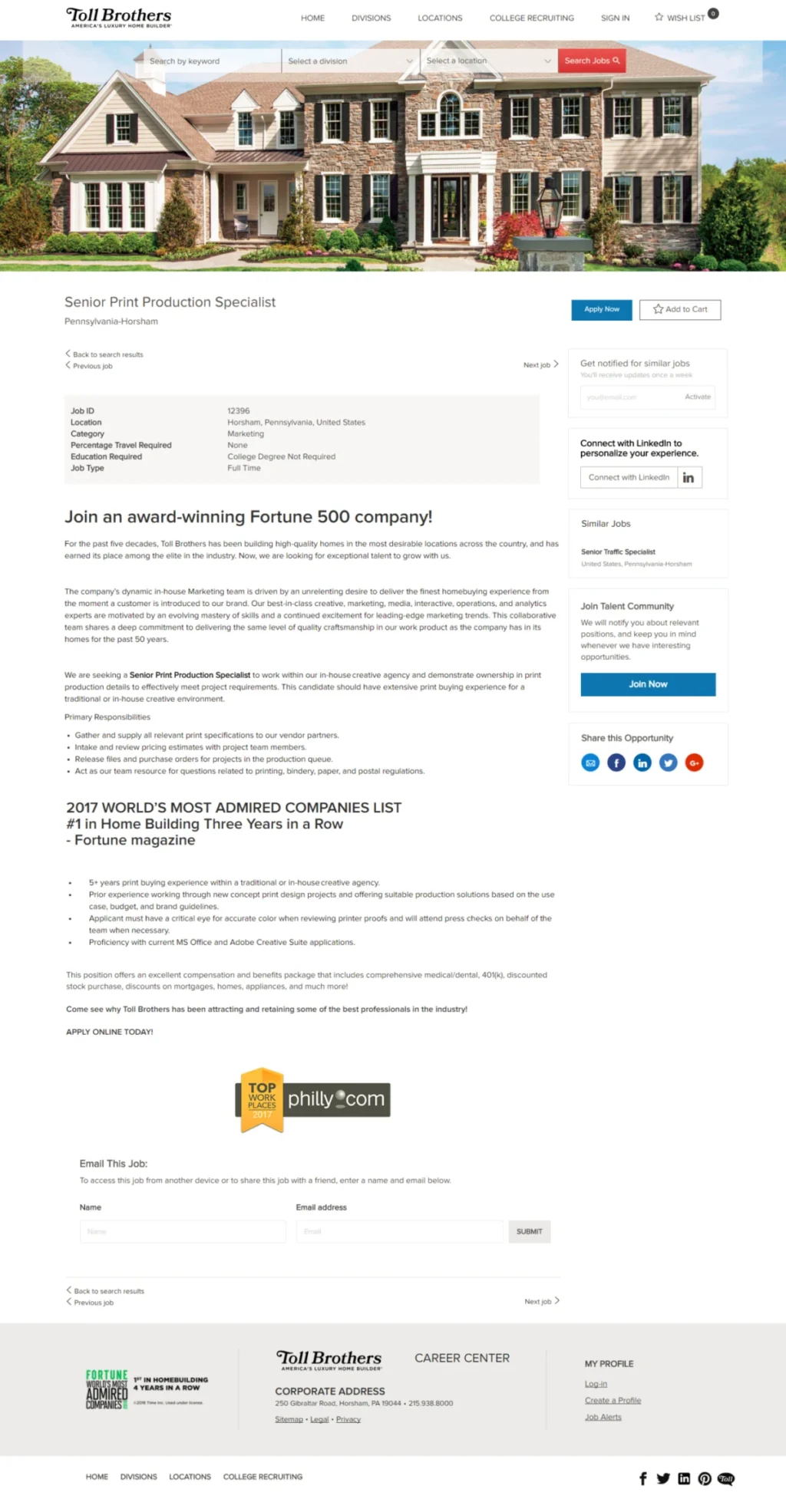
- Toll Brothers: A luxury home builder, their job ads would probably focus on craftsmanship, quality, and the opportunity to build dream homes, appealing to skilled trades and design professionals with an emphasis on excellence.
- IBM: A technology giant, IBM’s ads would typically emphasize innovation, research opportunities, global impact, and a commitment to continuous learning and professional growth within a diverse workforce.
- Bud Light: A consumer brand, Bud Light’s ads for non-marketing roles might focus on a fun, dynamic work environment, brand influence, and opportunities to contribute to a widely recognized product, often with a youthful and energetic tone.
These companies exemplify the trend of integrating strong employer branding, clear communication of values, and compelling content to attract and retain talent effectively.
Continuous Improvement: The Iterative Nature of Talent Acquisition
Effective job advertising is not a one-time effort but an ongoing process of refinement and adaptation.
- Feedback Integration: Regularly soliciting and acting upon feedback from candidates, hiring managers, and internal teams is crucial. Common questions or areas of confusion in job descriptions can indicate areas for improvement. AI sentiment analysis tools can be instrumental in detecting subtle patterns in candidate feedback, such as recurring concerns about benefits or wellness programs, signaling potential issues with existing talent policies.
- Performance Data Analysis: Diving into metrics such as job ad views, click-through rates, application rates, and ultimately, hiring quality, provides invaluable insights. A high view count with low applications might signal an unoptimized call to action or unappealing initial impression. Conversely, high application rates yielding low-quality hires could indicate vague skill requirements that need refinement. Cross-analysis of JD views and candidate quality yield helps optimize the recruitment funnel.
- Agility and Flexibility: The talent market, technological landscape, and organizational needs are constantly evolving. Job descriptions must remain agile, adapting to new priorities, initiatives, and shifts in company culture. This includes responding to evolving user accessibility standards, such as ensuring mobile optimization, given the significant number of candidates applying via handheld devices.
- Test and Iterate: Experimentation with different formats, language, visuals, and calls to action through A/B testing helps identify what resonates best with target audiences. This iterative approach ensures that job ads remain cutting-edge and effective.
- Regular Review and Update: Periodic review and updating of all job descriptions ensure accuracy, relevance, and alignment with current organizational goals and market expectations, even for roles that have not changed significantly.
Implications for Employers and the Future of Recruitment
The evolution of job advertising from 2018 to 2026 underscores a fundamental truth: talent acquisition is a strategic function that demands creativity, data-driven insights, and a deep understanding of candidate psychology. Organizations that embrace these advanced approaches gain a significant competitive advantage, attracting not just more applicants, but the right applicants—individuals who are not only qualified but also culturally aligned and motivated by the company’s mission and values. The future of recruitment will continue to see increased personalization, interactive experiences, and the strategic integration of AI to optimize every stage of the candidate journey, beginning with the initial job advertisement.






