
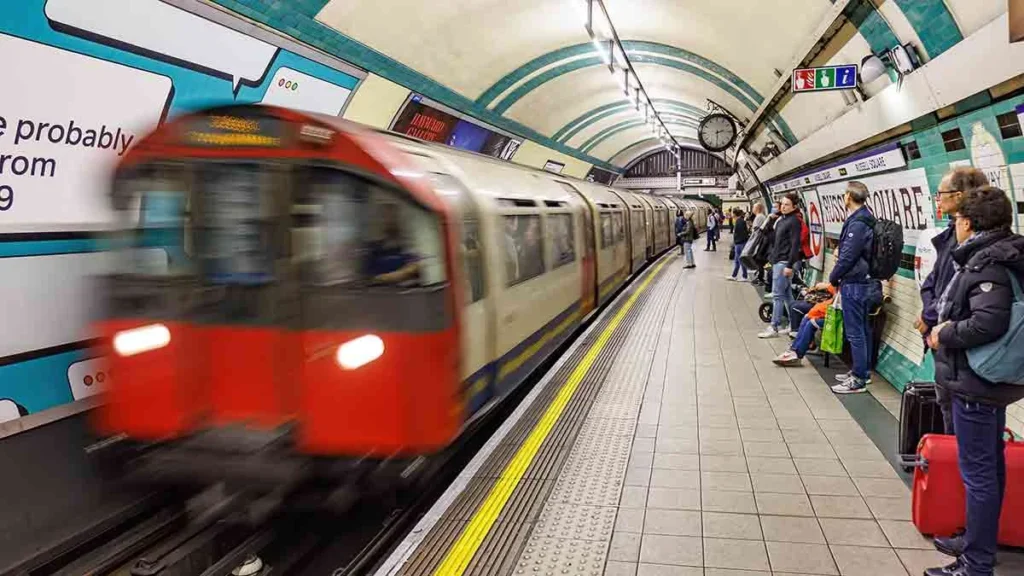
London, UK – Scheduled strikes on the London Underground, poised to cause significant disruption across the capital this week, have been called off following a pivotal shift in position by the Tube’s management regarding a proposed four-day working week for drivers. The RMT union confirmed the deferment of industrial action, indicating that employer concessions at the eleventh hour have opened a pathway for further negotiations on critical issues, including new rosters, driver fatigue, and safety protocols. While immediate travel chaos has been averted, the underlying dispute remains unresolved, with future strike dates already earmarked if substantive progress is not made.
Background to the Dispute: A Modernisation Proposal Meets Union Concerns
At the heart of the contention lies Transport for London’s (TfL) proposal for a new working pattern that would see most Tube drivers transition to a voluntary four-day week. This initiative, intended to improve work-life balance for drivers and enhance the reliability of service for customers, involves reducing the working week from 36 to 35 hours. While contractual hours would technically remain the same due to the introduction of paid meal breaks, the practical implication for drivers would be longer days for fewer days per week, leading to a slight reduction in overall working hours. TfL has projected an implementation target of 2027 for these new arrangements.
The proposal has met with mixed reactions from the unions representing London Underground drivers. Notably, the Aslef union, which represents a substantial 85% of Tube drivers, voted in favour of the new arrangements earlier this year, signaling a degree of acceptance among a majority of the workforce. However, the RMT, a prominent and historically assertive union in the transport sector, has expressed profound reservations. Their concerns center on the "imposition of new rosters," suggesting a lack of genuine consultation or a disregard for existing agreements, alongside critical issues of driver fatigue and overarching safety implications that they argue could arise from altered shift patterns and potentially longer working days.
A Chronology of Industrial Action and Negotiation
The recent developments are part of a protracted series of negotiations and planned industrial actions that have cast a shadow over London’s transport network for weeks.
- April 2024: The dispute escalated into direct industrial action. Tube drivers, members of the RMT, initiated a 24-hour walkout beginning at midday on Tuesday, April 21st. This was followed by a second, similarly timed strike from midday on Thursday, April 23rd. These initial strikes caused widespread disruption, forcing millions of Londoners to seek alternative transport, impacting businesses, and highlighting the critical role of the Underground in the city’s economic and social fabric. Each day of significant Tube strike action is estimated to cost the London economy tens of millions of pounds in lost productivity and consumer spending.
- May 2024: Further 24-hour strikes were planned for Tuesday, May 19th, and Thursday, May 21st. These were the strikes that have now been cancelled following the breakthrough in discussions. The cancellation brought a collective sigh of relief for commuters and businesses anticipating another week of travel headaches.
- June 2024: While the May strikes are off, the RMT has maintained pressure by rescheduling previously planned industrial action. Further 24-hour strikes, initially set for June 16th and 18th, have been moved to Tuesday, June 2nd, and Thursday, June 4th. This conditional deferment underscores the fragility of the current truce and serves as a clear warning that the dispute is far from resolved, pending satisfactory progress in ongoing talks.
Union Stance: Concerns Beyond the Four-Day Week Concept
A spokesperson for the RMT union articulated the union’s cautious optimism following the recent developments. "At the eleventh hour the employer has shifted its position, allowing us to further explore our members’ concerns around the imposition of new rosters, fatigue and safety issues," the spokesperson stated. This comment indicates that the RMT’s grievances extend beyond merely the concept of a four-day week. Their focus on "imposition" suggests a procedural dispute, where they feel the new working arrangements were introduced without adequate negotiation or consideration for existing agreements and driver welfare.
The emphasis on "fatigue and safety issues" is particularly potent in a safety-critical industry like public transport. Longer working days, even if fewer in number, could potentially lead to increased fatigue, especially for drivers operating complex machinery in a high-pressure environment. The RMT likely seeks assurances regarding risk assessments, adequate rest periods between shifts, and robust systems to monitor and mitigate driver fatigue, which is paramount for passenger safety. The union’s concluding remark, "The dispute is not over, and more strike action will follow if we fail to make sufficient progress," firmly establishes that this is a temporary pause, not a resolution, and places the onus on management to address their concerns comprehensively.
Management Response: Balancing Modernisation with Employee Well-being
From Transport for London’s perspective, the cancellation of the strikes is unequivocally positive news. Nick Dent, Director of Customer Operations for London Underground, expressed relief: "We are pleased that RMT has withdrawn its planned industrial action this week. This is good news for London." He reiterated the dual benefits of the voluntary four-day week proposal, citing its design to "improve both work-life balance for drivers and the reliability of service for customers." This aligns with TfL’s broader strategy to modernise operations, enhance efficiency, and attract and retain skilled staff in a competitive labour market.

Adding further context, Claire Mann, Transport for London’s Chief Operating Officer, had previously clarified the voluntary nature of the scheme. "Any Tube driver who doesn’t wish to opt in to the new, four-day working pattern and associated changes to working arrangements can remain on a five-day working pattern," Mann stated. This flexibility is a key aspect of TfL’s argument, aiming to mitigate fears of forced changes. Mann also expressed confidence that "the majority of the issues that have been raised would be resolved with more detailed work," suggesting that TfL believes many of the RMT’s concerns stem from a lack of full understanding or specific implementation details, rather than fundamental flaws in the proposal itself.
Crucially, however, the precise nature of the "shift in position" by TfL, as stated by the RMT, remains undisclosed. This ambiguity is central to understanding the current state of play. It could range from a commitment to more detailed consultation on specific rosters, an agreement to conduct further independent safety assessments, or perhaps even concessions on certain aspects of the new working arrangements. The outcome of the upcoming discussions will reveal the extent and nature of these employer concessions.
Broader Context: Industrial Relations in the UK and the Future of Work
This dispute on the London Underground is not an isolated incident but rather a microcosm of broader industrial relations challenges gripping the UK. In recent years, the nation has witnessed a significant uptick in strike action across various sectors – including rail, healthcare, education, and postal services – largely driven by persistent high inflation eroding real wages, disputes over working conditions, and government austerity measures. Unions, emboldened by public support in some instances and necessity in others, have increasingly resorted to industrial action to leverage their demands.
The economic impact of transport strikes, particularly in a global city like London, is substantial. Beyond the direct costs to transport operators, there are ripple effects on businesses losing custom, commuters facing increased travel times and costs, and a general dampening of economic activity. Estimates suggest that a single day of London Underground strikes can cost the capital’s economy tens of millions of pounds. For London, which relies heavily on its public transport network, the stability of the Tube is paramount for its continued function as a global financial and cultural hub.
Furthermore, the debate around the four-day working week places this dispute within a global conversation about the future of work. Experiments and trials of a four-day week have gained traction worldwide, with proponents citing benefits such as increased productivity, improved employee well-being, reduced carbon footprints, and better recruitment and retention rates. Countries like Iceland have seen significant success in trials, and organisations like ‘4 Day Week Global’ have facilitated pilots across numerous industries. However, implementing such models in 24/7, safety-critical sectors like public transport presents unique challenges, including maintaining service continuity, managing complex shift patterns, and ensuring rigorous safety standards. TfL’s proposal, while aligning with progressive workplace trends, must navigate these sector-specific hurdles, making union buy-in crucial. The London Underground model appears to be a compressed hours model, where total weekly hours are slightly reduced but daily hours might be longer.
Implications and The Path Ahead
The immediate implication of the cancelled strikes is a reprieve for millions of Londoners and businesses, avoiding another round of travel disruption. For TfL, it means maintaining service continuity and averting further financial losses and reputational damage that strikes inevitably incur. It also offers a vital window for continued dialogue, demonstrating that constructive engagement can, at least temporarily, defuse tensions.
For the drivers, the voluntary nature of the four-day week offers flexibility, potentially improving work-life balance for those who opt in. However, the RMT’s concerns highlight that for others, or under specific implementation scenarios, it could lead to increased fatigue or undesirable roster changes. The union’s continued vigilance underscores the importance of robust safeguards and genuinely voluntary participation.
The broader implication for industrial relations is a demonstration of the persistent power of unions, particularly in critical infrastructure sectors. Despite the Aslef union’s acceptance, the RMT’s ability to trigger and defer strikes indicates its significant influence. The outcome of the deferred June strikes will hinge entirely on the progress made in the upcoming discussions. "Sufficient progress" for the RMT likely entails concrete commitments on roster design, enhanced safety protocols, clearer guidelines on managing fatigue, and perhaps greater union involvement in the finalisation of the new working patterns.
The next few weeks will be critical. Both sides are under pressure to find common ground. TfL needs to demonstrate that its four-day week proposal can be implemented safely and fairly, without compromising driver welfare or operational integrity. The RMT needs to secure tangible concessions that address its members’ concerns, proving the value of its industrial leverage. The future of London’s Underground services, and a significant workplace reform, hangs in the balance as these crucial negotiations unfold.








