
In a landmark decision poised to reshape workplace policies across the United Kingdom, a Muslim employee at NHS England, referred to as LS, has successfully challenged her employer’s policy on transgender facility use, winning claims of indirect sex discrimination and harassment. The Leeds Employment Tribunal found that NHS England’s policy, which permitted transgender colleagues to use single-sex facilities corresponding to their gender identity rather than their biological sex, placed LS at a significant disadvantage due to her sex, religious beliefs, and post-traumatic stress disorder (PTSD) stemming from male sexual violence. This ruling underscores the critical importance of balancing competing protected characteristics under the Equality Act 2010 and the need for employers to rigorously assess the proportionality of their policies.
The case, heard over six days in late March, involved LS, a senior programme manager still employed by NHS England, who identifies as female, Muslim, and holds gender-critical beliefs. Her claims were intricately linked to these four protected characteristics, particularly her deeply held religious convictions and her experiences with male sexual violence, which manifest as PTSD. These factors led her to consider intimate environments where biological males might be present as unsuitable, especially for activities such as showering or performing religious ablutions.
Policy Origins and Initial Concerns
NHS England first introduced its "trans equality policy and procedure" in October 2017. These documents explicitly stated that transgender colleagues could use single-sex facilities, including toilets, changing rooms, and showers, that aligned with their gender identity once they had achieved "full time presentation… in the new gender role." LS began her tenure with NHS England around the same time the policy was implemented.
The catalyst for LS’s formal complaint arose in October 2022, following an email about a colleague’s transition (referred to as "person X") and her attendance at a "trans awareness" session on November 9, 2022. Prompted by the session, LS raised her concerns with Erk Gunce, NHS England’s HR, OD, and EDI manager. In an email, she questioned the lack of consultation with "cis-women, religious minorities and ethnicities" when forming the trans policy, particularly regarding the decision to allow trans persons into "opposite sex" single-sex facilities despite the availability of gender-neutral alternatives. She highlighted that such consultation "was something not considered necessary," as per her understanding from the session.
Internal communications within NHS England’s HR department, later revealed in the judgment, showed Gunce denying he had stated consultation was unnecessary, instead referring to equality impact assessments. He sought guidance on handling similar questions in future sessions, indicating a perceived complexity or sensitivity around the issue.
Escalation and Grievance Process
LS pursued her concerns through multiple follow-up emails in November, but responses from HR were delayed. By January 12, 2023, she sent a "more formal email" to Gunce, signaling her intention to escalate the matter. This led to her being provided with contact details for Matthew Baker, NHS England’s Acas liaison, with whom she discussed the process for raising formal issues.
Adding to her distress, in February 2023, LS received a letter from the acting director of people and OD stating that her role was at risk of redundancy. While NHS England later confirmed this was an administrative error, LS testified that, at the time, she feared it was an act of retaliation for her outspoken concerns about the trans equality policy. This incident further contributed to her sense of an unsupportive work environment.
LS formally filed a grievance concerning the policy in April 2023. The grievance process itself was marred by "considerable delay," a factor the tribunal panel deemed relevant to her harassment claims. The grievance was finally heard on November 30, 2023, and subsequently rejected. An appeal followed on May 3, 2024, which partially upheld some elements of her complaint but largely rejected her core arguments.
During the grievance appeal hearing, LS was pressed on her views. When asked if a trans woman who had undergone "full reassignment surgery and looks to a full extent as a female" should use women’s facilities, LS responded: "I think it depends if they pass or not. Trans women do use female facilities, some look obviously more male than others and I recognise that it’s possible that I may have been in the same toilet as a trans woman and not recognised that they are trans. I feel the policy has been made with this small minority within a minority in mind. To fully pass as a female is very rare."
Crucially, when asked at what point she considered a trans woman to be a woman, LS unequivocally stated: "Never, human beings can’t change sex." She clarified her understanding that the Gender Recognition Certificate (GRC) was developed for documentation purposes (passport, pensions) and did not, in her view, alter biological sex or dictate access to single-sex facilities.
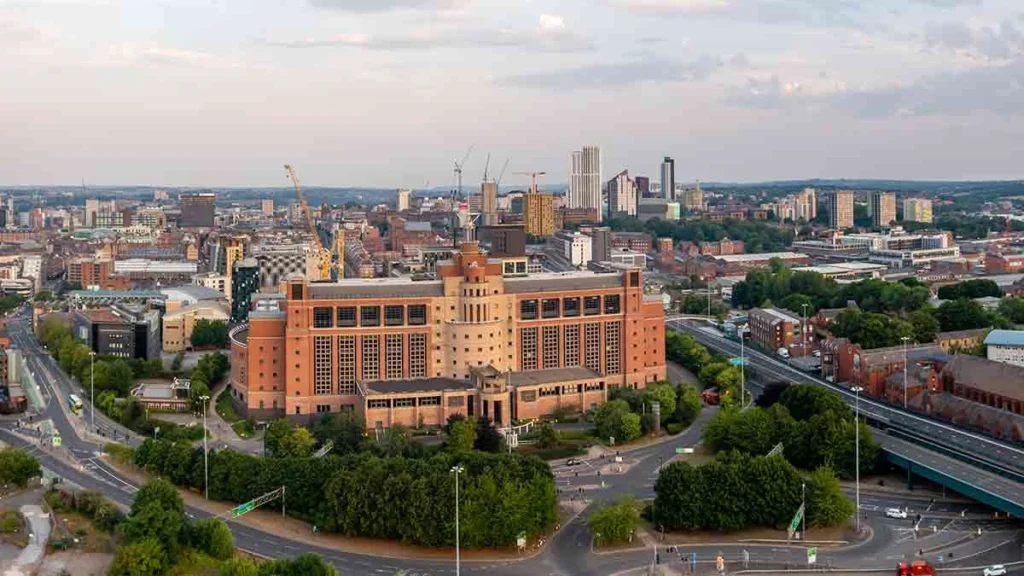
The appeal outcome letter did offer a potential solution: if LS had continued working at Quarry House (one of NHS England’s Leeds offices), the organization would have explored providing her with secure, single-occupancy showering facilities. However, by the time of the appeal, LS had relocated to Wellington Place, where unisex single-occupancy lockable showers were already available, a solution that did not fully address her core concerns about the policy itself. LS took maternity leave twice during the relevant period, filing her tribunal claim during her second leave in 2023-24.
The Tribunal Hearing: LS’s Testimony and Protected Characteristics
During cross-examination at the tribunal, LS acknowledged that the grievance process itself was "polite" and that she received no direct criticism. However, she expressed a profound sense that "everyone lacked insight throughout the investigation because how can you tell a rape victim that she should go elsewhere in the gender neutral toilets because she does not want to share facilities with a male."

Her testimony highlighted the convergence of her protected characteristics:
- Religious Beliefs (Muslim): LS stated it is improper to expose most parts of her body to any male not her husband, and particularly improper to be naked. She explained the religious obligation to perform "ghusl," a ritual washing requiring nudity, before prayer, which she would undertake in a shower if necessary at work. The facilities at Quarry House were deemed unsuitable for this due to the potential presence of biological males.
- PTSD related to male sexual violence: LS testified that being in an intimate environment where a male might be present put her at risk of triggering her PTSD and feeling vulnerable to sexual assault. This fear, a symptom and trigger of her condition, was not directed at any specific male colleague but was a generalized response to the perceived risk.
- Gender-critical belief: LS articulated her "gender-critical position as the middle ground where everyone’s rights are respected and accommodated." While she had no objection to working with or socializing with trans people in non-intimate spaces, she firmly believed "it is not reasonable to allow men who say they are women and be allowed access to women’s spaces." She presented herself as an advocate for proper healthcare for trans people, but also for the legal rights of females, rejecting any suggestion of transphobia.
- Sex (Female): Her claims were rooted in the unique disadvantages faced by biological women, especially those with her specific religious and trauma-related needs, under the policy.
The tribunal heard that although the issue arose after "person X" (who has since left NHS England) identified as female and intended to use female-only facilities, LS’s claim was not motivated by hostility towards that individual. NHS England provided demographic data for its Leeds offices, estimating approximately 2,317 female employees, of whom 162 were Muslim, with only one or two identified as trans women.
The Tribunal’s Judgment: Upholding Discrimination and Harassment
The employment tribunal upheld LS’s claims of indirect sex discrimination and harassment. NHS England had conceded that LS and other women (both Muslim and those with PTSD) were subject to a disadvantage as a result of its policy.
The tribunal found that NHS England’s policy constituted indirect sex discrimination because the organization failed to demonstrate that the policy was a proportionate means of achieving a legitimate aim. Key reasons cited included:
- Lack of Consultation: A failure to adequately consult with women and other affected groups regarding the policy’s implications.
- Insufficient Consideration of Alternatives: NHS England did not sufficiently explore or implement less discriminatory alternatives that could have accommodated all staff while upholding safety and dignity.
- Overreliance on "Full Presentation": The policy’s reliance on "full time presentation" as a threshold for facility use was deemed insufficient to mitigate the disproportionate impact on women, particularly those with LS’s specific vulnerabilities.
Regarding harassment, NHS England accepted that the policy and procedure amounted to unwanted conduct. However, they initially disputed that it had the effect of violating LS’s dignity or creating a hostile or intimidating environment for her. The tribunal disagreed, concluding that it was entirely reasonable for NHS England’s policy and procedure to have the effect of harassment on LS, both in relation to her sex and her gender-critical belief. Crucially, the tribunal distinguished that while the policy’s purpose may not have been to harass LS, it demonstrably had that effect.
Legal Context and Broader Implications
The judgment delivered a significant legal clarification, stating: "there is no express legal right for a transgender person to use the single-sex facilities of their gender identity under the [Equality] Act or under the Workplace Regulations." This finding directly challenges a common interpretation of the Equality Act 2010 that many employers, including NHS England, had seemingly adopted.
NHS England had submitted that, like many other employers, it was applying the Equality Act as it understood it at the time, relying on advice from external bodies such as Stonewall, Unison, and feedback from its staff networks. However, the tribunal explicitly rejected this defence, stating: "reliance on contemporaneous guidance or good practice advice cannot justify an incorrect interpretation of the law. Employers must seek their own legal advice and ensure that they are applying the law correctly." This serves as a stark warning to all organizations to critically evaluate external advice and ensure their policies are legally robust and compliant.
This judgment builds upon previous legal developments, including the landmark Supreme Court ruling in For Women Scotland v Scottish Ministers last year, which affirmed that "sex" in the Equality Act 2010 refers to biological sex. It also implicitly reinforces the protection of gender-critical beliefs as a philosophical belief under the Act, following the Maya Forstater case.
Elizabeth McGlone, managing partner of Didlaw and LS’s solicitor, expressed delight at the outcome, stating, "We hope this case goes a significant way to supporting the Supreme Court judgment in For Women Scotland and applies further pressure on the government to publish the EHRC guidance (which has been inexplicably and unjustifiably delayed) and to force all employers to comply with the law on biological sex and the provision of facilities and services." She commended LS for her "strength, courage and fortitude" in bringing the case, challenging her public sector employer while remaining employed, and achieving this outcome "on her behalf and that of all biological women."
Impact on UK Workplaces and Future Guidance
This ruling is expected to have far-reaching implications for employers across the UK. Many organizations have implemented similar "gender self-ID" policies for facility use, often based on interpretations of equality law that the tribunal has now deemed incorrect. Employers will now be compelled to review their policies to ensure they adequately balance the protected characteristics of sex, gender reassignment, religion or belief, and disability, while providing safe and dignified spaces for all employees. This may necessitate:
- Re-evaluation of single-sex spaces: A clearer understanding and implementation of how and when single-sex spaces can and should be maintained based on biological sex.
- Genuine Consultation: Engaging in meaningful consultation with all employee groups, particularly those whose needs might be disproportionately affected by policies, before implementation.
- Individual Risk Assessments: Implementing robust individual risk assessments and offering reasonable adjustments to accommodate specific needs related to religion, trauma, or disability.
- Independent Legal Advice: Prioritizing independent legal advice over reliance on advocacy groups or general "good practice" guidelines.
The Employment Tribunal’s judgment arrives at a time of intense public debate surrounding sex and gender identity. The updated Equality and Human Rights Commission (EHRC) code of practice for services, public functions, and associations, informed by the For Women Scotland ruling, is anticipated to be laid before Parliament this month. A separate code for employers is expected to follow. These guidelines are eagerly awaited, as they are expected to provide much-needed clarity for organizations navigating these complex legal and ethical landscapes.
While NHS England has been contacted for comment, the implications of this judgment are undeniable. It serves as a powerful reminder that employers have a legal obligation to protect all their staff, and that policies designed to promote inclusivity must not inadvertently discriminate against or harass other protected groups. The case highlights the necessity of a nuanced approach that acknowledges and respects the diverse needs and beliefs within the workforce, particularly when dealing with fundamental issues of privacy, safety, and dignity in intimate spaces.







