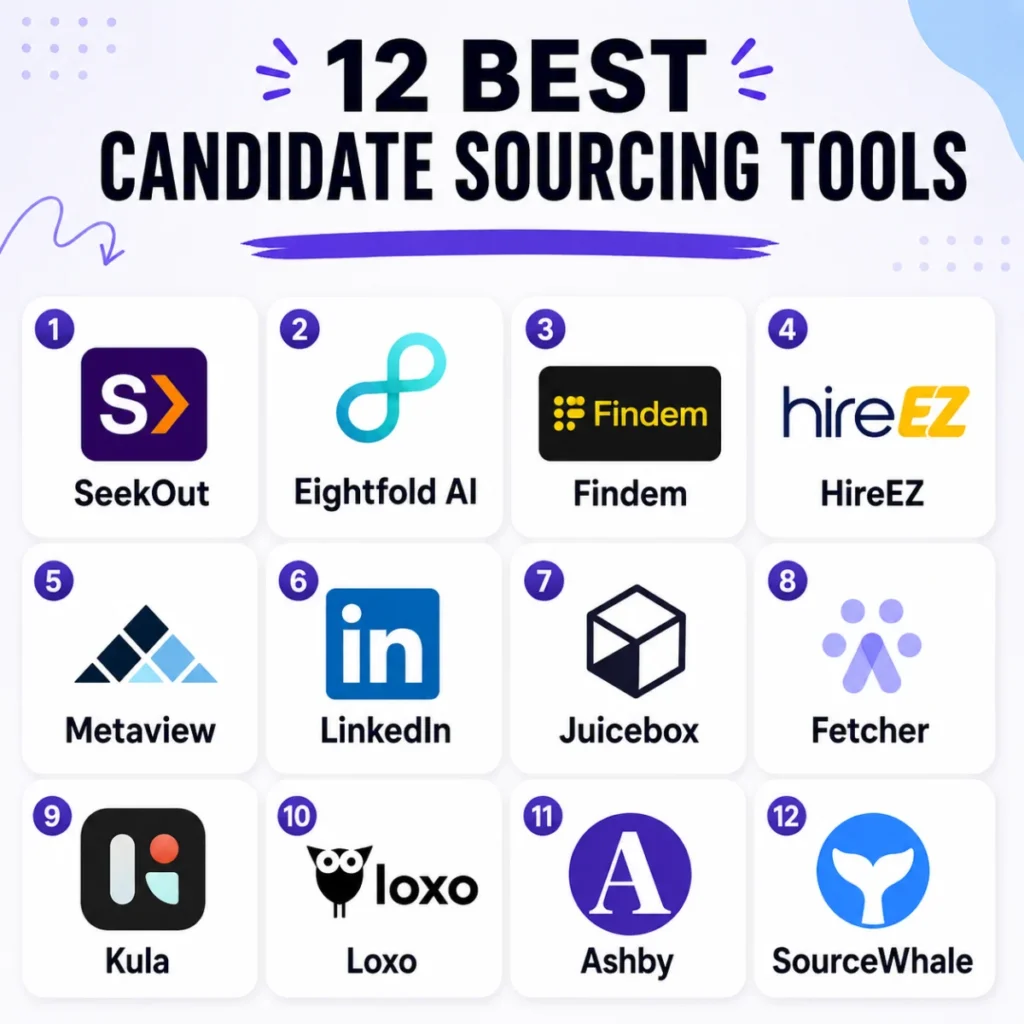
Job boards still drive applicant volume, but the best AI candidate sourcing tools are how companies find the candidates who actually get hired, primarily targeting passive talent that never hits an apply button. This shift marks a significant evolution in talent acquisition strategies, moving beyond traditional methods to embrace intelligent automation and data-driven insights. The year 2026 is witnessing the full maturation of these technologies, making them indispensable for organizations striving for competitive advantage in the global talent market.
According to Gem’s 2026 Recruiting Benchmark Reports, sourced candidates are an astounding 8x more likely to be hired compared to those applying through conventional job boards. This compelling statistic underscores a critical paradigm shift: while job boards generate a broad pool of applicants, often including many unqualified individuals, direct sourcing, referrals, and internal mobility consistently deliver a higher caliber of candidates who are better matches for specific roles and company cultures. Companies still relying solely on job boards risk overlooking the most qualified and engaged talent, effectively leaving their best potential hires untapped.
This comprehensive guide delves into the essential tools, strategic insights, and emerging trends shaping hiring strategies in 2026, aiming to equip talent acquisition professionals with the knowledge to stay ahead of the curve. The integration of Artificial Intelligence (AI) into the recruitment lifecycle is no longer a futuristic concept but a present-day necessity, transforming how companies identify, engage, and secure top talent.
The Paradigm Shift: From Reactive to Proactive Talent Acquisition
For decades, job boards served as the primary nexus between employers and job seekers. Companies posted openings, and interested candidates applied. This reactive model, while efficient for processing high volumes, often struggled with quality control, long time-to-hire cycles, and the inability to reach passive candidates—individuals who are not actively looking for a new role but might be open to the right opportunity. These passive candidates often represent the most experienced, skilled, and high-performing individuals within their fields, making them highly coveted.
The advent of AI-powered sourcing tools has fundamentally altered this dynamic. Instead of waiting for applications, companies can now proactively identify, evaluate, and engage potential candidates who possess the precise skills, experience, and even cultural fit required. This proactive approach allows organizations to build robust talent pipelines, reduce reliance on reactive application processes, and significantly improve the quality of hires. The shift is not merely technological; it represents a strategic realignment of talent acquisition from an administrative function to a critical business driver.
The Evolution of AI in Recruitment: A Brief Chronology
The journey of AI in recruitment began modestly in the late 2010s, primarily with automation tools for resume parsing and chatbot functionalities for candidate screening. Early iterations focused on alleviating administrative burdens, but as machine learning algorithms became more sophisticated and data processing capabilities expanded, AI’s role rapidly evolved.
By the early 2020s, AI started offering more predictive and analytical capabilities. Tools emerged that could analyze vast datasets of professional profiles, public information, and past hiring patterns to identify suitable candidates. Natural Language Processing (NLP) allowed AI to understand job descriptions and resumes with greater nuance, moving beyond keyword matching to semantic understanding. The focus shifted from mere automation to intelligent matching and engagement.
Entering 2026, AI-powered sourcing has reached a level of maturity where it can not only identify potential candidates but also predict their likelihood of success, assess cultural alignment, and even automate personalized outreach. These tools leverage advanced algorithms to scour billions of data points across various platforms, creating comprehensive profiles of potential hires. This rapid evolution underscores the imperative for talent acquisition teams to adopt these technologies to remain competitive.
Key Drivers of AI Sourcing Adoption in 2026
Several factors are accelerating the widespread adoption of AI sourcing tools:
- Increased Competition for Talent: In a globalized and rapidly evolving job market, securing top talent is more challenging than ever. AI provides an edge by enabling companies to identify and reach candidates that competitors might miss.
- Demand for Efficiency and Speed: Traditional sourcing can be time-consuming. AI automates many labor-intensive tasks, significantly reducing the time-to-hire and allowing recruiters to focus on higher-value activities like candidate engagement and relationship building.
- Emphasis on Diversity, Equity, and Inclusion (DEI): AI tools, when properly configured, can help mitigate unconscious bias in sourcing by focusing on skills and qualifications rather than demographic factors, and can actively identify underrepresented talent pools.
- Data-Driven Decision Making: AI platforms provide rich analytics on talent pools, market availability, compensation benchmarks, and candidate engagement, empowering recruiters with insights to make more informed hiring decisions.
- Enhanced Candidate Experience: By automating initial screening and providing personalized outreach, AI can streamline the early stages of the candidate journey, leading to a more positive experience.
Understanding the Mechanics of Modern AI Sourcing Tools
At their core, AI sourcing tools leverage sophisticated algorithms, machine learning (ML), and natural language processing (NLP) to achieve their objectives. They operate by:
- Aggregating Data: Sourcing platforms pull data from a multitude of online sources, including professional networks (LinkedIn, GitHub), public profiles, academic databases, patent filings, and corporate websites. This creates a vast, dynamic database of potential candidates.
- Semantic Search and Matching: Unlike simple keyword searches, AI uses NLP to understand the context and meaning of job descriptions and candidate profiles. It can identify synonyms, related skills, and implicit qualifications, leading to more accurate matches. For example, it understands that "Software Engineer" might require proficiency in "Python," "Java," or "C++" even if not explicitly stated in a candidate’s profile, based on industry trends.
- Predictive Analytics: AI can analyze historical hiring data and candidate profiles to predict which candidates are most likely to be a good fit, respond to outreach, or even succeed in a particular role. This includes assessing factors like career trajectory, skill development, and engagement patterns.
- Automated Outreach and Engagement: Many tools integrate with email and CRM systems to automate personalized outreach campaigns, scheduling follow-ups, and tracking candidate responses. This ensures consistent communication without manual effort.
- Bias Mitigation: Advanced AI can be designed to identify and reduce unconscious bias in the sourcing process by anonymizing certain demographic data points or focusing purely on skill-based matching, thereby promoting diversity.
Spotlight on Leading AI Candidate Sourcing Platforms for 2026
The market for AI candidate sourcing tools is robust and competitive, with each platform offering unique strengths. Here’s a closer look at some of the best AI tools for recruitment in 2026, categorized by their primary advantages:
1. SeekOut
- Best for: Sourcing hard-to-find technical talent and diverse candidates.
- Key Features: Offers an extensive database of technical professionals, including those on GitHub and other niche platforms. Strong emphasis on diversity sourcing with filters for underrepresented groups. Provides market insights and competitive intelligence, allowing recruiters to understand talent availability and compensation trends. Its AI-driven search capabilities are highly adept at uncovering passive candidates with specific technical skill sets.
2. Eightfold AI
- Best for: Enterprise talent intelligence and internal mobility.
- Key Features: Leverages deep learning to create a universal talent profile for every individual, mapping skills, capabilities, and potential. It’s powerful for both external sourcing and internal talent management, helping organizations identify skill gaps and facilitate internal career growth. Its AI matches candidates not just to open roles but to future opportunities, making it a comprehensive talent intelligence platform for large enterprises.
3. Findem
- Best for: Diversity hiring and attribute-based sourcing with rich talent market data.
- Key Features: Focuses on "attribute-based" hiring, allowing recruiters to define exact candidate attributes (skills, experience, values, achievements) rather than just keywords. It excels in building diverse talent pipelines through its advanced filters and DEI analytics. Provides real-time market insights into talent availability, location, and compensation.
4. HireEZ (formerly Hiretual)
- Best for: Outbound sourcing at scale and comprehensive candidate search.
- Key Features: Boasts a vast database aggregated from over 45 platforms, providing a 360-degree view of candidates. Its AI-powered search allows for highly specific queries, while its automated outreach features enable recruiters to engage a large volume of candidates efficiently. It’s designed for teams that need to conduct extensive outbound sourcing campaigns.
5. Metaview
- Best for: Autonomous AI sourcing agents and interview intelligence.
- Key Features: While known for its AI-powered interview note-taking and feedback automation, Metaview is evolving with "autonomous AI sourcing agents" that can proactively identify and engage candidates. This suggests a future where AI can handle initial candidate identification and interaction, freeing recruiters for more strategic tasks. Its integration with the interview process provides a holistic view of candidate quality from initial contact to final assessment.
6. LinkedIn Talent Insights / Recruiter AI
- Best for: Teams already deeply integrated into the LinkedIn ecosystem.
- Key Features: Leverages LinkedIn’s unparalleled network data to provide talent market insights, competitive intelligence, and predictive hiring analytics. Recruiter AI enhances the search and recommendation capabilities within LinkedIn Recruiter, suggesting candidates based on past hiring patterns and role requirements. Its strength lies in its direct access to a professional network of over 900 million members.
7. Juicebox
- Best for: Natural language candidate search and intuitive user experience.
- Key Features: Prioritizes ease of use with a natural language interface, allowing recruiters to describe their ideal candidate in plain English, and the AI translates it into complex search queries. This democratizes advanced sourcing capabilities, making it accessible even for less technical recruiters. It focuses on simplifying the initial search and discovery phase.
8. Fetcher
- Best for: AI sourcing with a human quality check and personalized outreach.
- Key Features: Combines AI-driven candidate identification with human review to ensure quality and relevance. It automates personalized email outreach and follow-ups, tracking engagement and managing responses. This hybrid approach aims to deliver high-quality leads while maintaining the efficiency of AI.
9. Kula AI
- Best for: AI-native, end-to-end hiring workflows and CRM functionalities.
- Key Features: Positioned as an AI-native solution that integrates sourcing, outreach, and relationship management into a single platform. It focuses on building long-term talent pipelines and automating the entire candidate engagement journey, from initial contact to interview scheduling. Kula emphasizes a seamless, AI-driven experience across the recruitment funnel.
10. Loxo
- Best for: All-in-one sourcing, CRM, and talent intelligence.
- Key Features: Offers a comprehensive platform that includes a massive candidate database, AI-powered search, applicant tracking system (ATS) capabilities, and robust CRM functionalities. It aims to be a single source for managing all aspects of the recruitment process, from initial sourcing to placement. Its strength lies in its breadth of features for recruitment agencies and corporate talent teams.
11. Ashby
- Best for: Data-driven hiring teams and advanced analytics.
- Key Features: Provides powerful analytics and reporting tools to optimize every stage of the hiring process. Its AI assists with candidate sourcing, but its core strength lies in its ability to provide actionable insights into recruitment performance, helping teams identify bottlenecks and improve efficiency through data. It’s ideal for organizations committed to continuous improvement through metrics.
12. SourceWhale
- Best for: Multi-channel outreach campaigns and engagement automation.
- Key Features: Focuses on automating personalized outreach across multiple channels (email, LinkedIn, social media). Its AI helps identify the best contact points and crafts engaging messages. It tracks candidate interactions and integrates with major CRMs and ATS platforms, making it a powerful tool for large-scale engagement efforts.
Beyond Sourcing: The Crucial Role of Job Description Optimization with Ongig
Even with the most advanced AI sourcing tools, the success of recruitment efforts ultimately hinges on the quality of the job description. An optimized job description acts as the crucial bridge between a perfectly sourced candidate and a successful application. This is where tools like Ongig become indispensable.
Ongig specializes in job description optimization, enabling recruiters to craft job posts that are not only attractive but also highly effective and compliant. It stands out by focusing on:
- Inclusive Language Analysis: Identifies and eliminates biased language that might deter diverse candidates, ensuring job descriptions appeal to a broader, more representative talent pool.
- SEO Optimization: Analyzes keywords and phrases to ensure job descriptions rank highly on search engines and job boards, improving visibility and organic reach.
- Brand Voice Consistency: Helps maintain a consistent employer brand voice across all job postings, reinforcing company culture and values.
- Compliance Checks: Flags potential compliance issues related to legal and regulatory requirements, minimizing risks.
- Readability and Engagement Scores: Provides insights into how engaging and easy-to-understand a job description is, offering suggestions for improvement.
Ongig is perfect for busy recruiters and talent acquisition teams who need to automate tasks, ensure precise job descriptions, and enhance their employer brand. By optimizing job descriptions, companies can significantly improve conversion rates from sourced candidates and ensure that their message resonates with the right talent.
Comparative Analysis: Key Features of AI Sourcing Tools
The comprehensive table provided in the original article highlights critical features for evaluating AI sourcing platforms:
| Software | Database & AI Search | Automated Outreach | ATS Integration | Pricing |
|---|---|---|---|---|
| SeekOut | ✓ | ✓ | ✓ | Starts at $149/month |
| Eightfold AI | ✓ | ✓ | ✓ | Contact for pricing |
| Findem | ✓ | ✓ | ✓ | Contact for pricing |
| hireEZ | ✓ | ✓ | ✓ | Contact for pricing |
| Metaview | ✓ | Partial | ✓ | Start for free |
| LinkedIn Talent Insights | ✓ | Partial | ✓ | Contact for pricing |
| Juicebox | ✓ | ✓ | ✓ | Start for free |
| Fetcher | ✓ | ✓ | ✓ | Starts at $115/mo |
| Loxo | ✓ | ✓ | ✓ | Start for free |
| Ashby | ✓ | ✓ | ✓ | Start at $400/month |
| Kula AI | ✓ | ✓ | ✓ | Start at $4800/year |
| SourceWhale | ✗ | ✓ | ✓ | Contact for pricing |
- Database & AI Search: This feature is foundational, representing the core capability of identifying and matching candidates. A robust database coupled with intelligent AI search ensures comprehensive coverage and accurate results.
- Automated Outreach: Critical for scaling engagement, automated outreach personalizes communication and manages follow-ups, saving recruiters significant time. The "partial" designation for Metaview and LinkedIn Talent Insights suggests their primary focus might be elsewhere, or their outreach is integrated with other modules.
- ATS Integration: Seamless integration with existing Applicant Tracking Systems (ATS) like Workday, Greenhouse, SAP SuccessFactors, and SmartRecruiters is paramount for a streamlined workflow, preventing data silos and ensuring a unified view of the candidate pipeline. Most leading tools recognize this necessity.
- Pricing: Pricing models vary significantly, from freemium options to enterprise-level subscriptions, reflecting the diverse needs and budgets of organizations. This emphasizes the importance of understanding ROI and scalability when selecting a tool.
Strategic Implications for Talent Acquisition Teams
The widespread adoption of AI sourcing tools has profound implications for talent acquisition functions:
- Elevated Role of the Recruiter: Recruiters are transforming from administrative processors to strategic talent advisors. With AI handling the initial search and screening, recruiters can dedicate more time to building relationships, conducting in-depth interviews, and focusing on candidate experience and strategic workforce planning.
- Enhanced Data-Driven Decision Making: AI provides unprecedented access to talent market data, allowing teams to forecast hiring needs, identify skill gaps, benchmark compensation, and optimize their recruitment funnels based on real-time insights.
- Competitive Advantage: Companies that effectively leverage AI sourcing gain a significant edge in attracting top talent, leading to stronger workforces, increased innovation, and improved business outcomes.
- Proactive Talent Pipelining: AI enables the continuous building of talent pipelines for critical roles, ensuring that when a vacancy arises, a pool of pre-qualified, engaged candidates is already available, drastically reducing time-to-hire.
- Improved Diversity and Inclusion: When implemented correctly, AI can help mitigate human bias, leading to more diverse candidate slates and fostering a more inclusive workforce.
Challenges and Considerations in AI Sourcing Adoption
Despite the numerous benefits, the implementation of AI sourcing tools is not without its challenges:
- Data Privacy and Security: Handling vast amounts of candidate data necessitates robust security measures and strict adherence to data privacy regulations (e.g., GDPR, CCPA).
- Potential for Algorithmic Bias: While AI can mitigate human bias, it can also perpetuate or amplify existing biases if trained on flawed or biased datasets. Continuous monitoring and auditing of algorithms are crucial.
- Integration Complexities: Integrating new AI tools with existing HR tech stacks (ATS, HRIS, CRM) can be complex and require significant IT resources.
- Cost and ROI Justification: The initial investment in AI tools can be substantial. Organizations need to carefully evaluate the return on investment through metrics like reduced time-to-hire, lower cost-per-hire, and improved quality of hire.
- The Need for Human Oversight: AI is a powerful assistant, not a replacement for human judgment. Recruiters remain essential for critical decision-making, relationship building, and ensuring a human-centric candidate experience.
Future Outlook: What’s Next for AI in Recruitment?
Looking beyond 2026, the trajectory of AI in recruitment points towards even greater sophistication and integration:
- Hyper-Personalization at Scale: AI will enable even more granular personalization of candidate engagement, tailoring messages, content, and even career paths to individual aspirations.
- Predictive Analytics for Retention: Beyond hiring, AI will increasingly predict employee churn and identify factors influencing retention, allowing companies to proactively address issues.
- Full Lifecycle Automation: Expect further automation across the entire employee lifecycle, from sourcing and onboarding to learning & development and offboarding.
- Enhanced Candidate Experience through AI Assistants: AI-powered conversational interfaces will become more sophisticated, offering 24/7 support, answering complex queries, and guiding candidates through the application process seamlessly.
- Ethical AI and Transparency: Greater emphasis will be placed on developing ethical AI, ensuring transparency in algorithms, and addressing concerns around fairness and accountability.
Expert Perspectives on AI in Talent Acquisition
Industry analysts and HR leaders are largely optimistic about the future of AI in recruitment. Dr. Eleanor Vance, a leading HR technology analyst, states, "AI is not just optimizing processes; it’s fundamentally reshaping the strategic value of talent acquisition. Companies that embrace these tools will not just find talent faster, but they will find better talent, leading to stronger organizational performance." Similarly, Maria Rodriguez, Head of Global Talent Acquisition at a Fortune 500 tech firm, notes, "Our shift to AI-powered sourcing has drastically cut our time-to-hire for critical roles by 30% and significantly diversified our talent pools. It allows our recruiters to act as true business partners, focusing on candidate engagement and strategic planning." These statements reflect a growing consensus that AI is no longer optional but a strategic imperative.
Frequently Asked Questions about the Best AI Candidate Sourcing Tools
1. What is AI-powered candidate sourcing?
AI-powered candidate sourcing leverages artificial intelligence, including machine learning and natural language processing, to automate and enhance the process of identifying, engaging, and attracting potential job candidates. It moves beyond traditional keyword searches to understand the nuances of job requirements and candidate profiles, predicting suitability and automating personalized outreach. This replaces traditional, time-intensive manual methods with data-driven, automated processes that focus on a comprehensive evaluation of skills, experience, cultural fit, and potential, often targeting passive candidates who are not actively applying for jobs.
2. How is AI candidate sourcing different from an Applicant Tracking System (ATS)?
An ATS primarily manages candidates who have already applied for a job. It acts as a database and workflow system for tracking applications, scheduling interviews, and managing communication throughout the hiring process. In contrast, AI candidate sourcing is focused on finding qualified candidates externally from vast databases, professional networks, and public platforms to build talent pipelines before they apply. While an ATS is reactive, managing inbound applications, sourcing tools are proactive, generating outbound leads. However, many modern AI sourcing tools integrate seamlessly with ATS platforms, and some, like Loxo and Kula, offer hybrid functionalities that bridge the gap between sourcing and applicant management. The synergy between sourcing tools and ATS is key to a holistic talent acquisition strategy.
3. Do AI sourcing tools integrate with existing HR systems?
Yes, most reputable AI sourcing tools are designed for seamless integration with major HR systems, particularly Applicant Tracking Systems (ATS) and Human Resources Information Systems (HRIS). This interoperability is crucial for maintaining data consistency, streamlining workflows, and avoiding manual data entry. For example, SeekOut, Eightfold AI, hireEZ, Juicebox, and Fetcher commonly integrate with popular ATS platforms like Workday, Greenhouse, SAP SuccessFactors, SmartRecruiters, and others. These integrations allow for the smooth transfer of candidate profiles, status updates, and feedback, ensuring that all candidate data resides in a centralized location for efficient management and reporting.
4. Can AI sourcing tools help with diversity hiring?
Absolutely, when configured and utilized correctly, AI sourcing tools can be powerful allies in promoting diversity, equity, and inclusion (DEI). Platforms like Findem and Eightfold AI specifically include diversity filters, bias detection features, and DEI analytics that help teams identify underrepresented candidates, track inclusion metrics across the pipeline, and ensure a diverse slate of candidates for every role. These tools can anonymize candidate data to reduce unconscious bias, focus solely on skills and qualifications, and actively search for candidates from diverse backgrounds and experiences. However, it’s vital that organizations audit their AI systems regularly to prevent algorithmic bias from creeping in through biased training data.
Overall, AI candidate sourcing tools are no longer optional but an essential component for staying competitive in 2026. By leveraging the tools and strategies outlined in this guide, organizations can streamline their hiring processes, significantly improve the quality and diversity of their workforce, and optimize their overall talent acquisition strategies. Sourcing successful candidates starts with writing effective job descriptions, and tools like Ongig can help craft inclusive and compliant job postings that appeal to the highly qualified candidates identified by these advanced AI platforms. The future of recruitment is intelligent, proactive, and data-driven, and embracing AI is the key to unlocking its full potential.