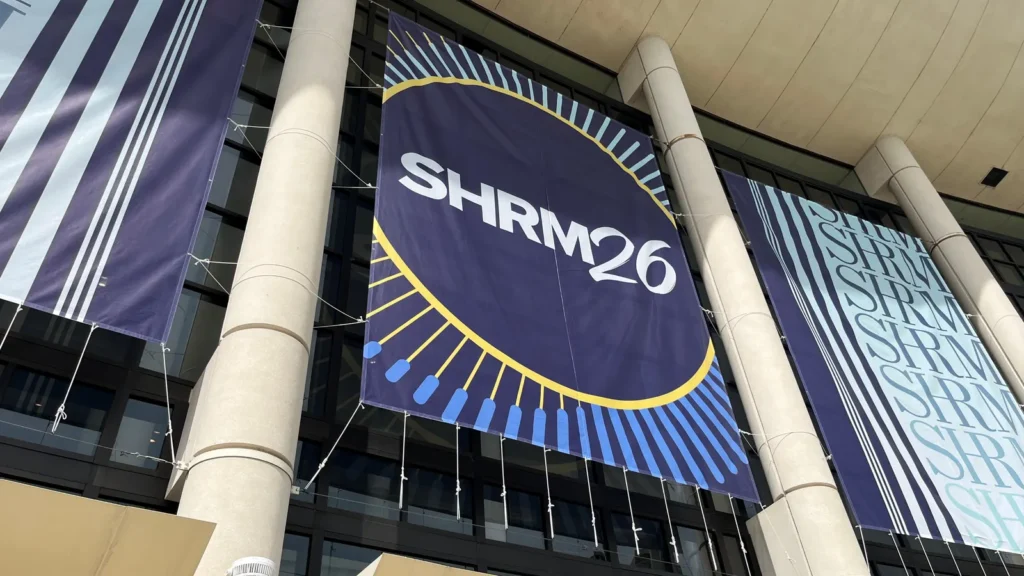
ORLANDO, Fla. – The pervasive influence of artificial intelligence (AI) was unequivocally the central theme at SHRM26, the Society for Human Resource Management’s annual conference. Held in Orlando, Florida, the event served as a critical forum for HR professionals to grapple with the opportunities, challenges, and profound implications of AI for the modern workforce. Attendees found it virtually impossible to participate in a session without AI being a significant point of discussion, underscoring its rapid integration into every facet of human resources. From philosophical deliberations on humanity’s role in an AI-driven world to practical guides for immediate implementation, speakers offered a spectrum of insights, collectively painting a comprehensive picture of AI’s transformative potential. HR Dive meticulously recaps some of the most compelling perspectives shared by executives, industry stakeholders, and thought leaders, highlighting the strategic imperatives for HR in this evolving landscape.
The Unavoidable Ascent of AI in Human Resources
SHRM26, traditionally a bellwether for trends in human capital management, convened amidst a global technological revolution propelled by advancements in artificial intelligence, particularly generative AI. The conference, drawing tens of thousands of HR practitioners, strategists, and solution providers, became the epicenter for a collective exploration of how AI is not merely optimizing processes but fundamentally reshaping talent acquisition, employee experience, performance management, and organizational culture. This year’s focus reflected a growing urgency within the HR community to understand, adopt, and ethically govern AI technologies that are already impacting daily operations and strategic planning. The backdrop of Orlando’s Orange County Convention Center buzzed with conversations about skill gaps, ethical AI, data privacy, and the human element in an increasingly automated world.
The timing of this intense focus is no coincidence. The past few years have seen an exponential rise in AI capabilities, making it accessible and powerful enough to move beyond niche applications into mainstream business functions. For HR, this translates into opportunities to automate repetitive administrative tasks, personalize employee experiences, enhance data-driven decision-making, and even predict future workforce needs. However, it also brings anxieties related to job displacement, algorithmic bias, and the erosion of human connection. Therefore, the discussions at SHRM26 were not just about if HR should adopt AI, but how to do so responsibly, strategically, and with a steadfast commitment to the human beings at the heart of every organization.
1. Simon Sinek: Prioritizing People for Successful AI Adoption
A standout voice at SHRM26 was acclaimed author and motivational speaker Simon Sinek, who captivated the Wednesday audience at the Orange County Convention Center. In a candid one-on-one discussion with BambooHR CEO Brad Rencher, Sinek delivered a resonant message to HR professionals navigating the complex interplay between AI’s technological promise and the very real human anxieties it engenders. His core assertion was clear: "If you forget about people, you’re doing AI adoption wrong." Sinek emphasized that the emotions surrounding AI – excitement, fear, uncertainty – are inherently human experiences that employers must acknowledge and address.
Sinek highlighted the existing struggles employers face in keeping pace with technological change, a challenge that is only exacerbated when they fail to engage in meaningful dialogue with employees about their concerns. He urged organizations to proactively invest in developing "human skills" such as empathy, communication, and collaboration, fostering a community-focused culture where individuals feel supported to navigate change together. This investment, he argued, builds resilience and trust, critical components for any successful technological transition.
Furthermore, Sinek cautioned against "toxic positivity," a prevalent trap where employers offer platitudes like "everything is fine, we got this" without genuinely addressing underlying fears. Instead, he advocated for transparent communication that instills confidence and reassures employees that their employer genuinely "has their back." This involves framing AI strategies around its personal impact on employees and demonstrating a collective commitment to making decisions that prioritize people’s well-being and growth. Sinek’s powerful closing statement encapsulated his philosophy: "We are human beings who work with human beings who sell to human beings, and if you don’t understand human beings, you don’t belong in business." His perspective resonated deeply, underscoring that AI, while a powerful tool, must always serve human objectives and enhance the human experience, not diminish it.
2. Kathleen Pearson: De-risking AI Implementation with "Micro Pain Points"
For many HR departments, the prospect of implementing a sweeping new technology like AI can be daunting, leading to inertia or confusion about the best starting point. Kathleen Pearson, CHRO at Opensity Solutions, a managed services organization, offered a pragmatic solution: begin with "micro pain points." This strategy involves identifying singular, time-intensive tasks that can be quickly and effectively addressed by AI or automation, thereby providing an immediate, tangible use case that can be showcased to leadership and the broader organization.
Pearson shared a compelling example from her own experience. Her team was tasked with integrating three disparate company handbooks following a merger, a process notorious for its complexity and time consumption. Leveraging Anthropic’s Claude, an advanced large language model, Pearson’s team conducted cross-checks to identify conflicting policies across the handbooks and performed an initial legal review. The results were staggering: what would have traditionally taken her and her team several weeks of meticulous manual review was accomplished in just three hours. This process surfaced 65 specific areas requiring discussion with their general counsel, streamlining a critical post-merger integration task.
This "micro pain point" approach offers several strategic advantages. It de-risks AI adoption by focusing on contained problems with clear, measurable outcomes, avoiding the pitfalls of large, expensive, and complex enterprise-wide rollouts. Pearson noted, "Once you do that once […] it’s repeatable, and it spreads throughout without having to do a very top-down approach." This organic spread fosters internal champions and builds confidence in AI’s capabilities, often requiring minimal budget allocation initially. By demonstrating immediate value and efficiency gains on a smaller scale, HR departments can build a compelling case for broader AI investment and adoption, transforming skepticism into enthusiasm.
3. Johnny Taylor: Reclaiming Strategic Time Through AI for Human-Centric Work
SHRM President and CEO Johnny Taylor offered a personal and profound perspective on AI’s practical benefits, emphasizing its role in alleviating the burden of repetitive administrative tasks. In an exclusive interview with HR Dive, Taylor highlighted how AI has significantly streamlined his daily workflow, particularly concerning his email inbox. Taylor, known for his commitment to responding to every email received from SHRM members, explained that AI now provides a robust first draft for each response. He then reviews, refines, and personalizes these drafts, a process that has cumulatively reclaimed approximately one hour of his day.
The critical insight from Taylor, however, wasn’t merely about the time saved but about how that time is reinvested. Instead of viewing this newfound efficiency as an opportunity for personal leisure, Taylor channels it back into the core mission of HR: human interaction. He noted that he now has significantly more time to "walk the halls of SHRM’s headquarters and interact with employees," engaging in more meaningful, face-to-face conversations. This direct engagement fosters a stronger sense of community, allows for deeper understanding of employee needs, and strengthens organizational culture – tasks that are inherently human and cannot be replicated by AI.
Taylor’s message served as a powerful reminder for the broader HR community: "HR people should not use this time to free themselves up and go on vacation, but [should instead] return to human work." This perspective aligns with the evolving strategic role of HR, moving away from purely administrative functions towards becoming a true strategic partner that focuses on talent development, employee well-being, and organizational leadership. By offloading mundane tasks to AI, HR professionals can elevate their roles, dedicate more time to complex problem-solving, strategic planning, and, crucially, direct human connection, thereby enhancing their value to the organization. This redefinition of work, facilitated by AI, underscores a shift towards a more human-centric and impactful HR function.
4. Kate Noel: HR as the Vanguard of AI Adoption
Kate Noel, Senior VP and Head of People Operations at Morning Brew, a prominent business media company, presented a compelling case for HR leading by example in AI adoption. Her message was clear: if an organization desires widespread embrace of new technological tools, HR practitioners must be at the forefront, demonstrating effective and innovative use. This leadership not only showcases the technology’s potential but also fosters a culture of psychological safety for employees to experiment and adopt new tools themselves.
Noel elaborated on Morning Brew’s innovative "Brew Bot," an AI integration within Slack designed as a central hub for employees to ask a wide array of service- and business-related questions. This bot provides prompt and accurate answers, significantly improving internal efficiency and employee access to information. Crucially, Noel highlighted that the organization’s HR team leverages the backend data generated by Brew Bot to identify recurring queries and common pain points. This data then informs where HR should strategically allocate education and training resources, ensuring interventions are targeted and impactful.
The Brew Bot initiative is just one example of how Morning Brew’s HR staff actively prototypes and demonstrates beneficial AI applications for the entire organization. Noel also discussed the formation of an internal AI committee, a collaborative forum where participants across various departments explore and determine future use cases, acknowledging that AI’s utility will inherently differ across job roles and functions. Noel articulated the broader impact of HR’s proactive stance: "It’s a great signal because if I’m doing that as the head of HR for my team, I’m hoping that it makes the people on my team also feel psychologically safe to do it as well." She concluded by underscoring HR’s unique position: "I like to think of HR as one of the spaces where, if we do something, it impacts everything." This underscores HR’s pivotal role not just in implementing AI tools, but in shaping the organizational culture that embraces and maximizes their potential.
5. Alex Alonso: Cultivating a Nuanced and Comprehensive Approach to AI
Beyond mere adoption, Alex Alonso, Chief Data and Analytics Officer at SHRM, stressed the necessity for HR departments to construct a robust "playbook" for long-term AI integration. In an interview with HR Dive, Alonso articulated that this process is multi-faceted, with a significant component being the cultivation of a comprehensive and nuanced mindset among employees regarding AI use. This involves not only encouraging employees to be open to applying AI to various problems but also equipping them with the discernment to identify situations where AI might not be the appropriate solution.
A key aspect of this nuanced approach, according to Alonso, is teaching employees critical engagement with AI outputs. He cautioned against blindly accepting the first response from generative AI models like Claude or ChatGPT. Instead, HR professionals should educate the workforce on the importance of iterative prompting – refining queries to elicit more accurate, sophisticated, and contextually relevant outputs. This skill of "prompt engineering" is becoming increasingly vital for extracting maximum value from AI tools.
Furthermore, Alonso advocated for the practice of using more than one generative AI model for a given task. This multi-model approach allows for cross-validation of information, reduces the risk of relying on potentially biased or inaccurate single-source outputs, and encourages a more critical perspective on AI-generated content. He emphasized that HR’s role extends beyond simply introducing tools; it involves fostering a culture of informed skepticism and continuous learning about AI’s capabilities and limitations. By instilling these practices, HR can help build a workforce that is not just AI-enabled but also AI-literate, capable of leveraging technology responsibly and effectively while mitigating potential risks such as algorithmic bias or misinformation. This comprehensive approach ensures that AI serves as an augmentative force, enhancing human capabilities rather than replacing critical thinking.
Broader Implications and the Evolving Landscape of HR
The discussions at SHRM26 collectively highlight that AI is not a fleeting trend but a fundamental shift demanding strategic engagement from HR. The implications stretch across several critical domains:
Workforce Transformation and Skill Development: AI will undoubtedly reshape job roles, making some tasks obsolete while creating new ones. A 2023 report by IBM indicated that 40% of the global workforce would need reskilling in the next three years due to AI adoption. HR’s role in identifying future skill gaps, designing comprehensive reskilling and upskilling programs, and fostering a culture of continuous learning becomes paramount. This includes not only technical AI literacy but also the "human skills" that Simon Sinek champions, such as critical thinking, creativity, emotional intelligence, and complex problem-solving, which AI cannot replicate.
Ethical AI and Governance: As organizations increasingly rely on AI for hiring, performance management, and employee analytics, the ethical considerations become more pronounced. Issues of algorithmic bias, data privacy, transparency, and accountability are at the forefront. SHRM26 emphasized HR’s responsibility in developing clear ethical guidelines, ensuring fair and unbiased AI implementation, and advocating for human oversight. This requires a robust governance framework and collaboration with legal and IT departments to navigate regulatory complexities.
Strategic HR Partnerships: By automating administrative tasks, AI liberates HR professionals from routine work, allowing them to elevate their function to a more strategic level. As Johnny Taylor articulated, this reclaimed time should be reinvested in human connection, talent strategy, and organizational development. HR becomes less about processing paperwork and more about being a vital partner in business strategy, leveraging AI-driven insights to inform decisions on talent acquisition, retention, and organizational design. Data from a recent Mercer study shows that companies with highly strategic HR functions are 2.5 times more likely to report strong business outcomes.
Employee Experience and Engagement: AI offers unprecedented opportunities to personalize the employee experience, from tailored learning pathways and career development tools to intelligent HR chatbots providing instant support. Kate Noel’s "Brew Bot" exemplifies how AI can enhance service delivery and gather insights to proactively address employee needs. However, maintaining the human touch and ensuring AI complements, rather than detracts from, genuine human connection remains a delicate balance.
Organizational Culture and Change Management: Introducing AI necessitates significant change management. HR plays a pivotal role in fostering a culture that is receptive to innovation, provides psychological safety for experimentation, and manages employee anxieties. Transparent communication, pilot programs, and showcasing tangible benefits, as demonstrated by Kathleen Pearson, are crucial for building trust and driving adoption. A study by Gartner revealed that only 14% of companies report successfully scaling AI initiatives, often due to cultural resistance rather than technical limitations. HR must be the architect of an AI-ready culture.
The Path Forward: A Human-Centric AI Future
The insights from SHRM26 paint a clear picture: AI is not just a tool; it’s a catalyst for a profound transformation in how HR operates and contributes to organizational success. The dialogue moved beyond simple adoption to strategic integration, ethical considerations, and the imperative of maintaining humanity at the core of technological advancement. The challenge for HR professionals is to embrace this powerful technology with foresight, responsibility, and an unwavering commitment to the people they serve. By adopting a human-centric approach, starting with small, impactful use cases, reclaiming time for strategic human work, leading by example, and cultivating AI literacy, HR can effectively navigate the AI revolution and build more resilient, innovative, and human-focused organizations for the future. The conference underscored that the future of HR is inextricably linked to AI, but critically, it is a future where human intelligence, empathy, and strategic insight remain irreplaceable.