The Evolving Landscape of Talent Acquisition and HR Technology
The modern talent landscape presents unprecedented challenges for enterprise-level organizations. Global competition for skilled professionals, rapid technological advancements reshaping job roles, and a heightened focus on diversity, equity, and inclusion (DEI) all contribute to the complexity of talent acquisition. Simultaneously, a patchwork of evolving labor laws and pay equity regulations across different jurisdictions necessitates meticulous attention to how jobs are defined and communicated.
Historically, job descriptions were often static documents, created ad hoc and stored in fragmented systems like shared drives, email inboxes, or basic content management platforms such as SharePoint and Google Docs. While these tools offer basic document creation and sharing functionalities, they inherently lack the specialized features required for robust JD lifecycle management at scale. For enterprise teams managing potentially thousands of unique JDs, this manual, fragmented approach leads to significant inefficiencies, inconsistencies, and considerable compliance risks. Industry analysts report a significant year-over-year growth in HR technology adoption, with specialized talent management solutions, including JD management platforms, being a primary driver. This growth is fueled by the recognized need for integrated systems that can support strategic workforce planning and ensure organizational agility.
Beyond Basic Writing Tools: Defining Enterprise Job Description Management Software
Enterprise job description management software represents a distinct category of HR technology designed to address the unique demands of large organizations. It moves far beyond simply helping with JD writing, offering a comprehensive system to control and optimize the entire job content lifecycle. These platforms are engineered to manage JDs at scale, ensuring consistency, compliance, and efficiency across an organization’s diverse talent needs.
Key functionalities that differentiate these specialized solutions from generic document tools include:
- Live, Searchable Cloud Libraries: Providing a single source of truth for all job descriptions, complete with version control and advanced search capabilities.
- Scalable JD Management: Architected to handle thousands of JDs, often across multiple languages and regional variations, without compromising performance.
- Automated Approval Workflows: Implementing structured, auditable processes for JD review and sign-off by relevant stakeholders (e.g., hiring managers, HR, legal, compensation).
- Governed Templates and Standardization: Ensuring brand consistency, legal compliance, and the application of best practices through predefined, controlled templates.
- Automation of Repetitive Updates: Systematically applying changes to large sets of JDs, such as company policy updates or skill taxonomy revisions, to maintain accuracy and relevance.
- Seamless Integration with Core HR Systems: Connecting with Applicant Tracking Systems (ATS) for publishing and candidate application, and Human Resources Information Systems (HRIS) for employee data and organizational structure, ensuring data flow and consistency.
These capabilities collectively aim to minimize manual administrative burden, eliminate audit gaps, reduce legal exposure, and align job content strategically with organizational objectives, thereby enhancing the overall talent acquisition and management process.
Core Capabilities: A Deep Dive into Essential Features for Enterprise Solutions
For enterprise teams, the selection of JD management software hinges on a suite of advanced features that address the specific complexities of large-scale operations.
Centralized Repository and Searchability
A fundamental requirement is a live, cloud-based library that serves as the definitive source for all job descriptions. This central repository not only provides robust version control, allowing teams to track changes and revert to previous iterations, but also offers powerful search and filtering capabilities. This ensures that HR professionals, hiring managers, and even employees can easily access accurate, up-to-date JDs, minimizing duplication of effort and ensuring consistency in communication.
Scalability and Global Management
Enterprise organizations often operate across multiple regions and countries, necessitating the management of JDs in various languages and in adherence to diverse local labor laws. Specialized software must be capable of managing JDs at scale, supporting multi-language content, and allowing for regional variations while maintaining a core global standard. This prevents the fragmentation of job content and ensures a unified approach to talent management worldwide.
Automated Approval Workflows
Manual JD approval processes are notorious for creating bottlenecks, delays, and a lack of accountability. Enterprise JD software automates these workflows, routing JDs through predefined approval chains involving hiring managers, HR business partners, compensation specialists, and legal teams. This automation not only accelerates the approval cycle but also creates an auditable trail, enhancing compliance and providing insights into process efficiencies and potential holdups. Industry benchmarks suggest that automated workflows can reduce approval times by up to 40%.
Standardized Templates and Governance
To ensure brand consistency, legal compliance, and fairness, enterprise solutions provide tools for creating and enforcing governed JD templates. These templates embed company standards, legal disclaimers, and essential sections, guiding users to create high-quality, compliant JDs. This approach minimizes human error, reduces the risk of biased language, and ensures a consistent candidate experience across all roles.
Automated Updates and Maintenance
Job descriptions are not static; they evolve with organizational changes, technological shifts, and market demands. Enterprise JD software automates repetitive updates, such as changes to company-wide benefits statements, legal disclaimers, or skill taxonomies. This ensures that all relevant JDs are consistently updated without manual intervention, saving countless hours and preventing outdated information from being published.
Seamless Integration with HR Ecosystems
The true power of enterprise JD management lies in its ability to integrate seamlessly with other critical HR systems. Direct integrations with Applicant Tracking Systems (ATS) facilitate the publishing of JDs and the flow of candidate data, while connections to Human Resources Information Systems (HRIS) ensure alignment with employee records and organizational structures. Integration with compensation management platforms further enhances the ability to link job descriptions directly to salary bands and market data.
Bias Detection and Inclusivity Tools
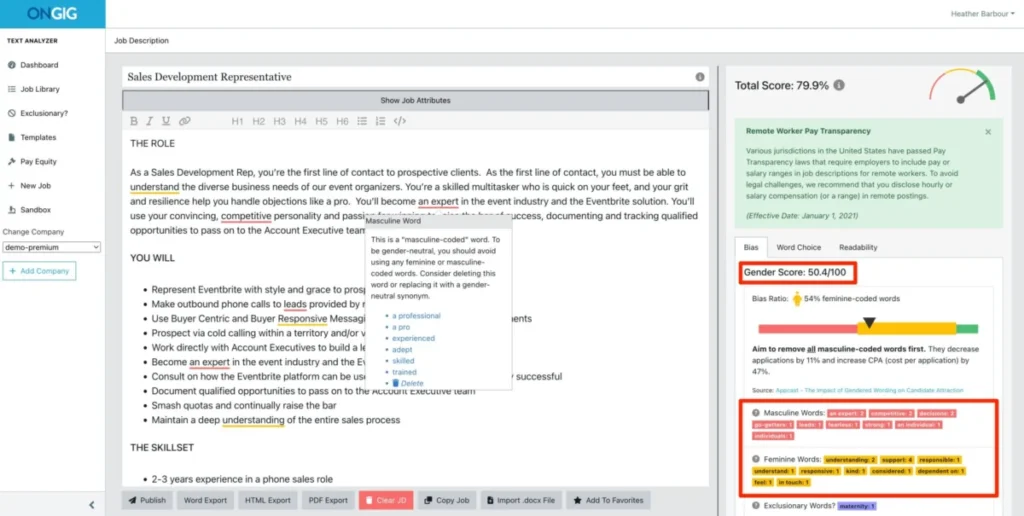
A critical feature in today’s talent landscape is the ability to identify and mitigate biased language within JDs. Advanced software utilizes AI and machine learning to flag gender-coded words, ageist terms, or other exclusionary language. By promoting inclusive language, these tools help organizations attract a broader, more diverse pool of candidates, supporting DEI initiatives and reducing potential legal risks. Studies have shown that inclusive job descriptions can increase applicant diversity by 15-20%.
Compensation Alignment
Many enterprise JD solutions are either integrated with or include functionalities for compensation benchmarking. This ensures that job descriptions are not only internally consistent but also competitive within the external market, aligning salaries with industry standards and internal pay equity goals. This feature is crucial for attracting top talent and managing compensation costs effectively.
Leading Solutions in the Enterprise JD Management Space
The market for enterprise job description management software is maturing, with several robust platforms offering specialized capabilities. Each solution brings a unique focus, catering to varying organizational priorities within the broader framework of JD lifecycle management.
Ongig Text Analyzer
Ongig Text Analyzer positions itself as a comprehensive system for managing job content from drafting to publishing. Its core strength lies in its AI-driven capabilities for building inclusive job descriptions, offering real-time feedback on language and bias. For enterprises, Ongig provides a searchable cloud library, manages approval workflows, standardizes JDs through governed templates, and integrates with ATS and HRIS systems, aiming to minimize manual effort and ensure content alignment across the talent ecosystem.
Job Description Management by Payscale
Payscale offers a solution focused on eliminating "job data chaos" by integrating job architecture, job descriptions, and leveling within a single system. This is particularly valuable for organizations struggling with inconsistent job titling, levels, and compensation structures. Payscale’s offering helps define and manage roles with clarity, ensuring that JDs are not only well-written but also aligned with organizational hierarchy and market-based compensation data.
JDMS by Hrizons
Hrizons’ Job Description Management System (JDMS) prioritizes ease of management through an organized, filterable, and sortable job description library. Its emphasis is on simplifying the creation, storage, and retrieval of JDs, while also ensuring seamless integration with preferred HRIS and ATS systems. JDMS aims to provide a centralized hub for all job data, making it accessible and manageable for large teams.
JDXpert
JDXpert is presented as a comprehensive job information management tool, extending beyond mere JD writing to encompass building, organizing, approving, and storing job descriptions. The platform’s strength lies in its ability to consolidate job-related data, eliminating the need for scattered tools and ensuring a unified approach to job content governance across the enterprise.
Quinto by HRSG
Quinto by HRSG addresses the challenge of inconsistency across an organization’s talent data. It provides a platform to maintain a shared, consistent structure for job information, which is critical for areas ranging from job descriptions to promotion and succession planning. Quinto’s focus is on data integrity and consistency, ensuring that all talent processes are built upon a reliable foundation of job definitions.
JobArchitect by Salary.com
JobArchitect by Salary.com is specifically designed for creating, approving, and maintaining job description content at scale. Its integration within the broader Salary.com platform means that recruitment teams can leverage robust compensation data directly when defining roles, eliminating guesswork and ensuring market-competitive pay structures. This tool aims to replace disparate systems with a single, integrated platform for job content and compensation alignment.
RoleCreate by Role Mapper
RoleCreate by Role Mapper focuses on enabling organizations to build inclusive, consistent, and compensation-ready JDs from a single platform. It recognizes that job descriptions are dynamic and provides tools to help maintain their relevance as the company and market evolve. RoleCreate emphasizes the strategic importance of JDs as living documents that reflect current organizational needs and market realities.
Datapeople (now a Payscale company)
Datapeople, now part of Payscale, specializes in improving and managing JD content through data-driven guidance. The platform uses real-world hiring data to predict how a job description will perform, offering insights beyond basic grammar checks. It flags issues such as non-inclusive language or missing benefits, providing actionable recommendations to optimize JDs for better candidate attraction and diversity outcomes.
Strategic Considerations for Implementation and Adoption
While features are paramount, enterprise teams must also evaluate several practical factors when selecting and implementing job description software.
Ease of Use
The software must be intuitive and user-friendly for all stakeholders, including HR generalists, recruiters, hiring managers, and legal teams. A complex interface can lead to low adoption rates, negating the benefits of the system. Vendors should offer clear user guides and comprehensive training resources.
Implementation Process
The speed and ease of implementation are crucial for large organizations. This includes understanding the typical deployment timeline, the level of vendor support provided during setup, and the resources required from the internal IT and HR teams. A phased rollout might be advisable for complex organizations.
Transparent Pricing Models
Enterprise software often comes with tiered pricing structures based on user count, features, or volume of JDs. Organizations should seek vendors with transparent pricing that clearly aligns with their anticipated usage and scalability needs, avoiding hidden costs or unexpected fees.
Content Migration Services
For organizations transitioning from existing, often fragmented, systems (like SharePoint or shared drives), robust content migration services are essential. The vendor should provide clear support and methodologies for migrating existing JDs and associated data into the new platform, minimizing disruption and ensuring data integrity.
Ongoing Support Availability
Effective post-implementation support is critical for long-term success. Organizations should assess the vendor’s support channels (e.g., phone, email, chat), response times, and the availability of dedicated account managers. Online reviews and client testimonials can offer insights into the quality of ongoing support.
The Broader Impact: Transforming Talent Operations and Organizational Agility
The adoption of specialized job description management software for enterprise teams yields far-reaching benefits that extend beyond mere administrative efficiency. These systems become strategic assets, fundamentally transforming talent operations and enhancing organizational agility.
Improved Candidate Experience and Employer Brand
Well-crafted, consistent, and inclusive job descriptions are the first touchpoint for potential candidates. By ensuring clarity, accuracy, and an inclusive tone across all JDs, organizations significantly enhance the candidate experience. This professionalism reinforces a strong employer brand, making the company more attractive to top talent and fostering a positive perception from the outset of the recruitment journey.
Enhanced Compliance and Risk Mitigation
The dynamic nature of labor laws and anti-discrimination regulations means that JDs are constant points of legal exposure. Enterprise JD software, with its built-in compliance checks, bias detection, and auditable approval workflows, acts as a critical safeguard. It helps ensure that JDs meet regulatory requirements, reducing the risk of costly lawsuits and penalties associated with non-compliant or discriminatory language.
Optimized Internal Mobility and Career Pathing
For large organizations, fostering internal mobility is key to retention and talent development. A centralized, well-structured JD library provides clear definitions of roles, required skills, and career progression paths. This transparency empowers employees to identify opportunities for growth within the company and enables HR to facilitate smoother internal transitions, reducing reliance on external hiring.
Data-Driven Insights for Workforce Planning
By centralizing and standardizing job data, these platforms generate invaluable insights. Analytics on job families, skill gaps, compensation trends, and hiring effectiveness can inform strategic workforce planning. This data-driven approach allows organizations to proactively address future talent needs, optimize resource allocation, and make informed decisions about organizational structure.
Driving Diversity, Equity, and Inclusion (DEI)
Beyond mere compliance, JD management software plays a pivotal role in advancing DEI initiatives. By actively promoting inclusive language, identifying potential biases, and ensuring fair representation of skills and responsibilities, these tools help create a more equitable hiring process. This leads to a more diverse applicant pool and, ultimately, a more diverse and innovative workforce, which research consistently links to improved business outcomes.
Conclusion
For enterprise teams, the transition from fragmented, manual job description processes to integrated, specialized management software is not merely an operational upgrade; it is a strategic imperative. In a competitive and regulated talent landscape, robust JD management underpins effective talent acquisition, mitigates legal risks, fosters internal mobility, and champions diversity. By investing in a comprehensive system, organizations can centralize their JD lifecycle, standardize content, streamline approvals, and leverage data to build a more agile, compliant, and ultimately, more successful workforce. The choice of the right platform, such as those highlighted, will hinge on an organization’s specific needs for scale, integration, and strategic alignment, but the overarching trend points toward these solutions as indispensable tools for modern enterprise HR.