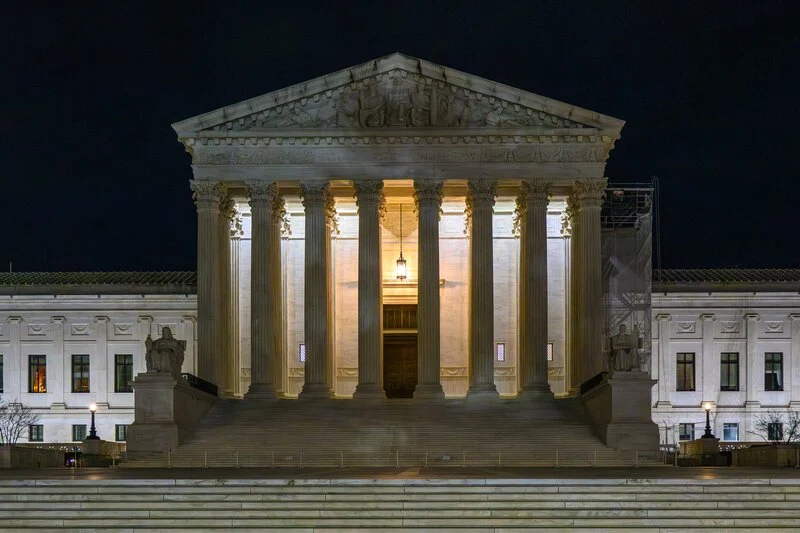
The United States Supreme Court concluded its 2025-2026 term in early July, leaving behind a trail of landmark decisions that have fundamentally reshaped the landscape of American jurisprudence and the boundaries of federal authority. As the justices retreated for their summer recess, legal analysts and constitutional scholars began the arduous task of dissecting a term defined by sharp ideological cleavages, the further entrenchment of a conservative supermajority, and a series of rulings that continue to recalibrate the balance of power between the three branches of government. The term, which saw the Court grapple with issues ranging from the limits of executive immunity to the reach of federal regulatory agencies, serves as a testament to the transformative era currently underway at the nation’s highest tribunal.
A Term Defined by Doctrinal Shifts
The 2025-2026 term was characterized by a rigorous application of originalist and textualist philosophies, which have become the hallmark of the current Court’s conservative wing. Chief Justice John Roberts, often viewed as the institutionalist seeking incremental change, found himself frequently aligned with the more staunchly conservative justices—Clarence Thomas, Samuel Alito, Neil Gorsuch, Brett Kavanaugh, and Amy Coney Barrett—in cases that challenged long-standing precedents.
Throughout the term, the Court’s decisions reflected a profound skepticism of the "administrative state." Following the previous year’s momentum in curtailing the power of federal agencies, the justices this term moved to further restrict the ability of the executive branch to interpret ambiguous statutes. This shift has significant implications for environmental protection, labor relations, and consumer safety, as the Court increasingly insists that major policy questions must be explicitly authorized by Congress rather than determined by agency experts.
Chronology of the 2025-2026 Term
The term followed the traditional Supreme Court calendar, beginning on the first Monday of October 2025 and concluding with a flurry of opinions in late June and early July 2026.
October – December 2025: The Opening Salvos
The term began with oral arguments centered on technical jurisdictional questions and the scope of the First Amendment in the digital age. Early signals from the bench suggested a Court eager to address the complexities of content moderation on social media platforms and the degree to which state laws can dictate the editorial choices of private tech companies.
January – March 2026: The Core Constitutional Battles
During the winter months, the Court heard arguments regarding the Fourth Amendment’s application to modern surveillance technologies and a high-profile challenge to the funding structure of several independent federal agencies. It was during this period that the ideological lines began to harden, with the liberal minority—Justices Sonia Sotomayor, Elena Kagan, and Ketanji Brown Jackson—frequently questioning the potential for chaos resulting from the overturning of settled regulatory frameworks.
April – June 2026: The Opinion Season
As is customary, the most controversial and impactful decisions were reserved for the end of the term. The final weeks of June saw a rapid succession of rulings that addressed presidential power, voting rights, and the intersection of religious freedom and public education. The term officially concluded on July 2, 2026, with the release of several 6-3 decisions that highlighted the deep philosophical divide within the chamber.
Statistical Analysis: The 6-3 Paradigm
Data from the 2025-2026 term confirms the continued dominance of the conservative majority. Out of the 64 signed opinions issued this term, approximately 32% were decided by a 6-3 vote along traditional ideological lines. This represents a slight increase from the previous term, indicating a consolidation of the conservative bloc’s agenda.
However, the data also reveals nuances in the voting patterns. Chief Justice Roberts and Justice Kavanaugh emerged as the most frequent members of the majority, appearing in over 90% of all decided cases. In contrast, Justice Thomas and Justice Alito remained the most likely to issue solo concurrences or dissents that pushed for even more radical departures from precedent.
Unanimous decisions, which once comprised the majority of the Court’s output, accounted for only 41% of the term’s rulings. Many of these unanimous votes occurred in lower-profile cases involving statutory interpretation or procedural disputes, while the "hot-button" social and political issues almost invariably resulted in a fractured bench.
Landmark Rulings and Jurisprudential Impact
Several key cases stand out as pillars of the 2025-2026 term, each carrying profound implications for the future of American law.
The Curtailment of Agency Deference
Building on the foundation laid in previous terms, the Court issued a definitive ruling in Department of Commerce v. New England Fisheries, which effectively dismantled the remnants of what was once known as "Chevron deference." The Court held that courts must exercise independent judgment in deciding whether an agency has acted within its statutory authority, rather than deferring to an agency’s "reasonable" interpretation of an ambiguous law. This ruling has already triggered a wave of litigation in lower courts, as industries challenge decades of federal regulations.
Executive Power and Immunity
In a follow-up to previous high-stakes litigation involving the executive branch, the Court clarified the boundaries of presidential immunity for "official acts." The 6-3 majority ruled that while a president does not enjoy absolute immunity for private conduct, the protections for actions taken within the "outer perimeter" of official duties are expansive. The dissenting justices argued that this creates a "functional king" who is above the law, while the majority maintained it is necessary to preserve the independence of the executive office.
The First Amendment and Digital Platforms
The Court also addressed the "State Action" doctrine in the context of social media. In a complex ruling, the justices held that while social media companies are private entities with their own First Amendment rights to curate content, they may be treated as state actors if they work in "close coordination" with government officials to suppress specific viewpoints. This decision has forced a reevaluation of how federal agencies communicate with tech giants regarding misinformation and public health.
Official Responses and Public Reaction
The conclusion of the term prompted immediate and polarized reactions from political leaders and legal advocacy groups.
From the Executive Branch:
The White House issued a statement expressing "deep concern" over the Court’s direction. "The decisions reached this term represent a troubling departure from the principles of stability and progress," the statement read. "By stripping away the ability of federal agencies to protect the public and by expanding executive immunity, the Court is moving the country toward a period of legal uncertainty."
From Congressional Leaders:
Congressional Republicans largely lauded the Court’s work. A senior member of the Senate Judiciary Committee remarked, "The 2025-2026 term will be remembered as a victory for the Constitution and the rule of law. The justices have rightly returned power to the people’s elected representatives and reined in an unelected bureaucracy that has overstepped its bounds for far too long."
From the Legal Academy:
Constitutional law professors have noted the speed at which the Court is moving. "What we are seeing is not just a conservative shift, but a methodological revolution," said one prominent scholar. "The Court is not just changing the answers to legal questions; it is changing the very rules of how those questions are asked and answered."
The Shadow Docket and Procedural Trends
An analysis of the term would be incomplete without addressing the "shadow docket"—the Court’s use of emergency orders and summary dispositions. While the Court made efforts to move more significant cases to the "merits docket" for full briefing and argument, it continued to use emergency applications to stay lower court rulings on controversial topics such as immigration and election law.
Critics argue that the shadow docket lacks transparency and deprives the public of the reasoned explanations found in full opinions. However, proponents argue that the speed of modern litigation necessitates a mechanism for the Court to intervene quickly when constitutional rights or federal interests are at immediate risk.
Broader Impact and Implications
The long-term implications of the 2025-2026 term are difficult to overstate. By narrowing the power of federal agencies, the Court has shifted the burden of policymaking squarely onto a Congress that has often struggled with gridlock. This shift may lead to a more decentralized regulatory environment, with states taking on a larger role in areas like environmental standards and labor protections.
Furthermore, the Court’s focus on history and tradition as the primary guides for constitutional interpretation suggests that many other long-standing precedents may be vulnerable in future terms. Issues such as substantive due process and the scope of the Commerce Clause remain in the crosshairs of the conservative majority.
As the legal community looks toward the 2026-2027 term, the cases already on the docket suggest no slowing down. Petitions involving the Second Amendment, affirmative action in private industry, and the limits of the dormant Commerce Clause are already generating significant interest.
In conclusion, the 2025-2026 term was a watershed moment for the Supreme Court. It solidified the 6-3 majority’s control over the nation’s legal trajectory and signaled a permanent shift away from the mid-20th-century consensus on the role of the federal government. For better or worse, the "Roberts Court" has fully embraced its role as a transformative force, ensuring that its influence will be felt for generations to come.