The global corporate landscape is currently undergoing one of the most significant shifts in workforce development since the industrial revolution, driven by the rapid integration of Artificial Intelligence (AI) into daily operations. As organizations across the globe scramble to "enable AI" within their ranks, a critical divide has emerged between mere exposure to technology and the actual capability to utilize it effectively. While the speed of adoption has reached unprecedented levels, experts warn that the rush to implement AI-driven learning may be prioritizing short-term familiarity over long-term proficiency, potentially creating a "competency gap" that could hinder economic productivity and individual career growth.
The current atmosphere in the corporate world is often described as an "AI gold rush," characterized by a frantic effort to integrate generative AI tools and machine learning frameworks into every facet of business. However, industry analysts and Learning and Development (L&D) professionals are increasingly concerned that this movement is frequently reduced to a "checkbox" exercise. In this environment, the success of a training program is often measured by attendance rates at webinars or the deployment of "AI-powered" features, rather than by a measurable increase in the workforce’s ability to solve complex problems using these tools.
A Chronology of the AI Learning Surge
The trajectory of AI in the professional sphere has moved with startling velocity. To understand the current state of AI learning, one must look at the timeline of its integration into the mainstream consciousness.
Between 2018 and 2021, AI was largely viewed as a specialized domain, reserved for data scientists and software engineers. During this period, the average professional’s understanding of machine learning was often superficial, limited to buzzwords and abstract concepts. The barrier to entry was high, and "learning AI" required a deep dive into mathematics and coding.
The landscape shifted dramatically in November 2022 with the public release of high-performance generative AI models. This served as the catalyst for the current "gold rush." By early 2023, the focus moved from "What is AI?" to "How do we use it?" Organizations began a frantic search for "AI literacy," a term that quickly became a staple in annual reports and strategic planning sessions.
Throughout 2024, the trend has evolved into what is now known as "AI enablement at scale." This phase is marked by the mass deployment of AI tools across diverse departments, from human resources to legal and customer support. However, it is within this rapid scaling that the "checkbox" mentality has taken root, as the pressure to show immediate progress often overrides the need for deep, contextual learning.
Supporting Data: The Scale of Adoption vs. The Skill Gap
Recent data underscores both the excitement and the underlying risks of the current AI transition. According to McKinsey & Company’s latest "State of AI" report, AI adoption has more than doubled since 2017, with 50% of organizations reporting they have adopted AI in at least one business function. Furthermore, LinkedIn’s 2024 Workplace Learning Report identifies AI literacy as one of the top three most in-demand skill areas globally, with a 160% increase in members adding AI skills to their profiles over the past year.
Despite these impressive figures, a secondary set of data points toward a "capability crisis." Research from the World Economic Forum (WEF) suggests that while 44% of workers’ skills will be disrupted in the next five years, only a fraction of current corporate training programs are considered "highly effective" at reskilling employees for an AI-integrated environment. A survey of C-suite executives conducted by IBM found that while 87% of managers believe employees need to be reskilled in AI, only 28% of those organizations have a clear roadmap for doing so beyond basic tool introductions.
The Pitfalls of "Checkbox" Training and Exposure
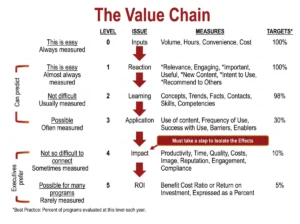
The primary challenge identified by educational psychologists and industry leaders is the confusion between "exposure" and "application." In the rush to meet KPIs, many organizations are opting for one-size-fits-all training modules—often hour-long webinars or generic tool demonstrations. While these methods provide familiarity, they rarely translate into the ability to apply AI to specific, high-stakes professional tasks.
"Familiarity is not the same as capability," notes one senior L&D strategist. "When we provide a demo of a new AI tool, we are giving people awareness. But capability only comes when that person knows how to prompt that tool to solve a specific client problem, how to audit the output for bias, and how to integrate that output into a larger workflow."
The danger of this "checkbox" approach is two-fold. First, it creates a false sense of security among leadership, who believe their workforce is prepared for the future. Second, it can lead to "AI fatigue" among employees who feel overwhelmed by new tools but lack the foundational understanding to make those tools useful in their specific roles.
Strategic Frameworks for Meaningful Reskilling
To move beyond the superficial, experts suggest that organizations must reframe their approach to AI education. The consensus among successful implementers is that the "tool-first" approach is fundamentally flawed. Instead, training must be problem-centric and context-driven.
-
Starting with Problems, Not Tools: Rather than introducing a new AI software and asking employees to find a use for it, effective programs identify existing bottlenecks in the workflow and then introduce AI as a potential solution. This ensures that the learning is grounded in relevance.
-
Role-Specific Customization: The AI needs of a customer support executive are vastly different from those of a creative director or a financial analyst. One-size-fits-all training fails because it ignores the nuances of different professional contexts. Tailored learning paths that focus on specific use cases are significantly more effective at driving adoption.
-
Iterative and Messy Learning: Deep capability is rarely achieved through linear, polished modules. It requires what educators call "active experimentation." This involves allowing employees to use AI in low-pressure environments, where they can fail, iterate, and discover the limitations of the technology.
-
Psychological Safety: A critical but often overlooked component of AI adoption is the human element. Many employees fear that AI is a tool designed to replace them. For learning to be effective, organizations must foster an environment of psychological safety where AI is framed as an "augmentative" tool rather than a "replacement" tool.
Official Responses and Industry Sentiment
The sentiment from major international bodies reflects a growing urgency for a more thoughtful approach to AI education. The World Economic Forum has repeatedly emphasized that "meaningful" reskilling is the real challenge of the decade. In their view, the goal is not just to create AI experts, but to create "thoughtful, confident users" across all sectors of the economy.
In the tech sector, leaders are also beginning to voice the need for a shift in strategy. During a recent industry summit, a prominent CTO remarked, "We have enough people who know how to talk about AI. What we lack are people who know how to work alongside it." This sentiment is echoed by labor unions and employee advocacy groups, who argue that training should be a continuous right rather than a one-time event, ensuring that workers are not left behind as the technology evolves.
Broader Impact and Economic Implications
The implications of how we handle AI learning extend far beyond the corporate classroom. If the "capability gap" persists, it could lead to a bifurcated labor market where a small elite understands how to leverage AI while the majority of the workforce remains in a state of superficial familiarity. This could exacerbate existing income inequalities and lead to significant labor market volatility.
Conversely, if organizations successfully bridge the gap between exposure and capability, the potential for economic growth is immense. Effective AI integration has the potential to automate routine tasks, allowing human workers to focus on higher-order creative and strategic work. This "human-in-the-loop" model is widely considered the gold standard for future productivity.
Furthermore, the democratization of AI knowledge has the potential to level the playing field for smaller organizations. When complex concepts are made accessible and actionable, small businesses can compete with larger corporations by leveraging AI to scale their operations without the need for massive capital investment in human resources.
Future Outlook: Beyond the Gold Rush
As the initial dust of the AI gold rush begins to settle, the focus of the global business community is expected to shift from "speed of adoption" to "quality of integration." The most successful organizations of the next decade will likely be those that recognized early on that AI is not a magic bullet, but a sophisticated tool that requires a sophisticated user.
The transition from a "checkbox" mentality to a capability-driven framework will require a fundamental shift in how we value learning. It requires a move away from passive consumption toward active, contextual application. In the words of industry analysts, the question is no longer "How fast can we scale AI learning?" but rather "How well are we helping people actually use it to change the way they work?"
Ultimately, the goal of AI education is not to turn every employee into a computer scientist. It is to empower every professional to become a confident, critical, and creative user of technology. In doing so, society can ensure that the AI revolution is not just a period of rapid technological change, but a period of genuine human and professional advancement.