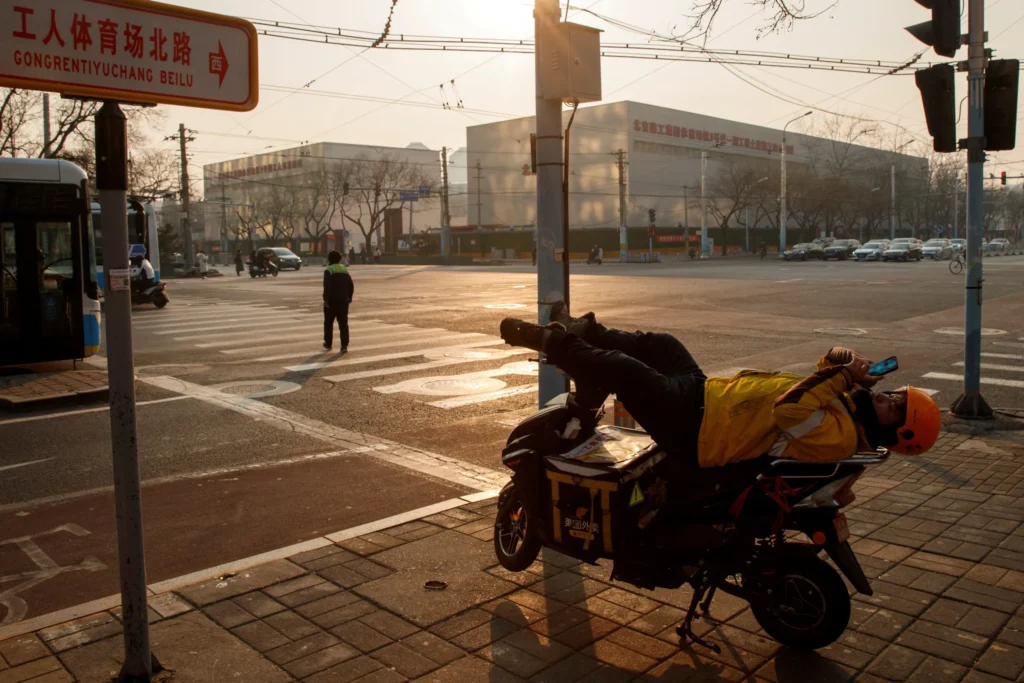
Bao Zhang, a former software tester, now navigates Beijing’s bustling streets as a driver for a Chinese ride-hailing app, a career shift driven by a contracting job market that offers him little optimism for a return to the tech sector. His experience is becoming increasingly emblematic of a broader economic trend in China, where tens of millions are transitioning from traditional, formal employment into the precarious landscape of the gig economy. This surge is fueled by a confluence of factors: meager unemployment insurance benefits, a record influx of university graduates, and a persistent shortage of stable, well-paying jobs.
"Those who used to take taxis now have to drive them themselves," Zhang, 30, remarked. He works from early morning until late at night, earning approximately 6,000 yuan (about $885 USD) per month after accounting for vehicle rental and charging expenses. This sentiment underscores the cyclical nature of economic hardship, where former consumers of services are compelled to become providers, often at reduced economic returns.
The scale of this transformation is substantial. The China New Employment Forms Research Center, a prominent think tank, projects that the number of individuals engaged in flexible employment – defined as those without permanent full-time contracts – will swell to an estimated 320 million this year. This represents a significant increase from 280 million in 2025 and forms a cohort nearly as large as the entire population of the United States, constituting approximately 44% of China’s total workforce. This demographic shift has profound implications for China’s social fabric, economic stability, and the future of its welfare system.
The Gig Economy as an Employment Buffer
Analysts widely agree that China’s burgeoning gig economy is functioning as a critical employment buffer, absorbing workers displaced from traditional sectors. The ongoing property crisis has led to a significant reduction in construction jobs, while manufacturing firms are shedding labor due to automation, cost-cutting measures, increased global tariffs, and intensified price wars within the industry. This economic restructuring has created a ripple effect, pushing individuals into alternative forms of work.
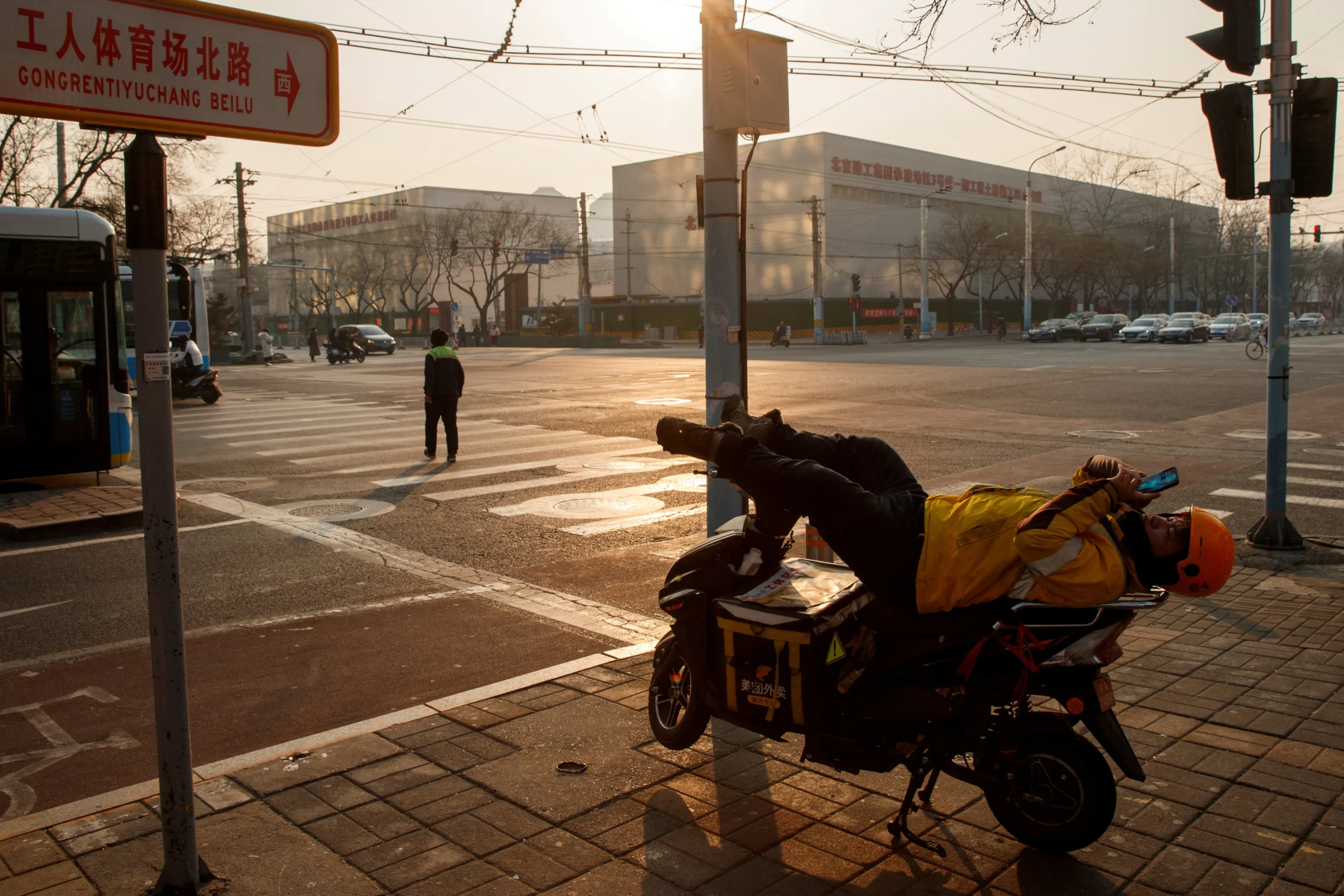
Crucially, the gig economy is increasingly attracting educated youth and white-collar professionals who find themselves squeezed by weakening domestic demand and the rapid advancement of artificial intelligence. These are individuals who, in previous economic cycles, would have been absorbed by burgeoning service industries or expanding corporate roles.
Yang Zhan, a cultural anthropology expert at the Hong Kong Polytechnic University, noted the profound nature of this trend. "The proportion is extremely high," Zhan stated. "It’s no longer limited to rural migrants and has spread to the middle class and university graduates." He further elaborated on the underlying drivers: "China is upgrading manufacturing, and many industries that used to absorb large numbers of workers are being phased out. Then there is AI." This dual pressure of industrial transformation and technological disruption is fundamentally altering the employment landscape.
Mitigating Income Shocks, Creating Long-Term Risks
Globally, gig economy work offers a vital mechanism for individuals to mitigate the immediate income shock of losing a formal job. However, in China, the rise of these flexible employment arrangements introduces a complex set of long-term risks, particularly concerning the nation’s social welfare system. A key concern is that mandatory social insurance contributions are often absent or inconsistent in the gig sector.
This has significant implications for China’s pension system, which is already facing demographic pressures. A 2019 report by the Chinese Academy of Social Sciences warned that the national pension fund could face depletion by 2035 due to an aging population. A subsequent 2024 update suggested that delaying retirement might extend the fund’s solvency by an additional eight to nine years, but the underlying challenge remains.
A government adviser, speaking on condition of anonymity, highlighted the difficulty in finding sustainable solutions. "It may not be easy to find a solution," the adviser commented, citing the inherent instability of incomes and contracts within the gig sector. This adviser suggested that Beijing should prioritize supporting the formal services industry to create more stable and secure employment opportunities.

The Growing Burden on Social Insurance
The financial strain on China’s social insurance system is becoming increasingly apparent. Data from Gavekal Dragonomics reveals that central government transfers, which are used to bridge gaps in social insurance budgets, have roughly tripled over the past decade. These transfers now account for approximately 3 trillion yuan, doubling as a percentage of total government expenditure to 10%. This underscores a growing reliance on public funds to sustain the social safety net as fewer workers contribute consistently through formal employment.
Another government adviser pointed out the impracticality of further taxing gig workers, many of whom are rural migrants with already precarious incomes. Such a move would be "highly unreasonable," the adviser argued, suggesting that long-term solutions might involve initiatives like birth subsidies to address demographic imbalances.
The reluctance of gig workers to contribute to social insurance is a significant factor. Interviews conducted by Reuters with flexible workers revealed that only a small minority voluntarily contributed to social security schemes. Some managed contributions through formal part-time jobs outside their gig work, while the majority preferred to save independently, prioritizing immediate financial needs over long-term, often perceived as distant, benefits.
Angel An, a 24-year-old who has found success by promoting her ride-hailing services to tourists through social media, exemplifies this approach. She earns more than the average driver and stated, "I can take control, rather than wait for decades for others to pay me." This sentiment reflects a desire for autonomy and immediate financial agency, a stark contrast to the deferred gratification often associated with formal employment and social security.
Bao Zhang, the former software tester, also illustrates this disengagement from social insurance. Despite suffering from recurring ankle and knee pain due to long hours in traffic, he has opted not to purchase medical insurance. He views pension benefits as "too far away" and anticipates they would be minimal in any case. This widespread disinclination to contribute to social security creates a widening gap between the growing number of gig workers and the sustainability of the welfare system.

Frederic Neumann, an economist at HSBC, echoed these concerns, noting that gig jobs often lack the pay and security that many Chinese workers have come to expect. He warned that this trend could drag down consumption and overall economic growth. "A whole new generation is growing up unaccustomed to the security and confidence that their parents for a long time enjoyed," Neumann observed. This generational shift in expectations and economic reality poses a significant challenge to China’s long-term development strategy.
Low Participation in Social Security Schemes
Government reports highlight the low uptake of social security among flexible workers. A December 2025 government report indicated that by the end of 2024, only 70.6 million flexible workers were enrolled in the urban employee pension scheme, which supplements basic retirement benefits. The majority of migrant workers contribute only small amounts to the basic scheme, where monthly payouts can be as low as 163 yuan.
Precise figures for gig workers contributing to all social insurance schemes – encompassing pension, medical, work injury, unemployment, maternity, and housing – are not readily available, but estimates suggest these numbers are significantly lower. A Peking University survey involving 30,000 delivery workers found that fewer than 10% would support mandatory social security contributions. Such contributions would represent a substantial financial burden, potentially costing employees around 10% of their income and employers roughly a quarter.
Ting Lu, Chief China Economist at Nomura, stressed the urgency of addressing this issue. "The urgent priority is to make it easier for flexible workers to be included in the employee social security system," Lu stated. He estimates that only tens of millions are fully enrolled in comprehensive social security. "We need to reduce anxiety," Lu added, "so that they save less and consume more." This suggests that enhanced social security could not only benefit individual workers but also stimulate domestic consumption, a key driver of economic growth.
Yang Zhan, the anthropologist, articulated the complex trade-off facing the Chinese government. Beijing must balance the need to improve welfare provisions for gig workers with the imperative to preserve the industry’s capacity to create jobs. "The government very much needs the platform economy to absorb workers," Zhan explained, emphasizing its role in maintaining social stability. However, any significant regulatory changes aimed at increasing employer contributions to welfare could potentially "cause a major shock" to the industry’s profitability, creating a delicate balancing act for policymakers.

Wage Pressures and Market Saturation
While China’s official unemployment rate has remained relatively stable around 5%-6% for the past decade, the burgeoning gig economy has played a role in keeping these figures in check. The definition of employment often includes individuals working even a single hour per week, meaning that gig work, however sporadic, can prevent individuals from being officially counted as unemployed.
However, an increasing influx of gig workers is beginning to outpace demand in certain sectors, leading to wage stagnation and even declines. The aforementioned think tank report indicated that while China’s 16 million food delivery riders saw their average income rise by 11% to 37.3 yuan per hour in 2025, wages for the 37.2 million ride-hailing drivers actually shrank by 1.8%.
This trend has prompted official concern. At least four cities, including the prominent tech hub of Shenzhen, have issued warnings about market "saturation" in the ride-hailing sector since April. A second government adviser clarified that these warnings were intended to raise awareness rather than deter people from pursuing such work, acknowledging that preventing people from taking on more gig work could "become a social stability issue."
Li, a cleaner in his early 50s who supplements his income by delivering food until 10 p.m. for an extra 40-100 yuan daily, suspects that the growing number of riders is compressing earnings per order. Despite this, he feels he has "no choice" but to continue. "At my age, without education, what could I possibly do?" Li lamented. "In Beijing, most college students also have to deliver food," he added, highlighting the broad reach of this economic challenge across different demographics and educational backgrounds.
The economic realities faced by individuals like Bao Zhang and Li underscore the complex challenges confronting China’s policymakers. The gig economy, while providing a vital safety net, is revealing its limitations. The long-term sustainability of this model, both for individual workers and for the broader social welfare system, remains a critical question as China navigates a period of significant economic transition. The government faces the daunting task of fostering innovation and employment while ensuring that its citizens have access to the security and stability that a robust social safety net provides.