A tense budget meeting, fraught with high stakes and competing strategic initiatives vying for limited resources, unfolded recently within the executive suites of a major corporation. The scenario, observed by a junior executive invited to witness the proceedings, highlighted a critical deficiency in traditional leadership development and succession planning: the underestimation of "wisdom transfer." This pivotal moment, where a Vice President chose to openly demonstrate his decision-making process rather than simply close the door on observation, has ignited a conversation about how organizations cultivate their future leaders, moving beyond mere knowledge acquisition to the deeper cultivation of practical wisdom.
The meeting, described as a microcosm of complex organizational challenges, saw senior leaders entrenched in their data and arguments. The Vice President, facing a deadlock, paused, a moment of deliberate reflection that eschewed a premature resolution. Instead, he extended an invitation to a protégé, a gesture that momentarily disrupted the room’s established dynamic. This seemingly small act of opening the door, both literally and figuratively, allowed for an unprecedented glimpse into the nuanced art of leadership. The protégé, hesitant yet intrigued, observed not just the VP’s tactical maneuvers and data-driven calculations, but critically, how he navigated ambiguity, posed probing "why" questions, and modulated his emotional responses to align competing priorities with a shared organizational vision.
Following the meeting, the debrief between the VP and his protégé underscored the profound impact of the experience. While a brief ten minutes were dedicated to dissecting the financial data, a significant fifty minutes were devoted to dissecting the VP’s decision to pause, his repeated inquiries, and the deliberate waiting that allowed for emergent insights. This extended reflection highlights that the most impactful learning occurred not from the presentation of facts, but from the observation of judgment in action. This type of development, the article argues, is rarely codified in job descriptions or formal succession plans, leaving emerging leaders ill-equipped to envision, request, or replicate such crucial developmental opportunities.
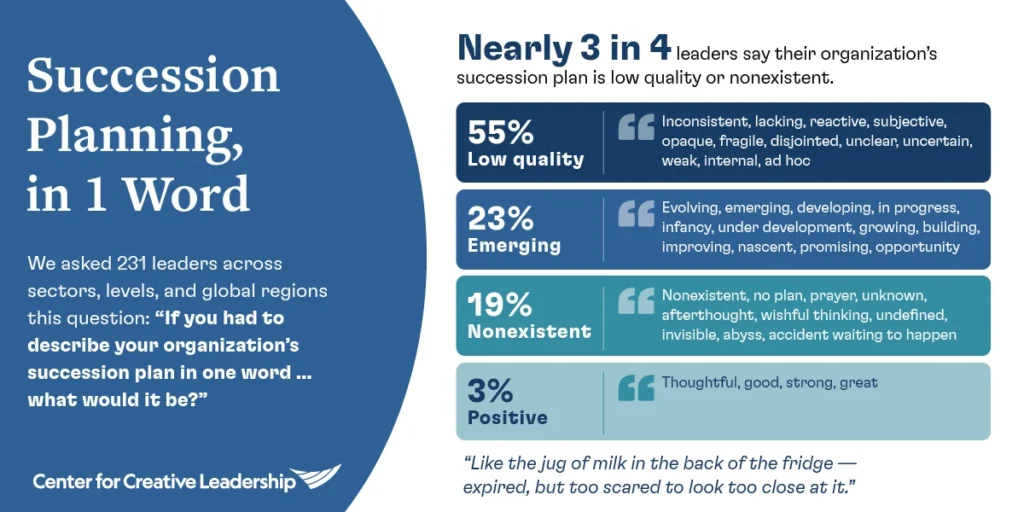
This narrative serves as a powerful illustration of a broader organizational principle: wisdom, when hoarded, depreciates, but when shared, it compounds. Recent succession research, as highlighted in the article, reinforces this tenet. Organizations that approach succession planning as a reactive, last-minute scramble often find themselves ill-equipped to manage the simultaneous demands of short-term operational needs and long-term strategic growth. Without proactive development, they lack the foresight to identify critical roles susceptible to disruption or the strategic actions necessary to mitigate such risks. The research advocates for a paradigm shift, urging organizations to treat succession as a dynamic, living system of leadership development. This system should foster a "wisdom infrastructure" designed to identify and cultivate the right leaders well in advance of their anticipated need.
The Crucial Distinction: Knowledge Transfer vs. Wisdom Transfer
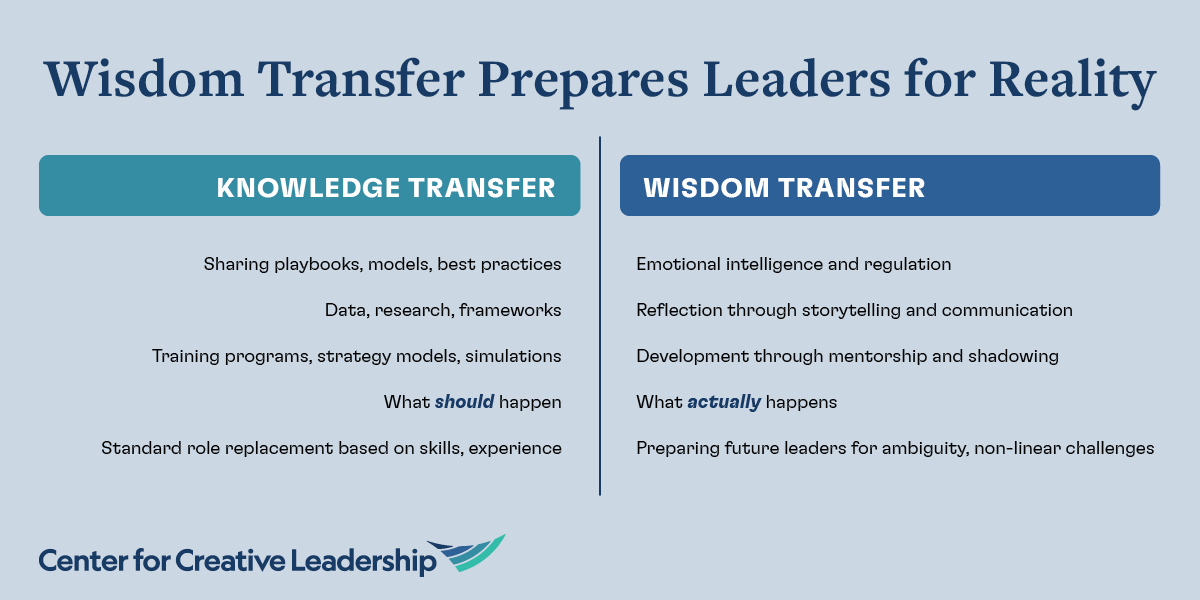
The core of the article’s argument lies in distinguishing between "knowledge transfer" and "wisdom transfer" within the context of succession planning. Many senior leaders, according to the research, primarily perceive succession planning as a mechanism for knowledge transfer. This encompasses the foundational aspects: the completion of forms, the deployment of standardized frameworks and data for decision-making, the communication of best practices, and the selection of role replacements based on quantifiable, job-related skills. This approach answers questions such as: What are the essential technical skills for this role? What are the standard operating procedures? What are the key performance indicators?
While crucial for ensuring operational continuity, knowledge transfer alone is insufficient for building the resilient succession systems demanded by today’s volatile business environment. This methodology prepares leaders for an idealized scenario, neglecting the unpredictable realities that frequently arise. The article posits that the most critical leadership moments occur precisely when the established playbooks fail, when external shocks disrupt operations, or when leaders encounter situations for which they have no formal training. It is in these instances that leadership wisdom becomes indispensable.

Leadership wisdom, as defined, is the capacity to interpret complex contexts, anticipate far-reaching consequences, and exercise consistent discernment amidst ambiguity. Wisdom transfer, therefore, is the deliberate and intentional sharing of this accumulated judgment, experience, and discernment from seasoned leaders to the next generation. It’s about equipping future leaders with the ability to navigate not just the known, but the unknown.
The research indicates that successful leadership transitions are more prevalent in organizations that embed wisdom transfer as a central pillar of their succession infrastructure. This requires a shift in the questions organizations ask, moving beyond the transactional to the transformational: How do leaders interpret complex, ambiguous situations? What are the long-term implications of current decisions? How do leaders exercise sound judgment when faced with novel challenges? How can we foster the ability to anticipate unintended consequences?
Wisdom transfer fundamentally reframes succession planning from a static, administrative process into a strategic mindset. When leaders embrace this philosophy, succession planning evolves from a mere checklist exercise into one of their most significant leadership development opportunities. As the opening anecdote illustrates, this profound transfer often begins with an unassuming yet powerful invitation: "Come with me so I can show you how this really works."
Building the Succession Infrastructure: Cultivating Avenues for Wisdom Transfer
To effectively implement wisdom transfer, organizations must establish a robust succession infrastructure. This infrastructure should be designed to create tangible avenues for the sharing of judgment, experience, and discernment. The article outlines four core elements that serve as structural pillars for a modern succession system:
1. Witnessing Decisions in Real-Time
One of the most formative aspects of leadership development is the opportunity to observe consequential decisions being made in real-time. Emerging leaders need consistent exposure to how leadership operates at higher echelons, gaining insight into the subtle dynamics that often lie beneath the surface of formal discussions. The goal is to cultivate the capacity to sense underlying currents, anticipate shifts in the organizational landscape, and respond with discernment rather than rote adherence to procedure. Organizational systems can facilitate this by creating development journeys that encourage interpretation and integration of observations into an emerging leader’s own thinking and actions. These experiences foster a deeper awareness of critical capabilities, often unlisted in formal job descriptions, that are essential for advancement. Witnessing judgment in action is an exceptionally powerful form of wisdom transfer.
Actionable Insight: Organizations should map their highest-stakes decision-making moments and critically assess who is present in those rooms and who should be. This proactive approach ensures that the next generation of leaders is exposed to the crucible of executive decision-making.
2. Communicating Continuity Through Leadership Transition
Critical leadership transitions often arrive unexpectedly, occurring in environments where organizational momentum may falter or a culture is in flux. Navigating these periods demands leaders capable of continuously orienting themselves and their organizations within shifting landscapes. A proven practice identified through research is the deliberate formation of a "wisdom council." This council comprises individuals with real influence and deep institutional memory, ensuring representation from every major organizational function, either through their direct leader or their most trusted subordinate. Such a network fosters a collective inquiry: Who are we, who are we becoming, and what must we carry forward?
Organizations that cannot answer these fundamental questions during a transition risk significant strategic disruption. They may struggle to discern between what must be preserved and what must be released, potentially leading to calcification around outdated strengths or the abandonment of vital assets. The answers to these questions reside within individuals and surface when wise leaders accurately read the room and articulate sentiments that are felt but not yet expressed.
Actionable Insight: Before the next significant leadership transition, organizations should identify individuals who embody the organization’s history and core values. Ensuring their presence in crucial discussions is paramount for maintaining continuity and making informed decisions about the organization’s future.
3. Fostering Developmental Relationships
Wisdom flourishes most effectively in environments characterized by trust and open communication. Developmental relationships serve as a primary conduit for wisdom transfer within organizations, providing emerging leaders with invaluable guidance as they progress towards and assume new roles. Judgment, a critical leadership attribute, is abstract, notoriously difficult to teach formally, and absolutely essential to transfer. Developmental relationships create fertile ground for improving judgment through seasoned leaders who can walk through hypothetical scenarios, articulate their reasoning processes, compare thought processes, and discuss the multifaceted factors that inform their decisions in critical moments. The research has identified enduring relationships between colleagues and mentors that have sustained themselves for decades, even after formal roles have concluded. This longevity suggests that wisdom transferred through relationships transcends specific positions and continues to compound over time.
Actionable Insight: Organizations should actively identify and protect existing developmental relationships within their ranks. These informal networks are invaluable assets that can be inadvertently lost when roles change, and their preservation is key to ongoing wisdom transfer.
4. Mapping Influence Networks
Organizational wisdom transfer does not neatly follow the hierarchical structure of an organizational chart. Instead, it resides at critical nodes where leaders are most interconnected with diverse stakeholders and perspectives. Network science consistently demonstrates that the most influential carriers of wisdom and institutional memory are often found at the edges and bridges of an organization.
Three network properties are particularly relevant for succession planning:
- Status: This reflects the depth and breadth of a leader’s connections within the organization. Wisdom-rich leaders are those deeply embedded across multiple influence circles, whose value to succession planning is often overlooked until their departure.
- Boundary Spanning: This involves the ability to carry perspectives across different functions, generations, and organizational lines. Boundary spanners often set agendas and influence information flow, leading without formal authority. Because their influence is relational rather than positional, they may not appear on traditional succession plans, leading organizations to struggle in understanding why certain initiatives falter while others gain traction.
- Coalition Capacity: This refers to the ability to build trust across differences and to hold competing perspectives in productive tension. Organizations that lose this capacity during leadership transitions risk their ability to attract and cultivate the next generation of leaders.
Research confirms that the contemporary workforce is increasingly a global network. Organizational resilience is built by individuals who have already navigated and survived diverse contexts, and breakthrough leaders may emerge from unexpected quarters, speaking unfamiliar languages of innovation and adaptation. Influence network mapping provides a systematic approach to identifying these vital individuals before they are critically needed.
Actionable Insight: Organizations should map their internal influence networks to pinpoint where wisdom is concentrated, how it is flowing, and who the key carriers are, particularly those not evident on the formal organizational chart.
Elevating Wisdom Transfer to a Leadership Development Priority
The knowledge that propelled an organization to its current position may not suffice for its future trajectory. In an era where leadership development tools like competency frameworks, feedback templates, and succession documents can be generated instantaneously by artificial intelligence, the true value lies in the labor of wisdom. This includes the deliberate act of opening the door, the enduring commitment of a mentor, or the strategic assembly of a council to guide an organization through transition. These endeavors require time, presence, and energy – the very investments that imbue wisdom transfer with its profound value.
Extensive research into organizations that successfully navigate leadership transitions reveals a critical insight: succession plans falter when wisdom ceases to flow through the transition. The critical judgment, instinctive foresight, and hard-won perspectives that stem from years of leading through reality and complexity are precisely what wisdom transfer aims to preserve and propagate.
Individuals in leadership positions hold significant influence over the systems, programs, and expectations that shape leadership behavior. They possess the insight into where organizational wisdom resides, how it circulates, and where it is bottlenecked. By championing this work, leaders can transform succession planning from a risk mitigation strategy into a regenerative leadership system that grows progressively wiser with each transition. The power to build such a system exists, and it need not be undertaken in isolation.
The Future of Succession is Wisdom-Powered
Organizations poised for enduring success in the coming years, decades, and centuries will be those that recognize leadership wisdom as their most valuable asset. This asset retains its worth only through deliberate and systematic transference. This crucial work cannot be automated, but it can, and must, be intentionally cultivated.
Wisdom transfer is the bridge from identifying potential successors to developing truly prepared leaders. It is the mechanism by which an organization ensures it can not only maintain current operations but also strategically identify and pursue future opportunities. And it all begins with a simple, yet profound, gesture: an open door. Organizations that commit to this principle will not only find the leaders they seek but will also ensure those leaders are fundamentally ready to meet the challenges ahead.
Ready to Take the Next Step?
Succession planning is most effective when leadership is truly transferred, not merely assigned. Explore how our new Succession Reimagined program can equip your organization to build a future-ready leadership pipeline powered by wisdom.