
A broad coalition of civil rights and higher education organizations has launched a significant legal challenge against the Trump administration’s latest executive order targeting Diversity, Equity, and Inclusion (DEI) initiatives among federal contractors. Filed on Monday, April 21, 2026, the complaint contends that the March 26 executive order unconstitutionally infringes upon free speech and free association rights, posing a direct threat to a wide array of activities traditionally designed to foster inclusive workplaces and address systemic disparities. The lawsuit, brought before a federal court in Maryland, marks the latest escalation in a series of legal and political battles over the role of DEI in American institutions, with plaintiffs arguing the order broadly and erroneously conflates all DEI efforts with illegal racial discrimination, jeopardizing legitimate and lawful remedial actions.
Background of the Executive Order
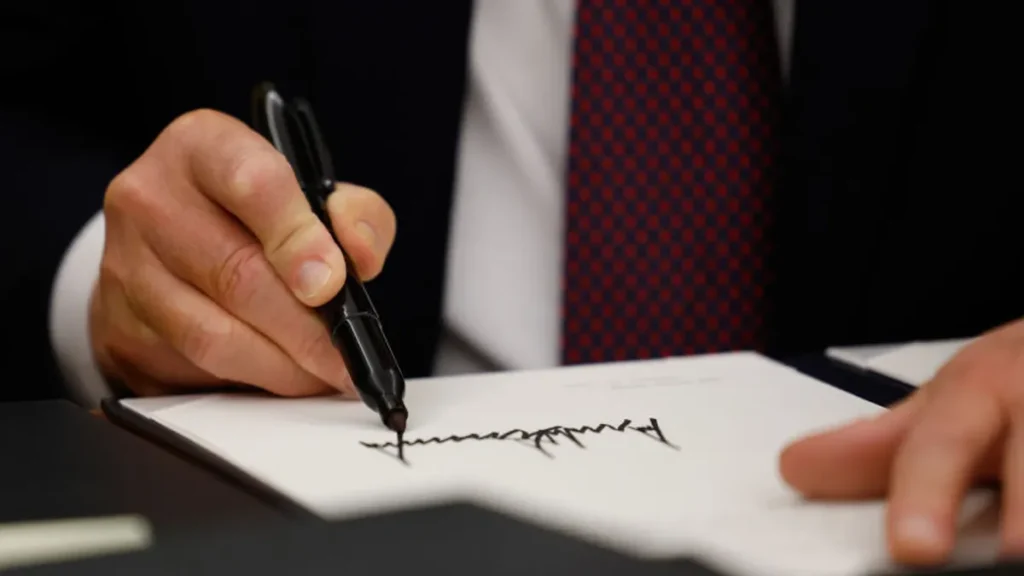
The executive order, issued by President Donald Trump on March 26, 2026, builds upon the administration’s ongoing efforts to dismantle what it describes as "divisive" and "discriminatory" DEI programming across federal agencies and their private sector partners. While the full text of the order details specific prohibitions, its core intent, as articulated by the administration, is to ensure that federal contractors do not engage in activities that classify individuals by race, promote "critical race theory," or foster what the White House deems "anti-American propaganda." The order aims to reshape the landscape of federal contracting, which annually accounts for hundreds of billions of dollars and employs millions across various industries, by imposing strict new guidelines on how companies can implement or even discuss issues related to diversity, equity, and inclusion. This move follows a consistent policy trajectory from the administration, signaling a determined push to redefine the parameters of workplace diversity initiatives.
The Plaintiffs’ Case: Free Speech and Association Concerns
At the heart of the plaintiffs’ argument is the assertion that the executive order overreaches by conflating virtually all diversity, equity, and inclusion activities with "racial discrimination," thereby rendering a vast spectrum of lawful endeavors illegal. The complaint explicitly states, "By equating expression on race and ethnicity with ‘DEI,’ the Contractors Order reaches a substantial amount of protected expression, including lawful remedial efforts, that touches on race without excluding or classifying individuals based on race." The plaintiffs further clarify that even activities that do classify individuals by race can be lawful "so long as they seek to remedy discrimination and are narrowly tailored to that interest," echoing established constitutional jurisprudence.
The legal groups detailed several common and generally accepted activities that they believe would be impermissibly forbidden under the executive order’s broad interpretation. These include:
- Voluntary or Non-Exclusive Gatherings: Employee resource groups (ERGs) or affinity groups tied to race or ethnicity, even if open to all employees, could be deemed non-compliant. Such groups are widely recognized as fostering belonging and professional development.
- Targeted Support Programs: Programming or support initiatives designed for contractors or employees who may face unique challenges based on their race or ethnicity, intended to level the playing field, could be curtailed.
- Educational Events: Events featuring speakers who discuss race- or ethnicity-based challenges within their industry or society at large, crucial for understanding diverse perspectives, might be prohibited.
- Inclusive Recruitment Strategies: Targeted recruitment or advertising efforts aimed at expanding access to non-exclusionary opportunities, designed to diversify talent pipelines and ensure equitable representation, could be restricted.
- Supplier Diversity Initiatives: Programs encouraging the use of minority-owned businesses, a common practice in public and private sectors to promote economic equity, might also fall under the order’s purview.
The plaintiffs argue that such a sweeping prohibition effectively stifles protected expression and association under the First Amendment, creating a chilling effect that discourages companies from engaging in any activities that could be misconstrued as discriminatory, even if they are perfectly legal and beneficial. This broad interpretation, they contend, undermines the very principles of open dialogue and inclusive engagement crucial for a fair and equitable society.
Specific Impacts on Minority-Serving Organizations and Contractors
The direct and immediate financial repercussions of the executive order are already being felt by some of the plaintiff organizations. The National Association of Minority Contractors (NAMC), and specifically its DMV chapter (NAMC-DMV), highlighted significant economic distress. According to the complaint, NAMC-DMV has "already heard from some sponsors," predominantly large construction companies, expressing serious concerns about continuing their financial support under the new order. The implications are dire: "Ninety percent of NAMC-DMV’s operating expenses come from these sponsors," the complaint revealed, adding that "Losing their support would be devastating."
This anecdote underscores a broader potential impact on the federal contracting ecosystem. Many large corporations, eager to avoid legal entanglements or sanctions from the federal government, may choose to err on the side of caution by ceasing support for, or participation in, any programs that could be perceived as violating the executive order. This could disproportionately harm minority-owned businesses, educational institutions, and non-profits that rely on such partnerships and sponsorships to operate and fulfill their missions of promoting diversity and equity. It creates a climate of uncertainty and fear, forcing organizations to divest from initiatives that foster economic inclusion and address historical underrepresentation.
The White House’s Stance and Rationale
The Trump administration has unequivocally pushed back against the lawsuit, reiterating its commitment to the executive order and its underlying philosophy. Abigail Jackson, a White House spokesperson, responded to HR Dive with a firm defense of the administration’s actions. "President Trump promised the American people to eliminate the scourge of DEI from American society and he is delivering on that promise every single day by ensuring that every American, regardless of race, is treated equally," Jackson stated. She further asserted, "The President’s actions to this end are lawful and well within his executive authority, no matter what left-wing organizations run by hacks like Marc Elias have to say about it."
This statement highlights the administration’s framing of DEI as a "scourge" and a direct impediment to equal treatment, rather than a mechanism to achieve it. The White House’s position is rooted in the belief that race-conscious programs, even those designed to remedy historical discrimination, inherently lead to unequal treatment and division. The administration views its executive order as a necessary corrective to what it perceives as an overreach of DEI ideology, aiming to enforce a strict interpretation of colorblindness in federal contracting and employment practices.

A Pattern of Policy: The Administration’s Anti-DEI Chronology
The current lawsuit is not an isolated incident but rather the latest chapter in a protracted legal and political struggle against DEI initiatives by the Trump administration. The National Association of Diversity Officers in Higher Education (NADOHE), a lead plaintiff in the current challenge, has a history of confronting these policies.
- 2025 Executive Orders: In 2025, the administration issued a series of executive orders also targeting DEI activities, specifically those in federal agencies and among private sector entities receiving federal funds. These orders were similarly framed as efforts to combat "divisive concepts" and promote "unity."
- NADOHE’s Initial Constitutional Challenge: NADOHE, along with other groups, promptly filed a lawsuit challenging these 2025 executive orders on constitutional grounds, arguing they violated free speech and other rights.
- Preliminary Injunction: In February 2025, a Maryland district court, the same court now considering the new lawsuit, granted a preliminary injunction against certain provisions of these orders. This was a significant early victory for the plaintiffs, temporarily halting the enforcement of those specific anti-DEI mandates.
- 4th U.S. Circuit Court of Appeals Intervention: However, this victory proved temporary. The 4th U.S. Circuit Court of Appeals subsequently stayed that decision and, nearly a year later, vacated it. Crucially, the appellate court’s decision was based on a finding that the plaintiffs lacked standing to challenge one of the specific provisions of the executive order, rather than a definitive ruling on the merits of the constitutional arguments against DEI restrictions overall. This procedural setback underscored the complexities of litigating executive orders and the challenges of establishing standing for broad policy grievances.
- March 26, 2026 Executive Order: The current March 26, 2026 executive order represents the administration’s renewed and, arguably, more expansive effort to restrict DEI among federal contractors, following the partial legal challenges to its predecessors. This chronology illustrates a persistent and evolving strategy from the White House to reshape the landscape of diversity and inclusion, continually testing the boundaries of executive authority and constitutional protections.
Broader National Discourse on DEI
The legal battle over the executive order is set against a backdrop of a highly polarized national debate concerning DEI. For decades, DEI initiatives have been developed and implemented across corporate, academic, and governmental sectors to address historical injustices, promote equitable opportunities, and foster inclusive environments where individuals from all backgrounds can thrive. Proponents argue that DEI is essential for correcting systemic inequalities, enhancing innovation, improving employee morale, and creating a workforce that reflects the diversity of the nation. Studies by organizations like McKinsey & Company and Deloitte have often linked diversity in leadership to improved financial performance and better decision-making.
However, in recent years, DEI has become a significant flashpoint in political discourse, particularly among conservative factions. Critics argue that DEI initiatives are divisive, promote "reverse discrimination," emphasize group identity over individual merit, and sometimes endorse ideologies like critical race theory, which they contend is inherently discriminatory. This critique often frames DEI as antithetical to the American ideal of meritocracy and individual achievement. The Trump administration’s executive orders are a direct manifestation of this critical perspective, aiming to dismantle what it perceives as an ideological imposition rather than a beneficial set of practices.
Legal Precedents and the Scope of Executive Power
The lawsuit will likely delve into complex areas of constitutional law, particularly concerning the First Amendment rights of free speech and association, and the extent of presidential authority over federal contractors. Presidents have historically wielded significant power through executive orders to influence the conduct of federal contractors, notably with Executive Order 11246, which mandates affirmative action and prohibits discrimination. However, this power is not unlimited and is subject to constitutional constraints.

The courts will need to weigh whether the current executive order merely sets conditions for government contracts—a power generally afforded to the executive branch—or whether it constitutes an undue restriction on protected speech and association that extends beyond the legitimate scope of government contracting oversight. The distinction between government speech and the private speech of contractors, as well as the interpretation of what constitutes "discrimination" versus legitimate remedial efforts, will be central to the court’s deliberations. The legal challenge could set important precedents regarding the balance between executive authority and individual constitutional rights in the context of commercial relationships with the federal government.
Potential Implications for Federal Contractors and the Workforce
The implications of this executive order, regardless of the lawsuit’s outcome, are far-reaching for the thousands of businesses and millions of employees involved in federal contracting.
- Compliance Burden and Uncertainty: Contractors face immense pressure to understand and comply with the order’s potentially vague provisions. The risk of misinterpretation and subsequent loss of lucrative federal contracts could lead to a significant chilling effect, where companies drastically scale back or eliminate all DEI initiatives, even those that are demonstrably legal and beneficial.
- Talent Acquisition and Retention: Companies committed to diversity may find it harder to attract and retain top talent if they are perceived as unable to foster inclusive environments or support diverse employee groups. This could be particularly challenging in industries facing talent shortages or competing in a global marketplace where diversity is increasingly valued.
- Innovation and Competitiveness: Arguments that diverse teams lead to enhanced creativity, problem-solving, and market insights could be undermined if the order restricts the very mechanisms designed to foster such diversity. This could potentially reduce the competitiveness of federal contractors in a global economy that increasingly values diverse perspectives.
- Corporate Social Responsibility: Many corporations have publicly committed to robust DEI goals as part of their environmental, social, and governance (ESG) strategies. The executive order could put them in a difficult position, forcing them to choose between their federal contracts and their stated corporate values and commitments.
- Economic Disadvantage for Minority-Owned Businesses: As evidenced by NAMC-DMV’s situation, the order could create an economic disadvantage for minority-owned businesses and organizations whose missions are inherently tied to promoting diversity and equity.
The Road Ahead: Legal Battle and Political Stakes
The lawsuit is expected to be a protracted legal battle, potentially moving through multiple levels of the federal judiciary. The outcome will have significant ramifications, not only for federal contractors but also for the broader landscape of DEI initiatives in the United States. A judicial affirmation of the executive order could embolden further restrictions on DEI, while a ruling in favor of the plaintiffs could reinforce constitutional protections for speech and association in the workplace.
Beyond the legal sphere, the lawsuit carries substantial political weight. The administration has clearly signaled its intention to make the curtailment of DEI a hallmark of its policy agenda. The legal challenge, therefore, becomes a focal point in the ongoing cultural and political wars, shaping public discourse and potentially influencing future policy debates and electoral outcomes. As the courts deliberate, the future of diversity, equity, and inclusion in federal contracting, and potentially beyond, hangs in the balance.






