The landscape of modern education has undergone a significant transformation, shifting the focus of classroom management from a traditional model of strict discipline to a comprehensive system of engagement and support. In 2026, data from U.S. public schools indicates that managing student behavior has become the primary source of job-related stress for educators, surpassing concerns over curriculum standards or administrative duties. A landmark study by the RAND Corporation further revealed that teachers now dedicate approximately eight hours per week—the equivalent of one full workday—specifically to addressing student behavioral or mental health needs. This paradigm shift suggests that classroom management is no longer merely a classroom-level skill but a critical organizational and workforce issue that impacts teacher retention and student academic achievement.
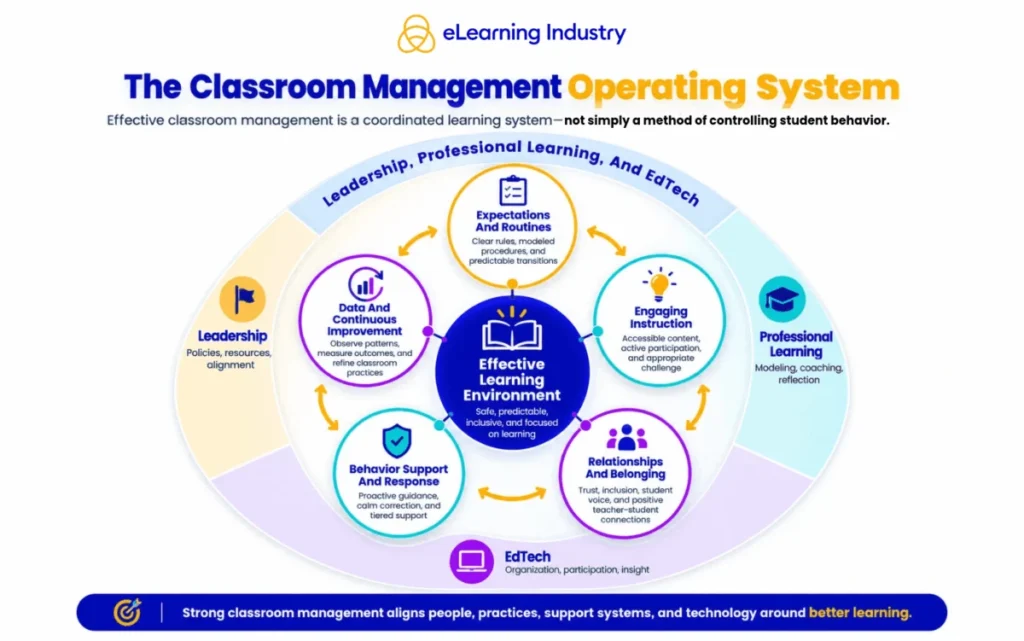
Effective classroom management is defined as the strategic integration of expectations, routines, relationships, instructional methods, and behavior supports to create a safe, predictable, and productive learning environment. It encompasses proactive measures designed to prevent disruption and consistent, equitable responses to challenges. According to the American Psychological Association (APA), behavioral and social-emotional skills are not innate; they must be taught with the same rigor as academic subjects. Consequently, modern management plans prioritize the teaching of expected behaviors alongside literacy and mathematics, recognizing that a student’s ability to navigate the social environment of a school is fundamental to their academic success.
The Evolution of Classroom Management: A Chronology of Change
The approach to maintaining order in educational settings has evolved through several distinct phases over the past several decades. Understanding this chronology is essential for contextualizing the current emphasis on evidence-based strategies.
In the late 20th century, many school districts relied on "zero tolerance" policies, which focused heavily on punitive measures and exclusion to maintain control. However, by the early 2000s, research began to show that these methods often exacerbated behavioral issues and disproportionately affected marginalized student populations. This led to the rise of Positive Behavioral Interventions and Supports (PBIS) in the 2010s, a framework that moved away from punishment toward the reinforcement of desired behaviors.
By the early 2020s, the global pandemic introduced unprecedented challenges, including significant gaps in social-emotional development and an increase in digital distractions. This era necessitated a more flexible, trauma-informed approach to management. Entering 2026, the current standard integrates these historical lessons into a "holistic management" model. This model views behavior as a form of communication and prioritizes the creation of a learning "ecosystem" where technology, instruction, and emotional support are inextricably linked.
Components of a Comprehensive Classroom Management Plan
A professional classroom management plan serves as a blueprint for the learning environment. Rather than relying on a teacher’s intuition or "gut feeling" during a crisis, a written plan ensures that decisions are fair, consistent, and aligned with school-wide policies. An effective plan includes seven core pillars.
First, a clear statement of purpose defines the intended atmosphere of the classroom. This moves beyond "keeping students quiet" to goals such as fostering curiosity or encouraging collaborative problem-solving. Second, the plan must outline observable expectations. Instead of vague concepts like "respect," teachers are encouraged to define what respect looks like during specific activities, such as group work or independent study.
The third pillar involves documented routines and procedures. This includes the "mechanics" of the day: how students enter the room, how materials are distributed, and how transitions between subjects are handled. Fourth, the plan integrates instructional engagement practices. Research consistently shows that high-quality, accessible instruction is the best defense against disruption. When students are appropriately challenged and engaged, the likelihood of off-task behavior decreases significantly.
Fifth, the plan establishes a system for feedback and acknowledgment. This focuses on recognizing students who meet or exceed expectations, providing them with specific, descriptive feedback that reinforces their progress. Sixth, a response and escalation process is defined. This provides a roadmap for addressing misbehavior, starting with low-level interventions like proximity or non-verbal cues and moving toward restorative conversations or family contact. Finally, a review cycle ensures that the plan remains dynamic. By analyzing behavioral data monthly, educators can identify if a specific routine is failing or if certain times of day require additional support.
10 Evidence-Based Strategies for the Modern Educator
To implement a management plan effectively, educators utilize a suite of strategies that have been validated by pedagogical research.
- Establish Limited, Clear Expectations: Research suggests that having three to five positively stated expectations is more effective than a long list of "don’ts." These should be visible and frequently referenced.
- Deliberate Instruction of Routines: Routines are not learned through a single announcement. They must be modeled, practiced, and retaught after school breaks or when data suggests a decline in compliance.
- Instructional Design as Management: Lessons that are broken into manageable segments (chunking) and include regular checks for understanding keep students in the "learning zone," preventing the frustration that often leads to outbursts.
- Active Supervision: This involves constant movement and scanning of the room. By being physically present in different areas of the classroom, teachers can provide immediate support and deter off-task behavior before it escalates.
- Specific, Performance-Contingent Feedback: General praise like "good job" is less effective than specific feedback such as, "I noticed you used the rubric to check your work before submitting it."
- Intentional Transition Management: Transitions are high-risk times for disruption. Using visual timers and clear step-by-step directions helps students move between activities without losing focus.
- Private, Calm Correction: Publicly reprimanding a student often triggers a "fight or flight" response. Private corrections preserve the student-teacher relationship and reduce the likelihood of a power struggle.
- Data-Driven Pattern Identification: By tracking when and where disruptions occur, teachers can identify triggers, such as difficult transitions or specific peer groupings, and adjust the environment accordingly.
- Culturally Responsive Relationship Building: Understanding the diverse communication styles and cultural backgrounds of students allows teachers to build trust. Structure is more effective when it is built on a foundation of mutual respect.
- Tiered Support Systems: Following the PBIS model, teachers should provide universal support for all students, targeted support for those at risk, and individualized interventions for students with intensive needs.
Contextual Adjustments Across Grade Levels
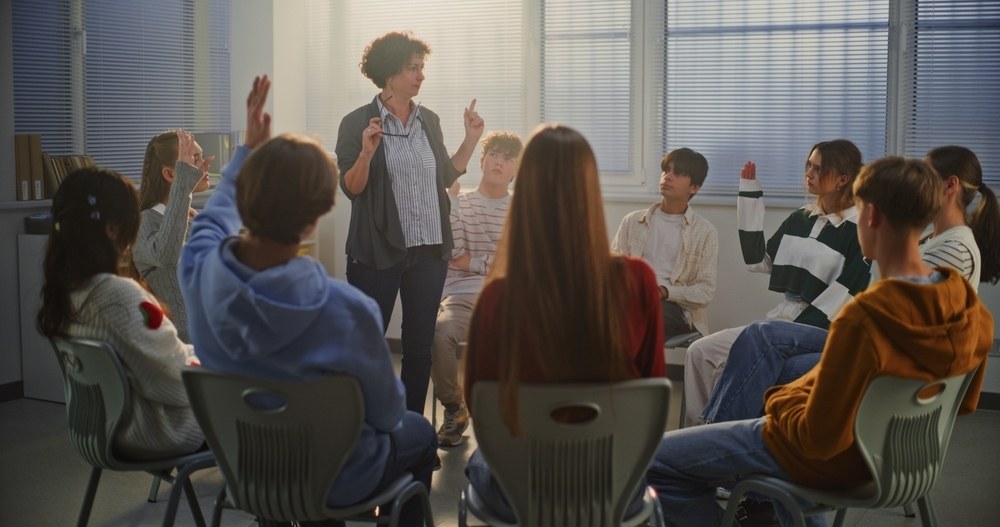
While the principles of management remain constant, their application must be developmentally appropriate. In elementary settings, the priority is making expectations concrete and visible through visual schedules and frequent modeling. In middle school, management must balance structure with the students’ growing need for autonomy, often involving them in the creation of classroom norms.
High school management shifts toward relevance and respect, focusing on predictable procedures that prepare students for the professional world. In the digital or hybrid realm, management involves explicitly defining "netiquette," such as appropriate chat use and camera expectations, to ensure the virtual space remains a focused learning environment.
The Role of Educational Technology
EdTech has become a double-edged sword in classroom management. When used correctly, digital tools can streamline attendance, provide immediate feedback through gamified learning, and help students organize their assignments via Learning Management Systems (LMS). However, the introduction of devices also introduces new avenues for distraction.
The 2026 educational landscape emphasizes that technology should simplify, not complicate. Decision-makers are increasingly cautious about "monitoring" software, noting that while it can track screen activity, it does not replace the need for active supervision and engagement. The consensus among learning leaders is that technology is a tool to support the management plan, not a substitute for the pedagogical skills of the teacher.
Broader Impact and Implications for the Education Workforce
The implications of effective classroom management extend far beyond the four walls of a school. There is a direct correlation between classroom stability and teacher retention. As behavior-related stress continues to be a leading cause of educators leaving the profession, school districts are increasingly viewing classroom management training as a vital recruitment and retention strategy.
Furthermore, there is an equity dimension to this issue. Data indicates that inconsistent management practices often lead to disproportionate disciplinary actions against students of color and those with disabilities. By implementing structured, evidence-based management plans, schools can reduce subjective discipline and create a more equitable environment for all learners.
In conclusion, classroom management in 2026 is recognized as a sophisticated discipline that requires a blend of psychological insight, instructional expertise, and organizational planning. Success is no longer measured by the silence of a room, but by the level of student participation, the efficiency of transitions, and the strength of the teacher-student bond. By moving away from reactive discipline and toward a proactive, systemic approach, educators can reclaim instructional time and foster an environment where both students and teachers can thrive.