

Congressional Democrats have introduced a comprehensive bill aimed at significantly expanding the number of American workers eligible for overtime pay, a legislative move that comes in direct response to the U.S. Department of Labor’s recent rescission of a Biden-era overtime rule. The proposed legislation, dubbed the "Restoring Overtime Pay Act," seeks to dramatically increase the salary threshold below which most salaried workers must receive time-and-a-half pay for hours worked beyond 40 in a week. Spearheaded by Senator Bernie Sanders (I-Vt.) and Representative Mark Takano (D-Calif.), the bill intends to extend overtime protections to nearly 30 million additional workers, marking a pivotal moment in the ongoing debate over wage standards and worker compensation in the United States.
Historical Context: The Evolving Landscape of Overtime Regulations
The concept of overtime pay is rooted in the Fair Labor Standards Act (FLSA) of 1938, a landmark piece of legislation that established minimum wage, recordkeeping, and child labor standards for full-time and part-time workers in the private and public sectors. A core component of the FLSA is the requirement that eligible employees receive overtime pay at a rate of no less than one and one-half times their regular rate of pay for hours worked over 40 in a workweek. However, the FLSA includes exemptions for executive, administrative, and professional (EAP) employees, often referred to as "white-collar" exemptions. To qualify for these exemptions, employees must meet certain duties tests and, crucially, earn above a specified salary threshold.
Over the decades, the real value of this salary threshold has significantly eroded due to inflation and infrequent updates. The original threshold set in 1938 effectively covered a vast majority of salaried workers. However, by the early 21st century, the threshold had fallen so low that it covered a minuscule percentage of the salaried workforce, leaving millions vulnerable to working extensive hours without additional compensation. This erosion sparked a series of attempts by various administrations to update the rule and restore its original intent.
In 2016, under the Obama administration, the Department of Labor finalized a rule that would have more than doubled the salary threshold for overtime eligibility, raising it from $23,660 to $47,476 per year. This move was projected to extend overtime protections to an estimated 4.2 million additional workers within its first year. However, the rule faced strong opposition from business groups and was ultimately blocked by a federal judge just weeks before its scheduled implementation, leaving the 2004 threshold in place.
Following the injunction against the Obama-era rule, the Trump administration’s Department of Labor introduced its own update in 2019. This rule raised the salary threshold more modestly, from $23,660 to $35,568 per year. While it did extend overtime eligibility to over a million workers, it was seen by many labor advocates as insufficient to address the widespread issue of salaried employees working long hours without fair compensation.
The Biden administration, aligning with its pro-labor stance, subsequently initiated efforts to further revise the overtime rules, aiming for a more substantial increase to the salary threshold than that implemented by the Trump administration. This initiative was part of a broader agenda to strengthen worker protections and ensure fair wages. The details of the Biden-era rule, which was eventually rescinded, had sought to reflect the current economic realities and the rising cost of living, attempting to bring the overtime threshold closer to its historical effectiveness.
The Rescission and the Call for Legislative Action
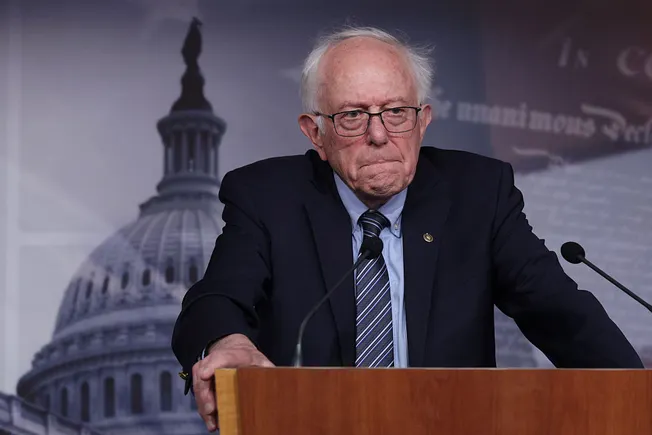
The recent U.S. Department of Labor’s decision to rescind the Biden-era overtime rule has effectively stalled any administrative expansion of overtime eligibility. While the specifics of the rescinded rule and the exact circumstances of its reversal are complex, its immediate impact is clear: the opportunity to significantly expand overtime protections through executive action has been withdrawn. This action, coming at a time when many Americans are grappling with persistent inflation and a high cost of living, has galvanized Congressional Democrats to take legislative action.
The rescission means that the current, lower salary threshold for overtime exemption remains in effect, continuing a trend that labor advocates argue disadvantages millions of middle- and lower-income salaried workers. The lack of an updated federal standard means that many employees, particularly those in entry-level management or supervisory roles, find themselves working well beyond 40 hours a week without the benefit of additional pay, despite earning salaries that offer little financial cushion in today’s economy. This situation has fueled the Democratic push for a statutory solution, bypassing the unpredictable nature of administrative rulemaking.
The "Restoring Overtime Pay Act": Key Provisions and Goals
The "Restoring Overtime Pay Act" proposes a dramatic overhaul of the current overtime eligibility criteria. While the precise new salary threshold is yet to be fully detailed in public statements, the bill aims to raise it significantly enough to encompass "nearly 30 million workers," as stated by its proponents. This suggests a threshold that would likely exceed previous proposals and potentially be indexed to automatically update over time, a critical feature that would prevent future erosion due to inflation.
Key provisions anticipated in the bill include:
- Substantial Increase in Salary Threshold: The central pillar of the legislation would be to elevate the minimum salary required for the EAP exemption to a level that ensures a vast majority of salaried workers are eligible for overtime. Past proposals have considered benchmarks like 50% or 60% of the average weekly earnings of full-time salaried workers, which would place the threshold significantly higher than the current $35,568.
- Automatic Updates: To prevent future legislative stagnation and inflationary erosion, the bill is expected to include a mechanism for automatic adjustments to the salary threshold. This could involve tying it to an economic indicator, such as the Consumer Price Index or a percentage of national average wages, ensuring that the threshold remains relevant and effective over time.
- Strengthening Duties Tests: While the primary focus is on the salary threshold, the bill may also seek to reinforce the "duties tests" for the EAP exemption, ensuring that only genuinely executive, administrative, or professional employees are exempt, rather than those performing routine tasks.
The ambition behind the "Restoring Overtime Pay Act" is clear: to reset the balance of power in the workplace, ensuring that long hours translate into fair compensation for a broader segment of the American workforce.
Proponents’ Arguments and Supporting Data
Supporters of the "Restoring Overtime Pay Act" argue that the current federal overtime law is woefully outdated and fails to protect workers in the modern economy. The Economic Policy Institute (EPI), a non-profit think tank, has provided stark data highlighting the extent of the problem, revealing that "only 8% of full-time salaried workers are currently eligible for overtime pay." This figure represents a dramatic decline from previous decades, underscoring the urgency felt by Democrats and labor organizations.
Senator Bernie Sanders, a leading voice for the bill, articulated the urgency in a May 18 statement, asserting, "It is beyond unacceptable that President Trump is denying overtime pay to millions of workers who desperately need it to keep up with the outrageously high cost of living." This statement frames the legislative push as a direct counter to policies perceived as detrimental to workers’ financial well-being, particularly amidst economic pressures.

Representative Mark Takano echoed these sentiments, stating, "Expanding the overtime threshold for salaried employees is the best way to ensure that families can survive the cost-of-living crisis caused by Donald Trump." These remarks underscore a key political narrative: that the current economic challenges are exacerbated by policies that suppress wage growth and fail to provide adequate compensation for labor.
Other Democratic co-sponsors have also voiced strong support. Senator Alex Padilla (D-Calif.) emphasized Congress’s duty, stating, "Congress has a responsibility to protect and more fairly pay our workforce." Similarly, Representative Alma Adams (D-Ohio) explicitly called the current federal overtime law "outdated," highlighting the need for a modern framework that reflects contemporary economic realities.
The bill has garnered significant backing from a broad coalition of workers’ rights organizations and labor unions. The Senate Health, Education, Labor, and Pensions Committee has noted endorsements from major groups including the AFL-CIO, the National Education Association, the Service Employees International Union (SEIU), and the United Auto Workers (UAW). These organizations represent millions of American workers and view the expansion of overtime eligibility as a critical step towards improving living standards, promoting work-life balance, and ensuring economic justice. They argue that increased overtime pay can help combat wage stagnation, reduce income inequality, and provide a much-needed boost to working families struggling with rising expenses for housing, healthcare, and education.
Potential Opposition and Business Concerns
While the "Restoring Overtime Pay Act" is championed by labor advocates, it is likely to face considerable opposition from business groups and some employers. Historically, proposals to significantly expand overtime eligibility have been met with concerns about increased labor costs, administrative burdens, and potential negative impacts on business operations.
Business associations, such as the U.S. Chamber of Commerce and various industry-specific trade groups, typically argue that raising the salary threshold too high could force businesses, particularly small and medium-sized enterprises (SMEs), to implement costly changes. These changes could include:
- Increased Wage Costs: Employers might have to pay more in overtime wages or increase base salaries to keep employees exempt, potentially impacting profitability.
- Reduced Flexibility: Some businesses argue that a higher threshold reduces their flexibility in managing salaried employees, forcing them to convert some positions to hourly or to strictly limit hours, which could stifle career development for aspiring managers.
- Administrative Burden: Reclassifying employees, tracking hours for previously exempt workers, and ensuring compliance with new regulations can be a complex and costly undertaking, especially for businesses with limited HR resources.
- Potential for Job Reductions: In some scenarios, businesses might respond to increased labor costs by slowing hiring, reducing staff, or curtailing expansion plans.
Opponents also sometimes contend that a high salary threshold blurs the line between managerial and non-managerial roles, potentially leading to a "demotion" in status for some employees who are converted from salaried exempt to hourly non-exempt. They might also argue that such mandates are best left to market forces or state-level regulations, rather than broad federal legislation.
Legislative Outlook and Political Implications
The path forward for the "Restoring Overtime Pay Act" is fraught with political challenges. In a divided Congress, passing legislation that fundamentally alters labor standards often requires bipartisan consensus, which can be difficult to achieve on issues as contentious as wage policy. While Democrats are united in their support, securing enough votes in both the House and Senate, especially if the Senate filibuster remains in place, will be a significant hurdle.

The introduction of this bill in May 2026, heading into a potentially charged election cycle, also carries significant political implications. Democrats are likely to use this legislation as a platform to highlight their commitment to the working class and to draw a clear contrast with what they portray as policies that favor corporations over employees. It allows them to campaign on tangible economic benefits for voters struggling with inflation and stagnant real wages.
Conversely, the bill could become a talking point for Republicans and business-friendly candidates, who might frame it as government overreach that harms economic growth and imposes undue burdens on employers. The debate around the bill is therefore likely to be highly politicized, serving as a proxy battle for broader economic philosophies. Even if the bill faces long odds of immediate passage, its introduction serves as a powerful statement of legislative intent and a means to shape public discourse around worker rights and economic fairness.
Broader Economic and Social Impact
Should a version of the "Restoring Overtime Pay Act" ultimately become law, its economic and social impacts would be far-reaching. For workers, the most immediate benefit would be a potential increase in take-home pay, either through overtime earnings or through employers raising base salaries to maintain exempt status. This could boost consumer spending, providing a stimulus to local economies. Increased wages and greater financial security could also improve mental and physical well-being for millions of families.
For businesses, the impact would vary. While some would absorb the costs, others might adjust staffing levels, operational hours, or pricing strategies. There could be an accelerated trend towards greater automation in some sectors to mitigate rising labor costs. On the other hand, some economists argue that higher wages can lead to increased productivity, reduced employee turnover, and a more engaged workforce, ultimately benefiting businesses in the long run. The legislation could also encourage employers to think more strategically about workload distribution and efficiency, potentially leading to better work-life balance for all employees.
Socially, expanding overtime eligibility could be a significant step towards addressing income inequality by ensuring that a larger share of economic gains flows to middle- and lower-income workers. It reinforces the principle that all labor, regardless of classification, deserves fair compensation, particularly when it extends beyond standard working hours.
In conclusion, the "Restoring Overtime Pay Act" represents a determined effort by Congressional Democrats to rectify what they perceive as a systemic failure in federal overtime regulations, exacerbated by recent administrative actions. By aiming to expand overtime eligibility to millions of additional workers, the bill reignites a crucial national conversation about fair wages, worker protections, and the economic well-being of the American workforce. While its legislative future remains uncertain, the bill’s introduction underscores the enduring political and economic significance of overtime rules in shaping the lives of workers and the landscape of American business.






