
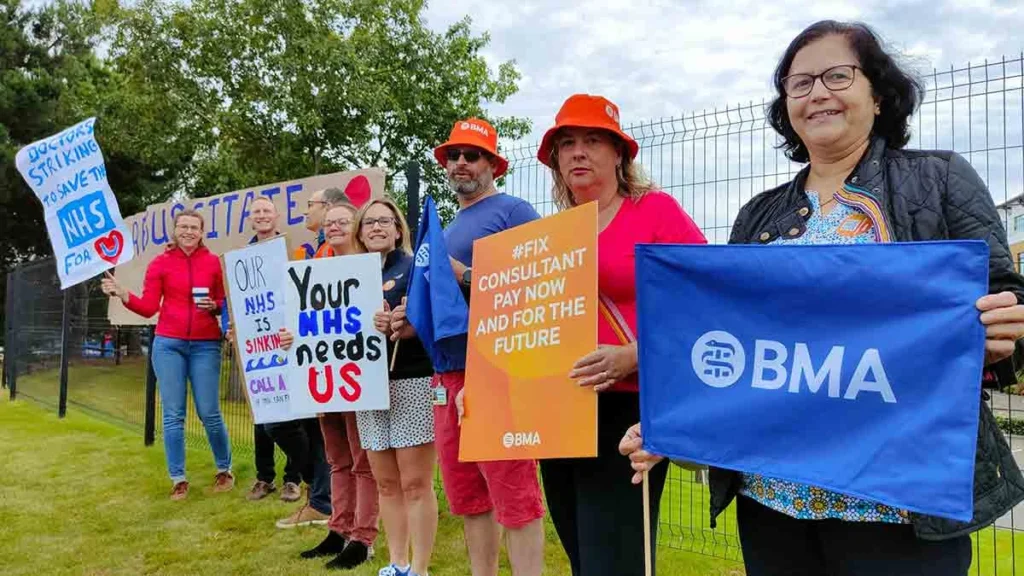
Consultant doctors across England have overwhelmingly voted in favour of industrial action, establishing a strike mandate that will empower the British Medical Association (BMA) to call for walkouts over the next 12 months. This significant development marks a deepening crisis in the National Health Service (NHS), shifting the focus of ongoing industrial unrest from junior doctors to the most senior medical professionals. The ballot results underscore a profound dissatisfaction among consultants regarding their pay and working conditions, setting the stage for potentially widespread disruption to patient care.
The statutory ballot saw 75.8% of participating consultants vote in favour of strike action. A total of 18,069 members of an eligible workforce of 35,067 cast their votes, resulting in a turnout of 51.5%. This figure narrowly but successfully cleared the 50% threshold required by law for industrial action mandates, granting the BMA a powerful negotiating position. The twelve-month mandate provides the union with a sustained period to engage in negotiations with the government, though it also raises the specter of prolonged uncertainty for the NHS and its patients.
The Roots of Discontent: Pay Erosion and Burnout
At the heart of the consultants’ grievances is a deeply felt sense of professional devaluation, primarily stemming from what the BMA calculates as a staggering 26% real-terms pay erosion over the past 17 years. This figure highlights a consistent decline in purchasing power for senior doctors, a period that has seen various economic challenges, including the 2008 financial crisis, austerity measures, and more recently, soaring inflation. The BMA argues that annual pay awards, often below inflation and sometimes subject to freezes, have failed to keep pace with the cost of living and the increasing demands placed upon consultants.
Beyond remuneration, the BMA is also advocating for crucial contractual reforms aimed at mitigating widespread burnout among senior medical staff. The proposals include a restructuring of the standard full-time working week, moving from the current 40 hours to 35 hours, crucially without a reduction in pay. This change is posited as a strategy to improve recruitment and retention within the profession, making consultant roles more sustainable and attractive. Additionally, the union seeks enhanced pay for out-of-hours and on-call duties, recognising the significant impact these unsocial and often high-pressure shifts have on consultants’ wellbeing and work-life balance.
The BMA has been particularly critical of the Review Body on Doctors’ and Dentists’ Remuneration (DDRB), the independent body tasked with advising the government on pay for doctors and dentists. The union asserts that the DDRB has repeatedly failed to adequately address consultants’ pay concerns, contributing directly to the current situation. As a point of comparison, the BMA highlighted that senior consultants in Wales can earn up to £16,000 more than their English counterparts, further fueling claims of unfairness and a lack of competitive remuneration within the English NHS.
A Broader Landscape of NHS Industrial Action
This vote by consultants does not occur in isolation but rather within a tumultuous period for industrial relations across the NHS. Just last week, resident doctors (junior doctors) voted in favour of accepting a revised pay and jobs offer from the government, bringing an end to their protracted dispute which had involved multiple rounds of walkouts over three years. While that resolution offered a temporary reprieve, the consultant ballot now signals a new front in the ongoing battle over NHS pay and conditions.
The discontent is not limited to England. In Northern Ireland, consultant and specialist, associate specialist, and specialty (SAS) doctors took 24-hour strike action on June 25-26, demonstrating the cross-border nature of these pay parity and working conditions disputes. These coordinated actions underscore a systemic issue within the UK’s health services, where medical professionals at various career stages feel undervalued and overworked.
Interestingly, a parallel ballot conducted for SAS doctors in England failed to reach the required 50% turnout threshold, despite overwhelming support for strike action among those who did vote (90.0% in favour). With only 43.0% turnout from 6,369 eligible SAS doctors, this group currently lacks a mandate for industrial action, highlighting the challenge of mobilising all segments of the medical workforce, even amidst shared grievances.

Official Reactions and Calls for Negotiation
The BMA’s consultants committee co-chairs, Dr. Helen Neary and Dr. Shanu Datta, issued a strong statement following the ballot results. They emphasised that the outcome sends a "clear message from consultants in England that they are not willing to tolerate the continued attack on their pay and professional value, and that, if necessary, they are willing to act." They highlighted the critical role of consultants as "the most senior and expert doctors working in hospitals," warning that a failure to recognise and support them risks their exodus from the NHS. Such a loss, they cautioned, would have "dire" consequences for an already struggling health service.
Directly addressing the political landscape, Dr. Neary and Dr. Datta urged the incoming Prime Minister – a reference to the anticipated change in leadership – to prioritise action to prevent both the departure of consultants and further industrial action. They affirmed that "No strikes need to take place if the government addresses these issues, but we now have a mandate that consultants are prepared to use if it does not act." This statement underscores the BMA’s position that industrial action remains a "last resort," and that the 12-month mandate provides "plenty of time to negotiate."
On the other side, Sir Ciarán Devane, chief executive of the NHS Alliance, expressed considerable disappointment at the ballot result. He acknowledged the concerns of senior doctors but urged both parties to return to collective bargaining to prevent operational disruption. "Health leaders will be disappointed that senior doctors have voted in favour of potential industrial action and now have a mandate to strike over the next 12 months," he stated. "Should they go ahead, any walkouts by consultants would once again impact the delivery of vital services and patient care." His call for "meaningful dialogue" reflects a widespread apprehension within NHS management about the potential for further strain on an already stretched system.
Potential Impact on Patient Care and the NHS Backlog
The prospect of consultant strikes carries profound implications for patient care across England. Consultants form the backbone of the NHS, leading surgical teams, managing complex medical cases, overseeing wards, providing specialist advice, and supervising junior doctors. Their absence, even for a limited period, could lead to the cancellation of thousands of elective surgeries, outpatient appointments, and diagnostic procedures.
The NHS is currently grappling with unprecedented waiting lists, with over 7.5 million people awaiting elective treatment. Any significant industrial action by consultants would inevitably exacerbate this backlog, further delaying access to crucial care and potentially worsening patient outcomes. Emergency services, though typically covered by derogations during strikes, could also face indirect pressure as senior decision-makers are diverted or unavailable. Moreover, the disruption to routine clinical activities would also impact the training of junior doctors and other healthcare professionals, creating a ripple effect across the future workforce.
The government, through the Department of Health and Social Care, is expected to reiterate its commitment to patient safety and call for continued negotiations. However, balancing the demands for substantial pay increases with broader fiscal responsibility and inflationary pressures presents a significant challenge. The cost of meeting the BMA’s demands, alongside those of other public sector workers, would run into billions of pounds, adding considerable pressure to public finances already under strain.
Looking Ahead: The Path to Resolution
The 12-month strike mandate provides a window for intensive negotiations, but also a looming threat. The BMA has clearly stated its core demands: a multi-year pay agreement to address historic real-terms pay erosion, contractual reforms including a 35-hour standard week with maintained pay, and enhanced remuneration for unsocial hours. These demands reflect a comprehensive approach to improving the professional lives of consultants, aiming to enhance recruitment and retention in a health service struggling with chronic workforce shortages.
The onus is now on the government to engage meaningfully with the BMA. With a new Prime Minister potentially at the helm, there is an opportunity for a fresh approach to industrial relations in the NHS. Avoiding strikes will require a willingness from both sides to compromise and find a sustainable solution that acknowledges the value of consultants’ work while also being fiscally responsible. Failure to do so risks an unprecedented exodus of senior medical talent and further, potentially devastating, disruption to the nation’s health service. The coming months will be critical in determining whether dialogue can avert widespread industrial action and ensure the stability of patient care in England.








