This week marked a pivotal moment for Cornerstone, the undisputed leader in corporate learning technology, as the company unveiled its comprehensive embrace of artificial intelligence. With a reported annual revenue of approximately $1 billion, significantly dwarfing competitors like Docebo, Cornerstone’s strategic pivot into AI signifies a major shift in the enterprise learning landscape. This development arrives as the industry grapples with rapid technological advancements and evolving workforce needs, a context that will be further explored in the upcoming "HR 2030" report.
Cornerstone: A Legacy of Learning Technology Leadership
For over 27 years, Cornerstone has been at the forefront of the corporate learning and talent management sectors. Founded as an e-learning platform, the company has consistently innovated, pioneering the "talent-driven learning platform" market. Its robust suite of solutions, primarily comprising Learning Management Systems (LMS) and Learning Experience Platforms (LXP), serves a vast clientele of over 7,000 enterprise customers, including many of the world’s most prominent brands. These platforms collectively cater to an estimated 140 million users globally. Beyond core learning, Cornerstone’s talent management capabilities further solidify its position in the human capital management ecosystem.
The total addressable market for these solutions is estimated to be around $30 billion, a significant portion of which is currently captured by behemoths like Workday, Oracle, and SAP. Despite this competitive pressure, Cornerstone has maintained a dominant position, largely attributed to its superior functionality compared to many of its rivals.
The company’s trajectory took a significant turn in 2021 when it was acquired by private equity firm Clearlake Capital Group for $5.5 billion, a valuation approximately five times its then-current revenue. Since then, Cornerstone has strategically expanded its technological footprint through key acquisitions, including EdCast for LXP capabilities, Skyhive for its advanced skills and labor market data, and Tailspin for its virtual reality (VR) learning solutions. While the company remains highly profitable, its market valuation has seen limited growth, a situation attributed in part to broader market shifts impacting traditional learning technologies.

Cornerstone acknowledges the evolving market dynamics. The company has been actively working to enhance its customer engagement through expanded channel partnerships, the promotion of integrated solutions, and the continuous enhancement of its feature set. However, industry observers note that the company’s brand, while established, may be perceived as somewhat traditional, leading some customers to re-evaluate their options during renewal periods. This is a common challenge for mature technology providers as disruptive innovations emerge. Cornerstone’s leadership team, including Himanshu Palsule, Michael Pawlyszyn, and Vincent Belliveau, is recognized for its extensive experience and execution-oriented approach, positioning the company to navigate these transitions.
The AI Disruption: A Paradigm Shift in Learning
The corporate learning sector, which has historically relied on the creation and distribution of static, pre-authored content, is undergoing a profound transformation. The advent of advanced AI models, epitomized by the public release of ChatGPT in the fall of 2022, has accelerated this change. The traditional "e-learning" or "published training content" market, valued in the hundreds of billions of dollars, is being fundamentally reshaped at an unprecedented pace.
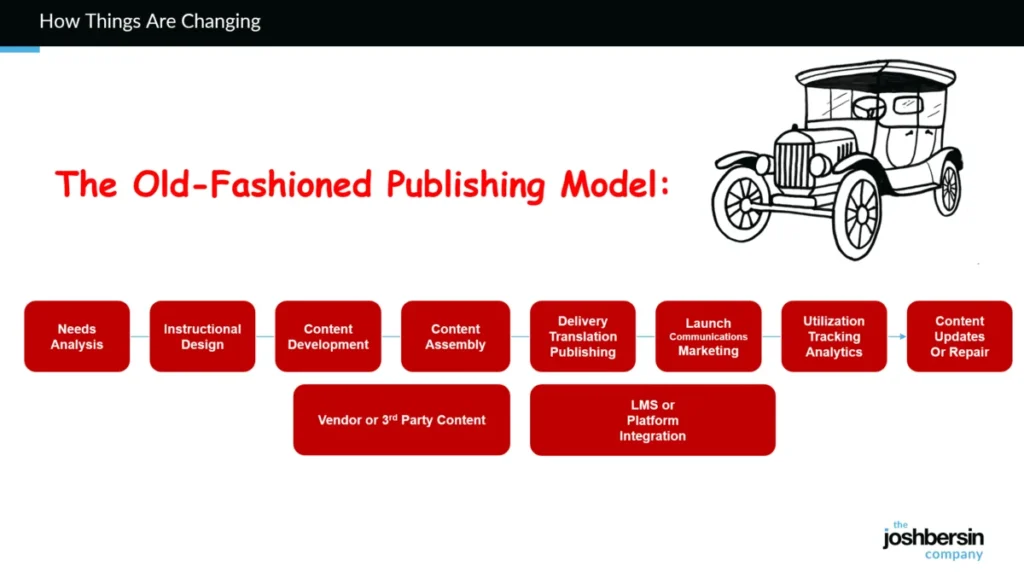
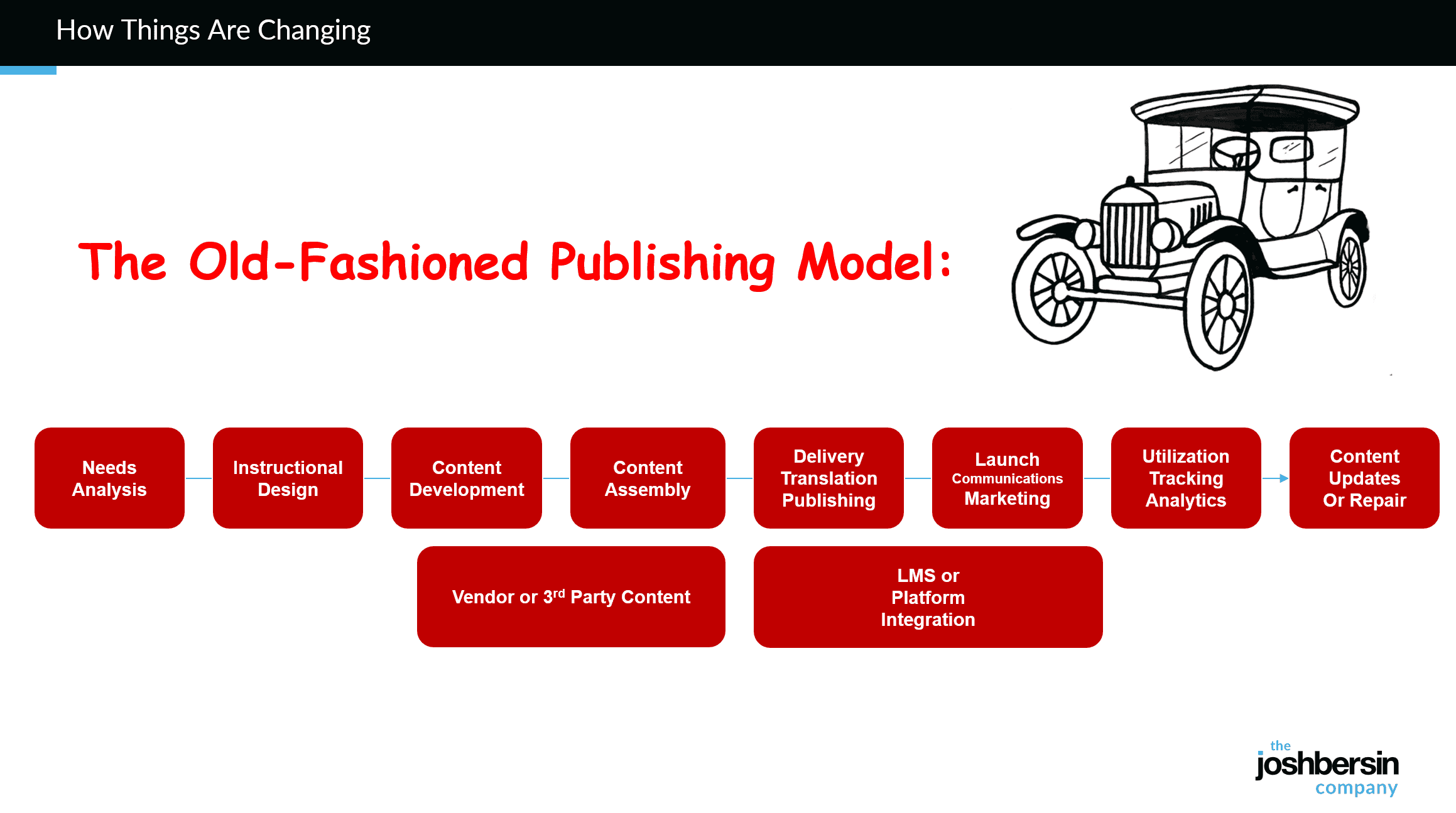
For decades, the standard model involved meticulously crafting and publishing content such as courses, videos, assessments, and simulations. This process, often undertaken by dedicated instructional designers, graphic artists, and subject matter experts, was time-consuming and costly. Each domain, from IT and sales to leadership development, featured numerous "publishers" offering specialized solutions. The creation of a single course could be likened to writing a book, involving extensive design, content sourcing, audience targeting, and months of development, followed by translation, testing, and deployment into an LMS. This entire workflow was largely underpinned by the SCORM (Sharable Content Object Reference Model) standard, a 35-year-old technology focused on tracking learner progress and completion rates.
This established process, which employed millions of learning professionals, is now facing obsolescence. Its inherent slowness, inflexibility in editing, and high cost are significant drawbacks. The development of a single course could cost upwards of $50,000, placing constant constraints on time and budget for content creators and often leading to questions about the return on investment for lengthy development cycles. While this industry has historically been robust, the emergence of AI-powered content generation presents a viable alternative to this complex and resource-intensive model.
AI’s Transformative Impact on Learning and Development
The capabilities of AI extend far beyond simply automating content creation. While AI-generated courses may initially be perceived as rudimentary, as seen with early AI-authored essays, their quality is rapidly improving, and the development time has been compressed from months to mere days or hours. Even if an AI-generated course achieves 70% accuracy, the remaining time can be dedicated to precise refinement.
However, the true revolution lies in how AI redefines the learning experience itself. AI-powered learning platforms enable users to "ask questions" directly, bypassing the need to navigate through lengthy chapters or modules. This creates a dynamic, interactive learning environment where each employee can access a personalized version of the information they need. This level of individualized learning has been a long-standing aspiration, largely unattainable with traditional SCORM-compliant materials.
Furthermore, AI-powered courses can be interconnected, allowing for a holistic understanding of knowledge. For instance, an employee learning about refinery safety and needing specific information on sulfur dioxide, a highly poisonous substance, would not need to locate a dedicated "sulfur dioxide safety" course. Instead, they could simply query the system, and the AI would provide an immediate answer, drawing from all relevant interconnected learning materials.
This shift highlights a fundamental redefinition of "corporate learning." While formal learning occurs when time permits, the majority of an employee’s day is dedicated to work, requiring immediate access to information, guidance, tips, advice, or knowledge to perform effectively. AI-native learning experiences are thus poised to become an essential "enablement" tool, offering support precisely when and where it is needed.
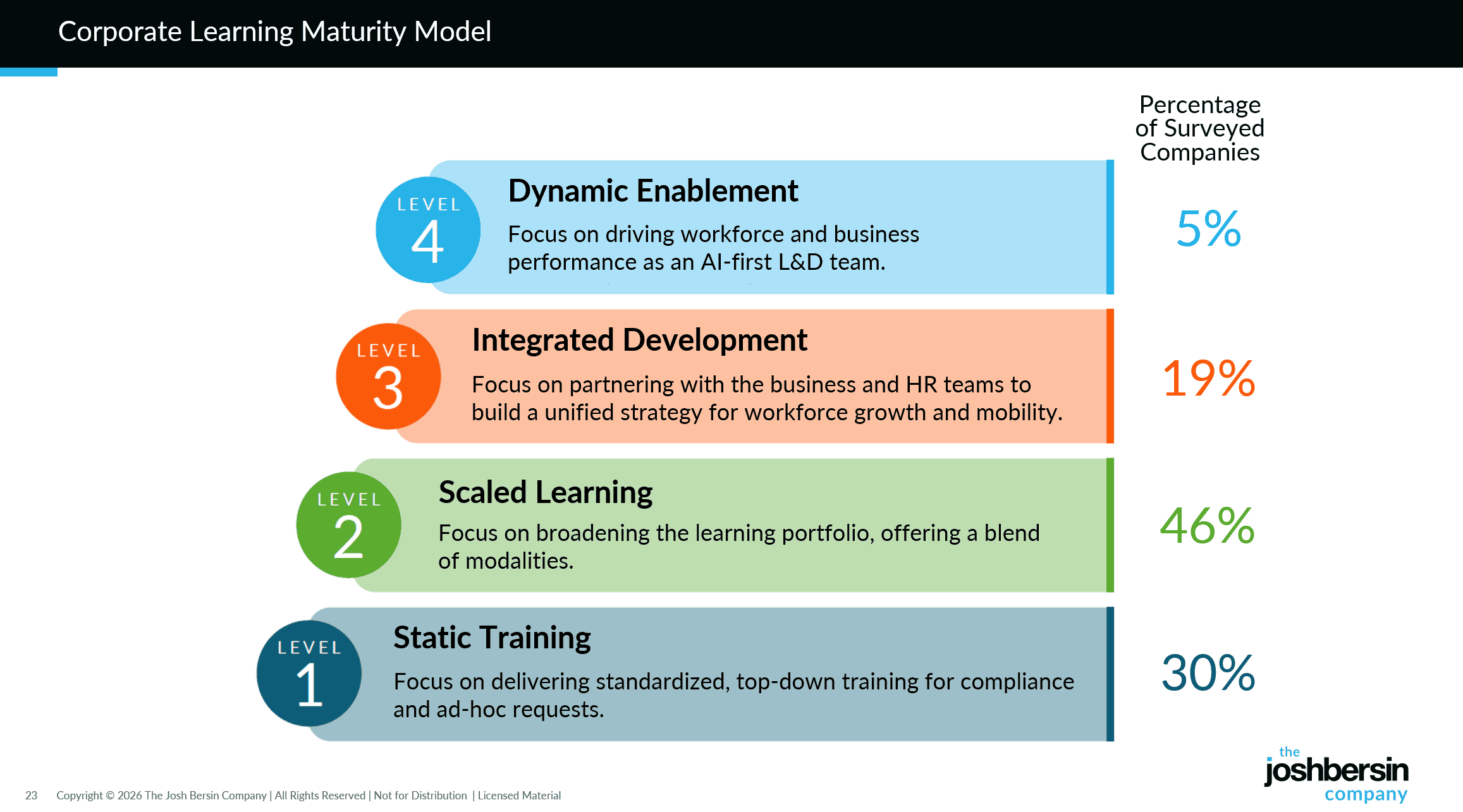
This transformation extends beyond the L&D department, fundamentally altering business operations. L&D functions are expected to streamline, with a significant portion of staff potentially integrating into business units to act as direct enablers. The reinvented L&D department, moving beyond its traditional HR confines, will focus on driving business outcomes, with the exception of compliance-related training. Research indicates that companies operating at advanced stages of learning maturity are significantly more innovative and responsive to skill development needs, earning them accolades from business leaders for their agility in addressing emerging challenges.
Cornerstone’s Strategic Response: Workforce AI
In this rapidly evolving landscape, new entrants such as Sana, Docebo, Absorb, Uplimit, and Arist are already offering AI-native learning solutions. Major AI players like OpenAI are integrating content from established providers, and companies like Anthropic are actively assisting enterprises in developing AI-driven learning initiatives. The convergence of AI agents, personal productivity tools like Microsoft Copilot, and sophisticated learning platforms is creating an environment where every employee will have an AI assistant capable of understanding their role, communications, and digital footprint.
This AI agent, informed by an individual’s skills, experiences, strengths, and weaknesses—further enhanced by peer feedback and performance data—forms what Cornerstone terms a "People Graph." The company’s recent announcement centers on the development of this People Graph, integrated with an AI-native learning platform. This synergy allows AI agents to proactively offer personalized guidance, onboarding plans, or coaching, replacing traditional, often slow, intervention methods.
The implications for L&D professionals are profound. Spending on traditional training tools is anticipated to decline, with budgets increasingly allocated to AI-native solutions. L&D leaders who fail to adapt to these AI-driven approaches risk diminishing influence, budget allocations, and ultimately, their roles within organizations.
Cornerstone’s response, spearheaded by its new AI team led by Guna Jayaraman, represents a significant reinvention effort. While the platform is still in its early stages, it integrates several key components:
- Skills and Capability Inference: Advanced AI models that analyze employee data to identify and map skills and competencies.
- Open "People Graph": A flexible data architecture designed to ingest information from diverse sources, including HRMS, LMS, project management systems, and employee engagement surveys. This creates a comprehensive profile of each employee.
- Data Services: Integration of external data, such as labor market insights from Skyhive, and the development of pre-built "Readiness Agents" designed to address specific business challenges.
This new offering, dubbed Cornerstone Workforce AI, aims to create an AI-native learning environment. While some functionalities will continue to draw from Cornerstone’s existing Galaxy platform, the new capabilities can be accessed through a new license tier, enabling clients to transition to an AI-centric model.
Early adopters, including a wealth management firm and a large media company, have reportedly seen significant improvements in skills development, employee mobility, and risk mitigation by integrating their proprietary company information into Workforce AI. While the platform may not yet be fully "AI-native" in the same vein as some newer competitors, the integration of AI content development tools and administrative AI agents signals a clear strategic direction.
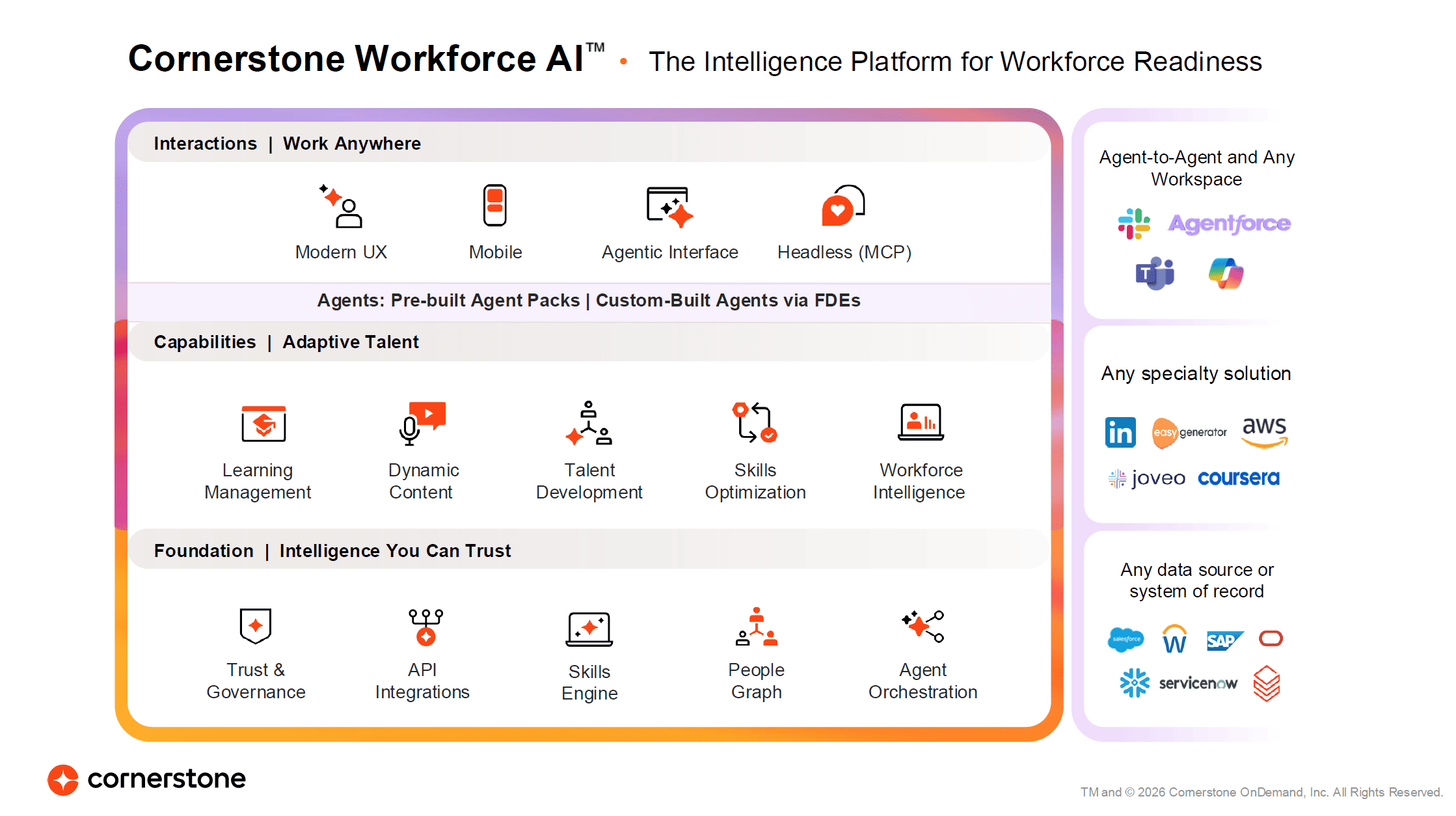
The current suite of packaged Agents, though not yet fully customizable, leverages the extensive data and intelligence within Workforce AI. These agents are designed to provide immediate solutions to common workplace needs, from administrative tasks to skill-based problem-solving.
The Future of Corporate Learning and Cornerstone’s Opportunity
Cornerstone’s strategic shift towards AI represents a significant gamble but also a substantial opportunity. The company has a long-standing relationship with its customer base and a deep understanding of the enterprise learning market. The management team’s decision to embrace this AI-driven future, despite potential concerns about alienating existing customers invested in legacy systems, positions them to influence the evolving market.
The decline in spending on traditional training solutions is inevitable, while AI budgets are poised for significant growth. Although established players and agile startups are already vying for market share, Cornerstone’s extensive customer base and established infrastructure provide a unique advantage.
For organizations looking to navigate this "revolution in L&D," Cornerstone Workforce AI presents a compelling proposition. The platform, while still maturing, offers the foundational AI capabilities to foster ambitious learning and development strategies. The ultimate goal is to empower every employee with the resources and personalized support needed to achieve success, transforming the concept of corporate enablement.
The success of Cornerstone’s reinvention will hinge on its ability to clearly articulate the value of its AI offerings in a market that is characterized by rapid, daily changes. As AI continues to reshape the business world, Cornerstone’s commitment to this transformative technology will be crucial in defining the future of corporate learning and development. The company’s deep dive into AI signifies not just a product update, but a fundamental reimagining of how individuals and organizations will learn, grow, and thrive in the years to come.