Organizational culture, often described as "the way things are done around here," is an inherent, pervasive force within every organization, profoundly shaping how individuals interact, decisions are made, and behaviors are either encouraged or overlooked. It is the invisible architecture that dictates an organization’s personality, values, and operational rhythm, influencing everything from daily interactions to long-term strategic direction. Far from being a mere soft skill or a peripheral concern, culture stands as a strategic imperative that directly impacts both human capital and bottom-line performance.
The Strategic Imperative of Culture: Beyond Soft Skills
The significance of a robust, positive organizational culture cannot be overstated in today’s dynamic business landscape. It is a critical differentiator, influencing an organization’s ability to attract top talent, retain valuable employees, foster innovation, and navigate periods of change or crisis. Research consistently underscores the tangible benefits of a healthy culture, transforming it from an abstract concept into a measurable driver of success.
One compelling piece of evidence comes from Great Place to Work®, which highlights that organizations cultivating high-trust cultures are an astounding 5.5 times more likely to achieve year-over-year revenue growth. This significant correlation is not coincidental; it stems from the fundamental role trust plays in employee behavior and decision-making. When employees trust their leaders and their peers, work processes accelerate, collaboration flourishes, and complex problems become significantly easier to solve, leading directly to enhanced productivity and financial gains.
Beyond revenue, the impact of culture permeates several critical areas:
- Employee Engagement and Motivation: A positive culture fosters an environment where employees feel valued, heard, and connected to a larger purpose. Highly engaged employees are more productive, committed, and less likely to seek opportunities elsewhere. Gallup’s research, for instance, consistently shows that highly engaged teams exhibit 21% greater profitability.
- Talent Attraction and Retention: In a competitive job market, an organization’s culture is a primary factor for prospective employees. A strong, positive culture acts as a magnet for top talent and a powerful antidote to turnover. The cost of replacing an employee can range from half to two times their annual salary, making retention through a vibrant culture a significant cost-saving measure.
- Innovation and Adaptability: Cultures that encourage psychological safety, experimentation, and open communication are fertile ground for innovation. When employees feel safe to propose new ideas, challenge the status quo, and even fail constructively, creativity flourishes, allowing organizations to adapt more swiftly to market changes and competitive pressures.
- Well-being and Mental Health: A supportive and inclusive culture contributes directly to employee well-being, reducing stress, burnout, and improving overall job satisfaction. This, in turn, translates into reduced absenteeism and increased productivity.
- Resilience and Crisis Management: Organizations with deeply ingrained positive cultures tend to be more resilient in the face of adversity. Shared values and a strong sense of community provide a stable foundation during economic downturns, industry disruptions, or global crises, enabling quicker recovery and sustained operational effectiveness.
The good news is that culture is not a static entity; it is a dynamic construct that can be intentionally shaped and improved through clear, consistent, and practical actions. The following strategies offer actionable pathways to cultivate a workplace culture where people not only show up but genuinely thrive.
Ten Pillars of a Thriving Workplace Culture: Actionable Strategies
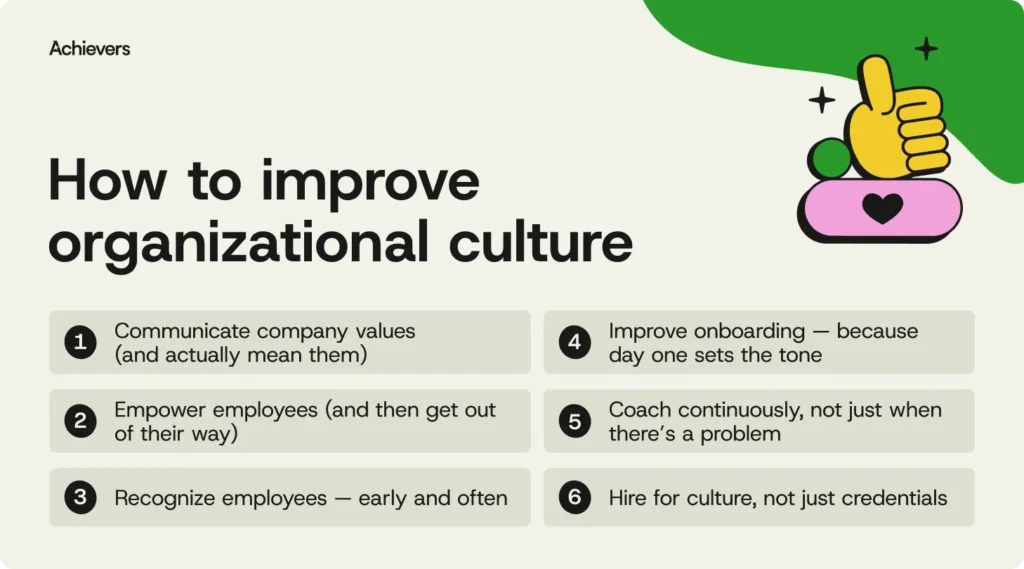
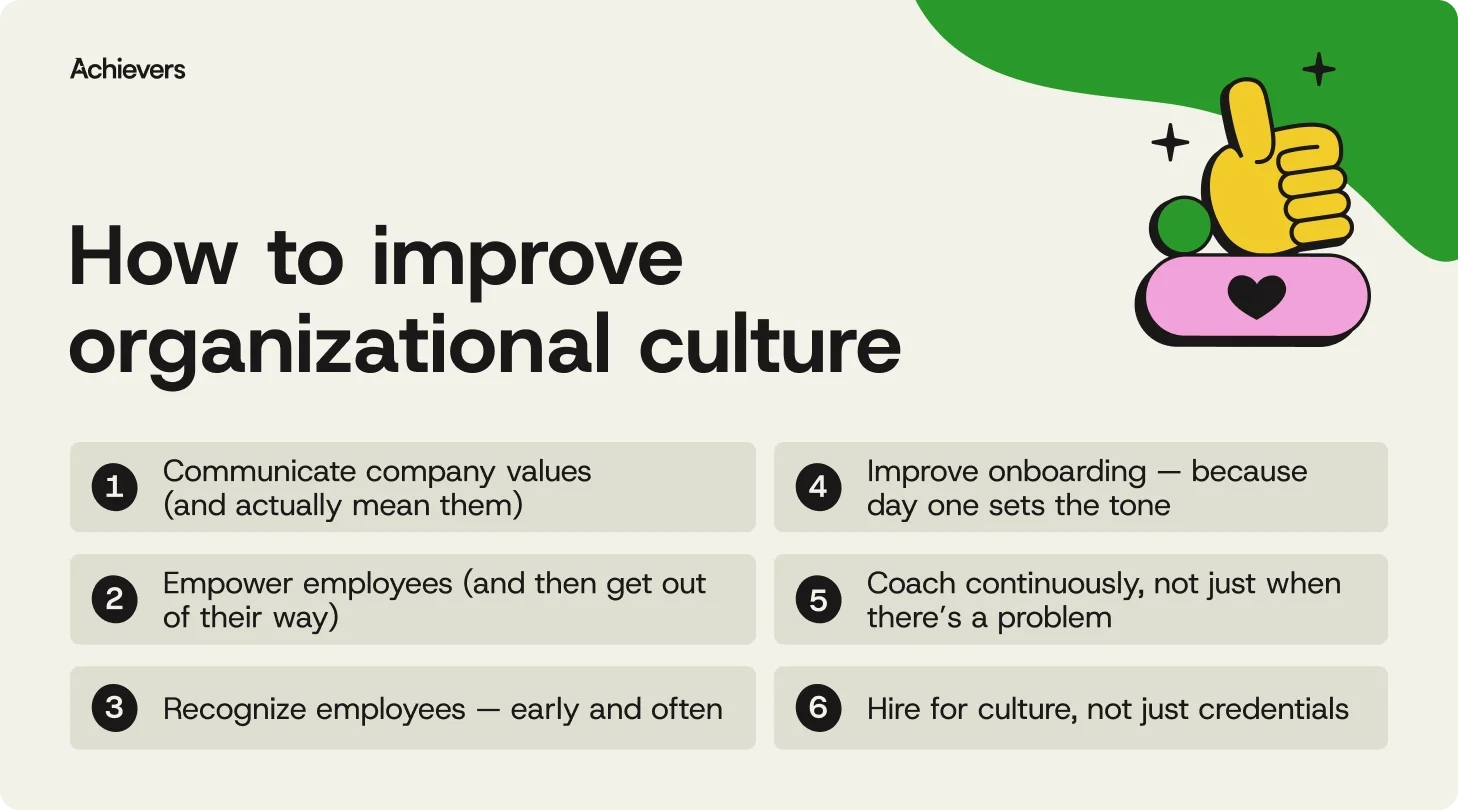
Improving organizational culture is a continuous journey that requires commitment from all levels, particularly leadership. These ten pillars offer practical, experience-driven approaches to strengthen an organization’s cultural fabric, fostering an environment where employees are engaged, productive, and proud to contribute.
1. Articulating and Embodying Core Values
Organizational values are the guiding principles that define an organization’s identity and inform its operational philosophy. They should transcend mere statements on a wall, actively guiding strategic decisions, shaping desired behaviors, and clarifying what constitutes "good work." For values to resonate, they must be consistently reinforced and visibly lived by everyone, especially leadership. For example, if "innovation" is a core value, leaders must visibly support new ideas, allocate resources for experimentation, and celebrate successful (and even learning-rich unsuccessful) ventures. If "integrity" is paramount, ethical conduct must be non-negotiable, and leaders must demonstrate transparency and accountability. When values are deeply integrated into daily operations, from hiring criteria to performance evaluations and recognition programs, employees gain a clear understanding of expectations and the larger purpose their work serves.
2. Cultivating a Culture of Continuous Recognition
Recognition is a powerful psychological motivator, directly influencing employee engagement, job satisfaction, and commitment. When individuals feel genuinely appreciated for their contributions, they are more likely to remain dedicated and consistently perform at a higher level. Effective recognition goes beyond annual awards; it is frequent, specific, and tied to observable behaviors or achievements. This can range from informal "thank yous" and peer-to-peer shout-outs to formal programs that acknowledge significant milestones or exceptional performance. For instance, a simple, timely email acknowledging an employee’s extra effort on a project, or a public mention in a team meeting, can significantly boost morale. Platforms designed for social recognition can facilitate this, allowing colleagues to celebrate each other’s successes in real-time. Frequent, meaningful recognition fosters a sense of belonging, validates efforts, and motivates individuals to continue striving for excellence.
3. Empowering Autonomy and Fostering Trust
Employees consistently perform their best work when they are granted ownership over their tasks, encouraged to contribute ideas, and trusted to make decisions within their purview. This empowerment is not about abandoning support but rather providing clear objectives, equipping employees with the necessary resources, and offering guidance when requested, then stepping back to allow them to execute. For example, rather than micromanaging, a manager might set a project goal and deadline, discuss potential roadblocks, and then empower the team to determine the best approach. When trust is extended, employees reciprocate with greater ownership, initiative, and approach each task with increased confidence and accountability. This builds a sense of responsibility and reduces the feeling of being merely a cog in a machine.

4. Strategic Onboarding: Laying the Foundation for Success
Onboarding is the critical gateway through which new employees experience an organization, profoundly shaping their initial perceptions and long-term engagement. A robust onboarding process extends far beyond administrative paperwork and system access; it serves as a comprehensive introduction to the organization’s culture, values, strategic vision, and what success truly entails in their role. Effective onboarding might include a structured plan for the first 90 days, a dedicated buddy or mentor, and early opportunities to connect with team members and leadership. For instance, a new hire could participate in a "culture immersion" session, hearing directly from leaders about the company’s journey and aspirations. A strong onboarding experience ensures new hires feel integrated, understand their role’s impact, and are aligned with organizational objectives from day one, leading to quicker ramp-up times and higher retention rates.
5. Embedding Continuous Coaching and Development
A culture of continuous learning and development is essential for both individual growth and organizational agility. This involves moving beyond sporadic annual reviews to an ongoing dialogue of feedback, coaching, and skill development. Managers should act as coaches, engaging in regular one-on-one check-ins to discuss progress, help employees navigate challenges, and clarify their career trajectories. This could involve identifying specific training needs, facilitating access to online courses, or creating internal mentorship programs. For example, a bi-weekly 1:1 meeting could focus on skill development goals, not just project updates. Creating a pervasive culture of continuous development keeps employees motivated, enhances their capabilities, and ensures the business remains future-ready. This approach also plays a pivotal role in developing managers, transforming good managers into truly great ones.
6. Values-Based Hiring: Building a Cohesive Team
Hiring with cultural alignment in mind is as crucial as assessing technical skills and experience. This approach ensures that new team members not only possess the necessary competencies but also resonate with the organization’s core values and working ethos. The focus shifts to understanding how candidates approach problems, collaborate with others, and align with the organization’s principles. Behavioral interview questions, for instance, can reveal a candidate’s problem-solving style, resilience, and collaborative spirit. While "cultural fit" should not lead to a lack of diversity, hiring for shared values helps build teams that collaborate effectively and share common expectations, contributing to a more cohesive and productive environment. When organizations hire individuals who "get it" – who genuinely want to be part of the existing culture – it strengthens teams, reduces turnover, and streamlines the onboarding process significantly.
7. Championing Open and Transparent Communication
Transparent communication is the bedrock of trust and engagement, originating from leadership but permeating every level of the organization. Employees desire to understand organizational happenings, the rationale behind key decisions, and how they can provide feedback. This involves regular updates from leadership, clear communication channels for strategic changes, and readily available avenues for employee input, such as town halls, anonymous suggestion boxes, or skip-level meetings. For example, a quarterly "Ask Me Anything" session with the CEO can foster transparency and build trust. When employees feel informed and heard, they remain engaged and focused, rather than succumbing to speculation or anxiety born from uncertainty. This also encourages a culture where feedback is seen as a gift, not a threat.
8. Fostering a Collaborative Ecosystem
Building a truly collaborative culture necessitates actively dismantling organizational silos, encouraging cross-functional cooperation, and intentionally creating space for shared successes. This involves designing projects that require inter-departmental collaboration, establishing shared goals and metrics that unite teams, and implementing tools and processes that facilitate seamless information exchange. For example, implementing a cross-departmental "innovation challenge" can foster collaboration and idea sharing. Celebrating collective achievements reinforces the idea that success is a team effort. When individuals perceive themselves as integral parts of a larger team working towards common objectives, it enhances morale, improves problem-solving, and strengthens overall organizational cohesion.
9. Prioritizing Diversity, Equity, and Inclusion (DEI)
Diversity fuels innovation, and inclusion ensures that diverse perspectives are not only present but also valued, heard, and leveraged. Achieving genuine DEI requires intentional, everyday actions, moving beyond mere demographic representation to fostering a true sense of belonging and equitable opportunity for all. This involves implementing unconscious bias training, developing inclusive leadership practices, and creating safe spaces for dialogue. For instance, establishing employee resource groups (ERGs) can provide support and advocacy for underrepresented communities within the organization. Celebrating the unique backgrounds, experiences, and contributions of every individual not only enriches the workplace but also makes everyone feel like a cherished part of something meaningful, driving superior decision-making and business outcomes. McKinsey research consistently links diverse leadership teams to higher financial performance.
10. Leadership as the North Star: Setting the Cultural Tone
Ultimately, organizational culture is a reflection of its leadership. Employees observe what leaders do far more than what they say. Therefore, leaders must consistently model the desired cultural behaviors with integrity, demonstrating active listening, owning their mistakes, and frequently recognizing the contributions of others. A leader who champions work-life balance, for example, by visibly taking personal time, sends a powerful message that resonates throughout the organization. Authentic leadership, characterized by vulnerability and accountability, creates a powerful ripple effect. Simply put, if an organization expects its employees to embody a particular culture, its leadership must first and foremost live that culture authentically. This unwavering commitment from the top establishes credibility and inspires cultural adoption across all levels.
The Journey of Culture Transformation: A Phased Approach
Culture transformation is not an event but a continuous process, often unfolding in discernible phases:
- Assessment and Diagnosis: This initial phase involves understanding the current cultural landscape. Tools such as employee surveys (e.g., eNPS, engagement surveys), focus groups, one-on-one interviews, and observation help identify strengths, weaknesses, pain points, and areas ripe for improvement. This data-driven approach provides a baseline and clarifies the gap between the current and desired culture.
- Visioning and Strategy Development: Based on the assessment, leaders define the desired future state of the culture. This involves articulating core values, desired behaviors, and the overall employee experience. A clear strategy is then developed, outlining specific initiatives, goals, and metrics for success. This phase requires broad input to ensure buy-in and relevance.
- Implementation and Communication: This is where the rubber meets the road. Initiatives outlined in the strategy are rolled out. This might include new training programs (e.g., leadership development, DEI workshops), revised HR policies (e.g., recognition programs, feedback systems), and communication campaigns to articulate the "why" behind the changes. Consistent, multi-channel communication is crucial during this phase to keep employees informed and engaged.
- Measurement, Feedback, and Iteration: Culture change requires ongoing monitoring. Regular surveys, pulse checks, and feedback mechanisms are used to track progress against established metrics. Are engagement scores improving? Is turnover decreasing? Are employees reporting a greater sense of psychological safety? This data informs adjustments to the strategy, ensuring that the culture transformation remains agile and responsive to the organization’s evolving needs. Culture is a living entity, demanding continuous care and refinement.
Leveraging Technology for Cultural Enhancement
In the modern workplace, technology plays an increasingly vital role in supporting and scaling cultural initiatives. HR technology platforms, such as those offered by companies like Achievers, are designed to make culture actionable and visible in daily operations, rather than remaining theoretical or aspirational.
These platforms often provide tools for:
- Real-time Recognition: Enabling peer-to-peer and manager-to-employee recognition, often tied directly to company values, making appreciation a consistent and integrated part of the workday.
- Employee Feedback and Listening: Providing mechanisms for regular pulse surveys, anonymous feedback channels, and comprehensive engagement surveys, allowing organizations to gauge sentiment and pinpoint areas for improvement.
- Performance Management and Coaching: Facilitating continuous performance conversations, goal setting, and development planning, moving beyond traditional annual reviews.
- Analytics and Insights: Offering data-driven insights into engagement levels, cultural health, and the impact of various initiatives, enabling leaders to make informed decisions.
By leveraging such technology, organizations can ensure that culture-building activities are not just standalone initiatives but are deeply embedded into the way people work, communicate, and grow every day. This leads to a culture where employees feel consistently seen, heard, and empowered, transforming recognition and connection from an initiative into a fundamental operational practice.
The Enduring Return on Investment: Why Culture Pays Off
While culture building demands sustained effort and investment, the return on investment is substantial and long-lasting. A thriving organizational culture translates into a more engaged workforce, reduced employee turnover, enhanced innovation, improved customer satisfaction, and ultimately, superior financial performance. It builds a reputation as an employer of choice, attracting top talent and creating a sustainable competitive advantage.
Building a Thriving Organizational Culture Starts with One Step
Organizational culture is not built overnight, nor is it ever truly "finished." It is an ongoing journey that begins with intentionality and a commitment to people. When organizations consciously prioritize authentic recognition, open and transparent communication, continuous development, and meaningful connection, they lay the groundwork for something far greater than just a productive workforce. They cultivate an environment where individuals feel genuinely valued, deeply trusted, and enthusiastically motivated to contribute their best.
Organizations do not need a massive overhaul to begin this journey. The most impactful changes often start with small, consistent actions: reinforcing core values in daily interactions, recognizing the exceptional work already happening, and fostering a spirit of open dialogue. Over time, these seemingly minor moments accumulate, creating a powerful momentum that transforms the workplace into a vibrant ecosystem where people don’t merely show up for work; they truly thrive. The effort invested in culture is an investment that pays dividends in engagement, retention, innovation, and measurable business results. There is no better time to embark on this journey than right now.
Improving Organizational Culture: Frequently Asked Questions
Q1: How long does it typically take to change organizational culture?
A1: Culture change is a marathon, not a sprint. Significant, lasting cultural transformation typically takes 18 months to 3 years, sometimes longer, depending on the size of the organization, the depth of the desired change, and the consistency of leadership commitment. Small, incremental improvements can be seen much sooner, but deep-seated cultural shifts require sustained effort and patience.
Q2: What are the biggest barriers to successful culture change?
A2: Common barriers include a lack of consistent leadership buy-in and visible commitment, resistance to change from employees (especially those comfortable with the status quo), insufficient communication regarding the "why" and "how" of the change, a failure to involve employees in the process, and an inability to measure and iterate on cultural initiatives effectively.
Q3: Can organizational culture be improved effectively in remote or hybrid work environments?
A3: Absolutely. While remote and hybrid models present unique challenges, they also offer opportunities. Culture can be fostered through intentional virtual team-building activities, transparent digital communication channels, virtual recognition programs, regular video check-ins, and clear expectations around work-life integration. Technology plays an even more critical role in connecting distributed teams and reinforcing cultural norms.
Q4: What is the role of Human Resources (HR) in driving culture improvement?
A4: HR plays a pivotal role as a strategic partner in culture improvement. This includes diagnosing cultural issues, developing and implementing culture-building programs (e.g., onboarding, recognition, L&D), advising leadership on cultural initiatives, ensuring policies align with desired values, and acting as a champion for employee well-being and engagement. HR often facilitates the communication and measurement aspects of culture change.
Q5: How can organizations effectively measure the impact of culture improvement initiatives?
A5: Measuring culture involves a blend of quantitative and qualitative data. Key metrics include employee engagement scores (from surveys), turnover rates, absenteeism, productivity metrics, eNPS (Employee Net Promoter Score), internal promotion rates, and diversity metrics. Qualitative data can be gathered through exit interviews, focus groups, and one-on-one feedback sessions to understand employee sentiment and the lived experience of the culture.