While many organizations traditionally emphasize manager-to-employee recognition, a critical element often overlooked is the profound impact of peer recognition. When employees actively acknowledge one another’s contributions, it generates more than just positive sentiment; it acts as a powerful engine for enhanced engagement, improved teamwork, elevated productivity, and even a measurable reduction in absenteeism. This horizontal appreciation taps into the innate human desire for validation from those who truly understand the daily challenges and triumphs of their roles, fostering a more connected and resilient workforce.
Defining the Essence of Peer-to-Peer Recognition
Peer-to-peer recognition is fundamentally the practice of employees formally or informally acknowledging and appreciating their colleagues for meaningful contributions, collaborative efforts, and consistent embodiment of organizational values. Unlike traditional top-down recognition, which typically flows from management, peer recognition reflects the authentic, day-to-day dynamics of how work truly gets accomplished. It captures real-time impact, reinforces shared standards, and highlights behaviors that are crucial in the moment, rather than waiting for scheduled performance reviews.
When effectively supported by appropriate structures and technological tools, peer recognition transcends a mere feel-good gesture. It significantly enhances visibility for diverse contributions, strongly reinforces company values, and provides invaluable insights to leadership regarding the specific behaviors that drive engagement and performance across various teams. At its most effective, peer recognition transforms spontaneous moments of appreciation into a consistent organizational habit, ensuring employees feel genuinely seen, heard, and valued. Simultaneously, it equips leaders with the crucial visibility needed to intentionally shape and cultivate a thriving company culture.
The Evolution of Workplace Appreciation: A Chronological Perspective
Historically, workplace recognition primarily consisted of formal, hierarchical systems where managers or executives bestowed accolades upon subordinates. This model, while valuable in its own right, often suffered from limitations such as infrequency, lack of specificity, and a potential disconnect from the ground-level realities of work. Annual bonuses, employee-of-the-month awards, and performance reviews were the primary mechanisms, often failing to capture the myriad of smaller, yet significant, contributions that collectively fuel an organization’s success.

The late 20th and early 21st centuries saw a gradual shift. As businesses began to understand the psychological underpinnings of motivation and engagement, the concept of "employee appreciation" broadened. Companies started experimenting with more frequent, informal recognition programs. However, it was the digital age and the rise of collaborative platforms that truly catalyzed the potential for peer-to-peer recognition. The move towards flatter organizational structures, agile methodologies, and increasingly distributed or hybrid workforces made it clear that managers alone could not observe every valuable interaction or contribution. The need for a more decentralized, democratic form of recognition became evident, leading to the development of dedicated platforms that facilitate easy, widespread peer appreciation. This evolution underscores a maturation in organizational psychology, recognizing that intrinsic motivation and a sense of belonging are powerfully influenced by one’s immediate colleagues.
Quantifiable Impact: The Data Behind Peer Connection
The benefits of robust peer recognition are not merely anecdotal; they are substantiated by compelling data. Recent findings from the Achievers Engagement and Retention Report (E&R Report) provide a stark illustration of its transformative power. The report indicates that employees who experience high levels of peer connection are significantly more engaged and content within their roles. Specifically, compared to those with low peer connection, employees with strong peer ties are:
- 4.7 times more likely to feel appreciated: This metric is crucial, as feeling valued is a primary driver of job satisfaction and commitment. When appreciation comes from peers, it often carries a unique authenticity, as colleagues witness the effort and impact firsthand.
- 5.4 times more likely to feel supported in their well-being: The workplace can be a source of stress, and peer support acts as a vital buffer. Knowing that colleagues acknowledge one’s struggles and contributions fosters a sense of psychological safety and collective care.
- 5.4 times more likely to feel a sense of belonging: Belonging is a fundamental human need, and in a professional context, it directly correlates with retention and engagement. Peer recognition strengthens team cohesion and reinforces that an individual is an integral part of a larger, supportive community.
These statistics underscore a critical insight: peers are uniquely positioned to observe the "quiet wins" and the "everyday heroics" that may elude even the most attentive managers. When these contributions are highlighted by colleagues, it ignites a powerful cycle of connection, reinforces a shared sense of purpose, and cultivates a company culture where individuals are genuinely motivated to contribute their best work and, crucially, want to remain. Industry reports from organizations like Gallup further corroborate these findings, consistently demonstrating that employees who feel recognized are more productive, have lower absenteeism rates, and are less likely to seek opportunities elsewhere. The financial implications of reduced turnover alone—saving on recruitment, onboarding, and training costs—can be substantial for any organization.
Beyond Engagement: Broader Benefits for Organizational Health
Peer recognition plays a pivotal role in mitigating employee turnover by building and reinforcing the everyday connections that profoundly influence how employees perceive their work and their long-term future within an organization. When individuals feel genuinely seen and valued by the very people they collaborate with daily, they are significantly less prone to disengagement or actively exploring new career opportunities.
- Supports Employee Well-being: The real-time validation provided by peer recognition – acknowledging effort and impact immediately, rather than waiting for formal reviews – significantly reduces workplace stress. This consistent affirmation builds confidence and bolsters overall well-being. The Achievers Workforce Institute (AWI) reports that employees with strong peer connections are 4.7 times more likely to be engaged, directly combating issues like disengagement and burnout.
- Builds a Genuine Sense of Belonging: Acknowledgment from teammates fosters deep emotional connections and reinforces individual purpose. The E&R report highlights that employees with strong peer connections are three times more likely to find their work meaningful. This directly influences an employee’s decision to stay with a company, as a sense of purpose and belonging are key drivers of long-term commitment.
- Creates Stronger, More Connected Cultures: Peer recognition acts as a unifying force, bringing teams together across diverse departments, roles, and even geographical locations. As these inter-personal and inter-team relationships strengthen, collaboration naturally improves, the company’s culture becomes tangibly visible in daily interactions, and employees develop a deeper investment in the organization as a whole. This interconnectedness motivates individuals to seek growth and development within the company, rather than looking for external opportunities to satisfy their need for connection.
Strategic Implementation: 15 Best Practices for Effective Peer Recognition
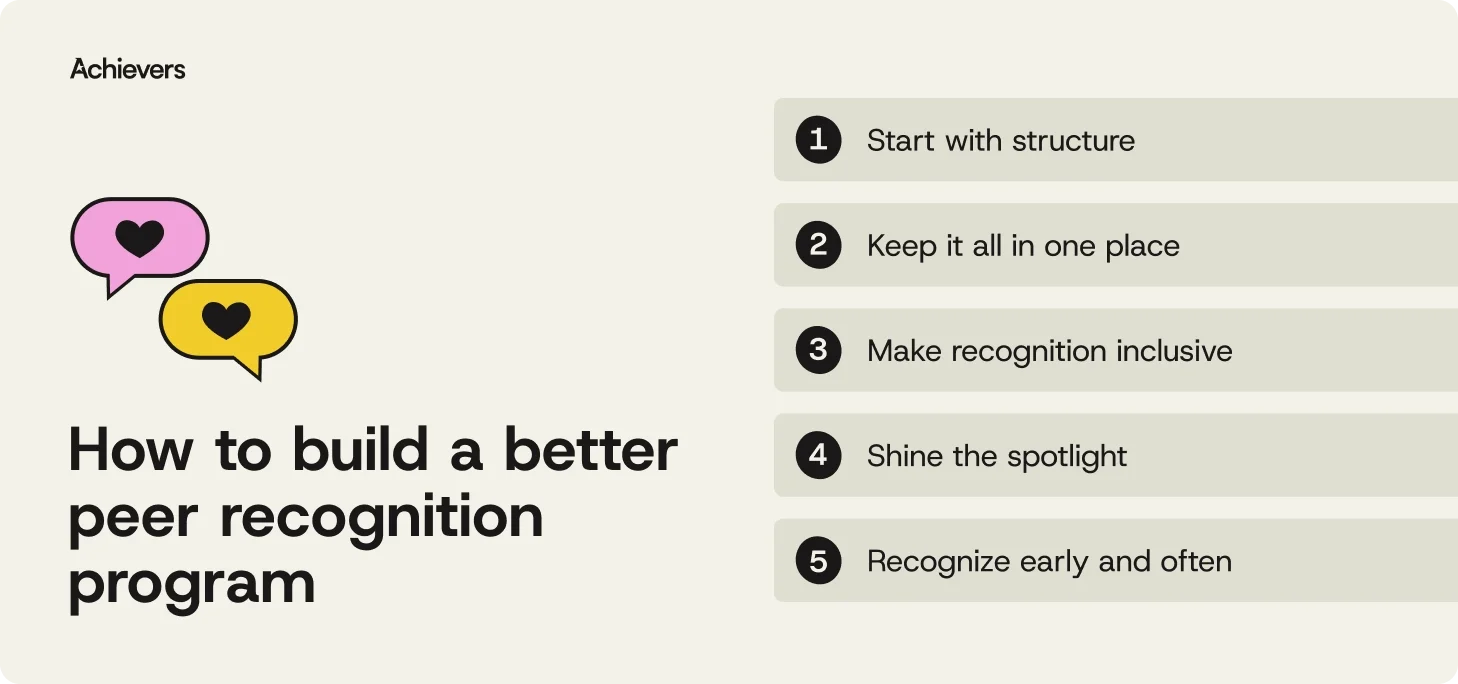
Cultivating a robust peer recognition program is fundamental to building a healthy, thriving workplace culture. However, the prospect can initially seem daunting. Here are 15 tried-and-true, people-first strategies to establish a peer recognition program that is not only effective but also sustainably integrated into the fabric of your organization:
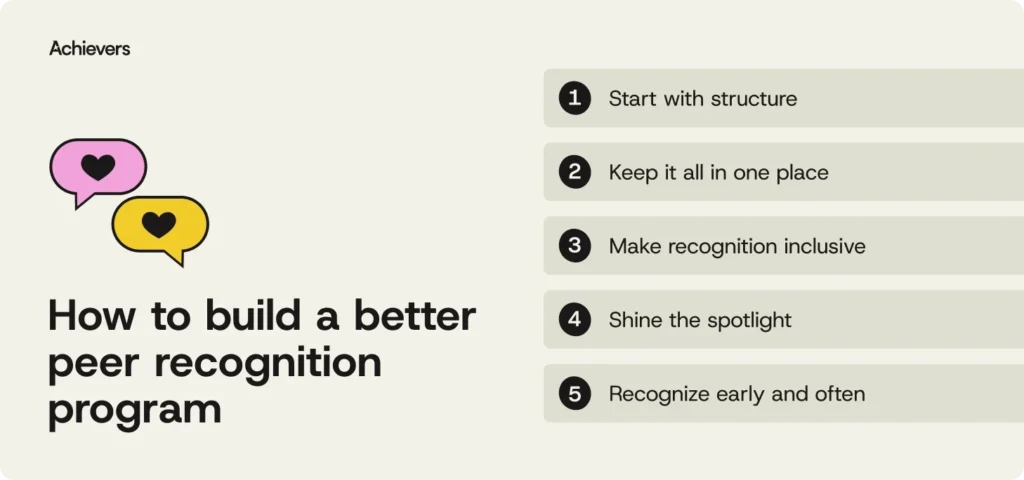
- Start with Structure: Effective peer recognition is intentional, not accidental. Define clear guidelines for what constitutes meaningful peer recognition, making it intuitive for everyone to participate. Whether it’s simple shout-outs or peer-nominated awards, a well-defined structure ensures recognition becomes a consistent part of the daily workflow.
- Centralize Recognition: Dispersed recognition efforts lead to confusion and overlooked contributions. A single, user-friendly recognition platform is crucial. It simplifies the process, ensures visibility and fairness, and removes friction, making it easy for peers to celebrate one another.
- Ensure Inclusivity: Recognition should extend beyond the loudest voices or the most visible roles. Design an organizational culture where every employee has the opportunity to recognize and be recognized. Celebrate all forms of contributions and regularly review data to ensure equitable participation across demographics and departments.
- Spotlight Great Recognition: Publicly highlighting exemplary peer recognition acts as a powerful motivator and reinforces desired behaviors. Whether through quick mentions in team stand-ups, internal newsletters, or company-wide announcements, public acknowledgment generates energy, visibility, and shared pride.
- Recognize Early and Often: Peers are often the first to notice daily achievements and small wins. Encourage frequent, informal shout-outs for everything from meeting deadlines to boosting team morale. Regular recognition strengthens relationships and fosters a consistently positive workplace environment.
- Prioritize Specificity: Generic praise like "great job" lacks impact. Encourage peers to articulate what was done, why it stood out, and how it benefited the team. Specific feedback makes recognition more meaningful and helps everyone understand the behaviors that drive performance.
- Lead by Example: For peer recognition to truly flourish, leaders at all levels must actively participate. When managers and executives recognize peers—not just their direct reports—it signals that appreciation is a cultural value, transcending hierarchical boundaries.
- Blend Social and Monetary Rewards: A balanced approach to recognition often includes both social praise and tangible incentives. While a heartfelt thank you is powerful, a small monetary reward (e.g., a gift card, bonus points) can amplify the impact, keeping recognition meaningful and motivating.
- Celebrate Employee Milestones: Peers are often privy to personal and professional milestones. Acknowledging promotions, work anniversaries, or significant personal achievements helps employees feel genuinely supported and valued by their teammates, reinforcing a shared journey of success.
- Inject Fun and Creativity: Recognition doesn’t have to be overly formal. Incorporate gamification through themed awards, friendly challenges, or a "kudos leaderboard." Making recognition enjoyable encourages active participation and fosters a more vibrant culture of appreciation.
- Recognize Both Teams and Individuals: Acknowledge both collective project successes and outstanding individual contributions. This dual approach reinforces that every role matters and significantly boosts overall employee morale and team cohesion.
- Measure Key Metrics: To ensure ongoing impact, track participation rates, recognition frequency, and equity of distribution. Data from your recognition platform can provide insights into program effectiveness and areas for improvement, enabling a data-driven approach to your recognition strategy.
- Empower Peer Nominations: Allow employees to nominate their colleagues for more formal awards. This authenticates the recognition process and brings hidden contributions to light, as peers often have the best insight into who is making a significant difference behind the scenes.
- Acknowledge Cross-Functional Wins: In modern organizations, collaboration often extends beyond immediate teams. Recognize instances where peers from different departments or functions support each other, helping to break down silos and foster a more integrated, collaborative culture.
- Link Recognition to Growth: Celebrate professional development. When a peer embraces a new role, acquires a new skill, or demonstrates emerging leadership, public recognition supports a growth mindset and embeds continuous learning as a core organizational value.
The Role of Technology: Enabling a Culture of Appreciation
While these best practices are robust on their own, their sustained implementation often proves challenging without the right technological infrastructure. This is precisely where dedicated peer-to-peer recognition software becomes indispensable, serving as the connective tissue between strategic intent and measurable impact. A purpose-built platform provides the necessary structure, visibility, and consistency for appreciation to thrive, ensuring that recognition is not dependent on memory, physical proximity, or individual personality.
By centralizing recognition efforts, seamlessly linking them to core organizational values, enabling real-time appreciation across all levels, and providing data-driven insights into recognition patterns, peer recognition software transforms best practices into ingrained daily behaviors. Instead of recognition existing as a theoretical concept, it becomes an active, living component of the workplace, shaping culture, strengthening internal connections, and directly driving tangible engagement and retention outcomes. Such platforms are not merely tools; they are enablers of a more human-centric and high-performing work environment.
Expert Perspectives and Industry Insights
HR leaders and organizational psychologists consistently emphasize the strategic importance of peer recognition. Dr. Eleanor Vance, a renowned expert in organizational behavior, notes, "The intrinsic motivation derived from peer affirmation is unparalleled. It speaks to our fundamental human need for social validation within our immediate community. Companies that foster this horizontal appreciation build stronger psychological contracts with their employees, leading to greater loyalty and discretionary effort."
Furthermore, industry veterans frequently highlight the competitive advantage derived from a robust recognition culture. Mark Henderson, a seasoned HR executive, states, "In today’s talent market, compensation alone isn’t enough. Employees are seeking environments where their contributions are seen and valued by those they work with daily. A strong peer recognition program isn’t just a ‘nice-to-have’; it’s a critical component of an attractive employer brand and a powerful tool for talent acquisition and retention." This perspective underscores that peer recognition is not just an internal benefit but also a significant external differentiator in the competitive landscape for skilled talent.

The Long-Term Implications: A Competitive Edge
Improving company culture through peer recognition is a process built through consistent, small moments of acknowledgment. It is how teams internalize what truly matters, how individuals experience belonging, and how positive behaviors become an organic part of daily work life. Research from the Achievers Workforce Institute (AWI) consistently demonstrates that when peer recognition is frequent, specific, and meaningful, it significantly strengthens the foundational elements that empower people to perform their best work and derive satisfaction from it.
The implications for businesses that prioritize peer recognition extend far beyond internal morale. Organizations with highly engaged and recognized employees typically exhibit lower turnover rates, translating into substantial cost savings from reduced recruitment and training expenses. Moreover, an engaged workforce often correlates with higher customer satisfaction, as enthusiastic employees are more likely to deliver exceptional service. Innovation also thrives in environments where contributions are celebrated, fostering a culture of psychological safety where employees feel comfortable taking risks and sharing new ideas. Ultimately, a strong culture of peer recognition enhances an organization’s adaptability, resilience, and overall reputation, positioning it as an employer of choice in a dynamic global market.
Conclusion: Don’t Just Work Together – Recognize Each Other
Peer-to-peer recognition might appear to be a ‘soft skill’ or a secondary concern, but its strategic impact is anything but. It is a potent force that demonstrably boosts employee engagement, elevates productivity, strengthens organizational culture, and, crucially, ensures individuals feel genuinely seen and appreciated for their daily efforts—not just for monumental achievements. It stands as one of the most straightforward, yet profoundly effective, strategies to cultivate a workforce that is deeply connected, intrinsically motivated, and inherently built for sustained success.
With platforms like Achievers, recognition seamlessly integrates into the daily rhythm of work. Such systems empower employees to effortlessly recognize and reward one another in real-time, infusing appreciation with purpose, meaning, and a touch of modern digital expression. From targeted culture campaigns to globally accessible rewards, these platforms transform abstract values into tangible behaviors, which in turn drive measurable business results. Building a culture where every individual feels valued and acknowledged is not an aspirational goal; with the right focus, frequency, and tools, it is an entirely achievable reality, yielding benefits that resonate throughout the entire organization.