The U.S. Equal Employment Opportunity Commission (EEOC) on Thursday, June 5, 2026, formally adopted a new National Enforcement Plan (NEP), a pivotal move that rescinds its predecessor and reorients the agency’s investigative and litigation priorities in alignment with the directives of President Donald Trump’s administration. This significant overhaul, replacing the 2024-2028 Strategic Enforcement Plan finalized under former President Joe Biden in late 2023, marks a pronounced departure in federal anti-discrimination efforts, shifting focus toward concerns such as "DEI-based discrimination," "anti-American bias," and a heightened emphasis on intentional discrimination over disparate impact liability.
A Fundamental Reorientation of Enforcement Priorities
The newly enacted 2025-2029 NEP outlines a suite of priorities that directly reflect the policy objectives championed by the current presidential administration and consistently advocated by EEOC Chair Andrea Lucas over the past year. While the full list of specific items in the plan was not detailed in the initial announcement, the overarching themes indicate a clear pivot. The most notable shifts include a sharpened focus on alleged discrimination arising from Diversity, Equity, and Inclusion (DEI) initiatives, a category broadly interpreted by critics of such programs as potentially fostering reverse discrimination. Concurrently, the plan targets "anti-American bias," a term that, while not explicitly defined within the context of employment law, suggests an intent to address perceived ideological biases within workplaces.
Central to this new direction is the NEP’s explicit commitment to President Trump’s April 2025 executive order, which directed federal agencies to cease pursuing disparate-impact liability. This legal doctrine, established by the Supreme Court in the landmark 1971 case Griggs v. Duke Power Co., allows for claims of discrimination where a facially neutral employment practice disproportionately harms a protected group, even without proof of discriminatory intent. The NEP, in a stark contrast to previous enforcement philosophies, states that intentional discrimination is "inherently more egregious," signaling a raised bar for proving discrimination and a redirection of enforcement resources. This prioritization suggests that the agency will now primarily seek to combat direct, provable acts of prejudice rather than addressing systemic issues that may lead to statistical disparities.
The Rescinded Biden-Era Strategic Enforcement Plan
The plan superseded by the NEP, the 2024-2028 Strategic Enforcement Plan, was crafted during the Biden administration and reflected a different set of priorities. It placed a strong emphasis on addressing systemic discrimination, acknowledging the "continued underrepresentation of women and workers of color in certain industries and sectors" as areas of particular concern. Furthermore, the Biden-era plan specifically included LGBTQ+ individuals under its umbrella of vulnerable workers, a designation that garnered significant attention from advocacy groups. Emerging issues, such as discrimination stemming from the increasing use of artificial intelligence (AI) tools in hiring and employment decisions, were also a key focus, anticipating the complex challenges posed by evolving technologies.
The contrast between the two plans highlights a fundamental philosophical divergence. The Biden-era SEP aimed to proactively identify and dismantle systemic barriers to equal opportunity, often utilizing statistical evidence of disparate impact to challenge entrenched practices. It sought to protect and advance the rights of specific demographic groups that historically faced discrimination. The new NEP, conversely, appears to emphasize an individualistic approach to anti-discrimination law, focusing on direct harm and intent, and signaling a potential reduction in the agency’s engagement with broader systemic issues or policies that, while not intentionally discriminatory, may have disproportionately negative effects.

Chair Andrea Lucas and the "Even-Handed" Approach
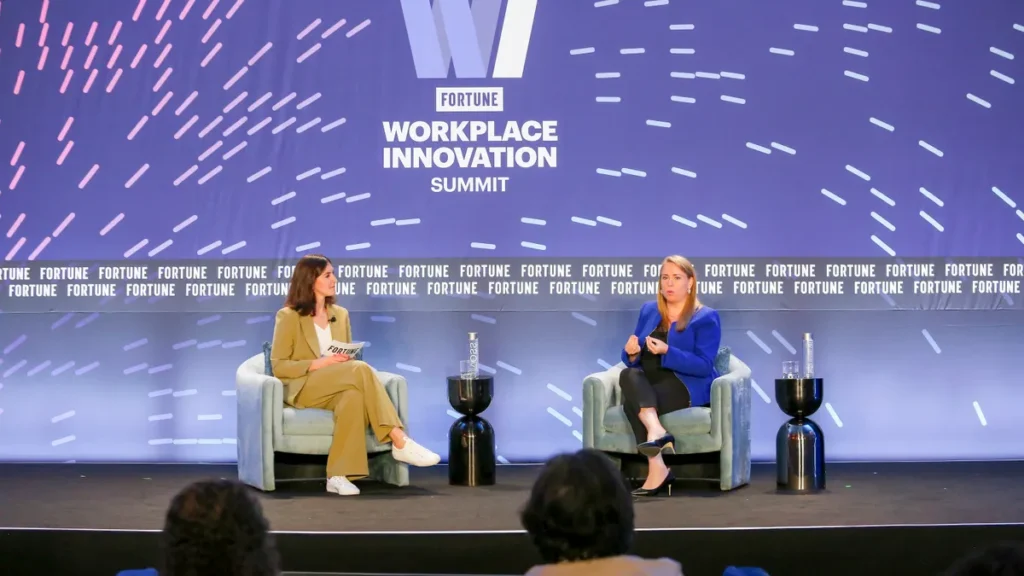
At the forefront of this policy shift is Andrea Lucas, Chair of the U.S. Equal Employment Opportunity Commission. Since her appointment, Lucas has consistently articulated a vision of "even-handed" enforcement, a concept she defines as "widening the aperture" of the EEOC’s civil rights agenda to encompass "all people." During a recent appearance at the Fortune Workplace Innovation Summit in Atlanta, Ga., on May 20, 2026, Lucas publicly defended this approach, asserting that the agency’s revised focus would ensure protection for all Americans, including groups that critics suggest were previously overlooked, such as white men. The accompanying image from the summit captured Lucas speaking, underscoring her active role in shaping and communicating the agency’s new direction.
Lucas’s proponents argue that this "even-handed" approach restores balance to the EEOC’s mission, ensuring that no group is privileged or disadvantaged in enforcement efforts. They contend that previous administrations had excessively focused on specific demographics, potentially neglecting claims from others. However, critics, including former high-ranking officials within the agency, have voiced strong concerns. They argue that this redirection risks diluting the EEOC’s core mission to combat discrimination against historically marginalized and vulnerable populations. These critics suggest that by broadening the focus too widely, the agency might abdicate its responsibility to actively prevent and redress systemic discrimination faced by groups such like transgender individuals, who, they argue, continue to face significant challenges in the workplace.
In an official agency press release, Lucas stated, "By prioritizing intentional discrimination and underscoring that every worker must be treated as an individual under the law, this plan sharpens the agency’s focus on protecting equal opportunity for all Americans. It strategically directs enforcement resources toward the most serious and consequential unlawful employment practices to better safeguard workers’ civil rights nationwide." This statement encapsulates the core tenets of the new plan, emphasizing individual treatment and the perceived severity of intentional acts over the broader impact of policies.
Presidential Directives and the Shift on Disparate Impact
The NEP’s explicit alignment with the executive branch is a critical component, noting that the EEOC "will use its discretion in its deployment of its enforcement authority to advance the Administration’s policy objectives and comply with relevant Executive Orders." This directive directly informs the agency’s decision to pivot away from disparate impact liability, a move initiated by President Trump’s April 2025 executive order.
The concept of disparate impact has been a cornerstone of anti-discrimination law for decades. It allows for challenges to practices that appear neutral but have a disproportionately negative effect on a protected class (e.g., race, gender, religion), even without proof of explicit discriminatory intent. For example, a seemingly neutral hiring test that statistically screens out a significantly higher percentage of minority candidates than white candidates could be challenged under disparate impact theory if it is not proven to be job-related and consistent with business necessity. The new administration’s stance, articulated in the NEP, seeks to elevate the standard of proof for discrimination, making it necessary to demonstrate intent to discriminate. This shift is expected to significantly alter the types of cases the EEOC pursues and the legal strategies it employs.
Historically, the EEOC has utilized both intentional discrimination (disparate treatment) and disparate impact theories to fulfill its mission. The ability to challenge practices based on their outcomes, rather than just explicit intent, allowed the agency to address subtle, institutional, and often unconscious biases that perpetuate inequality. By formally disavowing the pursuit of disparate impact liability, the EEOC is effectively narrowing its toolkit for combating certain forms of discrimination, particularly those that manifest through systemic patterns rather than overt acts of prejudice.

Reactions from Within the Commission
The adoption of the NEP was not unanimous within the commission. Commissioner Kalpana Kotagal, the sole Democrat on the commission, cast a dissenting vote and subsequently voiced her strong opposition in a LinkedIn post. Kotagal characterized the new plan as a thinly veiled attempt to "redirect limited resources toward prosecuting the Administration’s grievances and protecting the Administration’s most favored groups, instead of protecting all workers." Her statement underscores the deep ideological divide within the agency regarding its fundamental purpose and priorities.
Kotagal further highlighted concerns about the internal impact of this policy shift, stating, "Regrettably, this NEP will likely exacerbate morale issues, contributing to further attrition and making it difficult for the agency to fulfill its mission." This observation points to potential operational challenges within the EEOC, an agency already grappling with significant workloads and, according to Kotagal, understaffing. A decline in morale and increased staff turnover could hinder the agency’s ability to effectively investigate and prosecute discrimination claims, regardless of the new strategic direction. The implication is that a politically driven shift in focus could undermine the very enforcement capacity of the EEOC.
Broader Implications for Workers and Employers
The adoption of the new National Enforcement Plan carries substantial implications for both employees and employers across the United States. For workers, particularly those belonging to historically marginalized groups, the shift away from disparate impact claims could make it significantly more challenging to seek redress for certain forms of discrimination. Cases where discriminatory intent is difficult to prove, but where clear statistical disparities exist due to employment practices, may now fall outside the scope of the EEOC’s active enforcement. This could leave individuals feeling less protected and potentially disincentivize the reporting of certain types of workplace discrimination. For transgender individuals, for instance, who have often relied on a broader interpretation of sex discrimination to protect their rights, this new emphasis could create uncertainty regarding the EEOC’s commitment to their specific concerns.
For employers, the changes present a mixed bag. Some businesses and employer groups may welcome the reduced focus on disparate impact liability, viewing it as a relief from regulatory burdens and the potential for lawsuits based on statistical outcomes rather than proven intent. This could lead to a re-evaluation of current DEI initiatives. If "DEI-based discrimination" is explicitly targeted, companies might become more cautious about implementing or expanding programs designed to promote diversity, equity, and inclusion, fearing potential legal challenges from employees who feel disadvantaged by such initiatives. The definition and scope of "DEI-based discrimination" remain subject to interpretation, creating a new area of compliance uncertainty for human resources departments.
Conversely, employers committed to fostering diverse and inclusive workplaces may find themselves navigating a more complex legal landscape. They might need to meticulously document the non-discriminatory intent and business necessity of their DEI programs, even as the federal agency tasked with promoting workplace equality shifts its focus. The potential for a chilling effect on voluntary DEI efforts, driven by a fear of legal reprisal, is a significant concern for advocates of workplace diversity.
The Future of Federal Anti-Discrimination Enforcement

The 2025-2029 NEP is designed to remain in place until a majority of the commission votes to supersede, modify, or withdraw it. This means its influence could extend beyond the current presidential term, depending on future appointments to the commission. The composition of the EEOC, with its five commissioner seats, is crucial, as a shift in political appointments could lead to another reversal of enforcement priorities.
Legal experts anticipate that the new plan will likely face scrutiny and potential challenges. Civil rights organizations and legal advocacy groups are expected to closely monitor the EEOC’s enforcement actions and may pursue litigation that tests the boundaries of the new plan’s focus, particularly regarding disparate impact. Furthermore, the redefinition of what constitutes "anti-American bias" or "DEI-based discrimination" in an employment context could lead to new legal precedents and interpretations as cases make their way through the federal courts.
The long-term impact on the EEOC’s effectiveness and its standing as the nation’s primary enforcer of anti-discrimination laws will be closely watched. The agency’s ability to attract and retain talented staff, as Commissioner Kotagal noted, is paramount to its mission. If internal morale issues and attrition rates rise, the practical capacity of the EEOC to investigate and resolve charges, regardless of its strategic priorities, could be significantly diminished.
Historical Context of EEOC and Enforcement Philosophy
The EEOC was established by the Civil Rights Act of 1964 with the mandate to interpret and enforce federal laws prohibiting discrimination based on race, color, religion, sex, national origin, age, disability, and genetic information. Throughout its history, the agency’s enforcement philosophy has often reflected the prevailing political climate and the priorities of the presidential administration in power. Periods of emphasis on systemic discrimination, class-action lawsuits, and proactive enforcement have alternated with periods favoring individual complaints, conciliation, and a more constrained role for government intervention.
The current shift under Chair Lucas and the Trump administration represents one of the more pronounced ideological realignments in recent memory. It reflects a broader conservative legal movement that seeks to redefine civil rights enforcement by emphasizing individual liberty and meritocracy, often expressing skepticism about the efficacy or fairness of policies designed to address historical or systemic inequalities. This perspective tends to view concepts like "equity" as potentially leading to "reverse discrimination" or "quotas," moving away from the "equality of opportunity" model to one that strictly prohibits "equality of outcome" considerations. The new NEP, therefore, is not merely a change in administrative procedure but a reflection of a deeper philosophical debate about the very nature of equality and discrimination in American society. Its implementation will undoubtedly shape the future of workplace civil rights for years to come.