
The Equal Employment Opportunity Commission (EEOC) concluded its 2025 fiscal year on September 30, revealing a stark decline in enforcement activity that has brought the agency’s litigation output to its lowest level in ten years. With only 93 merit lawsuits filed over the past twelve months, the Commission’s activity represents a significant departure from the aggressive enforcement seen during the middle of the Biden administration. This decline is the result of a tumultuous year characterized by unprecedented leadership changes, a loss of a functional quorum among Commissioners, and a dramatic pivot in ideological priorities following the inauguration of the Trump administration in January 2025.
For employers and legal practitioners, the FY 2025 data marks the second consecutive year of "sluggish" activity, following a surprisingly quiet FY 2024. However, the raw numbers tell only part of the story. A granular analysis of the filings reveals a targeted shift in the types of cases the EEOC is willing to pursue, moving away from LGBTQ+ advocacy and systemic race-based claims toward a heightened focus on religious freedom, pregnancy protections, and disability accommodations.
A Turbulent Transition: The Chronology of FY 2025
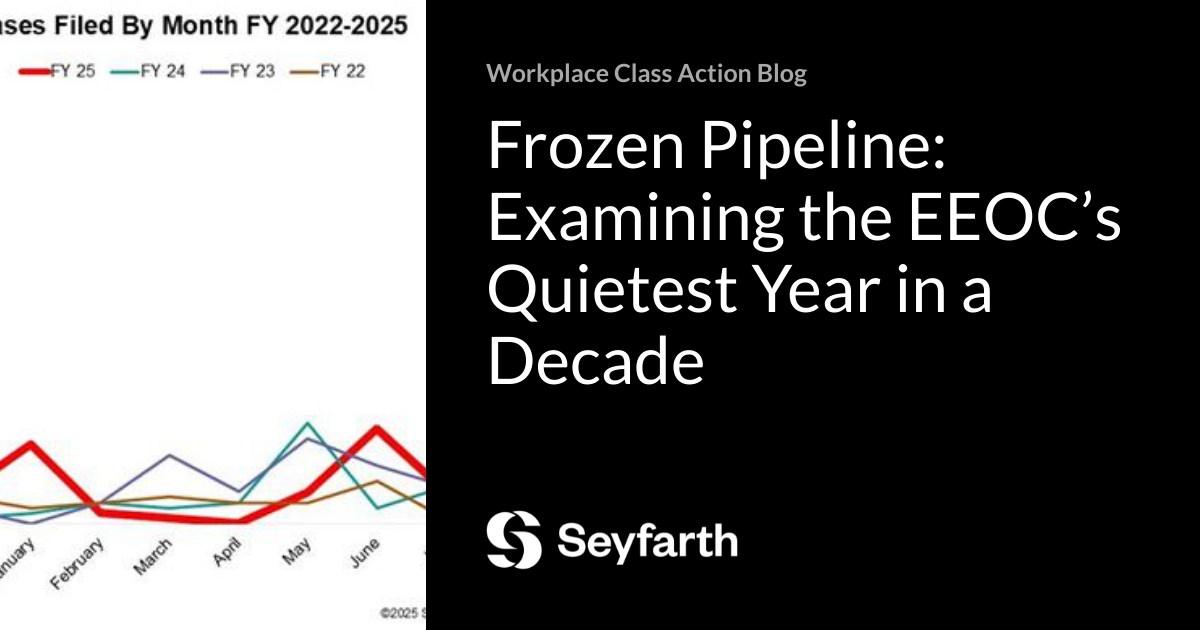
The 2025 fiscal year began under the momentum of the Biden administration, which had previously bolstered the agency with a Democratic majority and a robust budget. In the first four months of the fiscal year (October 2024 through January 2025), the Commission was relatively active, filing 24 lawsuits. This early surge, particularly the 15 filings in January alone, was widely interpreted by legal analysts as an effort by outgoing enforcement personnel to clear the pipeline and establish cases before the change in presidential administrations.
The trajectory of the agency shifted abruptly following the inauguration of President Trump. In late January 2025, the administration took the swift and expected step of elevating Andrea Lucas to Acting Chair of the EEOC. Simultaneously, the President terminated General Counsel Karla Gilbride, an appointee of the previous administration. In a move that challenged long-standing norms regarding the independence of federal agencies, the President also fired Commissioners Charlotte Burrows and Jocelyn Samuels, despite both having years remaining on their appointed terms.
These removals left the EEOC without a quorum, as only Acting Chair Lucas and Commissioner Kalpana Kotagal remained in office. The absence of a quorum has profound legal implications for the Commission’s ability to initiate high-impact litigation. Under existing delegations of authority, the General Counsel—or those acting in that capacity—can authorize routine litigation, but they generally lack the power to file suits involving systemic discrimination, cases that represent a departure from established precedent, or matters involving significant agency expenditures without full Commission approval.
Analyzing the Numbers: A Decade-Low Litigation Output
To understand the magnitude of the FY 2025 slowdown, one must look at the historical context of the Commission’s litigation arm. During the Obama administration and early Biden years, it was not uncommon for the EEOC to file between 140 and 200 merit lawsuits annually. In FY 2023, the agency hit a five-year high with 144 filings. By contrast, the 93 filings in FY 2025 represent one of the lowest totals in the last thirty years of the agency’s operation.
The timing of these filings also followed an unusual pattern. While September is traditionally the "surge" month for the EEOC—as staff rush to meet end-of-year quotas—the 35 lawsuits filed in September 2025 were significantly lower than the 56 filed in September 2024 and the 71 filed in September 2023.
Filing Activity by Statute (FY 2025)
- Title VII (Sex/Pregnancy/Religion): 37 cases related to sex or pregnancy; 11 cases related to religion.
- Americans with Disabilities Act (ADA): 34 cases.
- Age Discrimination in Employment Act (ADEA): 9 cases.
- Race and National Origin: 3 cases.
- Equal Pay Act (EPA): 0 cases.
The Ideological Pivot: From LGBTQ+ Rights to Religious Freedom
The most striking aspect of the FY 2025 data is the shift in the types of discrimination being targeted. Under Acting Chair Andrea Lucas, the EEOC has moved to "restore evenhanded enforcement," a phrase often used by the current leadership to signal a move away from what they characterize as "woke" policies.
In early 2025, the EEOC issued a formal statement clarifying that the agency would no longer view the use of biological pronouns or the acknowledgment of biological sex as a form of workplace harassment. This policy shift had immediate litigation consequences. In early 2025, the Commission moved to dismiss two ongoing lawsuits involving transgender workers—EEOC v. Starboard Group, Inc. and EEOC v. Brik Enterprises, Inc.—following an Executive Order focused on "restoring biological truth" in the federal government. While private plaintiffs in those cases intervened to continue the litigation, the EEOC’s withdrawal sent a clear message to the business community.

Conversely, religious discrimination claims have seen a notable resurgence. Despite a 600% increase in religious discrimination charges during the COVID-19 pandemic—largely driven by vaccine mandate disputes—the EEOC had previously been slow to bring these matters to court. In FY 2025, the Commission filed 11 lawsuits asserting religious discrimination or failure to accommodate religious beliefs. Acting Chair Lucas stated that under her leadership, the agency would ensure that workers are not forced to "choose between their paycheck and their faith."
Disability and Pregnancy: The Consistent Priorities
Despite the broader slowdown, the EEOC remains highly committed to enforcing the Americans with Disabilities Act (ADA) and new pregnancy-related protections. The 34 ADA-related lawsuits filed this year demonstrate that disability remains a top enforcement priority regardless of the political climate.
A specific trend identified in FY 2025 is the EEOC’s focus on "invisible" or hard-to-accommodate disabilities. The Commission filed several suits on behalf of individuals with mental health conditions, including PTSD, anxiety, and depression, as well as vision and hearing impairments. This suggests that the agency is increasingly scrutinizing the "interactive process" between employers and employees to ensure that accommodations are being discussed in good faith.
Furthermore, the EEOC has leaned into the enforcement of the Pregnant Workers Fairness Act (PWFA) and the Pregnancy Discrimination Act (PDA). Combined with general sex discrimination claims, these accounted for nearly 40% of the year’s total litigation. This focus aligns with the current administration’s stated goal of protecting maternal health and supporting families in the workplace.
Geographic and Industry Trends
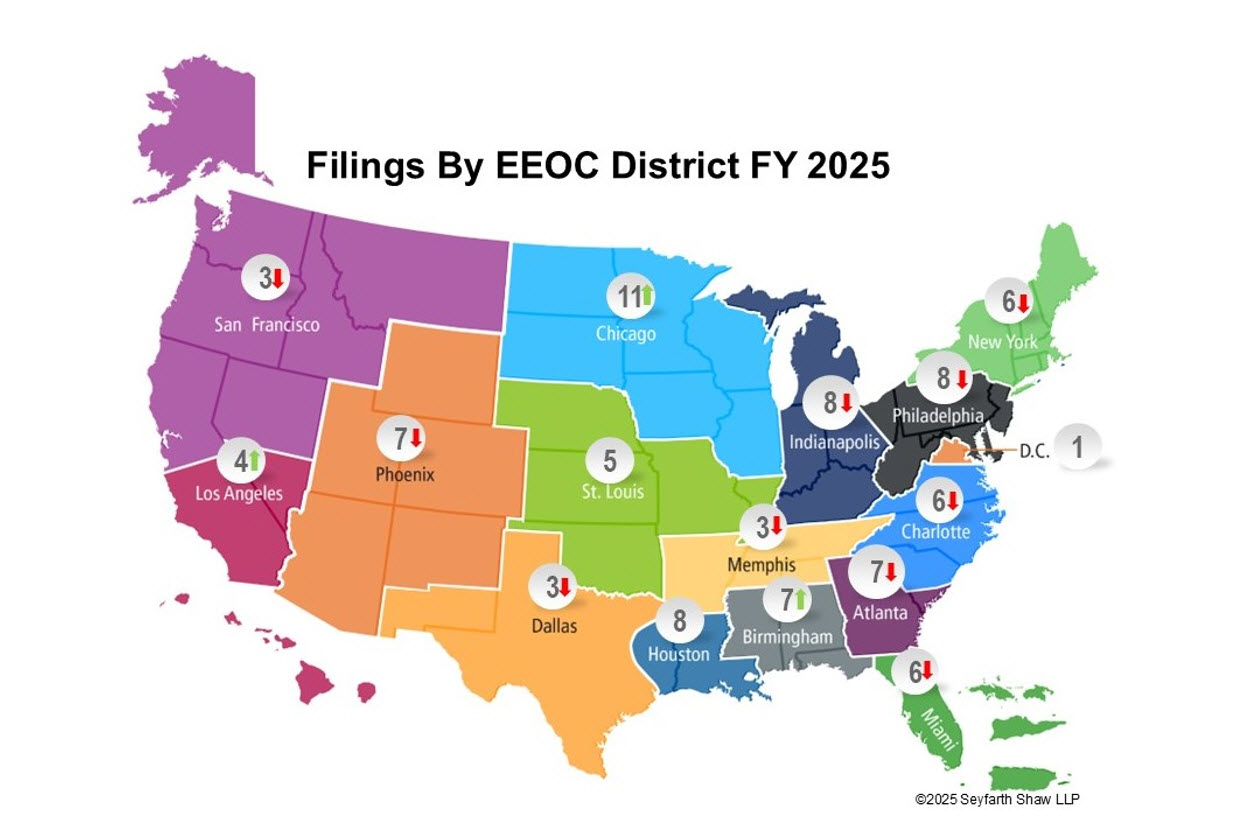
The distribution of lawsuits across the EEOC’s 15 District Offices showed significant regional disparities. The Chicago District Office reclaimed its position as the most aggressive branch, leading the nation with 11 merit filings. Other active regions included Philadelphia, Indianapolis, and Houston, each recording 8 filings.

In contrast, the West Coast offices—traditionally bastions of high-volume litigation—remained remarkably quiet. The Los Angeles, San Francisco, and New York offices combined for only 13 filings. This continued silence from the West Coast is a stark reversal from the Obama era, when those offices often led the Commission in complex and systemic filings.
From an industry perspective, healthcare remained a primary target for the EEOC in FY 2025. Hospitals, nursing homes, and outpatient clinics were frequently named in suits involving both ADA accommodations and religious exemptions, likely a lingering effect of the post-pandemic labor landscape.
Implications for the Employer Community
While the decrease in total filings might suggest a period of relief for employers, legal experts warn against complacency. The "sluggish" output of the EEOC does not necessarily reflect a decrease in the number of charges being filed by employees; rather, it reflects a bottleneck at the Commission level caused by leadership changes and quorum issues.
The lack of a quorum is a double-edged sword. While it prevents the EEOC from launching massive, systemic class actions that require Commission approval, it also means that the cases that do reach the docket are often narrower and focused on individual or small-group grievances. However, these smaller cases can still set dangerous precedents or result in significant reputational damage.
Furthermore, the private plaintiff’s bar often uses EEOC filings as a roadmap for their own litigation. Even if the EEOC is not filing a high volume of suits, the specific legal theories they highlight—such as "anti-American bias" or failure to accommodate mental health conditions—are frequently adopted by private attorneys.
As the EEOC moves into FY 2026, the primary question will be how quickly the administration can fill the vacant Commissioner seats and restore a quorum. Until then, the agency is expected to continue its focused, albeit limited, litigation strategy, prioritizing religious freedom and disability rights while largely stepping back from the social-justice-oriented litigation that defined the previous four years. For now, the "quiet" at the EEOC is less a sign of peace and more a reflection of an agency in the midst of a profound structural and ideological transformation.








