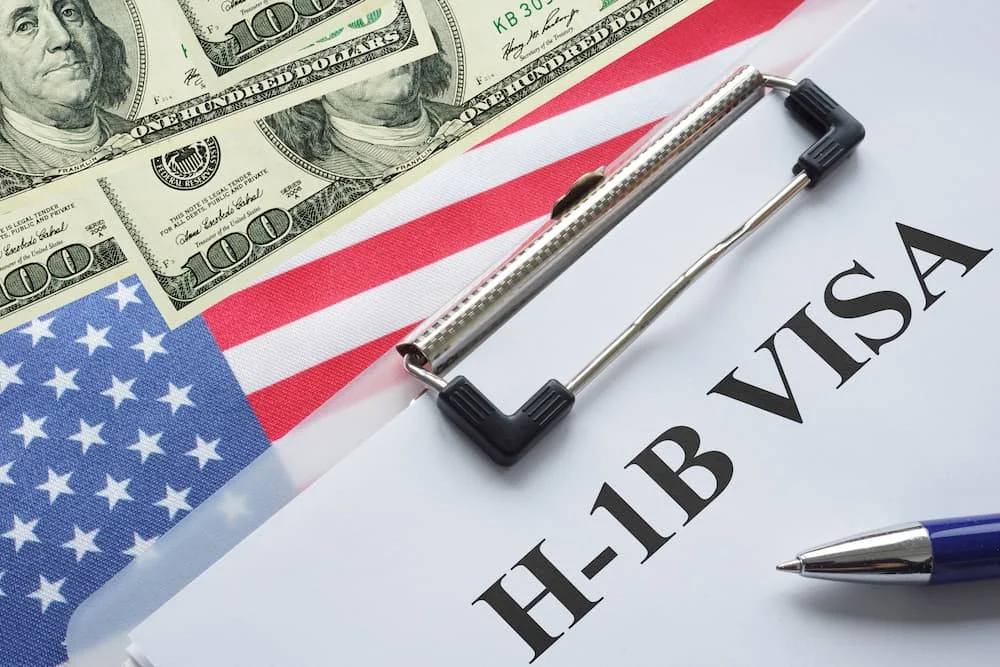
At 9 a.m., an organization’s HR department might approve the elimination of a role. By noon, payroll has processed the final date, IT has initiated the access revocation plan, and the manager is equipped with talking points for the departing employee. However, for an H-1B visa holder in the United States, this seemingly routine offboarding sequence can trigger a far more complex and urgent countdown—a "second clock" that profoundly impacts their legal ability to remain in the country and a prospective employer’s capacity to hire them. This critical window, currently a discretionary period of up to 60 consecutive days, is now under review by the White House, with a proposal signaling its potential elimination, poised to redefine talent mobility and HR compliance for thousands of U.S. businesses.
The H-1B Visa: A Cornerstone of U.S. Skilled Immigration
The H-1B visa program is a non-immigrant visa that allows U.S. employers to temporarily employ foreign workers in specialty occupations. These occupations generally require a bachelor’s degree or higher in a specific field, such as information technology, engineering, medicine, mathematics, and science. Established under the Immigration and Nationality Act, the H-1B program is vital for sectors heavily reliant on specialized skills, particularly the technology, healthcare, and research industries. Each year, the U.S. government issues 85,000 new H-1B visas, comprising a general cap of 65,000 and an additional 20,000 for those with a U.S. master’s degree or higher. This program has long been a conduit for global talent, enabling U.S. companies to fill critical skill gaps and maintain a competitive edge in the global economy.
H-1B workers contribute significantly to the U.S. economy, not only through their specialized labor but also through innovation, entrepreneurship, and tax contributions. Studies have consistently shown that skilled immigrants are disproportionately represented in STEM fields and patent applications, fueling economic growth and job creation. The program also facilitates crucial international knowledge transfer and collaboration, strengthening the U.S.’s position as a leader in scientific and technological advancement.
The Genesis of the 60-Day Grace Period: Fostering Mobility and Reducing Vulnerability
Prior to 2017, an H-1B worker whose employment was terminated faced immediate out-of-status consequences, often requiring them to depart the U.S. within days or even hours. This created immense pressure on individuals and discouraged job mobility, leading to what many critics called "indentured servitude," where workers felt tied to employers, even in undesirable conditions, due to fear of losing their immigration status.
Recognizing these challenges and aiming to enhance worker mobility and flexibility, the Department of Homeland Security (DHS) introduced the discretionary 60-day grace period for H-1B and several other employment-based non-immigrant classifications. This provision was part of a comprehensive final rule titled "Retention of EB-1, EB-2, and EB-3 Immigrant Workers and Program Improvements Affecting High-Skilled Workers," published in the Federal Register on November 18, 2016. The rule, which became effective on January 17, 2017, explicitly stated that "an individual may be granted a grace period of up to 60 consecutive days whenever his or her employment ends, or until the end of the authorized validity period, whichever is shorter."
The primary intent behind this grace period was to provide a limited window for high-skilled workers to pursue other lawful options. These options include finding a new employer to file an eligible H-1B transfer petition, applying for a change of status to another visa category, or preparing to depart the United States in an orderly fashion. Crucially, this period is not work authorization itself but a temporary reprieve to facilitate a transition, mitigating the immediate, severe consequences of job loss for skilled foreign nationals. It was designed to align with the "portability" provisions introduced by the American Competitiveness in the 21st Century Act (AC21) in 2000, which allowed H-1B workers to begin working for a new employer upon the proper filing of a new H-1B petition, rather than waiting for its approval. The 60-day grace period gave workers and new employers the necessary time to prepare and file that petition.
A Looming Policy Shift: The Proposed Elimination
This established and widely utilized grace period is now under a direct threat. The White House Office of Information and Regulatory Affairs (OIRA) has listed a Department of Homeland Security (DHS) proposal, identified as RIN 1615-AD22, titled "Eliminating the Discretionary 60-day Grace Period," as pending review. While the specific text of the proposed regulation has not yet been published, its very title sends a clear and unambiguous signal to employers and H-1B visa holders alike: the regulatory landscape governing highly skilled foreign workers could soon become significantly less forgiving.
The listing of this proposal with OIRA marks a crucial step in the federal rulemaking process. Once reviewed by OIRA, the proposal could be published in the Federal Register for public comment. This period typically lasts between 30 and 90 days, allowing stakeholders—including businesses, advocacy groups, and the general public—to provide feedback. After considering public comments, DHS would then decide whether to issue a final rule, which could take effect at a later date. Until a final rule is officially published and implemented, the current 60-day grace period remains in effect. However, the mere existence of this proposal warrants immediate attention and strategic planning from employers.
While the explicit rationale behind this proposed elimination is not yet public, it can be broadly contextualized within ongoing debates about immigration policy, workforce priorities, and potential efforts to prioritize domestic workers. It reflects a potential shift towards tighter controls on employment-based immigration, aligning with certain policy philosophies that advocate for reduced reliance on foreign labor.
Immediate Operational Challenges for U.S. Businesses
The potential elimination of the 60-day grace period poses formidable operational and strategic challenges for U.S. employers, particularly those heavily reliant on H-1B talent.
1. The Compressed Hiring Timeline: Consider a common scenario: Company A eliminates an Artificial Intelligence (AI) engineer’s position due to restructuring. Simultaneously, Company B urgently needs someone with precisely that niche expertise. Under the current rule, the AI engineer has up to 60 days to secure a new job and have their new employer file an H-1B transfer petition. This period accommodates the realities of corporate hiring: multiple interview rounds, compensation approvals, conflict-of-interest checks, background verification, internal sponsorship approvals, and the meticulous preparation of an immigration filing, which itself requires a certified Labor Condition Application (LCA) that takes at least seven business days to process. Eliminating the grace period would shrink this window to effectively zero days, transforming a standard recruiting process into a frantic, high-stakes race against immigration consequences.
2. Impact on Talent Acquisition and Retention: The U.S. labor market, especially in specialized STEM fields, faces persistent shortages. Industries like technology, healthcare, and advanced manufacturing depend on H-1B visas to access critical skills not readily available domestically. According to the National Foundation for American Policy (NFAP), H-1B visa holders are crucial for maintaining America’s lead in innovation. A zero-day grace period would severely hamper the ability of U.S. companies to attract and retain this global talent. Highly skilled individuals, faced with the prospect of immediate departure upon job loss, might opt to pursue opportunities in other countries with more flexible immigration policies, leading to a significant "brain drain" from the U.S.
3. Erosion of H-1B Portability: The current regulatory framework, bolstered by the grace period, allows for H-1B portability—meaning an employee can generally begin working for a new employer once a new H-1B petition is "properly filed" with USCIS, rather than waiting for its lengthy approval. This provision is critical for seamless transitions. Without the grace period, even the time to file that new petition would vanish, rendering the portability benefit practically useless for laid-off workers. This would disrupt career progression for skilled immigrants and force employers to either rush through hiring processes or forgo potentially ideal candidates.
4. Disproportionate Burden on Smaller Entities: The impact of this policy change would not be evenly distributed. Large multinational corporations often possess in-house mobility teams, dedicated immigration counsel, and established, high-speed workflows designed to manage complex immigration processes. They can mobilize resources quickly to prepare and file petitions. In contrast, startups, hospitals, universities, midsize manufacturers, and non-profit organizations frequently lack such extensive infrastructure. They might identify a strong candidate on day 30 (under the current rule) and then spend weeks navigating internal bureaucracy to determine sponsorship feasibility, secure budget approvals, and engage external counsel. A zero-day grace period would place these entities at a severe disadvantage, potentially limiting their access to top-tier talent. It would effectively reward the employer with the fastest paperwork, not necessarily the best job fit or the strongest utilization of a worker’s skills.
5. Economic and Innovation Implications: Beyond individual companies, the broader U.S. economy stands to lose. H-1B workers are known for their high rates of entrepreneurship and their contributions to STEM fields. Restricting their mobility could stifle innovation, slow economic growth, and diminish the U.S.’s global competitiveness. The uncertainty and rigidity introduced by such a rule could deter international students from pursuing higher education in the U.S., further impacting the future talent pipeline.
Weak Points in Current HR Systems Exposed by the Proposal
The proposed elimination acts as a stress test for existing HR and immigration compliance mechanisms, highlighting critical vulnerabilities:
1. Sequence of Communication and Decision-Making: All too often, immigration counsel is brought into the loop only after a termination decision is finalized, severance terms are fixed, and the employee’s last day is set. This belated engagement leaves little to no room for assessing alternative options such as internal redeployment, transfer to an affiliate company, the ripple effect on dependents’ immigration status, or the critical timing required for a new employer’s filing. If the grace period disappears, a late handoff could effectively erase all viable options for the employee before the relevant stakeholders—HR, employment counsel, and immigration counsel—are even in the room to discuss them.
2. Inconsistent and Inaccurate Manager Communication: Managers, acting with good intentions but lacking specific immigration expertise, may inadvertently create confusion or false expectations. They might reassure an employee by promising "60 days" even though the current period is discretionary and can be shorter. Conversely, some managers might cause unnecessary panic by instructing an employee to leave the country immediately. HR departments must develop precise, humane, and legally compliant communication scripts. These scripts should acknowledge the end of employment, clearly state the current grace period (while emphasizing its discretionary nature), and, critically, route all individual immigration questions to qualified legal counsel, thereby preventing managers from dispensing improvised and potentially inaccurate legal advice during an already sensitive termination meeting.
3. Delayed Sponsorship Assessment in Recruiting: Many companies, particularly those without extensive experience in sponsoring foreign nationals, tend to examine sponsorship requirements late in the hiring process, often only after several interview rounds and an offer is contemplated. This cadence is entirely incompatible with a candidate whose H-1B employment has just ended and who faces a rapidly shrinking or non-existent grace period. Recruiters need a streamlined, fast-track mechanism to obtain an early, lawful sponsorship assessment. This process must be carefully designed to avoid making assumptions based on a candidate’s name, accent, or national origin, which could lead to discrimination claims.
A Five-Part HR Playbook for Enhanced Preparedness
To navigate the evolving landscape and mitigate risks, HR departments must proactively implement a robust strategy:
1. Map the Exposure—Quietly and Systematically: HR must maintain an access-controlled, confidential inventory of all sponsored workers. This inventory should include critical data points such as visa classifications (H-1B, L-1, O-1, TN, etc.), petition end dates, the roles they occupy, and the responsible HR business partners. This data should be used for strategic workforce planning, risk assessment, and proactive compliance, not as a manager-accessible list of nationalities that could inadvertently lead to bias.
2. Create a Same-Day Escalation Rule for Sponsored Employees: Any planned employment action involving a sponsored employee—be it a termination, layoff, merger-related role change, or even a worksite move—should trigger an immediate, mandatory review by HR leadership, employment counsel, and immigration counsel. This review must occur before the action is finalized, allowing for a comprehensive assessment of immigration implications and the exploration of alternatives when feasible. This proactive approach ensures that immigration considerations are integrated into the decision-making process, rather than being an afterthought.
3. Make Redeployment Decisions Earlier and Strategically: Internal mobility and redeployment are crucial options for retaining valuable talent. However, a technically available internal role is useless if the approvals for an internal transfer and a new immigration filing begin only after the employee’s last day. HR must build immigration timing considerations directly into internal-mobility and reduction-in-force calendars. This means identifying potential internal matches for sponsored employees well in advance of any workforce changes and initiating the necessary internal approvals and immigration assessments concurrently.
4. Give Recruiters a Fast Lane for Sponsorship Assessments: To address the "late sponsorship assessment" weak point, HR needs to design a "fast lane" for candidates with urgent immigration needs. This involves clearly designating who within the organization (e.g., HR leader, legal counsel) has the authority to make sponsorship decisions quickly. Furthermore, establishing a streamlined process for immigration counsel to rapidly assess portability options for candidates and identifying which internal approvals can run in parallel will be critical. The goal is to achieve speed through a more efficient, well-defined process, not by sacrificing due diligence or compliance.
5. Train Managers and Preserve Guardrails Against Bias: Managers are the front line of employee interaction. They must be thoroughly trained on when to escalate immigration-related issues and, crucially, what not to promise or advise regarding an employee’s immigration status. HR, in collaboration with employment counsel, should regularly review these processes to ensure that the urgency of immigration matters does not lead to inconsistent treatment or, worse, national-origin bias. The U.S. Department of Justice publishes extensive recruiting and hiring best practices that can serve as valuable resources for establishing and maintaining these guardrails, ensuring fair and lawful treatment of all candidates.
Treating the Proposal as a Stress Test: A Broader Lesson
Ultimately, HR departments cannot control whether DHS publishes the proposed rule, what exceptions it might contain, or whether a final rule ultimately takes effect. What they can control is the internal process: ensuring that immigration considerations are thoroughly evaluated before an employment decision becomes irreversible.
This is the broader, enduring lesson illuminated by the proposed elimination of the 60-day rule. The original 2016 regulation that created the grace period explicitly recognized a fundamental truth: while employment can end instantaneously, lawful transitions for foreign nationals take time. The current proposal, therefore, transcends being merely an immigration-policy story. It serves as a comprehensive stress test for an organization’s offboarding procedures, internal mobility programs, recruiting efficiency, and, most critically, its cross-functional decision-making capabilities.
Companies that continue to treat immigration compliance as an isolated paperwork exercise to be addressed reactively after the primary business decision has been made are likely to discover their organizational weaknesses and inefficient handoffs at the worst possible moment—when a valuable employee’s immigration status is in immediate jeopardy. Conversely, organizations that proactively integrate immigration strategy as a fundamental input into their broader workforce planning and talent management will be far better prepared to adapt to regulatory changes, retain critical skills, and maintain compliance, regardless of the final form of this, or any future, immigration rule. The time to prepare for a zero-day grace period is now.