Employee recognition stands as one of the most potent yet often underutilized strategic tools available to organizations seeking to influence behavior at scale. Far from being a mere courtesy or a sporadic reward, consistent and meaningful recognition acts as a powerful communication mechanism, articulating an organization’s core values, highlighting critical contributions, and guiding employees toward desired future actions. Businesses that integrate recognition as an ongoing behavior driver consistently report measurable improvements across key metrics such as employee engagement, retention rates, and overall productivity, distinguishing them from those that view appreciation as an occasional, feel-good gesture.
At its core, employee recognition is the deliberate act of acknowledging and appreciating an individual’s or team’s contributions, efforts, or achievements. This practice serves to reinforce positive behaviors, deepen employee engagement, and cultivate an ingrained culture of appreciation within the workplace, fostering an environment where individuals feel valued and understood.
The Evolving Significance of Employee Recognition in the Modern Workforce
The contemporary business landscape, marked by dynamic economic shifts, evolving workforce demographics, and increasingly competitive talent markets, has elevated employee recognition from a desirable perk to a strategic imperative. In an era where employees are actively seeking purpose, connection, and clear pathways for growth, what an organization chooses to recognize sends unequivocal signals about its priorities and values. This strategic communication forms a critical component of a robust HR strategy. When recognition is delivered authentically and consistently, rather than as an annual formality or, worse, not at all, it directly translates into heightened employee engagement, increased productivity, and a stronger inclination for employees to remain with the company.
Data from the Achievers Workforce Institute (AWI) underscores this point, revealing that employees who receive weekly recognition are five times more likely to feel deeply connected to their company culture. This statistic highlights recognition’s profound ability to align individual actions with organizational values, ensuring that daily efforts are consciously directed towards objectives that truly matter. Recognition, therefore, is not merely about celebrating past achievements; it is a forward-looking mechanism that shapes future conduct, emphasizing which actions and efforts warrant attention, appreciation, and repetition.
The Science Behind Acknowledgment: Beyond Warm Fuzzies
While recognition undoubtedly elicits positive emotional responses, its efficacy is rooted in well-established psychological principles. It taps into fundamental human needs for validation, belonging, and competence.
- Behavioral Reinforcement: From a psychological perspective, recognition operates on principles of operant conditioning. Positive reinforcement—in this case, appreciation for desired actions—increases the likelihood that those actions will be repeated. When an employee’s effort or achievement is recognized, the brain releases dopamine, a neurotransmitter associated with pleasure and reward, creating a positive feedback loop that encourages similar behavior in the future.
- Motivation and Self-Efficacy: Recognition directly boosts an employee’s self-efficacy, their belief in their ability to succeed in specific situations. Feeling competent and valued is a powerful intrinsic motivator. It transforms job tasks from mere obligations into opportunities for meaningful contribution and personal growth.
- Belonging and Connection: Humans are social beings with an innate need for belonging. Recognition, particularly when public or peer-to-peer, reinforces an employee’s sense of belonging to a team and the wider organization. It signals that their contributions are seen, appreciated, and contribute to a collective goal, strengthening social ties and fostering a sense of community.
- Clarity and Direction: As noted by David Bator, Managing Director of AWI, in "The Recognition Effect" newsletter, the true impact of recognition lies in its ability to influence what employees do next, rather than solely acknowledging what they’ve already done. By specifically linking recognition to desired behaviors, organizations provide clear, actionable guidance on how employees can contribute more effectively and align with strategic objectives.
This research consistently points to a common theme: recognition is most effective when explicitly tied to observable behaviors. When organizations consistently acknowledge actions that align with their values and goals, they not only create clearer expectations but also significantly increase the probability of those behaviors recurring, thereby driving tangible business impact.

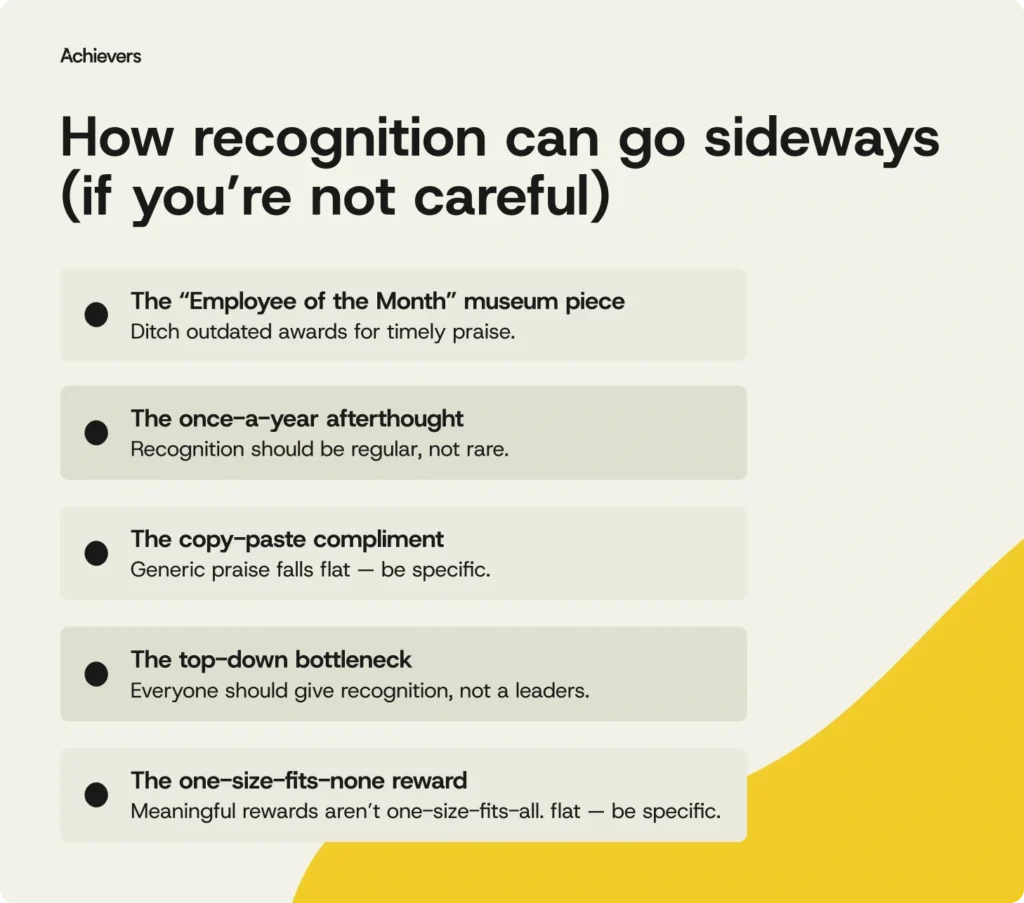
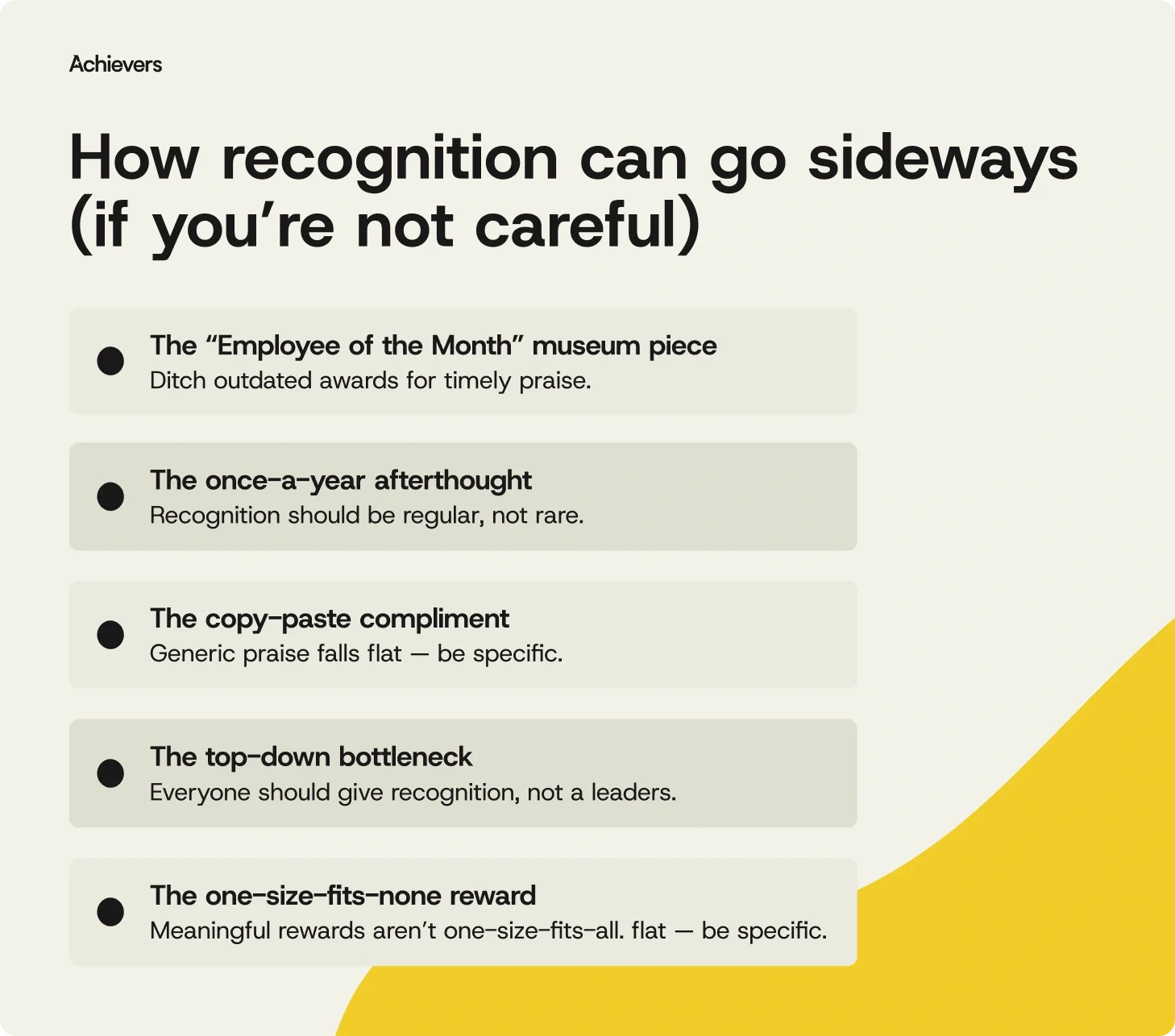
Navigating the Pitfalls: Modernizing Recognition Practices
Despite the clear benefits, many organizations inadvertently undermine their recognition efforts through outdated or poorly executed practices. Recognizing these common pitfalls is the first step toward building a truly impactful recognition strategy.
1. The "Employee of the Month" Museum Piece:
The Problem: While well-intentioned, the traditional "Employee of the Month" award often falls short. It’s typically infrequent, based on subjective committee decisions, and lacks specific, timely feedback. Employees don’t want mystery awards; they crave relevant, immediate acknowledgment.
The Solution: Replace infrequent, top-down accolades with real-time, continuous recognition. Implement platforms that allow managers and peers to offer immediate praise for specific actions. This ensures feedback is relevant and impactful, fostering a culture of ongoing appreciation rather than a periodic spotlight.
2. The Once-a-Year Afterthought:
The Problem: Limiting recognition to annual reviews, holiday parties, or sporadic events diminishes its motivational power. Delayed appreciation loses its resonance, failing to reinforce behaviors in the moment they occur.
The Solution: Integrate recognition into the daily fabric of company culture. It should be routine, not rare. Encourage frequent check-ins, informal shout-outs, and small, spontaneous gestures of appreciation. The goal is to create a constant feedback loop that keeps employees engaged and aware of their positive impact.
3. The Copy-Paste Compliment:
The Problem: Generic praise, such as "Good job!" or "Thanks for your hard work," while better than nothing, often feels insincere and transactional. It lacks the specificity needed to make a lasting impression or guide future behavior. If a compliment could apply to anyone, it often resonates with no one.
The Solution: Emphasize specific, behavioral recognition. Managers and peers should be trained to articulate what the employee did, why it mattered, and how it aligns with company values or goals. For example, instead of "Great presentation," say, "Your clear explanation of the Q3 financials during the team meeting helped everyone understand our strategic priorities for the next quarter, demonstrating excellent communication and alignment with our goal of transparency."
4. The Top-Down Bottleneck:
The Problem: When recognition flows exclusively from managers, it overlooks the immense power of peer-to-peer appreciation and limits the scope of contributions that get acknowledged. This can create a hierarchical culture where only visible achievements are celebrated, neglecting vital behind-the-scenes work.
The Solution: Empower everyone within the organization—teammates, cross-functional collaborators, and even customers—to recognize contributions in the moment. Implementing peer recognition platforms can democratize appreciation, making it a collective responsibility. This broadens the scope of recognition, strengthens team bonds, and builds a more authentic and sustainable culture of appreciation.
5. The One-Size-Fits-None Reward:
The Problem: Generic rewards, like standard gift cards or branded merchandise, often miss the mark because they fail to consider individual preferences and motivations. What might motivate one employee could be indifferent to another.
The Solution: Offer personalized and choice-based rewards. Beyond monetary incentives, consider experiential rewards, professional development opportunities, extra time off, or even philanthropic donations in an employee’s name. The most meaningful rewards reflect individual preferences and demonstrate that the organization genuinely understands and values its diverse workforce. Survey employees to understand what truly motivates them, moving beyond the predictable to the truly impactful.
Modernizing Employee Recognition and Rewards for Strategic Impact
Modernizing employee recognition and rewards programs transcends merely updating outdated practices; it involves a fundamental shift towards making recognition continuous, highly visible, and deeply integrated into the daily employee experience. These programs are intentionally designed to drive specific behaviors that align with organizational objectives.
A 2026 study by Harvard Business Review Analytic Services (HBR) highlighted this critical distinction: 88% of organizations with highly effective recognition programs reported designing their initiatives to drive specific employee behaviors, compared to a mere 28% of those with ineffective programs. This data strongly suggests that modern recognition is not about broad strokes of appreciation but about precise reinforcement of the actions organizations want employees to prioritize every single day.
Organizations leading the charge in this modernization effort are embedding recognition into the very fabric of daily work. For instance, Workday’s integration of recognition data directly into its HR systems led to a remarkable 70% year-over-year increase in employee feedback available to managers. This provides a more comprehensive and nuanced view of employee performance, moving beyond traditional metrics to incorporate real-time, peer-validated contributions. Such integrations transform recognition from an isolated event into a continuous data stream that informs talent development, performance management, and overall organizational strategy.
Recognition That Drives Measurable Results: A Strategic Imperative
The question, "Does employee recognition matter?" can be unequivocally answered with a resounding "yes." Its importance extends far beyond fostering a positive atmosphere; it is a fundamental driver of organizational success. Recognition is one of the most effective tools organizations possess to shape desired behaviors, strengthen corporate culture, and generate tangible business results.
Effective recognition programs translate directly into:
- Improved Employee Retention: Employees who feel valued are significantly less likely to seek opportunities elsewhere, reducing costly turnover and preserving institutional knowledge.
- Enhanced Productivity: When employees know their efforts are seen and appreciated, they are more motivated to perform at their best, leading to higher output and efficiency.
- Stronger Organizational Culture: A culture of appreciation fosters psychological safety, collaboration, and a sense of shared purpose, making the organization a more attractive place to work.
- Better Talent Attraction: Companies renowned for their strong recognition cultures become employer brands of choice, attracting top talent in a competitive market.
Platforms like Achievers are purpose-built to facilitate this strategic approach, enabling organizations to deliver frequent, meaningful recognition that fuels performance and retention without introducing additional friction into employees’ daily workflows. What begins as a simple "thank you" can, with a strategically designed and implemented recognition system, culminate in a measurable impact on key business outcomes.
In an increasingly complex and competitive global economy, organizations that invest strategically in modern, behavior-driven employee recognition are not just being "nice"; they are making a shrewd business decision that pays dividends in engagement, performance, and long-term success.