
The U.S. Office of Personnel Management (OPM), the central human resources agency for the federal government, is facing significant challenges in its operational capacity and risks worsening long-standing skills gaps due to substantial staff reductions implemented under the Trump administration. A critical report released on July 22, 2026, by a government watchdog, widely understood to be the Government Accountability Office (GAO), indicates that the extensive loss of personnel has severely hampered OPM’s ability to execute its vital functions. This assessment comes amidst the administration’s ongoing "right-sizing" efforts, which have seen a significant portion of OPM employees depart through deferred resignation programs and reductions in force over the past two years.
The Mandate of the U.S. Office of Personnel Management
The Office of Personnel Management serves as the chief human resources agency and personnel policy manager for the federal government. Its mission is critical: to recruit, retain, and honor a world-class federal workforce to serve the American people. OPM manages a vast array of responsibilities, including federal employee benefits, retirement services, federal hiring processes, workforce development, and upholding the merit system principles that underpin the civil service. Established in 1979 as a successor to the Civil Service Commission, OPM plays a crucial role in ensuring that the federal government operates efficiently, effectively, and with integrity, free from political patronage. Any disruption to OPM’s operational capacity, therefore, has ripple effects across all federal agencies, potentially impacting everything from the processing of retirement claims for millions of federal retirees to the ability of agencies to staff critical national security positions.
A Chronology of "Right-Sizing" Initiatives and Departures

The current state of OPM staffing is the culmination of a deliberate strategy by the Trump administration to reduce the size and scope of the federal workforce, particularly within agencies deemed to have excessive personnel or functions that could be streamlined. This initiative, often framed as an effort to achieve fiscal sustainability and improve efficiency, began to formalize in early 2025.
- January 28, 2025: OPM issued a pivotal directive known as the "Fork in the Road" memo. This memo offered federal employees, including those at OPM, a program for deferred resignations. Such programs typically incentivize employees to voluntarily leave federal service early, often in exchange for a lump-sum payment or continued benefits for a specified period. At the time of its issuance, an OPM spokesperson confirmed to HR Dive that the administration anticipated between 5% and 10% of federal employees across the government would accept this offer, signaling a broader intent for workforce reduction.
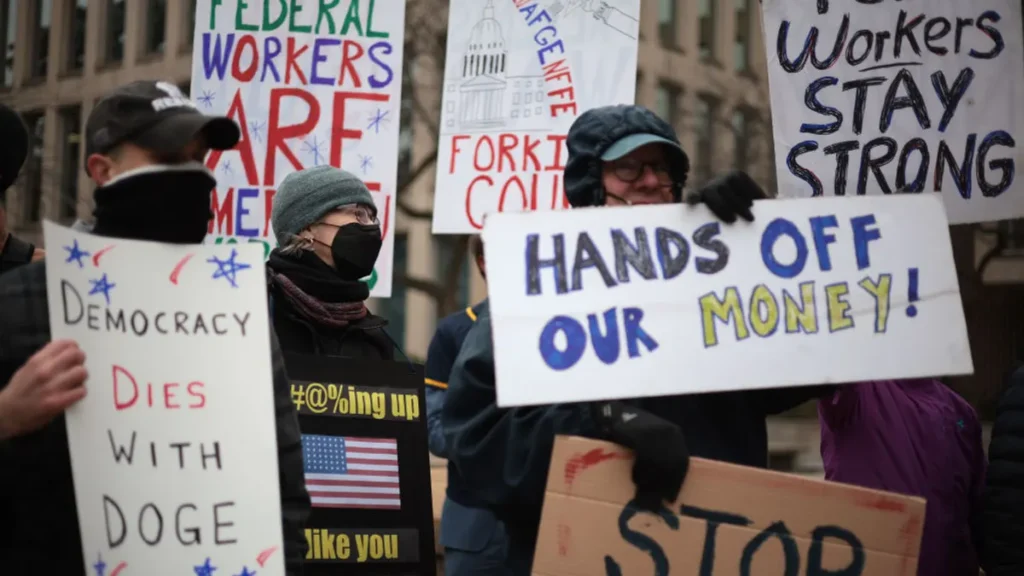
- February 5, 2025: The "Fork in the Road" memo, and the broader implications of the administration’s workforce policies, sparked public and employee concern. Protests were held outside the headquarters of the U.S. Office of Personnel Management in Washington, D.C., reflecting apprehension among federal workers and their advocates regarding job security and the future of the civil service.
- July 2025: OPM Director Scott Kupor publicly articulated the administration’s vision in a blog post titled "Right-Sizing with Purpose." In this post, Kupor emphasized OPM’s commitment to becoming "operationally efficient, by design," aiming to build a "leaner, more agile OPM, one that’s laser-focused on outcomes and taxpayer value." He explained that part of these changes involved cutting functions deemed "no longer affordable," specifically mentioning the elimination of a team dedicated to executive and leadership training for federal employees. This move signaled a shift in how OPM approached talent development within the federal sector.
- December 31, 2024, to March 31, 2026: Over this 15-month period, OPM experienced significant employee attrition. The watchdog’s report revealed that a striking 59% of those who left OPM did so through the government’s deferred resignation program, while an additional 10% departed via a reduction in force (RIF). This data indicates a substantial and rapid downsizing of the agency’s workforce.
- July 22, 2026: The government watchdog published its comprehensive report, detailing the adverse consequences of these staff reductions on OPM’s operational capacity and the exacerbation of existing skills gaps, thereby bringing the agency’s internal challenges to public light.
Detailed Findings: Operational Hampering and Exacerbated Skills Gaps
The watchdog’s report paints a stark picture of an agency struggling under the weight of its diminished workforce. The primary concern articulated by the report is that the loss of personnel has directly "hampered operational capacity" at OPM. This phrase encompasses a multitude of critical functions that the agency performs, which are now at risk of being slowed, delayed, or even inadequately performed. For instance, the processing of federal retirement applications, a complex and time-sensitive task for millions of retirees, could face significant backlogs. Similarly, the administration of federal employee health benefits, life insurance, and other crucial programs requires a dedicated and knowledgeable staff. Reductions in these areas could lead to errors, delays in service delivery, and increased frustration for federal employees and their families.
Beyond day-to-day operations, the report highlights the risk of "worsening pre-existing skills gaps." The federal government has long grappled with significant skills shortages in critical areas. Indeed, the GAO has identified "managing federal skills gaps" as a "High-Risk List" issue since 2001, underscoring its chronic nature. These gaps are particularly pronounced in specialized fields such as cybersecurity, information technology, financial management, acquisition, and STEM (science, technology, engineering, and mathematics) disciplines. The departure of experienced personnel, especially those with decades of institutional knowledge and specialized expertise, creates a "brain drain" that is exceedingly difficult to replenish. The report specifically noted the cutting of OPM’s executive and leadership training team, a decision that directly undermines the federal government’s ability to cultivate its next generation of leaders and address future talent needs. Experts in federal workforce management have consistently warned that such cuts, while offering short-term budgetary savings, inflict long-term damage on an organization’s capacity for strategic planning, innovation, and effective governance.
Restructuring and Reliance on Technology

In addition to direct staff reductions, OPM has also implemented internal reorganizations and proposed significant shifts in responsibilities. The report notes that the Merit System Accountability & Compliance office, a vital component for upholding the integrity of the federal merit system, experienced a substantial 41% drop in full-time workers between Fiscal Year 2024 and Fiscal Year 2026. Simultaneously, OPM "proposed transferring appeals of employees who have been separated by a reduction in force from the Merit Systems Protection Board (MSPB) to OPM, stating that the change is meant to improve efficiency." This proposed transfer raises significant concerns about potential conflicts of interest, as OPM would be responsible for adjudicating appeals related to workforce decisions it itself initiated. Critics argue that such a move could undermine the impartiality and independence traditionally afforded by the MSPB, potentially eroding trust in the fairness of federal employment processes.
Confronted with fewer staff, OPM has also suggested leveraging artificial intelligence (AI) and modernizing its IT systems as solutions to maintain or improve efficiency, according to the report. While technological advancements offer undeniable potential for streamlining processes and automating routine tasks, their successful implementation requires significant upfront investment, robust infrastructure, and, crucially, a highly skilled workforce capable of developing, deploying, and managing these complex systems. The report implicitly questions the feasibility of such a transition under conditions of severe staff reductions and potential loss of IT expertise. Without adequate human capital to guide and oversee technological integration, the promised efficiencies of AI and IT modernization may remain largely unrealized, potentially leading to new operational bottlenecks and system failures.
Transparency and Accountability Deficiencies
A particularly troubling aspect of the watchdog’s report is its emphasis on OPM’s lack of cooperation and transparency. The GAO explicitly stated that OPM "did not provide the agency with requested documentation on changes made to offices and programs, the reasoning behind office closures or consolidations, and processes for strategic workforce planning." Furthermore, OPM reportedly provided little more than general comments on a preliminary draft of the GAO’s report, failing to offer substantive explanations or detailed data.
This lack of transparency has profound implications for accountability. The watchdog concluded, "As a result, in this report, GAO is unable to provide complete information on what changes OPM made, its rationale, the expected costs and benefits." Without this crucial information, Congress, other federal agencies, and the public are left in the dark regarding the true impact and justification of the administration’s "right-sizing" initiative at OPM. This opacity hinders effective oversight, prevents a comprehensive assessment of the consequences of these policy decisions, and undermines the principles of open government. It also makes it difficult to ascertain whether the stated goals of fiscal sustainability and increased efficiency are genuinely being achieved or if the cuts are leading to unforeseen and detrimental costs down the line.

Stakeholder Reactions and Broader Implications
The release of the watchdog’s report has ignited strong reactions from various stakeholders, reflecting deep concerns about the future of the federal workforce and government services.
- Federal Employee Unions: Representatives from federal employee unions have been vocal in their condemnation of the OPM cuts. In inferred statements, union leaders would likely reiterate their long-standing warnings that such "right-sizing" initiatives are often euphemisms for gutting essential services. "These cuts are not ‘right-sizing’; they are gutting essential services and jeopardizing the integrity of our civil service," an inferred union spokesperson might have stated. "Our members are overworked and undervalued, and the American public will ultimately pay the price through degraded services and a less effective government." Unions have consistently advocated for adequate staffing and resources to ensure federal agencies can fulfill their missions without overburdening employees.
- Congressional Oversight Committees: Members of Congress, particularly those from the opposition party, are expected to call for immediate investigations and demand greater transparency from OPM. An inferred statement from a congressional committee chair could emphasize: "The administration’s unilateral dismantling of OPM without proper oversight or transparent justification is a grave disservice to federal employees and the citizens they serve. We demand answers and a clear plan to address these critical deficiencies before irreparable harm is done to our civil service." These committees are responsible for ensuring that federal agencies operate effectively and accountably, and the GAO’s findings provide strong impetus for increased scrutiny.
- Workforce Management Experts and Think Tanks: Analysts specializing in public administration and federal workforce issues have long cautioned against indiscriminate cuts to critical HR functions. An inferred statement from a prominent think tank could warn: "Dismantling key training and HR functions now will create a talent deficit that will take years, if not decades, to recover from. Effective government requires a robust, well-trained workforce, not just a lean one that sacrifices capacity for perceived efficiency. The loss of institutional knowledge and specialized skills will have enduring negative consequences for federal capacity to address complex national challenges." These experts often highlight the importance of strategic workforce planning, which the GAO indicated was lacking in OPM’s recent changes.
In response to a request for comment by HR Dive on Wednesday (presumably the day the report was released or the day prior, July 20 or 21, 2026), Director Scott Kupor reiterated the administration’s position. In an emailed statement, Kupor asserted, "Under this administration, OPM has done more to modernize services, strengthen accountability in the federal workforce, and implement important reforms [in] 18 months than some administrations did in eight years." This statement underscores the administration’s belief that its actions, despite the watchdog’s concerns, are leading to positive, transformative change within the agency and the broader federal workforce. However, the GAO’s findings directly challenge the notion that "modernization" and "reform" are occurring without significant, detrimental side effects on the agency’s core functions.
The broader implications of OPM’s diminished capacity are far-reaching. Across the federal government, agencies rely on OPM for guidance on personnel policies, support for recruitment and hiring, and the efficient administration of employee benefits. A weakened OPM could lead to slower hiring processes, making it harder for agencies to fill critical vacancies, particularly in high-demand fields. It could also result in delays or errors in retirement processing, creating financial hardship for former federal employees. Furthermore, the erosion of OPM’s ability to provide comprehensive workforce development and policy guidance could lead to a less skilled and less adaptable federal workforce overall. This scenario not only impacts employee morale and retention but also poses a long-term threat to the federal government’s ability to effectively serve the public, respond to crises, and implement national policies. The ongoing debate between the administration’s pursuit of a leaner government and the watchdog’s warnings of operational degradation highlights a fundamental tension in modern public administration.
The watchdog’s report serves as a critical alarm, indicating that the Trump administration’s "right-sizing" of the U.S. Office of Personnel Management has come at a significant cost to the agency’s operational capacity and its ability to address the federal government’s enduring skills gaps. While Director Kupor champions the administration’s pace of modernization and reform, the GAO’s findings suggest that these changes may be undermining the very foundations of effective federal human resources management. The lack of transparency surrounding OPM’s strategic decisions further exacerbates concerns, leaving a substantial gap in public understanding and oversight. As the federal government navigates an increasingly complex landscape, the capacity and integrity of its central HR agency will remain a crucial determinant of its overall effectiveness, prompting calls for comprehensive review and accountability in the wake of these revelations.






