
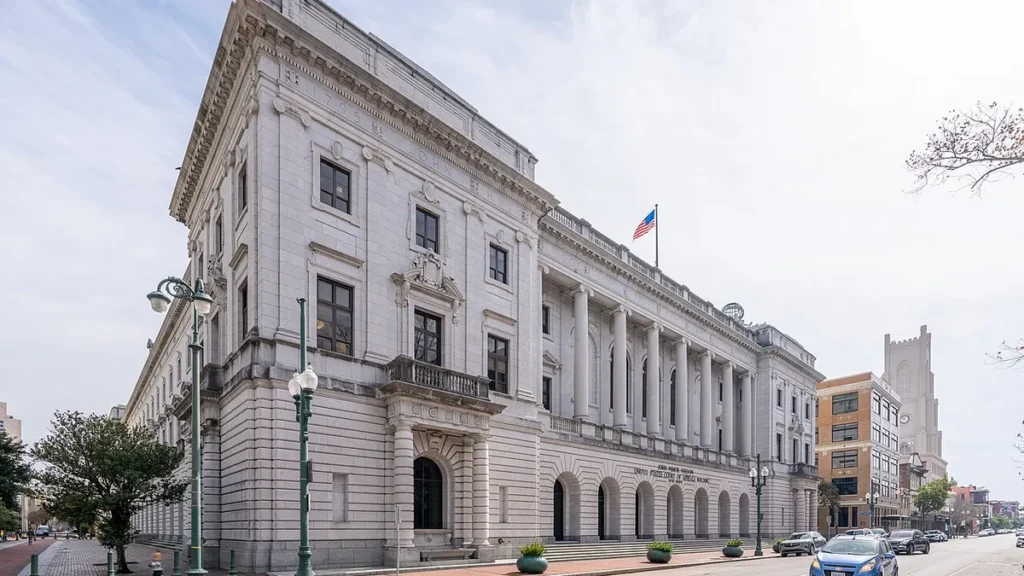
New Orleans, LA – In a significant ruling handed down on June 2, 2026, the U.S. Court of Appeals for the Fifth Circuit firmly rejected a plaintiff’s assertion that a recent Supreme Court decision, Ames, had effectively eliminated the long-standing requirement for a plaintiff to demonstrate less favorable treatment compared to a similarly situated employee in a discrimination lawsuit. The decision, Bravo v. Dallas Independent School District, reaffirms a crucial evidentiary hurdle for plaintiffs alleging disparate treatment under Title VII of the Civil Rights Act of 1964, particularly in the wake of evolving interpretations following the Ames judgment, which has been a focal point in the recent surge of reverse discrimination litigation. This ruling offers critical guidance to employers and legal practitioners grappling with the complexities of anti-discrimination law in a rapidly changing legal landscape.
The Fifth Circuit’s Deliberation in Bravo v. Dallas Independent School District
The case centered on a former teacher, the plaintiff in Bravo v. Dallas Independent School District, who brought a race discrimination lawsuit against his former employer. The plaintiff, whose specific protected class was not detailed in the original brief but implied to be a majority group member given the context of Ames, alleged discriminatory practices. Crucially, he conceded that he had not met the traditional requirement of showing he was treated less favorably than other similarly situated employees who were not members of his protected class under nearly identical circumstances – often referred to as the "comparator" requirement. Instead, the plaintiff contended that the Supreme Court’s Ames decision had overruled this specific evidentiary bar, thereby lessening his burden of proof.
The Fifth Circuit, however, disagreed with this interpretation. The court meticulously analyzed the scope and implications of Ames, concluding that while the Supreme Court cautioned against "inflexible applications" of the McDonnell Douglas burden-shifting test, particularly the "background circumstances" rule, it did not eradicate the fundamental need for comparator evidence. The Fifth Circuit’s opinion emphasized that the requirement to show less favorable treatment than a similarly situated comparator is "flexible enough to survive Ames." The court further referenced its own past precedents, which had already advised against overly rigid comparator analysis, indicating that the framework, while robust, was never intended to be an unyielding, one-size-fits-all straitjacket. This nuanced distinction drawn by the Fifth Circuit underscores a critical point: Ames targeted specific procedural hurdles that disproportionately affected majority-group plaintiffs, rather than dismantling the entire edifice of disparate treatment proof.
Understanding the McDonnell Douglas Framework: A Foundation of Discrimination Law
To fully appreciate the significance of the Fifth Circuit’s ruling, it is essential to revisit the bedrock principles of employment discrimination law, particularly the McDonnell Douglas burden-shifting framework. Established by the Supreme Court in McDonnell Douglas Corp. v. Green (1973), this test provides a structured method for analyzing disparate treatment claims under Title VII when direct evidence of discrimination is absent, relying instead on circumstantial evidence.
Title VII of the Civil Rights Act of 1964 prohibits employment discrimination based on race, color, religion, sex, and national origin. It was a landmark piece of legislation aimed at dismantling systemic discrimination in the workplace. However, proving discriminatory intent, especially when employers rarely admit to it, proved challenging. The McDonnell Douglas framework was devised to address this challenge by creating a three-stage process:
- Prima Facie Case: The plaintiff must first establish a prima facie case of discrimination. This typically involves showing that they:
- Are a member of a protected class.
- Were qualified for the position.
- Suffered an adverse employment action (e.g., termination, failure to promote).
- Were replaced by someone outside their protected class, or that others similarly situated but outside the protected class were treated more favorably. This fourth element is where the "similarly situated comparator" requirement often comes into play.
- Legitimate, Non-Discriminatory Reason: If the plaintiff establishes a prima facie case, the burden shifts to the employer to articulate a legitimate, non-discriminatory reason for the adverse employment action. This is a burden of production, not persuasion.
- Pretext: If the employer provides such a reason, the burden shifts back to the plaintiff to prove that the employer’s stated reason is merely a pretext for discrimination.
The "similarly situated comparator" element, particularly the fourth prong of the prima facie case, serves a vital purpose. It helps to eliminate other potential non-discriminatory reasons for the employer’s actions, creating an inference that discrimination was the likely motive. Without such a comparison, it becomes difficult to distinguish between legitimate business decisions and discriminatory ones. The Fifth Circuit’s ruling in Bravo reinforces that this element remains a cornerstone for establishing an initial inference of discrimination.
The Ames Decision: A Catalyst for Reevaluation and Its Nuances
The Supreme Court’s Ames decision, rendered prior to June 2026, served as a defining moment in the broader trend of reverse discrimination litigation that has increasingly challenged employers over the past few years. While the full details of Ames are not provided, its core impact, as described in legal analyses, was a caution against "inflexible applications" of the McDonnell Douglas test. Specifically, Ames addressed the "background circumstances" rule, which some circuits had historically applied to reverse discrimination claims. This rule required majority-group plaintiffs (e.g., white males) to present additional evidence of "background circumstances" suggesting the employer was the unusual employer who discriminated against the majority, effectively raising the bar for them to establish a prima facie case compared to minority-group plaintiffs.
Ames essentially clarified that the McDonnell Douglas framework should be applied equally to all plaintiffs, regardless of their protected class status, and that imposing an additional "background circumstances" requirement on majority-group plaintiffs was an "inflexible application" inconsistent with Title VII’s universal protections. However, Ames did not, as the Fifth Circuit now clarifies, abolish the fundamental need for any evidence of disparate treatment. It merely sought to ensure that the initial burden of proof was equitable for all.
The Ames decision, though intended to streamline and equalize the initial burden, initially created a degree of uncertainty among lower courts and legal practitioners regarding its precise scope. Many anticipated that it would significantly alter the landscape for discrimination claims, leading some to interpret it as a broader loosening of evidentiary standards. The Fifth Circuit’s ruling in Bravo provides a crucial counterpoint, clarifying that Ames was not a wholesale dismantling of established evidentiary requirements but rather a targeted refinement.
The Rise of Reverse Discrimination Litigation and Divergent Interpretations
The period leading up to and following the Ames decision has witnessed a notable increase in reverse discrimination claims. Data from the Equal Employment Opportunity Commission (EEOC) and various legal analyses, while not specifically cited in the original brief, generally indicate a growing trend in complaints alleging discrimination against individuals from historically dominant demographic groups. This trend is often attributed to several factors, including heightened awareness of diversity, equity, and inclusion (DEI) initiatives, evolving workplace demographics, and a more litigious environment where individuals feel empowered to challenge perceived unfairness regardless of their protected class status. Legal experts have urged HR departments to exercise extreme caution and ensure fairness in all employment practices to mitigate the risk of such lawsuits, even before Ames brought the issue to the forefront.
The impact of Ames on lower courts has not been uniform, highlighting the interpretative challenges it presented. For instance, in March 2026, just months before the Bravo decision, the Third Circuit Court of Appeals offered a different application of Ames. In that case, the Third Circuit revived a white police officer’s claims that he was denied a promotion in favor of an Arab Muslim colleague due to his race. The lower court had previously applied the "background circumstances" rule, dismissing the officer’s claim. The Third Circuit, citing Ames, determined that the lower court had erred by applying this rule, thereby allowing the officer’s claim to proceed. This decision illustrates how Ames did directly alter outcomes by removing a specific, additional hurdle for majority-group plaintiffs, leading to the revival of claims that might otherwise have been dismissed.

The contrast between the Third Circuit’s ruling and the Fifth Circuit’s decision in Bravo underscores the judicial process of refining the application of Supreme Court precedents. While the Third Circuit focused on the elimination of the "background circumstances" rule as a direct consequence of Ames, the Fifth Circuit in Bravo focused on what Ames did not eliminate: the general requirement for comparator evidence to establish disparate treatment. This distinction is subtle but profound, indicating that while the playing field for establishing a prima facie case may have been leveled for all plaintiffs, the foundational rules of evidence for proving discrimination still largely stand.
Legal Experts Weigh In: Navigating the Post-Ames Landscape
The Bravo decision provides much-needed clarity for employment law practitioners and HR professionals who have been navigating the turbulent waters post-Ames. Legal analysts suggest that the Fifth Circuit’s ruling serves as a crucial reminder that while Ames addressed an inequitable application of the McDonnell Douglas test, it was not an invitation for plaintiffs to bypass established evidentiary requirements altogether.
"The Ames decision created a flurry of speculation, with some interpreting it as a radical shift in how discrimination claims would be handled," states Dr. Eleanor Vance, a prominent employment law scholar. "The Fifth Circuit’s ruling in Bravo grounds us back in reality. It clarifies that while the ‘background circumstances’ rule is out, the fundamental principle of demonstrating that you were treated differently than someone similarly situated, for discriminatory reasons, remains absolutely vital. This isn’t a free pass for plaintiffs, nor is it a complete overhaul of Title VII jurisprudence."
HR professionals have been particularly concerned about the potential for increased litigation and the need for rigorous documentation. Sarah Chen, Vice President of HR at a national corporation, comments, "The initial buzz around Ames made us re-evaluate every aspect of our hiring, promotion, and termination processes. This Bravo decision reinforces that our core due diligence – ensuring consistent application of policies and thorough documentation of performance issues – is more important than ever. The ‘similarly situated’ argument is still a key defense for employers, meaning we need clear, objective criteria for all employment decisions."
The ongoing judicial interpretation of Ames also highlights the need for employers to train managers thoroughly on anti-discrimination policies, ensuring that decisions are made based on objective, job-related criteria, and that all employees, regardless of their protected class, are treated fairly and consistently.
Implications for Employers and Plaintiffs
The Bravo ruling carries significant implications for both employers and individuals pursuing discrimination claims:

For Employers:
- Reinforced Defense: The decision solidifies the "similarly situated comparator" defense. Employers can continue to argue that a plaintiff failed to establish a prima facie case if they cannot identify a comparable employee outside their protected class who received more favorable treatment under nearly identical circumstances.
- Importance of Consistency: The ruling underscores the critical importance of consistent application of workplace policies, disciplinary actions, and performance evaluations across all employees. Inconsistencies make it harder to defend against claims and easier for plaintiffs to identify comparators.
- Documentation is Key: Thorough and accurate documentation of performance issues, disciplinary actions, and the rationale behind employment decisions remains paramount. This documentation provides objective evidence to counter claims of disparate treatment.
- Continued Vigilance on DEI: While the legal landscape shifts, the ethical and business imperatives for diversity, equity, and inclusion remain. Employers must balance robust DEI initiatives with legal compliance, ensuring that no group is inadvertently disadvantaged.
For Plaintiffs:
- The Burden of Proof Remains: While Ames removed a specific, heightened burden for majority-group plaintiffs (the "background circumstances" rule), it did not eliminate the general need to establish a prima facie case of discrimination using circumstantial evidence.
- Strategic Case Building: Plaintiffs and their legal counsel must continue to focus on identifying appropriate comparators and presenting evidence of less favorable treatment to meet the McDonnell Douglas standard. This requires meticulous investigation and evidence gathering.
- Nuanced Interpretation of Ames: The Bravo decision makes it clear that Ames should not be broadly interpreted as a universal elimination of all traditional evidentiary requirements in discrimination cases. Its impact is more precisely focused on specific procedural hurdles.
- Potential for Circuit Splits: The differing interpretations between the Third and Fifth Circuits on the full scope of Ames could potentially lead to further litigation and, eventually, perhaps even another Supreme Court review to provide even greater clarity on these evolving standards.
The Future of Discrimination Claims
The Bravo decision is a critical waypoint in the ongoing evolution of employment discrimination law. It highlights the judiciary’s careful approach to interpreting Supreme Court rulings and ensuring that fundamental legal principles are maintained even as specific applications are refined. The legal landscape surrounding Title VII and reverse discrimination claims will undoubtedly continue to evolve, influenced by societal changes, further judicial interpretations, and potentially new legislative efforts.
As workplaces become increasingly diverse and complex, the balance between protecting all individuals from discrimination and ensuring a clear, manageable framework for legal claims will remain a central challenge. The Fifth Circuit’s ruling in Bravo v. Dallas Independent School District serves as a stark reminder that while the journey toward true workplace equity is ongoing, the established legal pathways for proving discrimination, though subject to refinement, continue to demand robust evidentiary support. It underscores that justice in the workplace requires not only the eradication of bias but also a clear and consistent application of the law for all parties involved.






